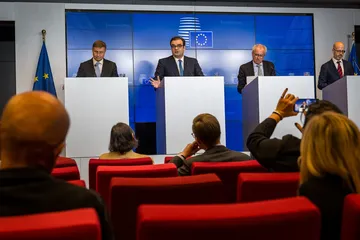
欧盟委员会财政主管瓦尔迪斯·多姆布罗夫斯基斯(Valdis Dombrovskis)敦促欧元区成员国保持预算克制,抵制意大利和希腊提出的进一步宽松的提议。
By Jorge Valero and Kamil Kowalcze European Commission finance chief Valdis Dombrovskis urged euro-area member states to observe budgetary restraint, pushing back against a proposal from Italy and Greece to introduce additional leeway.
“我强调的是财政审慎的必要性,尤其是在当前债券市场发展形势下,”他在卢森堡举行的地区财政部长会议后表示。“我们不能一直推出新的财政灵活性。”
“What I am emphasizing is the need for fiscal prudence, especially in the light of current bond market developments,” he said after a meeting of the region’s finance minsters in Luxembourg. “We cannot come with new fiscal flexibilities all the time.”
尽管如此,多姆布罗夫斯基斯表示,他“会更深入地审视意大利和希腊的建议”。此时,欧元区各国政府正面临借贷成本急剧上升的局面,最初集中在法国的抛售正逐步蔓延至其他主权市场。
Still, Dombrovskis said that he “will have a deeper look at the suggestions of Italy and Greece.”The discussion comes as euro-area governments face a sharp rise in borrowing costs, with the selloff initially centered on France increasingly spilling into other sovereign markets.
投资者持有法国10年期债券相较于德国债券所要求的额外收益率最近已升至自2011年以来的最高水平。包括意大利、希腊和比利时在内的其他负债较高的欧洲国家的债券也受到压力。
The extra yield demanded by investors to hold French 10-year bonds compared with those of Germany recently hit its highest since 2011. The bonds of other indebted European nations including Italy, Greece and Belgium have also come under pressure.
“我们对法国在保持健全公共财政方面的承诺充满信心,我个人对我的好同事罗兰·莱斯库尔(Roland Lescure)也非常有信心,”欧元集团主席基里亚科斯·皮埃拉卡基斯(Kyriakos Pierrakakis)说。
“We have confidence in France’s commitment vis-a-vis sound public finances, and I have personally a lot of confidence in my good colleague Roland Lescure,” Eurogroup President Kyriakos Pierrakakis said.
这场动荡加剧了人们对各国政府能否通过额外支出来应对能源冲击的担忧。能源成本的飙升已经传导至消费者价格,欧元区通胀在9月加速至3.8%,创下三年来的最高水平。
The turmoil has sharpened concerns about governments’ ability to respond to the energy shock with additional spending. The surge in energy costs is already feeding through to consumer prices, with euro-area inflation accelerating to 3.8% in September, the highest in three years.
这种组合正使欧洲各国面临日益艰难的政策取舍。为缓解家庭和企业能源成本上升而采取的措施正在推高赤字水平,而通胀则使利率保持在高位,投资者也要求更高的溢价来为负债沉重的国家融资。
That combination is creating increasingly difficult policy trade-offs for European governments. Measures to cushion households and companies from higher energy costs are increasing deficit levels while inflation is keeping interest rates elevated and investors are demanding a larger premium to finance heavily indebted countries.
“一方面,我们面临能源价格飙升、通货膨胀不断上升的问题;另一方面,债券市场也承受着压力和挑战,”皮拉卡基斯表示。“这里的两个关键词是‘保护’和‘维持’:我们需要保护家庭,保护企业,保护每一位正在承受能源冲击成本的欧洲人。”
“We have elevated energy prices, high energy prices, rising inflation on the one hand, but we have also pressures and challenges in the bond market on the other,” said Pierrakakis. “The two key words here are protect and preserve: we need to protect households, we need to protect businesses, we need to protect every European experiencing the costs of the energy shock.”
这位同时担任希腊财政部长的官员补充说:“与此同时,我们还需要维持财政自由所依赖的财政可信度。”作为欧盟的执行机构,欧盟委员会正敦促各国政府控制支出。欧盟官员多次要求各国首都仅针对特定对象实施临时性支持措施,以帮助企业与家庭。近几天,他们还警告称,一些政府呼吁增加国家支出的做法可能违反欧盟的赤字和债务上限。
The official, who also is Greece’s finance minister, added that “at the same time, we need to preserve the fiscal credibility of our fiscal freedom.”The European Commission, the EU’s executive arm, is pressing governments to restrain spending. EU officials have repeatedly told national capitals to only introduce targeted and temporary support measures for companies and households, and in recent days they warned against some governments’ calls for more national spending that could breach EU deficit and debt limits.
欧盟规则已为各国政府提供了一定空间以应对能源冲击。今年,欧盟委员会进一步放宽了相关限制,原本这项调整旨在为更高的国防开支留出余地,以便在2028年之前覆盖符合资格的能源安全措施。
EU rules already provide governments with some room to absorb the energy shock. The Commission gave additional leeway this year originally designed to accommodate higher defense expenditure to cover qualifying energy-security measures through 2028.
意大利和希腊已向布鲁塞尔寻求更大的预算灵活性,而法国则强调需要恢复公共财政健康,因为投资者正密切关注其稳定接近经济产出120%的债务负担的能力。不过,一些成员国对进一步削弱欧盟预算约束的尝试持谨慎态度。
Italy and Greece have sought additional budget flexibility from Brussels, while France has instead emphasized the need to restore its public finances as investors scrutinize its ability to stabilize a debt burden approaching 120% of economic output. But some member states are wary of further attempts to weaken the EU’s budgetary constraints.
比利时副总理文森特·范佩特赫姆表示:“我认为,为这类特殊情况与危机设立国家层面的‘豁免条款’并非明智之举。”他主张采取临时性措施来应对由供应冲击引发的能源价格高企问题。
“I don’t think it is a good idea that we create national escape clauses for cases and crises like these,” said Belgian Deputy Prime Minister Vincent Van Peteghem, arguing instead for temporary measures to face the high energy prices driven by the supply shock.