文/拉拉·威廉姆斯 经历新冠疫情后,我们对新发疫情都有些草木皆兵。因此,西伯利亚一家鼠疫研究所的一名实验室技术人员死亡事件让所有人高度警惕,这可以理解。但尽管我们对该案例仍知之甚少,俄罗斯还有另一个健康威胁正在酝酿,值得更多关注和警觉。
By Lara Williams After the Covid pandemic, we’re all a little jumpy when it comes to new disease outbreaks. So it’s understandable that the death of a lab technician working at a plague research institute in Siberia has put everyone on high alert. But while there’s still much we don’t know about that case, there is another health threat brewing in Russia that deserves more attention and alarm.
疑似鼠疫感染的细节扑朔迷离。当地媒体报道称,28岁的达里娅·希皮洛娃可能在工作场所发生意外后感染了肺鼠疫,但这些报道未经证实。俄罗斯当局表示,约200名她的接触者已被隔离。肺鼠疫是一种严重感染,当细菌感染肺部时发生。若不治疗,几乎总是致命的。
The details of the suspected plague infection are murky. Local media coverage suggested that 28-year-old Darya Shipilova may have contracted pneumonic plague after an accident at her workplace, though those reports have not been verified. Russian authorities have said that about 200 of her contacts were quarantined. Pneumonic plague is a severe infection that occurs when the bacterium infects the lungs. Without treatment, it’s nearly always fatal.
官方将希皮洛娃的死因归结为“原因不明”的肺炎,俄罗斯当局已告知世界卫生组织该地区未发现鼠疫病例。世卫组织已要求提供更多细节,美国总统特朗普表示他已安排与俄罗斯总统普京通话讨论此事。
Officially, Shipilova’s death has been attributed to pneumonia of “unknown” origin, and Russian authorities have told the World Health Organization that no plague case had beened in the region. The WHO has requested further details, and US President Donald Trump has said he has a call scheduled with Russia’s Vladimir Putin to discuss the incident.
世卫组织表示,其掌握的信息不足以进行全面风险评估,且俄罗斯回应其询问过于迟缓,称这种延迟“不可接受”。该国回应的不透明令人担忧——尤其是因为潜在的鼠疫并非西伯利亚唯一的公共卫生隐患。
The WHO says it doesn’t have enough information to conduct a full risk assessment and thatRussia has been too slow to respond to its inquiries, calling the delay “not okay.”The opacity of the country’s response is worrying — not least because the potential plague is not Siberia’s only public health concern.
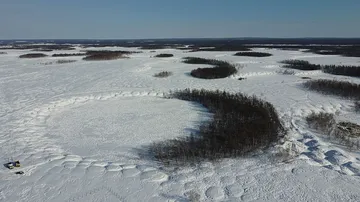
我最担心的是冻土层中潜藏的威胁,那里的严寒保存着过往大流行病的残留。科学家在一具300年历史的木乃伊中检测出了天花病毒DNA,在一具自1918年以来埋藏地下的尸体肺部发现了流感病毒RNA。如今,科学家已成功复活了在冻土中沉睡数万年的病原体。其中一些虽引人入胜却无威胁,例如只能攻击单细胞变形虫的巨型病毒。
The one I’m most worried about lies in the region’s permafrost, where remnants of previous pandemics are preserved in the cold. There, smallpox virus DNA was detected in a 300-year-old mummy and influenza virus RNA was found in the lung of a body lodged in the earth since 1918. Scientists have now been able to revive pathogens that have lain dormant in the permafrost for tens of thousands of years. Some are fascinating but not threatening, such as the giant viruses that can only target single-celled amoebas.
另一些则是常见人类病原体的近亲,如(金黄色葡萄球菌)和(导致腹泻疾病最常见的病因)。尽管我们有药物可以抵御这些熟悉的敌人,但冻土细菌中抗生素耐药基因的高流行率却令人惊讶。更可怕的是,那些可能导致尼安德特人或猛犸象灭绝的病毒和细菌,对当今人类而言将是全新的威胁。
Others are relatives of common human pathogens such as (staph bacteria) and (the most common cause of diarrhoeal diseases)Although we have drugs that should be able to defend against these familiar foes, there is a surprisingly high prevalence of antibiotic-resistant genes among bacteria in the frozen ground. Even scarier are the viruses and bacteria that may have played a role in the demise of Neanderthals or mammoths, and would be new to us today.
当然,如果气候稳定,这一切都不会成为问题。但人为导致的气候变化使北极升温速度达到全球其他地区的四倍。冻土正在迅速融化,增加了潘多拉魔盒般的古老病原体被释放的风险。该地区日益加剧的工业化及随之而来的外来务工人员增多,进一步加剧了危险,因为他们可能将任何疫情传播到世界偏远程度较低的地区。
Of course, none of this would be a problem if our climate was stable. But human-caused climate change is warming the Arctic up to four times faster than the rest of the planet. The permafrost is rapidly thawing, raising the risk that a Pandora’s Box of ancient pathogens will be unleashed. The danger is heightened by the growing industrialization of the region and resulting increase in migrant workers, who raise the risk of spreading any outbreak to less remote parts of the world.
尽管“僵尸病原体”现身听起来像天方夜谭,但请考虑一下:2016年,西伯利亚经历一个炎热干燥的夏季后冻土融化,引发了一场炭疽疫情,导致一名12岁男孩和2300多头驯鹿死亡。
As far-fetched as the appearance of a zombie pathogen might sound, consider that thawing Siberian permafrost after a hot, dry summer led to a 2016 anthrax outbreak that killed a 12-year-old boy and more than 2,300 reindeer.
2023年,来自法国、德国和俄罗斯的科学家发表论文警告称,冻土融化的健康风险非常真实,值得进一步研究。但由于世界上大部分冻土位于俄罗斯,普京入侵乌克兰使研究合作和信息共享变得复杂化。
In 2023, scientists from France, Germany and Russia published a paper warning that the health risks of melting permafrost are very real and warrant further study. But with most of the world’s permafrost located in Russia, Putin’s invasion of Ukraine has complicated research partnerships and information sharing.
正如对疑似鼠疫死亡病例缺乏详细信息所表明的那样,俄罗斯是否会就永久冻土带来的任何风险保持坦诚,这一点并不清楚。
And as the lack of detail surrounding the suspected plague death demonstrates, it’s not at all clear that Russia would be forthcoming about any risk emerging from the permafrost.
正如世界卫生组织总干事谭德塞在周四的一条X帖子中就希皮洛娃死亡调查所写:“根据《国际卫生条例》及时、完整、透明地共享信息,对于澄清相互矛盾的报告、准确评估潜在公共卫生风险至关重要。” 这一点对“僵尸病原体”同样适用,正如对鼠疫一样。
As Tedros Ghebreyesus, director-general of the WHO,wrote in an X postThursdayabout the investigation of Shipilova’s death: “Timely, complete and transparent information sharing under the International Health Regulations is essential to clarify conflicting reports and enable an accurate assessment of potential public health risks.”That’s as true for zombie pathogens as it for plagues.