作者:Vildana Hajric 和 Lu Wang全球最受关注的股指在人工智能的推动下展现出韧性,但这种表象掩盖了金融市场整体正在扩大的退潮——油价和借贷成本的持续上升正带来压力。
By Vildana Hajric and Lu Wang The AI-fueled resilience of the world’s most-watched stock indexes is masking a widening retreat across financial markets, as elevated oil prices and borrowing costs take their toll.
本周,美国10年期国债收益率接近5.4%,创下自2002年以来的最高水平。与此同时,布伦特原油价格徘徊在每桶100美元以上,加剧了人们对长期通胀冲击的担忧。全球多数地区的资金成本都在上升,英国借贷成本已升至19年来的高点,法国政府债务也面临更大压力。
Yields on 10-year US Treasuries approached 5.4% this week, their highest since 2002 as Brent crude hovered above $100 a barrel, stoking fears of a prolonged inflation shock. The price of money is rising across much of the world, sending UK borrowing costs to a 19-year high and adding to the pressure on French government debt.
尽管市场动荡不断,主要股指却表现出顽强的韧性。标准普尔500指数周二创下历史新高,随后两天因对人工智能需求的担忧而一度下跌,但周五在交易员展望又一个创纪录的盈利季后反弹。目前该指数仍接近历史高点。
For all the turmoil, the big equity benchmarks have proved resilient. The S&P 500 hit a record on Tuesday, stumbled over the next two sessions amid fears over AI demand, then bounced back Friday as traders looked ahead to another bumper earnings season. It remains within striking distance of its peak.
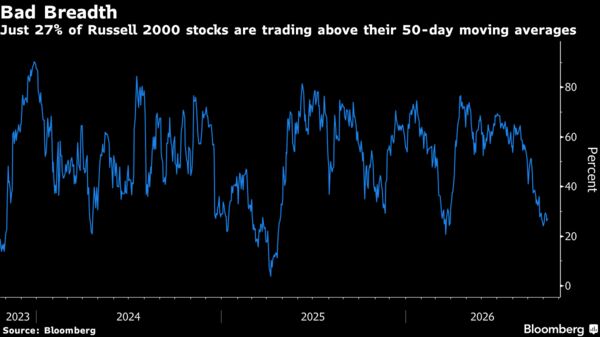
持续的经济增长使投资者能够暂时忽略收益率上升和地缘政治动荡的影响。然而,市场吸收冲击的能力在很大程度上取决于投资者的关注点。在标准普尔500指数成分股中,仅有不到三分之一的股票交易价格高于其50日均线,而这一指标被广泛用作衡量短期市场广度的参考。对于对利率更为敏感的罗素2000指数而言,情况更为严峻:其小盘股成分股中仅有27%的股价高于这一水平。
Enduring economic growth is allowing investors to look past rising yields and geopolitical upheaval. But the market’s ability to absorb the shock depends heavily on where investors are looking. Barely a third of S&P 500 members are trading above their 50-day moving averages, a widely watched gauge of near-term breadth. The picture is even starker for the interest-rate-sensitive Russell 2000, where just 27% of its small-cap constituents are above that threshold.
最弱势借款方发行的债券收益率约为15%,这对需要再融资的公司而言是一道沉重的负担。美国高收益企业债的信用利差近日扩大,一只垃圾债券ETF的价格已跌至去年春季关税战引发抛售以来的最低水平附近。
Bonds issued by the weakest borrowers yield about 15%, a punishing hurdle for companies that need to refinance. US high-yield corporate spreads have widened in recent days, and a junk-bond ETF has dropped to around its lowest levels since last spring’s tariff-war-fueled selloff.
新股上市市场也感受到寒意。纽约证券交易所集团总裁林恩·马丁将近期多起高关注度上市延迟归因于利率上升。
The landscape for new equity listings is feeling the chill, with a clutch of high-profile delays that NYSE Group President Lynn Martin has attributed to higher interest rates.
“标准普尔500指数采用市值加权方式,掩盖了表面之下正在发生的许多损失,”海洋公园资产管理公司(Ocean Park Asset Management)首席投资官詹姆斯·圣奥宾(James St. Aubin)表示。“即使没有美联储的干预,债券市场实际上也在收紧金融条件。风险在于,最初只是能源冲击的事件,最终可能演变为盈利问题,而股市尚未完全将这种可能性反映在价格中。”
“The cap-weighted S&P 500 is masking a lot of the damage happening beneath the surface,” said James St. Aubin, chief investment officer at Ocean Park Asset Management. “The bond market is effectively imposing tighter financial conditions even without help from the Fed. The risk is that what began as an energy shock eventually becomes an earnings problem, and the equity market has yet to fully price that possibility.”
目前,利率冲击促使投资者重新调整投资组合,而非引发全面的风险规避。投资者正在减持那些对波动性债券收益率和高融资成本敏感的仓位,从投机性信贷到货币套利交易,均在其中之列。
For now, the rate shock is spurring investors to reshuffle portfolios rather than triggering a wholesale flight from risk. Investors are peeling back positions vulnerable to volatile bond yields and expensive financing, from speculative credit to currency carry trades.
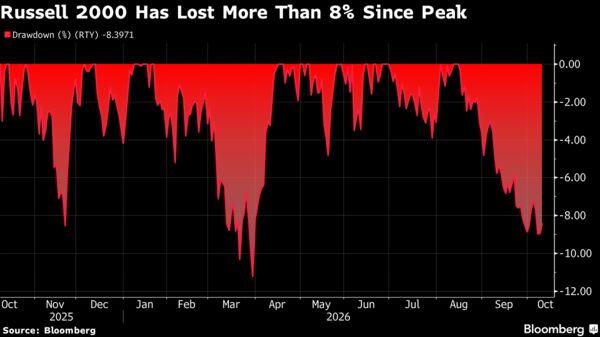
罗素2000指数连续第五周下跌,较其高点已下滑约8.5%,接近技术性回调区间;而房地产股也经历了持续较长时间的下跌。相比之下,标准普尔500指数和科技股占主导地位的纳斯达克100指数均出现上涨。
The Russell 2000 notched its fifth straight weekly loss, down roughly 8.5% from its high and nearing correction territory, while real estate stocks endured an extended losing streak. By contrast, the S&P 500 and tech-heavy Nasdaq 100 both climbed.
周四芯片制造商股票的抛售表明,即便是人工智能相关投资,也无法避免信心动摇带来的波动。大型指数还能承受压力多久,可能也取决于石油和债券市场的后续走势。
Thursday’s selloff in chipmakers showed that even the AI trade isn’t immune to a wobble in confidence. How much longer the big indexes can withstand the pressure may also come down to what happens next in oil and bonds.
法国兴业银行(Societe Generale)的策略师马尼什·卡布拉(Manish Kabra)、查尔斯·德布瓦松(Charles de Boissezon)和卡瓦塔尔·马穆尼(Kawtar Mamouni)指出,如果大型科技公司的现金流持续受压,同时10年期美国国债收益率达到6%,油价升至每桶150美元,那么标准普尔500指数明年可能下跌超过20%。相反,如果他们近期的一份报告中所写的那样,收益率回落至4%、油价降至80美元,且大型科技公司的基本面得到改善,那么市场仍有进一步上涨的空间。
A scenario combining a continued drain on megacap tech’s cash flow with a 6% yield on 10-year Treasuries and oil at $150 a barrel could send the S&P 500 down more than 20% next year, according to Societe Generale strategists Manish Kabra, Charles de Boissezon and Kawtar Mamouni. A retreat in yields toward 4% and oil to $80 alongside with improved fundamentals by big tech, by contrast, would leave room for further gains, they wrote in a recent note.
“5%的收益率会形成估值阻力,但一旦达到6%,我们很可能看到信用事件发生。”Kabra在一次采访中表示,而这种情况更可能出现在杠杆率最高的非私营部门之外。“目前所有问题都集中在主权国家的财政稳定性和债务可持续性上。”Ocean Park的St. Aubin称,其公司的内部模型已显示出多个受高利率影响的投资存在下行趋势,这促使他的团队削减对信用敏感资产的敞口,包括高收益债务,因为利差正在扩大。
“5% yield creates valuation headwind but at 6% we should see a credit event” that is more likely to occur outside the private sector where the most leveraged balance sheets exist, Kabra said in an interview. “All questions are currently on the fiscal stability and debt sustainability of sovereigns.”Ocean Park’s St. Aubin says his firm’s internal models have flagged downtrends in several investments exposed to higher rates, prompting his team to cut exposure to credit-sensitive assets, including high-yield debt, as spreads widen.
他将低于投资级的信用利差称为“真正的恐惧晴雨表”,因此自9月中旬以来的利差扩大尤其令人不安。
He calls below-investment-grade credit spreads “the true barometer of fear,” making the widening since mid-September particularly unsettling.
标普500指数创下历史新高时,市场广度却前所未有地薄弱。该指数中仅有30%的成分股交易价格高于其50日均线,自1990年彭博数据开始记录以来,这一参与度在所有创纪录的日子中都是最弱的。
The S&P 500’s all-time high arrived with unprecedentedly thin breadth. With only 30% of the index’s members trading above their 50-day moving average, the participation was the weakest among all record days since Bloomberg data began in 1990.
其他人则不会等到市场挤压效应波及股市的赢家。Jeff Muhlenkamp管理的2.7亿美元基金今年表现优于标普500指数,他已增加了能源类资产的配置,并清仓了几乎所有与人工智能相关的股票。
Others aren’t waiting for the squeeze to reach the stock market’s winners. Jeff Muhlenkamp, whose $270 million fund has beaten the S&P 500 this year, has increased its energy holdings and sold almost all its AI-related stakes.
“我很乐意在狂欢仍在进行时离场,”他指的是科技股市场的狂热,“目前融资渠道仍然畅通。一旦资金耗尽,游戏就结束了。”
“I’m happy to leave the party while it is still in full swing,” he said, referring to the frenzy over the technology. “Financing is still available. When that is exhausted it will be game over.”