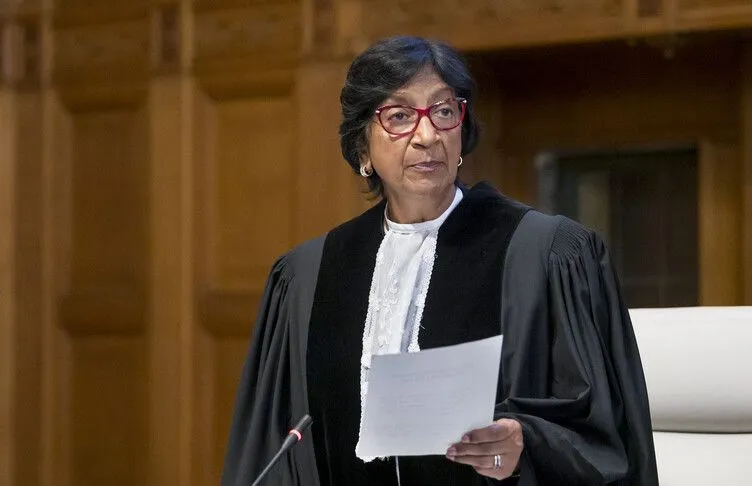
诺贝尔和平奖得主纳维·皮莱表示,寻求正义的巴勒斯坦人并不孤单,真相终将浮出水面,她呼吁国际社会从她祖国南非结束种族隔离制度的集体行动和经济制裁中汲取教训。
Nobel Peace Prize laureate Navi Pillay said Palestinians seeking justice are not alone and the truth will emerge, urging the international community to draw lessons from the collective action and economic sanctions that helped end apartheid in her native South Africa.
在周三的独家采访中,国际法院法官、前联合国人权事务高级专员皮莱回顾了她反对种族隔离的经历,并强调了国际社会对巴勒斯坦人的支持的重要性,尽管人们对加沙地带违法行为的追责仍存在担忧。
In an exclusive interview on Wednesday, Pillay, judge at the International Court of Justice and a former UN human rights chief, reflected on her experience fighting apartheid and the importance of international support for Palestinians amid continuing concerns over accountability for violations in the Gaza Strip.
“我认为我说得没错:尽管巴勒斯坦人如今已为自由而斗争超过90年,但国际社会的关注和支持对他们而言意义重大。”她对安纳多卢通讯社表示。
"I imagine I'm correct in saying that even though Palestinians are struggling for their freedom for more than 90 years now, attention by the international community and support by the international community would be of great significance for them," she told Anadolu.
“传递的信息是:你们并不孤单。只要有信息和正确的信息,真相就会被揭露。”现年85岁的皮莱因在国际正义领域的贡献而荣获2026年诺贝尔和平奖,她曾主持一个联合国调查委员会,该委员会去年得出结论,认为以色列在加沙地带犯下了种族灭绝罪。
"The message being, you're not alone. That with information and correct information, the truth will come out." Pillay, 85, who was awarded the 2026 Nobel Prize for her contributions to international justice, chaired a UN commission of inquiry, which concluded last year that Israel committed genocide in Gaza.
回顾她在种族隔离时期的经历,她说南非律师当时正在进行一场鲜有国际关注的孤独斗争。“我们确实几乎没有得到任何缓解。坦率地说,世界其他地区根本没有关注我们。”她说。
Recalling her experience under apartheid, she said South African lawyers fought a lonely struggle with little international attention. "We really had very little relief. And honestly, the rest of the world didn't pay attention to us," she said.
这位人权律师表示,如果联合国当时能够组建一个委员会来收集证据并在国际上公布调查结果,那将对当时的黑人南非人提供巨大帮助。
The rights lawyer said a UN commission gathering evidence and presenting its findings internationally would have greatly helped Black South Africans at that time.
皮莱强调了找出巴勒斯坦人苦难根源的重要性,并重申了她所领导的委员会的结论:以色列的非法占领是导致长期冲突的根本原因。
Pillay stressed the importance of identifying the root causes of Palestinian suffering, and reiterated her commission's finding that Israel's unlawful occupation was the root cause of the longstanding conflict.
她批评各国政府越来越把政治和地区利益置于维护国际和平与正义的责任之上。
She criticized governments for increasingly prioritizing their political and regional interests over their responsibilities to maintain international peace and justice.
她说联合国安全理事会已经拥有应对违规行为的机制,包括维和行动、调查委员会、调解和经济制裁。
She said the UN Security Council already possessed mechanisms to respond to violations, including peacekeeping operations, investigative commissions, mediation and economic sanctions.
“他们拥有的主要工具是实施制裁,对违反国际人权法和国际人道主义法的政府实施经济制裁,他们以前已经使用过这种手段,”她说。
"The principal tool they have is to impose sanctions, economic sanctions against governments that are violating international human rights law, international humanitarian law, they've used this before," she said.
在质疑国际社会对加沙的反应时,皮莱说:“所以,民间社会正在提出的问题是:'面对我们人民每天都能看到的巨大违规行为,你们为何坐视不理,束手无策?我们能在电视屏幕上看到种族灭绝正在发生。'” “我和大多数人一样,对如此少的行动感到不快乐,”她补充道。
Questioning the international community's response to Gaza, Pillay said: "So, the question that civil society is asking: 'Why are you sitting back and doing nothing in the face of huge violations that we, the people, can see daily? We can see genocide being committed on our television screens'." "And I am as unhappy as most people that there has been so little action," she added.
她借鉴南非的经验,指出 apartheid 在 1994 年结束,强调国际经济压力的决定性作用。
Drawing on South Africa's experience, where apartheid ended in 1994, Pillay emphasized the decisive role of international economic pressure.
“ apartheid 的结束主要是因为安理会和联合国对 apartheid 政府实施的经济制裁,”她说。
"Apartheid came to an end mainly because of the economic sanctions imposed by the Security Council, by the United Nations against the apartheid government," she said.
“我从未认为 apartheid 会在我有生之年结束,但正是世界各国政府、企业和民间社会的这种集体行动才使 apartheid 画上句号。”皮莱说,她一直希望在应对加沙局势时也能看到类似的国际合作。
"I never thought apartheid will end in my lifetime, but it's this collective action by governments, by businesses, and civil society all over the world that brought an end to apartheid." Pillay said she had been hoping for similar international cooperation in response to the situation in Gaza.
“我一直在希望并呼吁这种程度的合作,呼吁对巴勒斯坦人所遭受的巨大违规行为和杀戮进行这种程度的谴责,”她说。
"I've been hopefully looking for and calling for that level of cooperation, that level of condemnation of the huge violations and killings of Palestinians," she said.
当被问及以色列日益增长的国际孤立以及针对被占西岸定居者的制裁是否有助于结束其免责时,皮莱表示,这些发展可能有助于推动更广泛的集体行动。“我们不能接受的唯一事情就是什么都不做,”她说。
Asked whether Israel's growing international isolation and sanctions targeting settlers in the occupied West Bank could help end its impunity, Pillay said such developments could contribute to broader collective action. "The one thing we cannot accept is doing nothing," she said.
回忆起纳尔逊·曼德拉的立场——即南非人在巴勒斯坦人仍被压迫和占领的情况下无法完全享有自由——她表示,巴勒斯坦人正在寻求类似于反对种族隔离所采取的措施。
Recalling Nelson Mandela's position that South Africans could not fully enjoy freedom while Palestinians remained oppressed and occupied, she said Palestinians were seeking measures similar to those used against apartheid.
“巴勒斯坦人正在呼吁采取与结束种族隔离时相同的行动。他们看到了经济抵制的价值,”她说。
"Palestinians are calling for the kind of action that was taken to end apartheid. They see the value of economic boycotts," she said.
她还提到以色列人针对削弱国家最高法院努力的抗议,呼吁各国政府尊重平民的抗议权利,并配合国际刑事调查。
She also referred to protests by Israelis against efforts to weaken the country's Supreme Court, urging governments to respect civilians' right to protest and cooperate with international criminal investigations.
她强调,国际法律原则必须得到一贯适用,不能有选择性或偏见,尤其是在平民遭受苦难时。皮莱强调,政府而非仅国际组织,才应对防止种族灭绝承担责任。
She stressed that international legal principles must be applied consistently, without selectivity or bias, particularly when civilians are suffering. Pillay emphasized that governments, rather than international organizations alone, bear responsibility for preventing genocide.
“《防止及惩治灭绝种族罪公约》非常明确。防止种族灭绝的义务在于每一个国家,”她说。“这是其目的;它不是为了对种族灭绝作出反应并惩罚所谓的肇事者。主要原因是预防,因为当一个群体整体或部分被毁灭时,这是一种不可容忍的罪行。”关于在警告存在严重违规行为的情况下,仍向政府提供武器、情报或政治支持的潜在法律责任,皮莱表示,这些国家自身制定了国际公约和条约。
"The Genocide Convention is very clear. The duty is on every state to prevent genocide," she said. "That's a purpose; it's not to react to genocide and to punish the alleged perpetrators. The main reason is to prevent, because it's an intolerable crime when a whole group is being destroyed in whole or in part." About the potential legal responsibility of governments supplying weapons, intelligence or political support despite warnings of serious violations, Pillay said the states themselves established international conventions and treaties.
“他们制定了标准。现在他们必须毫无选择地执行这些标准,”她说,并认为各国政府因政治利益而未能落实自身承诺。
"They set the standards. Now they must implement them without selection," she said, arguing that governments were failing to apply their own commitments because of political interests.
皮莱回忆起,她所在的联合国委员会曾敦促联合国大会请求国际法院(ICJ)就以色列对巴勒斯坦领土的占领发表咨询意见。
Pillay recalled that her UN commission had urged the General Assembly to seek an advisory opinion from the International Court of Justice (ICJ) concerning Israel's occupation of Palestinian territory.
她欢迎法院在2024年的裁决,该裁决认为以色列在被占巴勒斯坦领土的持续存在是非法的,并阐明了关于巴勒斯坦权利的义务。然而,她承认法律程序对受苦的民众提供的即时救济有限。
She welcomed the court's opinion in 2024, which found Israel's continued presence in the occupied Palestinian territory unlawful, and outlined obligations concerning Palestinian rights. She, however, acknowledged that legal proceedings offered limited immediate relief to people suffering on the ground.
“我同意;它们对缓解他们眼前的困境帮助不大,”她说。“让我们利用国际法来主张和实现全世界受压迫人民的权利。”谈及国际体制的不足及其日益丧失的可信度,皮莱指出,联合国内部政府的主导地位以及公民社会空间的缩小。
"I agree; they're not very helpful to relieve their immediate dire situation," she said. "Let's use international law to assert and realize the rights of people who are oppressed everywhere in the world." On shortcomings of the international system and its eroding credibility, Pillay pointed to the dominance of governments within the UN and the shrinking space for civil society. "Certainly, the system is very skewed.
“当然,该体制非常偏斜。谁控制联合国?是成员国,是政府,”她说,敦促联合国成员国与公民社会组织开展更紧密的合作。
Who controls the United Nations? It's member states, it's governments," she said, urging UN members to conduct their affairs in closer cooperation with civil society organizations.
谈到华盛顿对国际刑事法院(ICC)的制裁措施,皮莱呼吁政府,包括《罗马规约》缔约国以外的国家,反对这一运动。
Turning to Washington's measures against the International Criminal Court (ICC), Pillay called on governments, including those outside the Rome Statute, to oppose the campaign.
“我希望看到世界各国,即联合国成员国,无论它们是否是《罗马规约》的缔约国,都能谴责美国对该法院施加的非法措施和制裁,”她说。
"I would like to see states of the world, the member states, whether they're parties to the Rome Statute or not, to condemn the unlawful measures and sanctions that the United States is imposing on this court," she said.
“我们应该明确表示这是不可接受的,然后我们都有责任帮助法院克服这些障碍。”前国际刑事法院法官表示,她相信法院工作人员将在日益增长的政治压力下继续工作。
"We should say roundly that it's unacceptable, and then we all have the responsibility to help the court to overcome these obstacles." The former ICC judge expressed confidence that the court's staff would continue their work despite mounting political pressure.
“他们不会因为政治压力而停止工作,因为他们是出于信念在工作。他们认为有可能为所有人实现正义,”她说。
"They're not going to stop doing what they are doing because they are working out of commitment. They believe that it is possible to realize justice for all," she said.
回顾获得诺贝尔奖的经历,皮莱形容这一认可出乎意料且意义深远。”这个奖项对我来说是个巨大的惊喜,但也是个美好的惊喜,”她说。
Reflecting on receiving the Nobel, Pillay described the recognition as unexpected and deeply meaningful. "This award was a huge surprise to me, but a wonderful surprise," she said.
她表达了对诺贝尔委员会的感激,感谢其肯定了她数十年职业生涯的不同方面,从反对种族隔离到推动国际正义。
She expressed gratitude that the Nobel Committee had recognized different aspects of her decades-long career, from challenging apartheid to advancing international justice.
“你不可能每次都胜诉。有时会赢,但更多时候会输,尤其是在种族隔离时期的南非,”她说道。
"You don't win a case all the time. You win some. You lose many, especially under apartheid South Africa," she said.
皮莱称,委员会对她工作的认可是一个“难忘的时刻”,她十分感激委员会为评估她对国际和平与正义所作出的贡献所付出的努力。
Pillay described the committee's recognition of her work as a "memorable moment," saying she appreciated its efforts to examine her contributions to international peace and justice.