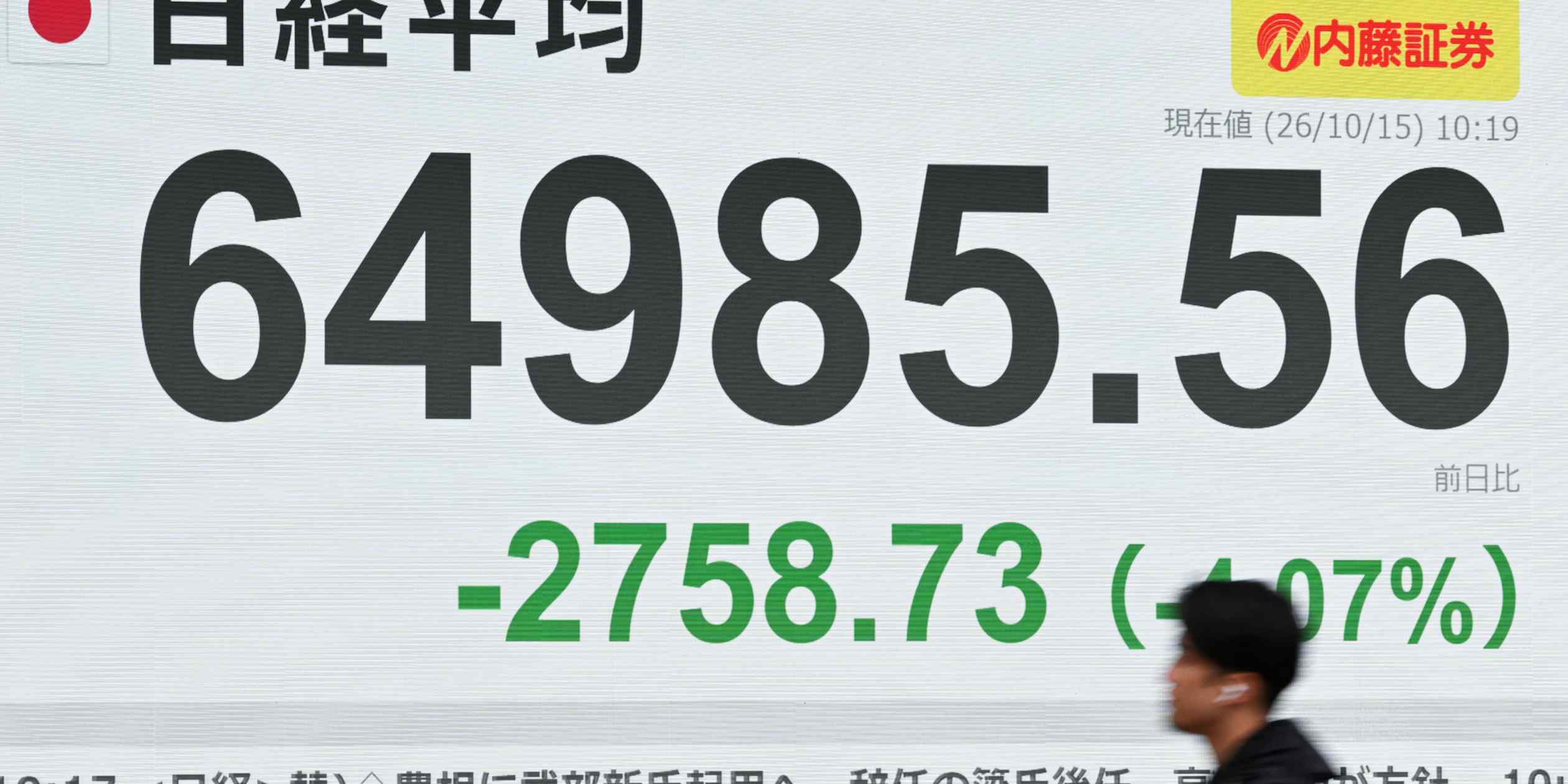
东京/首尔 -- 受美国市场因消费者物价指数高于预期而引发的抛售以及对人工智能投资的担忧影响,亚洲股市周四早盘大幅下挫。
TOKYO/SEOUL -- Asian shares plunged on Thursday morning following a sell-off in the U.S. market sparked by a higher-than-expected consumer price index and worries about artificial intelligence investment.
韩国基准KOSPI指数跌幅超过7%,交易价格跌至7月下旬急跌期间触及的低点5,593.56点以下。
South Korea's benchmark KOSPI index fell more than 7% and was trading under a low of 5,593.56 reached during a sharp decline in late July.
全球最大内存芯片制造商三星电子一度下跌9.9%,而本土竞争对手SK海力士暴跌超过11%。韩国最大汽车制造商现代汽车下跌6.3%,表明抛售正在扩散至非科技板块。
Samsung Electronics, the world's largest memory chipmaker, dropped 9.9% at one point, while local rival SK Hynix plummeted more than 11%. Hyundai Motor, South Korea's biggest automaker, skidded 6.3% lower, suggesting the sell-off is widening into non-tech sectors.
日本基准日经股指平均指数跌幅超过4%,一度跌破65,000点大关。存储芯片制造商铠侠控股下跌11.4%,而芯片工具制造商东京电子下跌7.2%。
Japan's benchmark Nikkei Stock Average fell over 4%, toppling under the 65,000 mark at one point. Memory maker Kioxia Holdings lost 11.4%, while chip-tool maker Tokyo Electron declined 7.2%.
台湾加权指数下跌3.0%,此前台湾积体电路制造股份有限公司(台积电)计划于周四晚些时候公布7月至9月财报。
Taiwan's Taiex dropped 3.0%, ahead of the July-September earnings announcement by Taiwan Semiconductor Manufacturing Co. (TSMC) scheduled for later Thursday.
此前,美国股票因公布的数据显示9月通胀率较8月加速上升而隔夜下跌。通胀担忧的再次升温引发了人们对收益率上升——因而借贷成本增加——可能抑制基础设施投资并提升人工智能相关公司信用风险的担忧。
That came after U.S. stocks fell overnight following the release of data showing the September inflation rate accelerated from August. Renewed inflation fears stoked concerns that rising yields -- and hence higher borrowing costs -- could curb infrastructure investment and boost the credit risk of AI-related companies.
美国纳斯达克指数周三下跌1.8%,而费城半导体板块(SOX)指数跌幅超过4%。
The U.S. Nasdaq fell 1.8% on Wednesday, while the Philadelphia Semiconductor Sector (SOX) index dropped over 4%.
人工智能云服务,即新云(neocloud)服务提供商CoreWeave的股价暴跌超过15%,波及其他新云公司的股票。CoreWeave到2032年到期、票面利率约为10%的债券收益率升至15%。市场对该行业在可能的加息周期中债务上升的担忧正在加剧。
Cloud service for AI, or neocloud, provider CoreWeave's shares dived over 15%, spreading to stocks of other neocloud companies. The yield on CoreWeave's bond maturing in 2032, with a coupon rate of about 10%, hit 15%. Concerns are growing about rising debt in the sector amid a possible rate-hike cycle.
美国10年期国债收益率一度升至5.33%,但随后在纽约时段回落至约5.2%,因为投资者在股价下跌时转向更安全的资产。日本10年期政府债券收益率周四早盘降至2.95%。
The 10-year U.S. Treasury yield rose to as much as 5.33%, but then eased to around 5.2% in the New York session, as investors shifted to the safer asset amid falling stock prices. Japan's 10-year government bond yield dropped to 2.95% on Thursday morning.
负面因素正在科技股上累积。其中关键因素之一是,中国长鑫存储(CXMT)在最近宣布下一代内存芯片设计取得突破后,人们对其崛起的担忧再次升温。与此同时,美国芯片制造商博通(Broadcom)首席执行官谭海仁(Hock Tan)本周强调了投资科技的风险,将其比作“在赌场下注”。半导体公司业绩表现良好。三星的营业利润在第三季度较去年同期增长近九倍,收入更是翻倍至195万亿韩元(约1450亿美元)。随着财报季进入高峰,市场关注的焦点是强劲业绩是否能够消散市场担忧。
Negative factors are piling up for tech shares. Key among them is renewed fear over the rise of China's CXMT after it recently announced a breakthrough in next-generation memory chip design. Meanwhile, the CEO of U.S. chipmaker Broadcom, Hock Tan, this week highlighted the risks of investing in tech, likening it to betting "in a casino." Semiconductor companies are performing well. Samsung's operating profit jumped nearly nine times from a year ago in the third quarter, with revenue more than doubling to 195 trillion won ($145 billion). As the earnings season gets into full swing, the focus is on whether strong results can dispel market concerns.