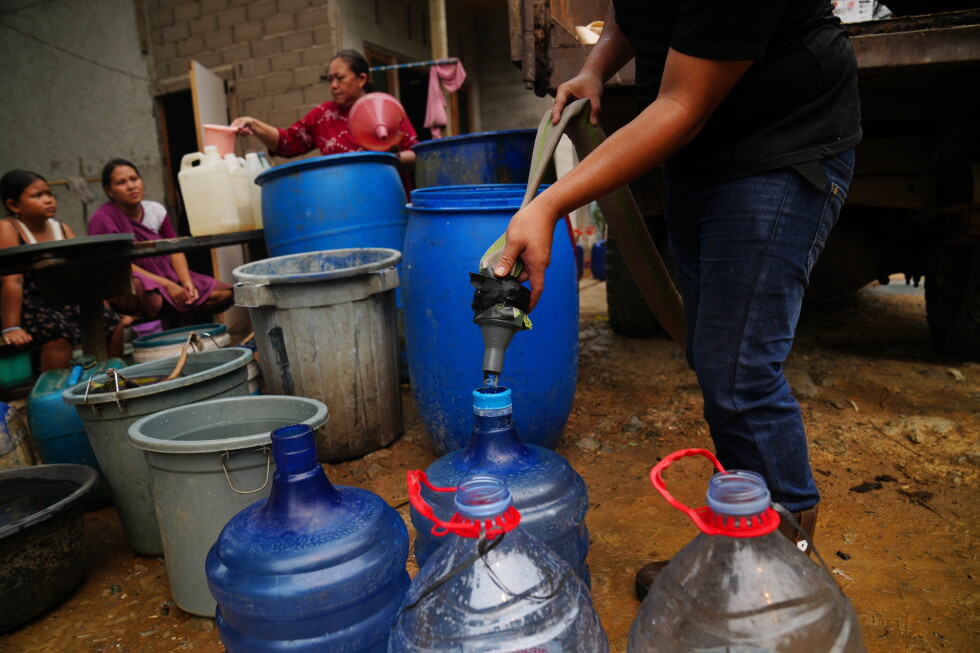
埃德娜·塔里甘(Edna Tarigan)与维多利亚·米尔科·佩内拉迪(Victoria Milko Penyeladi),印度尼西亚——在连续三个月没有降雨之后,居住在婆罗洲热带岛屿佩内拉迪村的店主斯里瓦蒂(Sriwati)再也无法依靠河流来满足自己的生活需求了。斯里瓦蒂是三个孩子的母亲。
EDNA TARIGAN, VICTORIA MILKO PENYELADI, Indonesia — After three months with no rain, Sriwati, a shopkeeper and mother of three children living in Penyeladi village on the tropical island of Borneo, can no longer depend on the river for her needs. Experts say communities like Sriwati’s are facing a severe water crisis as this year’s super El Niño , combined with decades of degradation of the island’s ecologically vital peatlands — ancient wetlands that are critical for carbon storage, water regulation and pollution control — has created the perfect storm exacerbating human-caused climate change.
专家指出,像斯里瓦蒂这样的社区正面临严重的水资源危机:今年的强厄尔尼诺现象,加上该岛生态至关重要的泥炭地(这些古老的湿地对碳储存、水资源调节和污染控制起着关键作用)多年来持续退化,共同引发了这场“完美风暴”,进一步加剧了人为造成的气候变化。
The Kapuas, Indonesia’s longest river that over 3 million people rely on, has extremely receded in the area near her home.
印度尼西亚最长的河流——卡普阿斯河(Kapuas River)在她家附近的河段水位已经大幅下降,只剩下一条浑浊的浅水溪流。这种水既不能饮用,也无法用来清洗她为孩子们准备的食物(比如米饭)。因此,她现在不得不购买水,这进一步增加了她的每月开支。
All that’s left is a shallow stream of muddy water that’s not safe to drink or wash the rice she cooks to feed her children. She now has to buy water, adding to her monthly expenses. “The water shortage affects us, especially when it comes to drinking water,” Sriwati, who like many Indonesians uses only one name, told The Associated Press from her small, concrete home.
“水资源短缺对我们影响很大,尤其是饮用水方面,”斯里瓦蒂告诉美联社。她和许多印度尼西亚人一样,只使用一个名字。她从自己那间简陋的混凝土房子里说道。
El Niño is part of a natural climate cycle of warming ocean temperatures, but this year’s is expected to reach new extremes of drought, heat waves, flooding and other climate-related disruptions across the globe. Meteorologists forecast it could exceed a record El Niño that began in 1997 and helped trigger billions of dollars in damage from heat waves, floods, droughts, tornadoes and wildfires. In Borneo, experts say that because vast peatlands have been destroyed by land conversion, the effects of El Niño are already being more acutely felt.
厄尔尼诺现象属于海洋温度升高的自然气候循环的一部分,但今年的厄尔尼诺现象预计将导致全球范围内出现更极端的干旱、热浪、洪水等气候问题。气象学家预测,其影响可能会超过1997年开始的那次厄尔尼诺现象——那次事件曾引发全球范围内的热浪、洪水、干旱和野火,造成了数十亿美元的损失。
“In Kalimantan, something like 60% of the peatland areas have been drained to make way for palm oil plantations and for pulp and paper concessions,” said Amanda Hurowitz, a senior director at international environmental organization Mighty Earth, using the name for the Indonesia-controlled part of Borneo. “That means the water is not where it should be. There are all these canals, and because the canals are blocked, the water table goes low,” she continued.
在婆罗洲,由于大规模的泥炭地被破坏(主要用于建设棕榈油种植园和纸浆造纸厂),厄尔尼诺现象的影响尤为严重。国际环保组织“Mighty Earth”的高级主管阿曼达·胡罗维茨(Amanda Hurowitz)表示:“在加里曼丹岛(Kalimantan),大约60%的泥炭地已被排干,用于建设棕榈油种植园和纸浆造纸厂。”
“Because it’s so dry, the water has just disappeared.”In a written statement to the AP, Indonesia’s Ministry of Forestry acknowledged the negative impact of drained peatlands, while insisting that specific causes and liabilities must be determined by evidence rather than attributed automatically to El Niño or the presence of businesses.
“在加里曼丹岛,大约60%的泥炭地已经被破坏,用于建设棕榈油种植园和纸浆造纸厂,”阿曼达·胡罗维茨说道。
They added that the government aims to prevent future peatland degradation through ecosystem restoration and strict enforcement of concession holders’ obligations.
“这意味着水没有流到它该去的地方。虽然这里有众多的运河,但由于这些运河被堵塞了,地下水位一直在下降,”她继续说道,“由于天气过于干燥,水已经完全消失了。”印度尼西亚林业部在给美联社(AP)的书面声明中承认了泥炭地被破坏所带来的负面影响,同时强调具体的原因和责任必须通过证据来确定,而不能简单地归咎于厄尔尼诺现象或企业的活动。
“The government’s long-term agenda focuses on preserving and restoring peatland hydrological functions, improving landscape and water management, strengthening fire prevention, and ensuring that all parties managing land fulfill their responsibilities,” they said. Experts say the hot, dry conditions caused by El Niño coupled with peatland degradation have contributed to the enormous fires spreading across Borneo.
声明还指出,政府计划通过生态系统恢复以及严格督促土地特许经营权持有者履行其义务来防止未来的泥炭地退化。
Dried peat is highly flammable, allowing fires to easily spread in drained areas.
“政府的长期目标是保护和恢复泥炭地的水文功能,改善土地管理和水资源利用,加强防火措施,并确保所有土地管理者都能履行自己的职责,”声明中写道。
Because the fires often spread underground, they’re difficult to extinguish and can easily reoccur, according to the Borneo Nature Foundation.
专家表示,由厄尔尼诺现象引起的炎热干燥天气与泥炭地退化共同导致了婆罗洲大规模火灾的爆发。根据婆罗洲自然基金会(Borneo Nature Foundation)的说法,干燥的泥炭具有极高的易燃性,这使得火灾在排水后的区域迅速蔓延;由于这些火灾常常在地下蔓延,因此非常难以扑灭,并且很容易再次发生。
The dwindling water supply in the area has slowed down firefighting efforts, while Japan has deployed firefighting assistance to the island. Toxic thick haze blankets the sky.
该地区日益减少的水资源供应严重阻碍了灭火工作;日本已向婆罗洲派遣了灭火援助力量。
The smoke has drifted as far as the Philippines , more than 800 kilometers (500 miles) away, and breached Malaysia’s emergency-level threshold for air pollution, forcing authorities to declare an emergency last week in a town in Sarawak state on Borneo.
有毒的浓雾笼罩着整个地区,烟雾甚至蔓延到了800多公里(500英里)外的菲律宾,并突破了马来西亚的空气污染紧急警戒线,迫使当地政府上周在婆罗洲砂拉越州的一个城镇宣布进入紧急状态。
In a written statement to the AP, Indonesia’s Ministry of Forestry said the government is shifting its forest and land fire policy toward prevention by strengthening cross-sectoral coordination, enforcing laws against burning-based land clearing, expanding patrols and early detection systems, promoting risk-based monitoring and peatland restoration, and requiring permit holders and communities to take responsibility for fire control.
印尼林业部在给美联社的书面声明中表示,政府正将森林和土地火灾政策的重心转向预防,通过加强跨部门协调、严格执法打击焚烧开垦、扩大巡逻和早期探测系统、推行基于风险的监测和泥炭地恢复,以及要求许可持有者和社区承担防火责任。
“Ultimately, controlling forest and land fires is not the task of a single ministry or institution,” they said.
“归根结底,控制森林和土地火灾并非单一部委或机构的任务,”声明称。“预防需要协同努力。”印尼林业部记录显示,1月至7月间烧毁土地超过20.2万公顷(约49.9万英亩),面积几乎是新加坡的三倍。随着大火持续燃烧、水源依然短缺,社区民众持续遭受痛苦。
“Prevention requires collaborative effort.”Indonesia’s Forestry Ministry recorded more than 202,000 hectares (499,000 acres) of burned land between January and July, almost three times the size of Singapore. As the fires continue to burn and water remains scarce, communities continue to suffer. In Sungai Malaya village in West Kalimantan, fires have burned for over a month, with residents remaining tense around the clock, as fires have sometimes suddenly worsened at night.
在西加里曼丹省的巽他马拉亚村,大火已燃烧一个多月,村民们昼夜提心吊胆,因为火势有时会在夜间突然恶化。
Fires have decimated the vacant lots where Rumsiyeh, a 45-year-old mother of five children, and her husband picked ferns to sell at the market.
大火毁掉了45岁、育有五个孩子的母亲Rumsiyeh和丈夫采摘蕨类植物在市场出售的空地。“一切都没了。我们没法谋生了,”她说。
“Everything’s gone. We can’t make a living anymore,” she said. Boaters, fishers and others who rely on the river have had their livelihoods impacted, as extremely low water levels mean it’s impossible to fish or travel on the Kapuas.
依靠河流生存的船工、渔民等生计受到冲击,卡普阿斯河水位极低导致无法捕鱼或航行。在水位尚可通航的河段,浓烟阻碍视线,39岁的渔民Abiansah表示航行极其危险。
In the areas where there’s enough water for boats to operate, the thick haze hampers visibility, making it dangerous to operate, fisherman Abiansah, 39, said. And the national economic impact remains unmeasured: Large metal barges that usually carry oil palm tree kernels for processing downriver currently lie aground on the sand, as children swing from their untied mooring lines.
国家层面的经济损失尚未评估:平日运送油棕果实下游加工的大型金属驳船目前搁浅在沙滩上,孩子们荡着未系好的缆绳玩耍。
Some relief has come from private and government water donations, but residents still fear what the future holds.
尽管私人和政府捐赠的水源提供了一些缓解,但居民仍对未来感到担忧。
“I’m worried about this prolonged dry spell. It’s reached the point where just going about our daily activities — going anywhere at all — has become difficult. We’re facing water shortages, too,” said Sriwati.
“我担心这场持续的干旱。情况已经到了这样一个地步:仅仅进行日常活动——去任何地方——都变得困难。我们也面临水资源短缺,”斯里瓦蒂说。“我无法用语言来形容。”米尔科在伊斯兰堡发稿。
“I’m at a loss for words to describe it.”Milko reported from Islamabad.