布鲁诺·S·塞尔吉是哈佛大学可持续性与全球发展实践研究生项目的讲师。凯文·陈是Horizon Financial的首席经济学家兼首席投资官,同时也是CoinBridge的合伙人兼首席投资官,专攻全球宏观经济学、资产配置和数字资产。
Bruno S. Sergi is an instructor at Harvard University's sustainability and global development practice graduate programs. Kevin Chen is the chief economist and CIO of Horizon Financial and partner and CIO of CoinBridge, specializing in global macroeconomics, asset allocation and digital assets.
围绕人工智能的争论日益被描绘为美国创新与中国模仿之间的较量。但这一分歧已不再具有现实意义。在整个亚洲,决定性的问题正逐渐从“谁能够构建出最佳模型”,转变为“谁能够真正运用这些模型”。
The debate over artificial intelligence is increasingly framed as a contest between American innovation and Chinese imitation. But that is no longer the relevant divide. Across Asia, the decisive question is becoming not who builds the best model, but who can actually use one.
今年7月,许多非人工智能领域商界领袖此前几乎从未听过的中国模型——包括Moonshot的Kimi和阿里巴巴最新发布的Qwen——问世了,但相较于西方同类产品,这些模型附带的文档和公开基准测试要少得多。市场对此的反应是质疑一个长期存在的假设:即最强大的系统仍将保持昂贵、源自美国且资源稀缺。
In July, Chinese models that many business leaders outside the AI sector had barely heard of, including Moonshot's Kimi and Alibaba's latest Qwen releases, arrived with far less documentation and public benchmarking than their Western counterparts. Markets responded by questioning a comfortable assumption: that the most capable systems would remain expensive, American and scarce.
买方市场正在重新审视这一判断。被重新定价的,正是稀缺性本身。此前的投资组合都是基于这样一种理念构建的:前沿人工智能技术仍将集中在少数几家美国公司手中。如今,这一假设显得不再那么稳固。
re watching that reassessment from the buy side. What was being repriced was scarcity itself. Portfolios had been built around the idea that frontier AI would remain concentrated in a handful of U.S. firms. That assumption looks less secure today.
这一转变有助于解释一个数月来已有记录的现象:尽管华盛顿仍专注于出口管制,但亚洲大部分地区正将重点从技术来源转向实际应用。
That shift helps explain something that been documented for months while Washington remains focused on export controls: much of Asia is concentrating on adoption rather than origin.
新加坡的国家人工智能计划“AI Singapore”最近发布了Qwen-SEA-LION-v4,这是一个基于阿里巴巴开源Qwen模型构建的东南亚多语言模型。柬埔寨、印度尼西亚、老挝、马来西亚和缅甸也加入了中国在上海成立的新世界人工智能合作组织。北京方面已承诺提供数千个人工智能培训机会,并建立一个国际人工智能合作中心网络。
Singapore's national AI program, AI Singapore, recently released Qwen-SEA-LION-v4, a Southeast Asian multilingual model built on Alibaba's open Qwen foundation. Cambodia, Indonesia, Laos, Malaysia and Myanmar joined China's new World AI Cooperation Organization in Shanghai. Beijing has promised thousands of AI training opportunities and a network of international AI cooperation centers.
正如一位中国官员所说,开源模型为那些希望构建适应本地语言的主权人工智能系统的国家提供了重要基础。无论对北京的动机作何评价,其吸引力都是显而易见的。
As one Chinese official put it, open-source models provide an important foundation for countries seeking sovereign AI systems tailored to local languages. Whatever one thinks of Beijing's motives, the appeal is obvious.
德国巴登-符腾堡州的一家中型制造商、雅加达的一家银行或曼谷的一家医院集团,如今无需再许可使用美国的前沿系统即可开始部署。他们可以下载能力日益强大的开源模型,在本地运行,并将敏感数据保留在国内。
A midsize manufacturer in Germany's Baden-Wurttemberg, a bank in Jakarta or a hospital group in Bangkok no longer needs to license a frontier American system to begin deployment. They can download an increasingly capable open model, run it locally and keep sensitive data at home.
华盛顿的倾向往往是进一步筑高壁垒。英伟达首席执行官黄仁勋认为,美国更大的风险并非在于构建强大的人工智能系统,而在于未能广泛部署这些系统。尽管他本人从这一结果中受益,但他的诊断是正确的。
Washington's instinct is often to build the wall higher. Nvidia chief executive Jensen Huang has argued that America's greater risk is not building powerful AI systems, but failing to deploy them widely. He is right on the diagnosis, even if he has an interest in the outcome.
双方争论的焦点都错了。限制派认为,通过禁止出口可以维持优势;加速派则认为,监管会扼杀这一优势。然而,实际上阻碍发展的法规却少得惊人。美国没有全面的人工智能联邦法律;日本有人工智能指南;新加坡有相关框架。几乎没有任何法律会阻止医院、保险公司或工厂明天就部署人工智能。
Both parties are fighting over the wrong obstacle. Restrictionists believe advantage is preserved through denial. Accelerationists believe it is smothered by regulation. Yet there is remarkably little regulation standing in the way. The U.S. has no comprehensive federal AI statute. Japan has AI guidelines. Singapore has a framework. Almost nothing legally prevents a hospital, insurer or factory from deploying AI tomorrow.
但即便如此,他们也没有部署,原因也过于平淡无奇,难以登上头条新闻:在大阪或波士顿,患者的病历无法在两家不同科室之间流转;采购周期以季度或财年来计算;老旧系统让试验变得困难;风险管理流程也停留在另一个时代。
They are not deploying anyway, and for reasons too mundane to dominate headlines. Patient records that cannot move between two wards of the same hospital in Osaka or Boston. Procurement cycles measured in quarters or fiscal years. Legacy systems that make experimentation difficult. Risk management processes designed for another era.
2026年9月15日,英伟达首席执行官黄仁勋在旧金山参加完Dreamforce 2026峰会后离场。
Nvidia CEO Jensen Huang departs after taking part in the Dreamforce 2026 summit in San Francisco on Sept. 15, 2026.
这些问题都不是模型本身的问题,而是组织层面的问题。任何出口管制都无法解决这些问题。
None of this is a model problem. All of it is an organisational problem. No export control will fix it.
经济史在这方面给出了残酷的教训:电力在19世纪90年代便进入了美国工厂,但生产力提升却花了数十年时间——因为只有在工厂拆除中央传动轴并围绕电动机重新组织生产流程后,电力才能真正发挥作用。计算机技术的发展也遵循类似规律。几十年来,日本各界一直在探讨数字化转型问题,对这一规律自然深有体会。
Economic history is brutal on this point. Electricity reached American factories in the 1890s but productivity gains took decades because the benefits came only after factories tore out central drive shafts and reorganized around electric motors. Computing followed a similar pattern. Japan knows this story well through decades of discussion about digital transformation.
通用型技术只有在相关机构围绕其进行重组时才能创造价值,而非仅仅在技术发明问世之时。这种重组过程缓慢且缺乏吸引力,而这场竞争的胜负恰恰就取决于此。
General-purpose technologies create value when institutions reorganize around them, not when the invention first arrives. That reorganization is slow, unglamorous and precisely where this contest will be decided.
也正因如此,开放模式具有重要的战略意义。关键不在于中国开发的系统是否易于获取,而在于广泛采用的技术能否催生出完整的生态系统。随之而来的往往是各类软件工具、开发者社群、培训项目以及技术标准。那些依赖某一特定生态系统的国家,其制度体系也会逐渐被该系统的运行逻辑所影响。我们常提醒各方:最初开发前沿人工智能模型时,其定位本就是开放且免费的,目的是解放人力、提升全民生活水平。
This is also why open models matter strategically. The issue is not simply that Chinese systems are available. It is that ecosystems form around widely adopted technologies. Software tools, developer communities, training programs and technical standards often follow. Countries that become dependent on one ecosystem may gradually find its assumptions embedded in their institutions as well. We like to remind everyone that when AI frontier models were initially developed, it was supposed to be open and free. It was designed as a way to free up human work and increase the living standard for all.
显然,如今人工智能已不再免费。所幸的是,黄仁勋、杨立昆、萨提亚·纳德拉、苏姿丰等业界领袖与研究者一直在呼吁人工智能模型应当保持开放。
Obviously, AI is not free now. Fortunately, we have leaders and researchers like Jensen Huang, Yan LeCun, Satya Nadella and Lisa Su that called for AI models to be open.
因此,对东京、雅加达和华盛顿而言,最具实际意义的政策议题其实相当具体:公立医院能否在一年内采购到合适的人工智能系统?各政府部门是否拥有足够干净、可用于训练模型的数据?是否存在可靠的框架来验证医疗、工业或信贷领域的AI模型,从而让相关应用决策成为专业层面的考量而非职业风险?
The most useful policy questions for Tokyo, Jakarta and Washington are therefore surprisingly narrow. Can a public hospital procure an AI system in under a year? Do ministries possess data clean enough to use one effectively? Is there a trusted framework for validating clinical, industrial or credit models so that adopting them becomes a professional decision rather than a career risk?
同样的问题也存在于工厂车间中。未来人工智能在生产力提升方面的进展,不太可能再源于某项基准测试结果的突破。更有可能的情况是:制造商重新设计工作流程、实现常规流程自动化,并将人工智能深度融入日常运营之中。
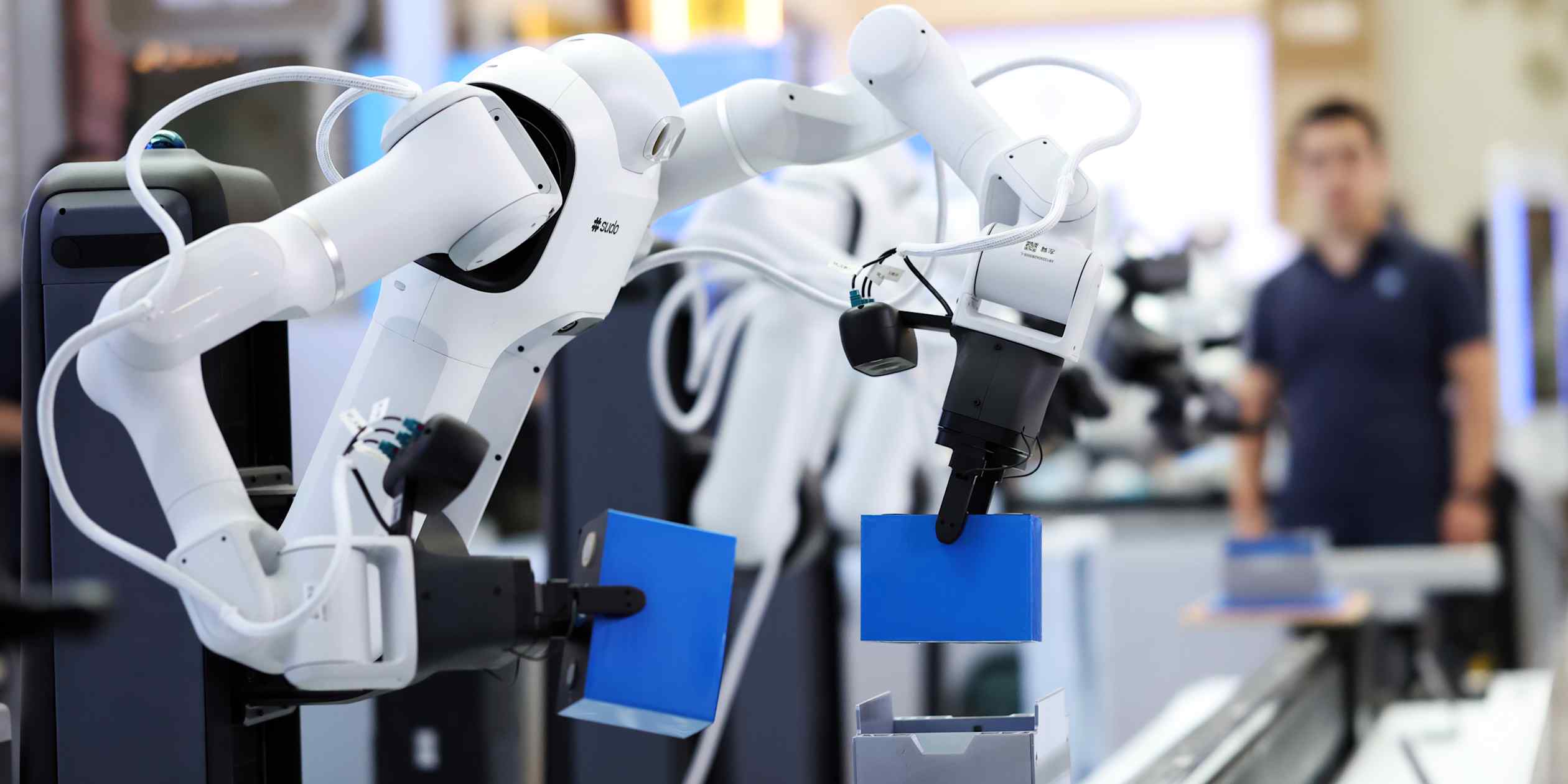
The same questions apply on factory floors. The next productivity gains in AI are unlikely to come from another benchmark result. They are more likely to come from manufacturers redesigning workflows, automating routine processes and integrating AI into day-to-day operations.
针对最敏感的技术实施定向管控或许有其必要性,但全面封锁则不可取——尤其是当由此赢得的时间并未被用于加速本国技术的应用推广时。
Targeted controls on the most sensitive technologies may have a place. Blanket containment does not, particularly if the time gained is not used to accelerate domestic adoption.
英国之所以能在工业革命中占据主导地位,并不仅仅是因为发明了蒸汽机,而是因为它围绕这一技术构建了整个经济体系。人工智能的发展同样遵循这一规律。在人工智能时代,胜出者未必是那些开发出最先进模型的国家,而很可能是那些能最快调整自身体制架构的国家。
Britain did not dominate the industrial revolution simply because it invented the steam engine. It built an economy around it. The same principle applies to artificial intelligence. The winners of the AI age may not be the countries that build the most advanced models. They may be the countries that redesign their institutions fastest.
这场竞赛早已拉开帷幕,而且其主战场并非实验室,而是亚洲各国的采购部门、工厂车间以及医疗体系。
That contest is already underway, and it is being fought less in research laboratories than in procurement offices, factory floors and hospital systems across Asia.