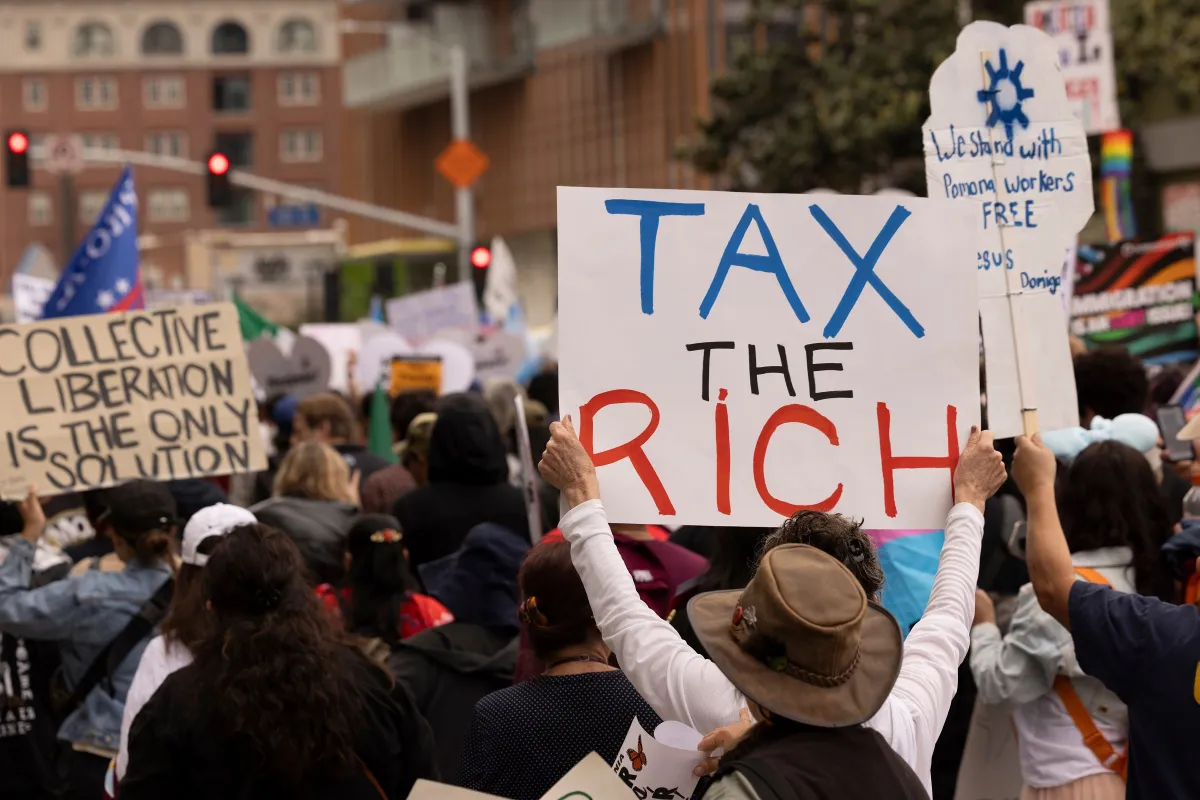
美国人对人工智能的厌恶情绪——以及与之密不可分的极端财富集中现象——正随着11月中期选举的临近而升温。
America’s disgust with AI — and the extreme wealth concentration with which it’s inextricably entwined — continues to rise ahead of the midterm elections in November.
根据华尔街日报的民意调查,令人震惊的是,目前有63%的美国成年人支持暂停人工智能的发展。其中有57%的人表示美国政府应该立即对人工智能进行监管,而仅有12%的人表示信任人工智能公司“带头”自我监管。
According to polling by the Wall Street Journal, a staggering 63 percent of adults in the US now support a pause on AI. A full 57 percent say the US government should regulate AI “immediately,” while a rock bottom 12 percent said they trusted AI companies to “take the lead” and regulate themselves.
当然,任何关于人工智能的讨论都必须面对资助这项技术的荒唐财富,既包括用来建造数据中心的资本投入,也包括急于将人工智能推向市场的科技 executives 的个人财富。或许并不奇怪的是,选民们清醒地认识到这一联系——他们普遍希望对国内的亿万富翁进行约束,这些亿万富翁名下的财富总和超过了57%的美国家庭。
Of course, any discussion of AI has to contend with the obscene wealth underwriting the tech, both literally in the form of capital deployed to build data centers, and in the personal fortunes of the tech executives rushing AI to market. Perhaps unsurprisingly, voters are keenly aware of this link — showing an overwhelming preference for reining in the country’s billionaires, who collectively own more wealth than 57 percent of US households.
华尔街日报调查的另一部分内容显示,在9月下旬对1500名选民进行的问卷调查中,优先考虑集体劳动人民利益而非少数亿万富翁的政策主张,在民主党、共和党和独立选票中都获得了巨大的支持。
Another section of the WSJ survey, which polled a total of 1,500ed voters in late September, found that policy ideas that prioritize the collective working class over a handful of billionaires have huge support among Democrat, Republican, and independent voters.
例如,一项禁止意外医疗账单的法案获得了90%的受访者的支持;而对净资产超过10亿美元的美国人的新联邦财富税也获得了61%的参与者的支持。一项要求医疗保险公司覆盖医生开具的所有服务和药品的立法获得了88%的支持,87%的人希望上限处方药的最高价格。另外有79%的人支持将信用卡利率限制在10%以内。
A law to ban surprise medical bills, for example, has support from 90 percent of respondents, while a new federal wealth tax on Americans with a net worth of over $1 billion has support from 61 percent of participants. Legislation mandating health insurance companies cover all services and medicine prescribed by doctor has support from 88 percent, and 87 percent want to cap the maximum price of prescription drugs. A further 79 percent are in favor of limiting credit card interest rates to 10 percent.
“我们喜欢把世界看成是保守派和自由派,”民主党民意调查专家约翰·安索诺斯告诉华尔街日报。“也许我们应该开始从另一个角度来看待世界: populism 是民主党和共和党这两个选票群体中的主导意识形态。”
“We love to think about the world as conservative and liberal,” Democratic pollster John Anzalone told the WSJ. “Maybe we should start thinking about the world as: populism is a dominant ideology in both the Democratic and Republican” voting blocs.
这些立法提案本身不太可能扭转美国工人阶级的命运。但鉴于绝大多数选民的强烈支持,这很明显表明普通民众正遭受着越来越难以忽视的痛苦,这些痛苦与科技精英所积累的巨额财富之间渐行渐远。
None of these legislative proposals are likely to reverse the fortunes of America’s working class on their own. But given the overwhelming support from the vast majority of voters, it’s clear the average Joe is hurting in ways that are increasingly difficult to separate from the vast wealth accumulated by the tech elite.
话虽如此,但这些爆炸性的民调结果有一个简单的解释:我们的观念是由我们的物质生活状况塑造的,而对于美国的工人来说,这种状况在越来越多的方面变得日益复杂,难以一一应对。正如安扎隆诺所说:“当你觉得买不起房子,或者觉得难以进步时,你会突然对自己以前可能从未想过会支持的政策产生吸引力。”
That said, there’s a simple explanation for the explosive poll results: our ideas are shaped by our material reality, which for working Americans has become increasingly fraught in so many ways it’s impossible to keep track. As Anzalone puts it, “when you feel like you can’t buy a home, or you feel like you can’t get ahead, you will all of a sudden be attracted to policies you never thought you would be attracted to.”