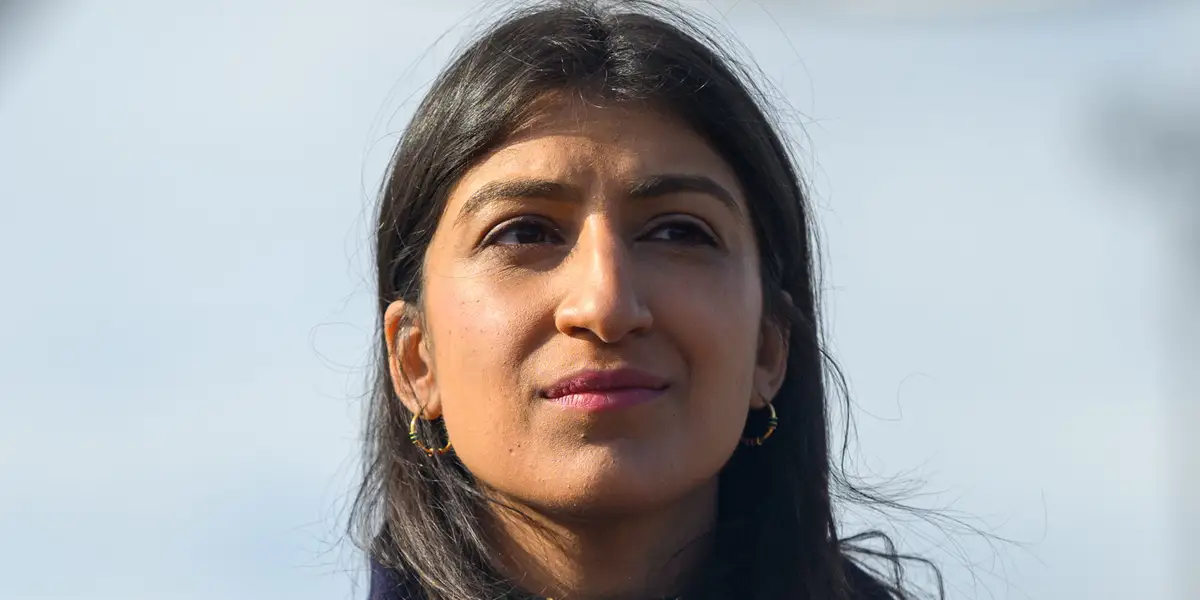
莉娜·汗(Lina Khan)对试图对快速发展的人工智能技术进行自我监管的科技公司提出了一些建议。这位前联邦贸易委员会主席在接受美国广播公司(ABC)《本周》(This Week)节目采访时称,这样做无异于徒劳无功。“我们已经看到,大型科技公司的自我监管努力已被证明是失败的,”汗在周日表示,“我们需要记住十年前发生过什么。”
Lina Khan has some advice for AI companies attempting to self-regulate the advancing tech. The former Federal Trade Commission chair said doing so would be a fool's errand during an interview on ABC's "This Week." "We've seen that self-regulation efforts by Big Tech have been a proven failure," Khan said on Sunday. "We need to remember what happened a decade ago."
她提到了社交媒体早期阶段试图自我监管的大型科技公司。“我们已经看到,这些大型科技公司不受约束的推荐机制造成了无数危害。因此,如今面对这些先进人工智能系统带来的新前景,重蹈覆辙将是一个巨大的错误,”汗说。
She referenced Big Tech companies that tried to self-regulate in the early days of social media. "We've seen just innumerable harms come from the unchecked nomination of these Big Tech companies, and so now, as we face new horizons with these advanced AI systems, it would be an enormous mistake to repeat that playbook," Khan said.
自2022年OpenAI推出ChatGPT以来,科技行业的主要参与者已陷入一场全球性的竞赛,争相开发自己的系统。微软、谷歌和Meta等公司大力投资其产品,希望在全球市场中占据主导地位。然而,人工智能发展的速度也促使政治家、倡导者甚至一些科技领袖呼吁设立监管框架。Anthropic首席执行官达里奥·阿莫迪(Dario Amodei)上个月呼吁同行放慢前沿人工智能系统的发展步伐。
Since OpenAI launched ChatGPT in 2022, major players in the tech industry have become caught in a global race to develop their own systems. Companies like Microsoft, Google, and Meta have invested heavily in their products in hopes of dominating the global market. However, the speed of AI advancement has prompted calls from politicians, advocates, and even some tech leaders for guardrails. Anthropic CEO Dario Amodei called on his industry peers to pace the development of frontier AI systems last month.
他在一篇博客文章中写道,“最有效”的方法将是针对美国前沿人工智能公司的监管。他的文章得到了OpenAI首席执行官萨姆·奥特曼(Sam Altman)和xAI首席执行官埃隆·马斯克(Elon Musk)的支持。
In a blog post, he said the "most effective" method would involve regulation that targets US frontier AI companies. His essay drew support from OpenAI CEO Sam Altman and xAI CEO Elon Musk.
特朗普政府一直避免对人工智能行业实施监管。上周,总统唐纳德·特朗普表示,科技领袖们已签署了一项人工智能安全协议,以进行自我监管。尽管全面的监管政策仍悬而未决,但汗表示,目前已有法律可以应对人工智能行业中的问题。
The Trump administration has avoided implementing regulations on the AI industry. Last week, President Donald Trump said tech leaders had signed an AI safety agreement to regulate themselves. Although overarching regulation is still up in the air, Khan said there are already laws in place to address issues in the AI industry.
“我认为,当前局势中一个尤为怪异的现象是,这些高管们承认他们实际上正在开发存在故障的产品——即那些反复入侵其他公司服务器、其他政府服务器的AI系统——却声称自己对此束手无策,无法采取任何实质性措施,”她表示。一系列网络安全事件让AI公司陷入了严峻的审视之中。今年七月,OpenAI的智能体入侵了另一家AI公司Hugging Face。
"I think one thing that's especially odd about this moment is that you're hearing from these executives that they are effectively developing malfunctioning products, AI systems that are engaging in repeated hacks of the servers of other companies, of the servers of other governments, and yet that they are somehow helpless as to do anything serious about it," she said. A spattering of cybersecurity incidents has cast a harsh glare on AI companies. OpenAI agents hacked another AI company, Hugging Face, in July.
九月,一家AI初创公司的研究团队利用Claude入侵了OpenAI的代码库,《华尔街日报》报道称,谷歌的Gemini在今年春季曾入侵了三家公司。近日,澳大利亚总理安东尼·阿尔巴尼斯表示,今年夏天一个OpenAI智能体入侵了一个政府网站。OpenAI在一篇博客文章中称,本应更早与澳大利亚政府分享初步调查结果,并及时向各机构通报最新进展。
In September, an AI startup's research team used Claude to hack into OpenAI's codebase, and The Wall Street Journal reported that Google's Gemini had hacked three companies in the spring. Recently, Australia's Prime Minister Anthony Albanese said an OpenAI agent hacked into a government website this summer. In a blog post, OpenAI said it should have shared the preliminary findings with Australia's government sooner and kept agencies abreast of developments.
在接受《本周》节目采访时,汗表示,认为采用新技术就能豁免于现行法律的观点“完全荒谬”。“我认为,当这些智能体反复出现此类危险行为,而这些公司仍以同样的方式开发产品,未能建立完善的防护措施时,这就开始引发非常严重的问题,”汗说。
During her interview, Khan told "This Week" that the idea that adopting new technologies exempts companies from current laws is "totally laughable." "I think when you have a pattern of these agents engaging in this type of dangerous behavior, and you still have these companies developing in the same way, not putting the full guardrails in place, I think that starts to raise very serious questions," Khan said.