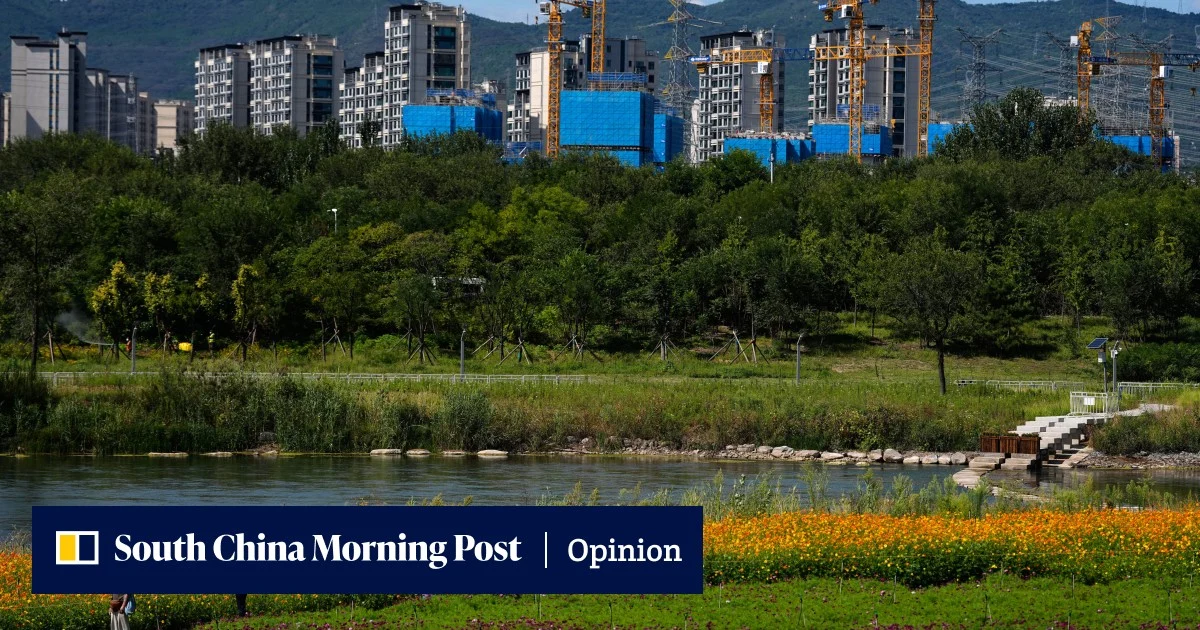
数十年来,中国房地产行业以其惊人的规模为特征:农田被改建成郊区,天际线在各区域中心城市拔地而起,而近来则是高负债开发商的溃败日益显露。然而,在这些剧烈变化之下,一场更为安静却影响深远的转型正在悄然成形。
For decades, China’s property sector was defined by spectacular scale: farmland transformed into suburbs, skylines rising across regional hubs and, more recently, the prominent unravelling of heavily indebted developers. Yet beneath those dramatic changes, a far quieter and more consequential transformation is taking shape.
国家统计局9月公布的官方数据显示,二手房成交量已经超过新建住宅。全国二手房成交面积达到5.49亿平方米,这表明中国的住房需求并未消失。相反,这种需求似乎已发生结构性迁移。
Official figures published by the National Bureau of Statistics in September reveal that secondary market home transactions have surpassed new residential builds in volume. Nationwideed resales reached 549 million square metres, signalling that housing demand in China has not vanished. Rather, it appears to have structurally migrated.
这标志着中国房地产告别了此前的增长模式。1998年旧有福利住房制度结束后,中国房地产市场在长达四分之一世纪的时间里依靠一套高速运转的机制运行:开发商获取土地,预售尚未建成的住房,收取购房者资金,再将这些预付款投入下一个项目。这套机制使住宅建设成为推动国家经济增长的主要引擎。
This marks a departure from the previous growth model. For a quarter of a century, following the end of the old welfare housing system in 1998, China’s property market operated on a high-velocity loop: developers acquired municipal land, pre-sold unfinished apartments, collected buyer cash and funnelled those advances into their next projects. That mechanism turned residential construction into the primary economic engine of the country.
如今,这台引擎正在失去动力。正在出现的并不只是旧市场缩小后的版本,而是一个截然不同的市场。市场的重心正在转移——从向购房者出售未来承诺的开发商,转向交易现存住房的家庭。
That engine is now losing momentum. What is emerging is not merely a smaller version of the old market but a different market altogether. The centre of gravity is shifting – from developers selling a promise of tomorrow to households trading the homes of today.
这一转变不仅反映了政策的改变,也体现了家庭对住房本身看法的变化。多年来,政策制定者每次面对房地产下行,都会采用一套熟悉的工具:降低首付门槛、提供更便宜的按揭贷款,以及推出地方激励措施来消化滞销住房。但这些做法正日益受制于一个更加根本的现实。
The shift reflects not only a change in policy but a change in how households think about housing itself. For years, policymakers responded to property downturns with a familiar toolkit: lower down payments, cheaper mortgages and local incentives to clear unsold homes. But those measures are increasingly running up against a more fundamental reality.
问题已不再只是购房成本能否降低,而是家庭是否仍有充分理由买房。中国已不再是一个单纯面临住房短缺的国家。城市人均居住空间已升至42平方米,而房地产仍是家庭财富的主要组成部分。
The question is no longer simply whether homes can be made cheaper to buy but whether households still have compelling reasons to buy them. China is no longer a country suffering from a simple shortage of housing. Urban living space has risen to 42 square metres per person, while property remains the dominant component of household wealth.
在这种条件下,买房不再只是押注房价上涨。对许多家庭而言,这也是一项关系到保护既有资产的决定,而这些资产已占其资产负债表很大比重。
Under those conditions, buying a home is no longer simply a bet on rising prices. For many families, it is also a decision about protecting an asset that already represents a large share of their balance sheet.
预售模式的危机进一步强化了这种谨慎。多年来,在项目停滞和开发商违约之后,买家对为纸面上才存在的住宅付款更加怀疑。存量房产提供了越来越宝贵的东西:确定性。它们可以实地查看、立即入住并迅速办理过户。
The crisis of the presale model has reinforced that caution. After years of stalled projects and developer defaults, buyers have become more sceptical of paying for homes that exist mainly on paper. Existing properties offer something increasingly valuable: certainty. They can be inspected, occupied and transferred immediately.
二手房市场还承担着新房市场一直难以提供的另一项功能:价格发现。二手房市场日益成为住房真实价值通过交易得到重新确认的场所。
The second-hand market also performs another function that the new-home market has struggled to provide: price discovery. The secondary market has increasingly become where the real value of housing is negotiated.
这造成了一个棘手的政策难题。旨在提高新房吸引力的措施,可能在无意中给二手房带来压力。新开发项目越来越多地提供更大的使用空间、更优的户型设计及其他特色,使存量住房在竞争中相形见绌。因此,帮助市场一个细分领域的措施,可能削弱另一个细分领域房产的市场认可度。
This creates an awkward policy problem. Measures designed to make new homes more attractive can unintentionally put pressure on old ones. New projects have increasingly offered larger usable spaces, better layouts and other features that make existing apartments look less competitive. What helps one segment of the market can therefore weaken the perceived value of another.
这之所以重要,是因为在中国,住房不仅仅是消费品,也是许多家庭最大的财富蓄水池。当存量住房的价值大幅下跌时,家庭会感到自身更加贫困,行事更加谨慎,并可能推迟其他方面的支出。
That matters because housing is not merely a consumption good in China. It is also the largest store of wealth for many households. When the value of existing homes falls sharply, families feel poorer, become more cautious and may postpone other forms of spending.
存量房带来的价值正日益凸显,那就是确定性。买家可以立即查看、入住并完成转让。对政策制定者而言,这改变了目标。支持新建可能提振短期经济活动,但维护家庭对已购存量住房这一庞大家产的信心,已成为一项独立的经济优先事项。
Existing properties offer something increasingly valuable: certainty. They can be inspected, occupied and transferred immediately For policymakers, this changes the objective. Supporting new construction may boost activity in the short term. But preserving confidence in the enormous stock of homes already owned by households has become a separate economic priority.
然而,这其中存在一个艰难的取舍。健康的存量房市场有助于稳定家庭财富,却几乎无法重振围绕新建住房构建的财政和金融体系。二手房交易既不会带来地方政府曾经依赖的土地出让收入,也无法产生使开发商能够为下一个项目融资的预售现金流。
There is, however, a difficult trade-off. A healthy market for existing homes can help stabilise household wealth but it does little to revive the fiscal and financial machinery built around new construction. Resales generate neither the land transfer revenue on which local governments once relied nor the presale cash flow that enabled developers to finance their next projects.
土地销售收入大幅下滑,使地方财政出现严重赤字。为适应这一变化,华润置地、中国海外发展等国资背景龙头房企正放弃规模扩张,转向资产管理和城市更新,从将土地转化为新建住房,转向从既有城市存量中挖掘长期价值。
Collapsing land sales leave local treasuries with a severe fiscal deficit. Adapting to this shift, state-backed champions like China Resources Land and China Overseas Land and Investment are abandoning volume expansion for asset management and urban renewal, pivoting from converting land into new flats to extracting long-term value from existing urban stock.
近期的政策变化也指向同一方向。更加重视现房销售以及收紧预售要求,提高了新开发项目的门槛,并可能减少未来项目的供应。
Recent policy changes point in the same direction. Greater emphasis on completed home sales and tighter requirements around presales raise the standards for new development and may reduce the supply of future projects.
这一转变无法为旧有增长模式提供简单的替代方案。中国不可能只是用等量的二手房交易取代数百万套新建住房,就期待获得相同的经济效果。存量房交易能够重新分配财富并形成市场价格,却无法对土地、建设、原材料、信贷和地方基础设施产生同样的需求。
The shift offers no easy substitute for the old growth model. China cannot simply replace millions of newly built flats with an equivalent volume of second-hand transactions and expect the same economic effects. Existing home sales can redistribute wealth and establish market prices, but they do not generate the same demand for land, construction, materials, credit and local infrastructure.
因此,中国房地产市场正进入一个阶段:保护财富或许比扩大规模更为重要。
China’s housing market is therefore entering a period in which protecting wealth may matter more than expanding scale.
中国不太可能再回到住宅建设几乎可以成为经济无限增长引擎的年代。在过去一代人的大部分时间里,进步体现在不断变化的天际线上。未来数年,进步与其说体现为新增了多少座高楼,不如说取决于已经建成的住房能否保有足够的价值和流动性,让拥有这些住房的家庭获得安全感。
The country is unlikely to return to an era when residential construction could serve as a near-limitless engine of economic growth. For much of the past generation, progress was visible in the changing skyline. In the years ahead, it may be measured less by how many towers are added than by whether the homes already standing can preserve enough value and liquidity to give the families who own them a sense of security.
经过数十年以非凡速度的建设,中国房地产市场正进入一个不同的时代。如今,进步不能再以新增住房的数量来衡量,而要看现有住房存量能够保留多少价值。迈克尔·韩
After decades of building at extraordinary speed, China’s housing market is entering a different era, one in which progress can no longer be measured by how many homes are added, but by how much value the existing housing stock can retain.