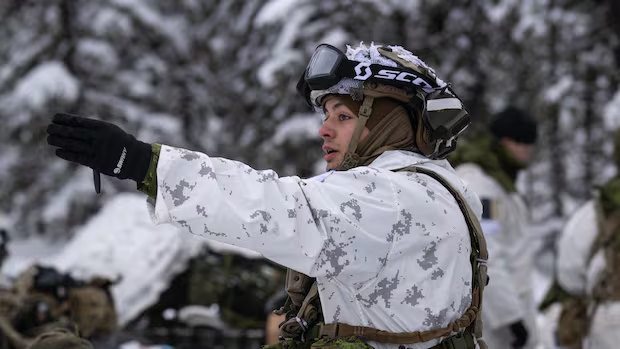
加拿大国防部的一系列内部文件显示,去年冬季加拿大部队在与美国军队于阿拉斯加进行的一次重大训练演习中,面对严酷环境时准备不足,且装备偶尔不达标。
A series of internal Department of National Defence documents suggest Canadian troops were ill-prepared and occasionally ill-equipped for the harsh conditions they faced last winter during a major training exercise with American forces in Alaska.
加拿大广播公司(CBC)新闻获得的评估报告表明,军方在重建其北极防御能力方面仍有大量工作要做,前路漫漫。
The evaluation reports, obtained by CBC News, show the military has a lot to learn and a long way to go to rebuild its capability to defend the Arctic.
此次训练涉及第3皇家加拿大团(3RCR)第3营的400多名成员。今年2月,在阿拉斯加费尔班克斯以北的联合太平洋多国战备中心举行的“全球响应”演习中,该营被编入一个规模大得多的美国陆军旅。
The training involved over 400 members of the 3rd Battalion Royal Canadian Regiment (3RCR) which was folded into a much larger U.S. Army brigade during Exercise Global Response in February at the Joint Pacific Multinational Readiness Center, north of Fairbanks, Alaska. The Carney government has committed to an almost year-round presence in the Far North and the reports indicate, among other things, that troops will need to learn to rely less on technology and more on basic skills in order to fight and survive, according to defence experts.
卡尼政府已承诺在远北地区保持几乎全年无休的存在。据国防专家称,报告指出,士兵们需要学会更少依赖技术,更多依靠基本技能,以便在严酷环境中作战和生存。
Cold front: Inside NATO's race to secure the Arctic Separate Canadian and American evaluations were prepared and both show a litany of concerns that raise questions about how prepared troops and their equipment are to fight in harsh conditions, where the temperatures plunge below –30 C. "Throughout their stay in the waiting area the Coy [Company] consistently demonstrated a lack of preparations needed to live in Arctic conditions," said an undated Canadian evaluation, which assessed individual companies within the battalion.
冷锋:北约争夺北极安全控制权内幕 加拿大和美国分别制定了独立的评估报告,两者均列出了一系列令人担忧的问题,引发了对部队及其装备在气温骤降至零下30摄氏度以下的严酷环境中作战准备程度的质疑。
Carney's $35B plan is 'a start' for Arctic security: former Canadian top soldier March 13 Duration The report was critical of a recent initiative which allowed the regiment to purchase off-the-shelf civilian equipment to augment military cold-weather gear — something that created problems.
一份未注明日期的加拿大评估报告对营内的各个连队进行了评估,其中写道:“在整个等待区停留期间,C连(Coy)始终表现出缺乏在北极条件下生活所需的准备工作。”
"This was evident when observing soldiers attempting to remedy issues with a Coleman stove and lanterns or watching them attempt to set up a 10-man tent," said the evaluation, obtained by CBC News.
卡尼的350亿美元计划是北极安全的“开端”:加拿大前最高军事指挥官 3月13日 时长 该报告批评了一项近期举措,该举措允许该团购买现成的民用装备以补充军用防寒装备——这一做法引发了一些问题。
It said that among some Canadian units there was a "lack of emphasis on basic winter soldiering skills."
“这一点在观察士兵们试图修理科尔曼炉具和灯笼,或尝试搭建十人帐篷时表现得尤为明显,”CBC新闻获得的一份评估报告称。报告指出,加拿大某些部队“对基础冬季作战技能重视不足”。在一次采访中,3RCR指挥官亚伦·科里中校对此表示不同意,并称他的部队在阿拉斯加训练部署前已接受为期一年的冬季环境训练。
In an interview, Lt.-Col. Aaron Corey, the commander of 3RCR, disagreed and said his troops trained for winter conditions for a year before the Alaska training deployment. "Every soldier to go up on that exercise had to be a cold weather operator qualified," Corey said.
“参加这次演习的每位士兵都必须具备严寒天气作战资格,”科里说。
"All of our leaders from the sections and up, we received cold weather leader training and then we had Arctic operations advisers that were sprinkled into the battalion as well."
“从班级到更高级别的所有指挥官,都接受了严寒天气领导力培训,此外,我们还在营内配备了北极作战顾问。”
He added the battalion "put a lot of effort into preparations for this exercise in the year preceding it and to get back to a level of winter warfare — or Arctic warfare — that we haven't seen in a few years."
他还补充说,该营“在演习前一年投入了大量精力进行准备,以恢复我们已有数年未接触过的冬季作战——或称北极作战——水平。”几十年来,加拿大士兵一直面临在极端寒冷环境中作战的难题,甚至在冷战初期曾为苏联可能从极地地区发动攻击的可能性做准备。
Canadian soldiers have wrestled with the problem of fighting in extreme cold for decades, and even prepared for the possibility of Soviet attack across the polar region during the early Cold War. The Alaskan exercise reports did note that despite the challenges — and as many as 30 troops suffering various levels of frostbite — the battalion was successful in the exercise by capturing its training objectives.
阿拉斯加演习的报告也指出,尽管面临诸多挑战——多达30名士兵遭受了不同程度的冻伤——但该营仍成功完成了训练目标。
Corey said troops learned valuable lessons, most notably how they have to slow down and take the weather into account, more so than when they are on operations in other parts of the world.
科里表示,部队从中吸取了宝贵经验,尤其是必须放慢行动节奏,并将天气因素纳入考量,这一点比在其他地区执行任务时更为重要。
"We had the enemy and the weather, which was a greater enemy in most cases," Corey said.
“我们既要面对敌人,还要应对天气,而天气在大多数情况下才是更大的敌人,”科里说。“因此,我们不得不放慢速度。我们必须确保部队有足够的时间进行保暖。我们不得不放慢脚步,因为携带的装备和物资更重。此外,在穿越沼泽地或攀登山脉时,也需要消耗更多体力。”《渥太华公民报》此前曾报道过冻伤伤亡情况。然而,加拿大广播公司新闻频道获得的文件则更全面地揭示了该团所面临的挑战。
"So we had to slow down. We had to make sure that our troops had warming cycles. We had to slow down because the kit and equipment you're carrying is heavier. We had to slow down because there's more energy being exerted as you fight your way through the muskeg or up the mountains."
其中一份文件指出,在演习期间,“医疗团队对其所需任务的理解出现了若干空白”。
The Ottawa Citizen previously reported on the frostbite casualties.
加拿大海岸警卫队正在测试北极监视无人机,而空军无人机交付计划则陷入停滞。军用卫星协议或将为内阁保密问题引发新一轮争议埋下伏笔。一份为卫生服务部门准备的未注明日期的评估报告称,医护人员原本认为自己只需待命救治真实伤员,而非参与训练模拟。有三次记录显示,部分医护人员使用个人手机长时间通话,从而暴露了自身位置。
The documents obtained by CBC News, however, paint a broader picture of the challenges faced by the regiment. One document noted how "several gaps emerged regarding the medical team's understanding of their required tasks" during the exercise. Canadian Coast Guard tests Arctic surveillance drone as air force delivery stalls Military satellite deal could set stage for new battle over cabinet secrecy The medics thought they were only on standby to treat real casualties, not participate in the training scenario, said an undated evaluation prepared for the health services branch. On three occasions some of them were seen using personal phones for long calls, giving away their positions to the enemy.
报告还指出,医疗团队仅接受了一场为期四小时的北极医学原则专业发展研讨会,而非在北极医学模拟中心参加为期五天的美国主导课程。
It was also noted that the medical team was only given a four-hour professional development seminar on Arctic medicine principles rather than a five-day U.S.-led course at the Arctic medicine simulation centre.
第3皇家加拿大步枪团的军士长罗伯特·麦克斯帕登上士表示,他认为医疗团队表现卓越,尤其是在处理冻伤伤员方面。但他称自己无法评论训练决策。
Chief Warrant Officer Robert McSpadden, the regimental sergeant major for 3RCR, said he found the medical team to be outstanding, especially when it came to treating the frostbite casualties. He said he couldn't speak to the training decisions.
加拿大部队还遇到了无人机电池在极寒天气下迅速耗尽的问题,某些情况下飞行时间仅剩10分钟。由于地处极北地区,缺乏卫星信号也导致通信出现困难。
The Canadians also ran into problems with the rapid cold weather draining batteries for their drones, leaving in some cases only 10 minutes of flying time. There were problems with communications because of the absence of satellites so far north.
由特德·史蒂文斯北极安全研究中心编写并在网上发布的另一份美国评估报告指出了美国部队如何经历了类似的困难。它指出了基本的准备问题,例如缺乏扫雪设备以及缺乏保持发动机运转以防止结冰的燃料。
The separate American assessment, prepared by the Ted Stevens Center for Arctic Security Studies and published online, noted how U.S. units experienced similar difficulties. It pointed to basic preparation problems such as a lack of snowclearing equipment and a shortage of fuel to keep engines running in order to prevent them from freezing.
20世纪90年代末曾在极北地区担任指挥职务的退役上校皮埃尔·勒布朗(Pierre Leblanc)表示,加拿大军队在北极大量驻扎已经过去了近一代人的时间,许多技能都必须重新学习。谁在保卫加拿大的北极?
Retired colonel Pierre Leblanc, who served in the Far North in command positions in the late 1990s, said it's been almost a generation since Canadian troops were present in large numbers in the Arctic and many skills will have to be relearned. Who’s defending Canada’s Arctic?
勒布朗说:“这是一个不同的世界。”他指出,天气的不可预测性和遥远的距离使其成为他遇到过的最具挑战性的操作地点。
"It's a different world," said Leblanc, who noted the unpredictability of the weather and the vast distances made it the most challenging place to operate he'd ever encountered. He used the example of having to dispatch a repair team to a North Warning System radar location during his tenure.
他举了一个例子:在任职期间必须派遣维修队前往北方预警系统雷达地点。
It was supposed to be a simple job, lasting only a few hours.
这本来是一项简单的工作,只持续几个小时。勒布朗说,球队在那里被困了21天。
The team was stuck there for 21 days, Leblanc said. Today's high-tech, web-enabled, satellite-tethered military needs a serious back-to-basics approach in a place where technology can't be counted on, he said.
他说,当今的高科技、网络支持、卫星连接的军队需要在一个无法依赖技术的地方采取认真的回归基础的方法。
"If you rely too much on it, you're going to very quickly have a problem.
“如果你过于依赖它,你很快就会遇到问题。必须能够使用非常非常基本的系统,”勒布朗说。
Have to be able to work with very, very basic systems," said Leblanc.
卡尔加里大学北极防御专家罗布·休伯特表示,20世纪50年代和60年代的加拿大军队是在极北训练和战斗的专家。
Rob Huebert, an Arctic defence expert at the University of Calgary, said the Canadian military in the 1950s and 60s was expert at training and fighting in the Far North.
当时,有能力在短时间内将1,000多名士兵及其装备转移到加拿大任何地方。
There was, at the time, the capacity to move more than 1,000 troops and their equipment at short notice anywhere in Canada.
例如,1950年2月,超过5,000名加拿大和美国士兵参加了怀特霍斯和阿拉斯加之间的阿拉斯加高速公路沿线的斯威特布莱尔演习,专门测试联合部队如何在北极条件下移动、战斗和维持自己。
For example, in February 1950, more than 5,000 Canadian and American troops took part in Exercise Sweetbriar along the Alaska Highway between Whitehorse and Alaska, specifically testing how combined forces could move, fight and sustain themselves in Arctic conditions.
加拿大部队随后针对苏联可能发动的北极空降袭击进行了训练,同时军方对服装、车辆、通信、机动性和生存技术进行了试验。20世纪70年代,加拿大空降团在珊瑚港和伊努维克等地进行了自身的伞降突击演练。
Canadian troops subsequently trained for the possibility of Soviet airborne attacks in the North, while the military experimented with clothing, vehicles, communications, mobility and survival techniques. In the 1970s, the Canadian Airborne Regiment practised its own parachute assaults at places including Coral Harbour and Inuvik.
休伯特承认,卡尼政府通过增加国防开支,推动了冬季演习的增加。但他表示,这些演习的规模较小。
Huebert acknowledged the increase in winter exercises that the Carney government has enabled through its increase in defence spending. But he says they are a smaller scale.
卡尼宣布为加拿大北部的国防和基础设施拨款350亿加元。“你不能简单地说,我们知道如何用小型部队执行任务,然后就能神奇地用大型部队做到这一点,”休伯特说。他补充说,这也是一种心态问题。
Carney announces $35B for defence, infrastructure in Canada's North "You can't just simply say, we know how to do this with small units and we can magically do it with big units," Huebert said. It's also a mindset problem, he added. Several years ago the country's former top military commander, retired general Walt Natynczyk, quipped that if the Russians ever invaded Canada's Arctic, the first thing he'd do is launch a search and rescue operation.
几年前,加拿大前最高军事指挥官、退役将军沃尔特·纳廷奇克曾打趣说,如果俄罗斯人真的入侵加拿大北极地区,他做的第一件事就是发起搜救行动。
"I really think that that was a very unfortunate comment," said Huebert, who added it established the notion that troops wouldn't have to fight in the Far North.
“我真的认为那是一句非常不幸的评论,”休伯特说,并补充道,这种言论确立了一种观念,即部队无需在远北地区作战。
"The Russians know how to fight in the North.
“俄罗斯人知道如何在北方作战。如果纳廷奇克将军当时实际上说的是,有越来越多的迹象表明,俄罗斯人并不是我们以为的朋友,那我们会好得多。”
We would be much better off if General Natynczyk, at that time, had actually said there are growing signs that the Russians are not the friends that we thought they were."