在她的第41次结婚纪念日上,瓦拉·古里亚耶娃回忆起丈夫的一生和死亡。
On the day of her 41st wedding anniversary, Vera Gulyaeva recalled her husband’s life and death.
3月份,一架俄罗斯无人机坠入乌克兰南部霍尔希基州奥列什科的一个面包排队处,造成多人死亡和63岁的退休司机谢尔盖·古里亚耶夫受伤。
In March, a Russian drone plunged into a bread line in the southern Ukrainian town of Oleshky, killing several people and wounding Serhiy Gulyaev, a retired 63-year-old driver.
这个已经被占领超过四年的小镇,2000名剩余居民在过去两年半的时间里生活在没有电、没有自来水、没有天然气和没有医疗保障的条件下。
The town in the Kherson region had already been occupied for more than four years, and its 2,000 remaining residents spent the last two and a half years without electricity, running water, natural gas or healthcare.
古里亚耶夫一对夫妇在1985年在一位朋友的婚礼上相识,他们住在一起建造的小房子里。即使在孩子们逃往克亚夫控制区之后,他们也不愿意离开。
The Gulyaevs, who had met at a friends’ wedding in 1985, lived in a small house they had built. They were reluctant to leave even after their children fled to Kyiv-controlled areas.
他们养着一只兰花、一个蔬菜园、五只母鸡、一个水井和一台发电机,发电机使用的是他们偶尔从中间商那里以高价购买的汽油。
They had an orchid, a vegetable patch, five hens, a water well and a power generator that ran on the overpriced gas they occasionally bought from middlemen.
“我几乎从不出门,”这位端庄的64岁退休小学教师告诉《半岛电视台》。“丈夫偶尔出去买面包。” [穆尔扎·米罗瓦列夫/半岛电视台] 面包排队的袭击使丈夫受到了严重的颅部伤。她试图将他送到距离80公里(50英里)外的斯卡多夫斯克市医院,但由于救护车在路上碾过地雷,未能成功。几天后,第二次尝试成功了——但古里亚耶夫在医院死亡了。她收残了丈夫的遗骨,将其火化后带回家。
“I almost never left the house,” Gulyaeva, a stately 64-year-old retired schoolteacher told Al Jazeera. “The husband occasionally went out to buy bread.”Vera Gulyaeva left the besieged town of Oleshky in March after her husband’s death [Mansur Mirovalev/Al Jazeera] The bread-line attack left him with deep cranial wounds. She tried to get him to a hospital 80km (50 miles) away in the city of Skadovsk but failed as the ambulance ran over a landmine on the road. Days later, a second attempt worked – but Gulyaev died in the hospital. She recovered his remains, had them cremated and returned home with his ashes.
现在,她与女婿和两个孙子住在乌克兰西部,而她的儿子正在与俄罗斯军队作战。
Now, she lives in western Ukraine with her daughter-in-law and two grandchildren while her son fights Russian forces.
古里亚耶娃留下了所有的家庭照片、朋友和邻居——其中有几人后来也去世了。
Gulyaeva left behind all her family photos, friends and neighbours – several of whom have since died.
“人们吃掉了他们藏起来的所有食物。人们正在挨饿,”古里亚耶娃说道,形容着肆虐这个小镇的食物短缺问题。
“People ate all of the food they’d stashed. People are starving,” Gulyaeva said of the food shortage stalking the town.
在教了四十年她童年时代就读的小学之后,她仍然无法理解“人们是如何杀死其他人”。
After four decades of teaching in the elementary school she had attended as a child, she still cannot fathom “how people can kill other people”.
有些居民靠他们种种的农作物、藏匿的物品或在废弃的公寓或房子里找到的东西度日。其他人则试图前往距离20公里(12.4英里)外的俄罗斯占领区乌克兰赫尔松州的拉登斯克村的最近的正常营业的杂货店购买食物。但有些人从未返回。
Some residents survive on what they have farmed, stashed or found in abandoned apartments or houses. Others try to reach the nearest functioning grocery shop in the neighbouring village of Radensk, 20km (12.4 miles) away, to buy food. But some never return.
携带食物包裹的无人机飞越了乌克兰赫尔松州俄罗斯占领区的一个被确认为奥莱什基的地点[摄自奥莱什基电报频道]一位逃离该城镇但仍与一些居民保持联系的人告诉《半岛电视台》,有人被俄罗斯无人机或反坦克地雷炸死。暴露在野外的尸体被野狗吃掉。
Drones carrying food packages fly over a location identified as Oleshky in the Russian-occupied area of Ukraine’s Kherson region [Handout/Screengrab/Oleksandr Prokudin, head of Kherson Regional Military Administration via Reuters] A resident who fled the town but remains in contact with some residents told Al Jazeera that people have been killed by Russian drones or landmines. The bodies left out in the open are eaten by feral dogs.
仅在星期四,就有4人伤亡。当他们试图前往拉登斯克时,有2人死亡,2人受伤,被人用独轮车和自行车拉回。
On Thursday alone, there were four casualties. As they tried to get to Radensk, two people were killed and two were injured and brought back on a wheelbarrow and a bike.
乌克兰人权公署员迪姆特罗·卢宾茨在星期六发表在电报上写道:“俄罗斯每天留给平民居民的选择——留下来饿死,还是离开并冒着步雷地雷炸死的风险。”
“The choice that Russia leaves every day to civilian residents – stay and starve to death, leave and risk getting blown on a landmine,” Ukraine’s human rights ombudsman, Dmytro Lubinets, wrote on Telegram on Saturday.
欧洲官员表示,奥莱什基的情况证明,基辅不应让步于莫斯科的要求,放弃其领土。
European officials said the situation in Oleshky proves that Kyiv should not give in to Moscow’s demands to cede its land.
欧盟外交与安全政策高级代表卡雅·卡拉斯在9月28日表示:“当有人说‘为什么他们不直接放弃这些领土呢?’听起来是如此简单,不是吗?但实际上,这关乎着将在这些领土上受苦的人们。”
“When someone says: ‘Why don’t they just give up these territories?’ it sounds so simple. Right? But in reality, this is about the people who will suffer on those territories,” European Union High Representative for Foreign Affairs and Security Policy Kaja Kallas said on September 28.
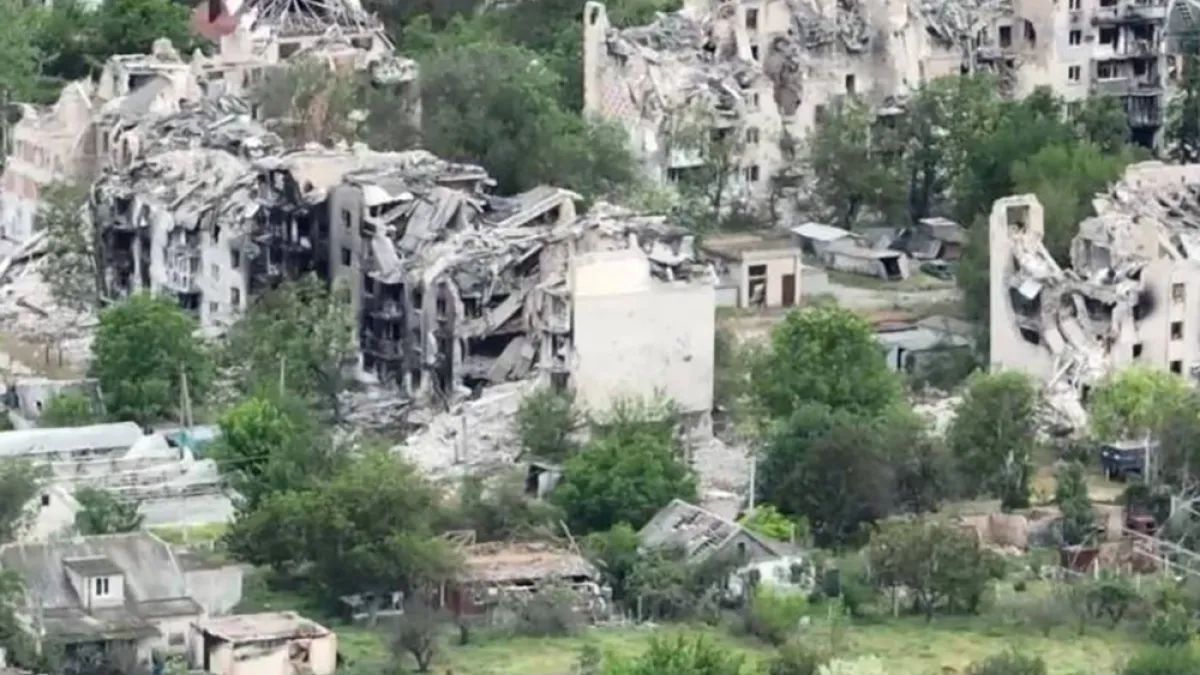
奥莱什基的一座被摧毁的房子[摄自奥莱什基电报频道]莫斯科在整个战争期间一直否认针对平民,但已承认这场人道主义灾难,并将其归咎于基辅。
A destroyed house in Oleshky [Courtesy of the Oleshky Telegram channel] Moscow, which has denied targeting civilians throughout the war, has acknowledged the humanitarian disaster but blamed Kyiv.
克里姆林宫发言人德米特里·佩斯科夫于9月20日声称:“的确,运送食品和医药存在问题,因为基辅政权实际上在百方圆尽地阻挠这些运送工作。”他还称:“无人机总是盘旋在空中,杀人。”俄罗斯支持者在占领地区也对其说法予以支持。
“There are, indeed, problems with delivering food and medical drugs [because] the Kyiv regime literally does everything to thwart these deliveries,” Kremlin spokesman Dmitry Peskov claimed on September 20. “Drones always hover in the air, killing people.”Pro-Russian figures in occupied areas support his claims.
“想离开的人已经离开了,这里没有人被拘留,”一位匿名的亲俄女性——她经营一个关于俄利斯基生活的电报频道——在9月28日写道。她声称:“不幸的是,当地居民害怕在镜头前讲话,因为他们在乌克兰那一边有亲戚。”她还称:“老年人生活在乌克兰的炮击之下,但害怕谈论这件事。”她的说法与乌克兰官员的陈述相去甚远。
“Those who wanted to leave have left. No one is being held here,” an anonymous pro-Russian woman who runs a Telegram channel on life in Oleshky wrote on September 28. “Unfortunately, locals are afraid to speak on camera” because they have relatives on the Ukrainian side, she claimed. “The elderly live under Ukrainian shelling but are afraid to talk.”Her claims are a far cry from what Ukrainian officials say.
“没有任何东西”根据俄利斯基市长哈桑恩科(已逃往基辅控制区,但仍保持与留下的居民的密切联系)的介绍,大多数俄利斯基居民一天只吃一次饭。她将留下的居民描述为俄罗斯的“人盾”。
‘There’s nothing’Most Oleshky residents eat once a day, according to Tetiana Khasanenko, Oleshky’s mayor, who fled to the Kyiv-controlled side but maintains constant contact with the remaining residents. She described the remaining residents as a human shield for Russia.
有些人找到了旧的、干涸的通心面来维持生活。有些人吃着他们在房子旁种的粮食。还有些人 resorting to普通的 purslane——一种含蛋白质极少、生吃也能食用的水瘤状杂草。
Some have found old, dried macaroni to sustain themselves. Some eat whatever they manage to grow next to their houses. And some resort to common purslane – a watery weed that contains next to no protein and can be eaten raw.
哈桑恩科告诉《半岛新闻》:“没有面粉,没有肉,没有油,没有糖,没有盐。”她说:“什么都没有。”她称,在这座没有正常民政行政机构的城镇中,俄罗斯士兵构成了持续的威胁。他们擅自搬进剩下的房屋,并强迫居民为他们提供食物和酒。
“There’s no flour, no meat, no oil, no sugar, no salt,” Hasanenko told Al Jazeera. “There’s nothing.”Russian soldiers are a constant threat in the town with no functioning civilian administration, she said. They move into the remaining houses without permission and force the residents to feed them and find alcohol.
哈桑恩科声称:“他们经常吸毒,但武装着,威胁着。”俄利斯基位于区域首府赫尔松以西约10公里(6英里),但俄罗斯军队在撤军时于2022年11月炸毁了跨越第聂伦河(欧洲最大河流之一)的1400米(1530码)大桥。食品和药品的运送既危险又复杂。
“They’re often on drugs,” Hasanenko claimed. “But they’re armed. They threaten.”Oleshky is about 10km (6 miles) west of the regional capital, Kherson, but Russians blew up the 1,400-metre (1,530-yard) bridge over the Dnipro River, one of Europe’s largest, in November 2022 while retreating from the city. The delivery of food and drugs is perilous and complicated.
最后一次试图用汽车将救命物资运送到奥莱什基的行动因埋设地雷和无人机攻击而被打断。
The last attempts to get lifesaving cargo to Oleshky in cars were cut short by landmines and drone attacks.
乌克兰已成功用无人机运送了数吨食物,但取回这些食物却相当复杂。
Ukraine has managed to fly several tonnes of food on drones, but retrieving it is complicated.
大多数幸存者已离开受战火破坏的房屋和公寓大楼,搬进相对完整的建筑中。
Most survivors have left their war-damaged houses and apartment buildings to move to the buildings that are more or less intact.
即使有些人设法给手机充上电并联系乌方,哈萨申科表示他们“不会透露确切的位置信息,因为他们害怕”。“因为如果有食物投放,俄军会惩罚他们,”她说。了解仍留居民日常遭受的磨难,逃离者们内疚不已。
And even if some people manage to charge their mobile phones and contact the Ukrainian side, they “don’t give exact geolocations because they’re afraid”, Hasanenko said. “Because if there’s a food drop, Russian soldiers will punish them for it,” she said. Knowing about the remaining residents’ daily ordeal, those who escaped are tormented with guilt.
古列耶娃说:“知道我们国家正在发生这样的事情,生活中就再也找不到任何快乐。这是一个巨大的悲 tragedy。”
“You don’t get any joy from life knowing that something like that is happening in our country,” Gulyeva said. “This is a huge tragedy.”