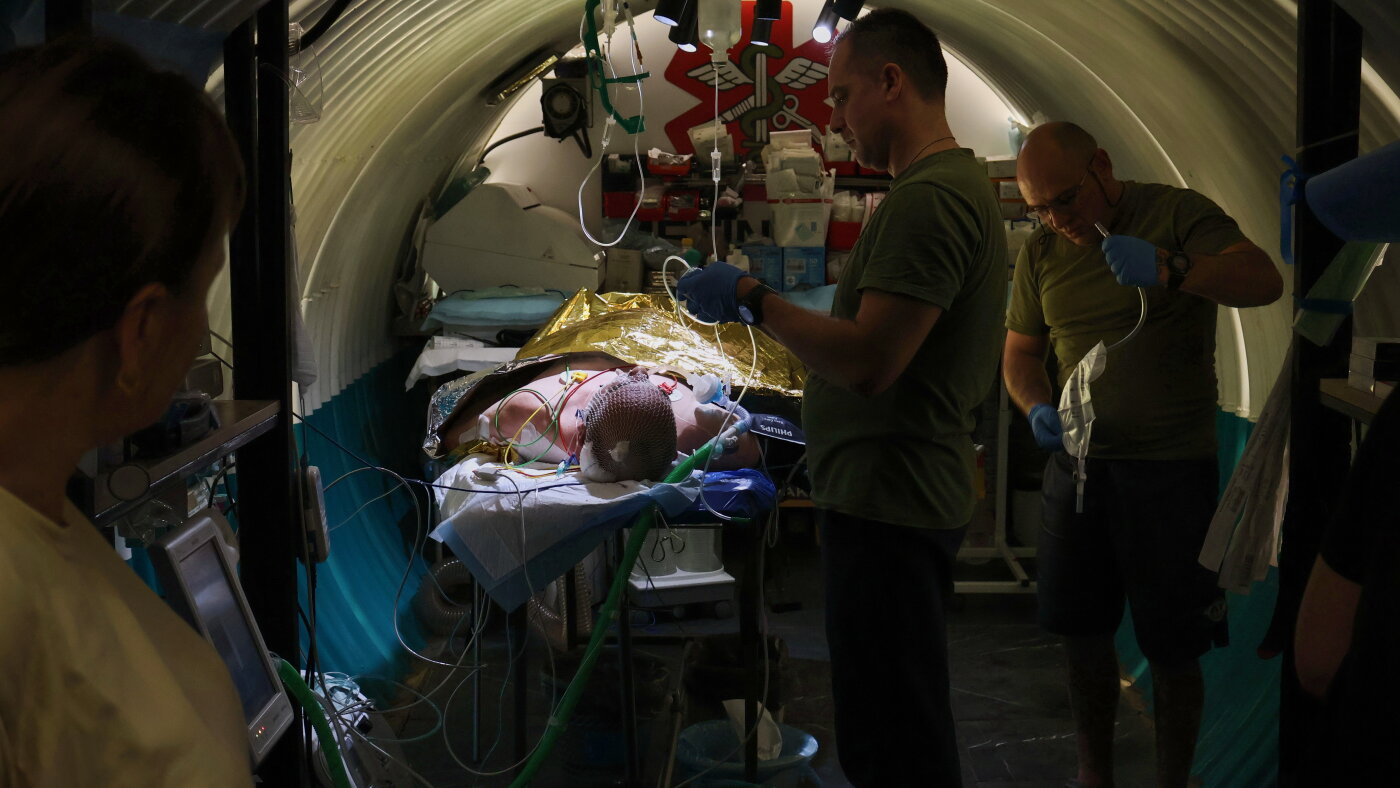
美国东部时间2026年10月5日上午8:33格雷格·迈尔(Greg Myre)9月9日,乌克兰军方医务人员在东南部扎波罗热地区前线附近的野战医院治疗一名受伤的乌克兰士兵12.绝大多数伤亡发生在所谓的杀戮区,这是前线两侧宽约10至20英里的地带,从北到南绵延700多英里。
October 5, 2026 8:33 AM ET Greg Myre Ukrainian military medics treat a wounded Ukrainian soldier in the field hospital near the frontline in the southeastern reigion of Zaporizhzhia on Sept. 12. The vast majority of casualties take place in the so-called Kill Zone, a band about 10 to 20 miles wide on both sides of the frontline, which stretches more than 700 miles from north to south.
enko/乌克兰第65机械化旅/乌克兰军方,通过美联社乌克兰基辅-俄罗斯-乌克兰战争的前线从北到南延伸整个国家。四年来,它几乎没有任何变化,有时被比作第一次世界大战中静态的、僵局的战壕战。
enko/Ukrainian 65th Mechanized brigade/Ukrainian military via AP KYIV, Ukraine — The frontline in the Russia-Ukraine war stretches the entire length of this country, from north to south. It has barely budged in four years and is sometimes compared to the static, deadlocked, trench warfare of World War I.
然而,横跨这条前线的是由不断发展的无人机技术主导的杀戮区,它定义了这场冲突以及战争的未来。
Yet straddling this frontline is the Kill Zone dominated by constantly evolving drone technology that's defining this conflict — and the future of warfare.
“这个杀戮区是一片领土带,到处都是俄罗斯无人机、俄罗斯地雷和火炮。这是不间断的侦察和监视,”乌克兰第59独立突击旅发言人、乌克兰高级中尉塔拉斯·迈沙克说。他在距离乌克兰东部前线仅几英里的Zoom上接受了NPR的采访。
"This Kill Zone is a belt of territory which is full of Russian drones, Russian mines, and also artillery. It's nonstop reconnaissance and surveillance," said Ukraine's Sr. Lt. Taras Myshak, the spokesman for Ukraine's 59th Separate Assault Brigade. He spoke with NPR on Zoom, just a few miles from the frontline in eastern Ukraine.
乌克兰也拥有类似的军火库,威胁着在防线另一边挖掘的俄罗斯军队。
Ukraine has a similar arsenal threatening the Russian forces that are dug in on the other side of the line.
关于杀戮区最重要的是,任何移动的迹象--只要把头伸出散兵坑呼吸新鲜空气--都会让你注意到并被头顶上不断嗡嗡作响的无人机攻击。
The most important thing to know about the Kill Zone is that any sign of movement — just sticking your head out of a foxhole for fresh air — can get you noticed, and attacked, by the drones constantly buzzing overhead.
迈沙克说,即使是常规行动,比如轮换部队进出该地区,也是一场噩梦。
Myshak says even routine movements, like rotating troops in and out of this zone, is a nightmare.
他说:“距离我们今天谈论的地方不远,我们有一个小组穿过了杀戮区,他们要步行四个小时才能走一公里。”“因为他们总是听到无人机的声音,他们必须躲起来等待。然后无人机经过,他们就可以移动了。“夜幕降临并没有让行动变得更安全,因为无人机有热感摄像头,可以检测体温,使其更难隐藏。“在晚上,情况更加危险,”他说。
"Not far from where we are talking today, we have a group that moved through the Kill Zone and they will they walk four hours just to go one kilometer," he said. "Because all the time they hear the drone and they have to hide and wait. Then the drone passes, and they can move." Nightfall doesn't make it any safer to move because the drones have thermal cameras that detect body heat and make it even harder to hide.
9月1日,乌克兰军队在乌克兰前线城镇德鲁日基夫卡的反无人机网下骑自行车12.俄罗斯和乌克兰军队都布下了网来防范无人机。部队经常步行或骑自行车行动,因为坦克、装甲运兵车和其他军用车辆很容易被发现并经常受到袭击。
"In the night, it's even more dangerous," he said. Ukrainian troops ride bikes under anti-drone netting in the frontline town of Druzhkivka, Ukraine, on Sept. 12. Both the Russian and Ukrainian forces have put up nets to guard against drones. The troops often move on foot or on bikes because tanks, armored personnel carriers and other military vehicles are easily spotted and often attacked.
伊琳娜·雷巴科娃(Iryna Rybakova)/乌克兰第93机械化旅/乌克兰军方通过美联社几乎没有任何变化的前线当俄罗斯于2022年2月发动全面入侵时,它以传统方式迅速推进,大纵队乘坐装甲车。那年秋天晚些时候,乌克兰的反攻在一些地方击退了俄罗斯人。
Iryna Rybakova/Ukrainian 93rd Mechanized Brigade/Ukrainian military via AP A frontline that barely budges When Russia launched its full-scale invasion in February 2022, it advanced rapidly in conventional fashion with large columns of troops in armored vehicles. Later that fall, Ukraine's counteroffensive drove the Russians back in some places.
从那时起,两支军队进驻,前线的行动也在逐步推进,但俄罗斯的进展很有限。这条线路现在绵延700多英里。在防线的两侧,杀戮区是一个宽约10至20英里的地带,由无人机主导。
Since then, the two armies settled in and the frontline has moved only incrementally, mostly with limited gains by Russia. This line now stretches more than 700 miles. On either side of the line, the Kill Zone is a band roughly 10 to 20 miles miles wide, and dominated by drones.
“杀戮区基本上是无人机战争的产物,”美国海军陆战队退伍军人罗布·李说,他现在居住在乌克兰,为费城外交政策研究所监测战争。
"The Kill Zone is basically a product of drone warfare," said Rob Lee, a U.S. Marine veteran who now lives in Ukraine and monitors the war for the Foreign Policy Research Institute of Philadelphia.
由于乌克兰的军队要少得多,并且严重依赖无人机,因此它在前线的存在非常少。
Because Ukraine has far fewer troops, and relies heavily on drones, it has a remarkably small presence on the frontline.
李说,在许多地方,乌克兰每英里的士兵不到10人,他们分成小团体,相距数百码。
Lee said that in many places, Ukraine has fewer than 10 soldiers per mile, in small groups, spaced out hundreds of yards apart.
“那些步兵大概分布在两个阵地上,每个阵地两到四人,”李说,“他们大部分时间都待在地下,试图继续隐蔽。”他补充说,这些部队实际上并不在于阻挡推进的俄军,而更像是在担任观察员,将俄军动向传给后方的乌克兰无人机操作员,后者再从空中锁定俄军入侵人员。
"Those infantrymen are maybe two positions where it's two to four people," said Lee. "They're underground for the most part. They're trying to remain hidden." These troops are not really trying to hold back advancing Russian soldiers, he added. They act more as spotters, relaying Russian movements to Ukrainian drone operators behind the front lines, who then track down the Russian intruders from the air.
李说,前线的无人机密度如此之高,双方几乎不可能在不被发现并招致火力打击的情况下集结大规模地面部队。坦克和装甲运兵车等军用车辆更容易被发现和攻击。
Lee says the frontline is so saturated with drones that it's virtually impossible for either side to pull together a large ground force without being detected and drawing fire. Military vehicles like tanks and armored personnel carriers are even easier to spot and attack.
“由于无人机密度极高,现在要让车辆靠近前线变得非常困难,”他说。
"Because of such a high density of drones, it became very difficult to bring vehicles near the frontline at all," he said.
6月,一名乌克兰军人在扎波罗热州东南部进行野外测试时操控一台地面机器人。乌克兰越来越多地使用地面无人机执行任务,包括向前线部队运送弹药和药品。乌克兰还会在机器人上安装机枪实施攻击。这些无人机也被用于在危险的“杀伤区”撤离伤员。
A Ukrainian serviceman controls a ground robot in a field test in the southeastern region of Zaporizhzhia in June. Ukraine is increasingly using ground drones for tasks that include delivering ammunition and medicine to frontline troops. Ukraine mounts machine guns on the robots to carry out attacks. The drones are also used to evacuate wounded soldiers in the dangerous Kill Zone.
根亚·萨维洛夫/法新社,经盖蒂图片社提供 双方军队原本都未计划以这种方式作战。
Genya Savilov/AFP via Getty Images Neither army planned to fight this way.
2022年全面入侵之初,乌克兰还没有真正的无人机产业。总统弗拉基米尔·泽连斯基表示,该国今年将生产1000万架无人机。
Ukraine had no real drone industry at the start of the full-scale invasion in 2022. President Volodymyr Zelenskyy says the country will make 10 million this year.
俄罗斯也大幅提高了无人机产量。今年预计将生产超过700万架,其中包括经常躲过乌克兰防线的喷气式飞行器。
Russia has ramped up its own drone production. It's expected to make more than 7 million this year, including jet-powered aircraft that are often evading Ukraine's defenses.
从零开始 四年前,迪马·普蒂亚塔加入乌克兰军队时,对无人机一无所知,也不认为这是男子汉式的战争方式。
Starting from scratch When Dima Putiata joined Ukraine's military four years ago, he knew nothing about drones and didn't think this was a manly way to wage war. "When I saw that we have drones, I was not smart enough.
“当我看到我们有了无人机时,还不够聪明。我当时想,‘不,我们不需要无人机。我们像男子汉一样战斗吧。’在这方面,我或许有点浪漫主义,”普蒂亚塔说。
I said, 'No, we don't need to have it. Let's fight like men.' I was a little bit maybe romantic in this way," said Putiata.
除了普蒂亚塔这样的怀疑论者之外,很少有乌克兰军队接受过使用这些新武器的训练。
In addition to skeptics like Putiata, few Ukrainian troops were trained to use these new weapons. "No one had drone operators," he recalled.
“没有人拥有无人机操作员,”他回忆道。“只是,‘哦,你是司机?你可以使用它。或者,‘哦,我可以使用无人机吗?你可以尝试一下。'“五月份离开军队时,普蒂亚塔中士正在乌克兰东北部杀戮区及其周边地区指挥26名无人机机组人员。
"It's just, 'Oh, you're a driver? You can use it.' Or, 'Oh, can I use a drone? You can try.'" By the time he left the military in May, Putiata, a sergeant, was commanding 26 drone crews in and around the Kill Zone in northeastern Ukraine.
他说,尽管双方不知道这项技术下一步会走向何方,但双方都迅速接受了这项技术。
Both sides have rapidly embraced the technology even if they don't know where it's headed next, he said.
“他们知道如何在这里和现在使用它,也许并不真正了解未来如何使用它,”他指出。“我的观点是,你只需要继续前进并适应。“9月11日,一名乌克兰军人在乌克兰东部前线城镇德鲁日基夫卡休息。12.部队经常在前线阵地长时间服役,因为轮换部队进出非常困难和危险。
"They understand how to use it here and right now, maybe not really understanding how to use it in the future," he noted. "My point is, you just need to keep going and adapting." A Ukrainian serviceman rests in the frontline town of Druzhkivka in eastern Ukraine on Sept. 12. Troops often serve for extended periods in frontline positions because it is so difficult and dangerous to rotate troops in and out.
认识到无人机的作用两年前,乌克兰成为第一个将无人机建立为独立军队分支的国家。
Recognizing the role of drones Two years ago, Ukraine became the first country to establish drones as an independent branch of its military.
这一创新现在包括地面无人机的广泛使用,它们看起来像巨魔,可以执行各种对部队来说太危险的任务。
This innovation now includes the widespread use of ground drones, which look like trollies and perform a wide range of tasks that have become too dangerous for troops.
机器人向前线运送食物、药品和弹药。这些机器人可以装载机关枪,现在可以进行定期攻击。
The robots deliver food, medicine and ammunition to frontline. The robots can be loaded with machine guns that now carry out regular attacks.
地面机器人还用于从杀戮区撤离受伤士兵。但无人机操作员和战斗医务人员拥有不同的技能,事实证明你两者都需要。
The ground robots are also being used to evacuate wounded soldiers from the Kill Zone. But drone operators and combat medics have separate skills, and it turns out you need both.
乌克兰裔美国人柳巴·希波维奇(Lyuba Shipovich)说:“无人机操作员不知道如何正确疏散受伤的士兵,医护人员也不知道如何操作地面机器人。”他领导着一个私人组织Dignitas,专门训练部队使用无人机。
"The drone operator doesn't know how to properly evacuate a wounded soldier, and the medic doesn't know how to operate a ground robot," said Lyuba Shipovich a Ukrainian-American, who heads a private group, Dignitas that trains troops on drones. "So now we're trying to create combined program that will train both the medic and the robot operator," she said.
“所以现在我们正在尝试创建组合程序,来培训医务人员和机器人操作员,”她说。
Media coverage tends to focus on long-range air strikes Russia and Ukraine are inflicting deep inside each other's territory.
媒体报道往往集中在俄罗斯和乌克兰在对方领土深处实施的远程空袭上。
But the vast majority of the fighting is in the Kill Zone, with drones now responsible for 80 percent of all casualties, according to Rob Lee and other military analysts.
但罗布·李和其他军事分析人士表示,绝大多数战斗都发生在杀伤区,无人机目前造成了80%的伤亡。
Dima Putiata, the former Ukrainian soldier, says what started in this war has already spread to other conflicts.
前乌克兰士兵迪玛·普蒂亚塔(Dima Putiata)表示,这场战争开始的事情已经蔓延到其他冲突。
"With drones, this is the cheapest flying munition that can be massively produced.
“对于无人机来说,这是可以大规模生产的最便宜的飞行弹药。你可以摧毁很多东西,”他说。“不幸的是,发动战争的费用比以前便宜得多。“他预测,这是一种世界将更频繁地看到的战争。
You can destroy a lot of stuff," he said. "It's much cheaper than it used to be to have a war, unfortunately." A kind of war, he predicts, that the world will see more often. NPR's Hanna Palamarenko contributed to this story.