玛丽克·勃兰特(Marieke Brandt)是维也纳奥地利科学院社会人类学研究所的高级研究员兼也门专家。她写了两部关于胡塞武装意识形态的主要著作:《也门的部落与政治:胡塞武装冲突的历史》和《世仇的故事:也门高地的统治、抵抗和代理》。为了清晰起见,这次采访进行了轻微的编辑。胡塞叛乱如何成为也门的一股国家政治力量?
Marieke Brandt is a senior researcher and Yemen expert at the Institute for Social Anthropology of the Austrian Academy of Sciences, in Vienna. She has written two major works on Houthi ideology: Tribes and Politics in Yemen: A History of the Houthi Conflict and The Tale of a Feud: Domination, Resistance and Agency in Highland Yemen. This interview was lightly edited for clarity. How did the Houthi rebellion become a national political force in Yemen?
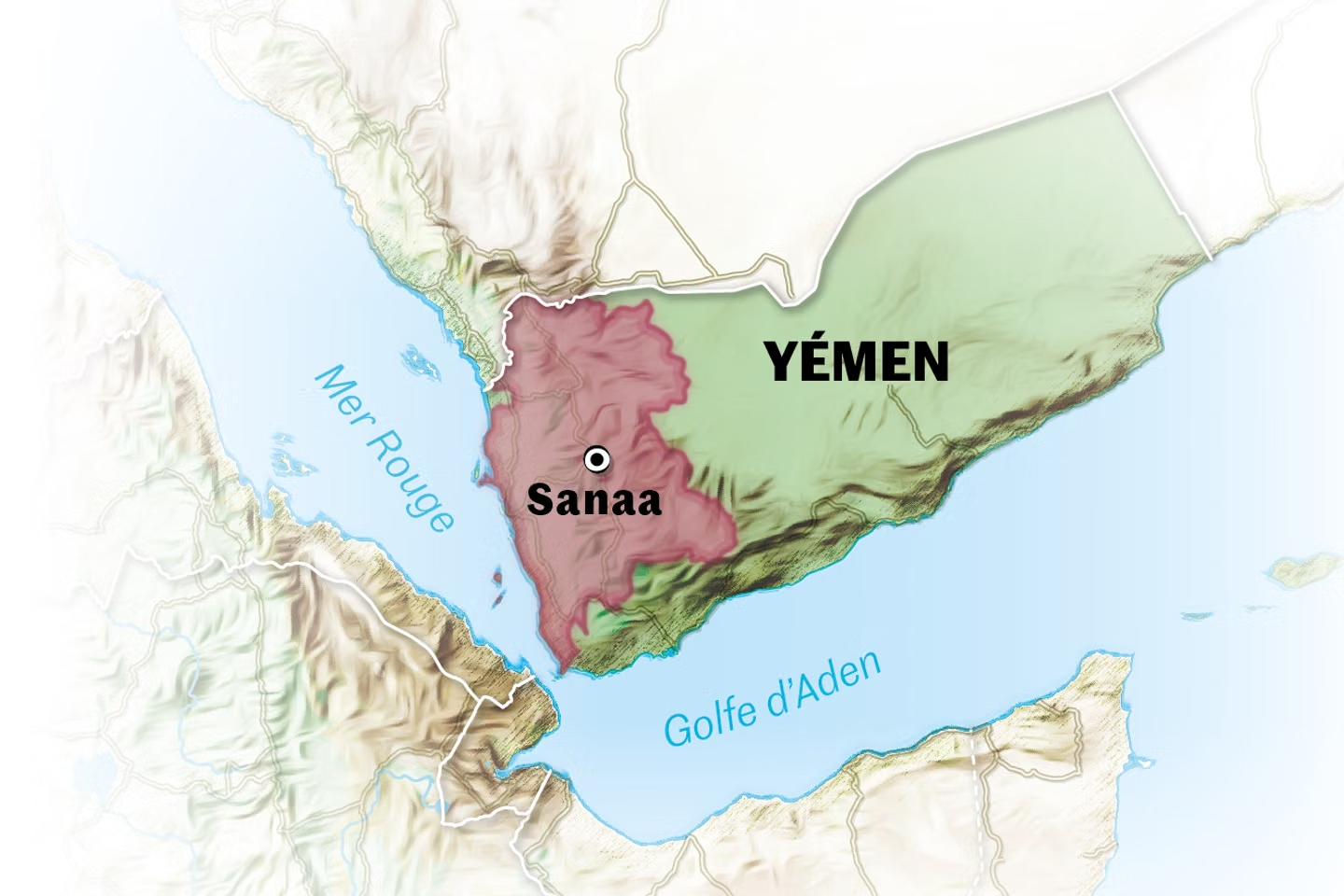
这场运动始于20世纪90年代也门北部的萨达(靠近沙特边境),主要目的是在沙特阿拉伯和也门政府推动的萨拉菲-瓦哈比(激进逊尼派运动)影响力不断增长的情况下,重新确立扎伊迪的身份-什叶派伊斯兰教的一个少数分支,在也门北部盛行。
The movement began in the 1990s in Saada, in northern Yemen [near the Saudi border], primarily aimed at reasserting Zaydi identity – a minority branch of Shia Islam, prevalent in northern Yemen – in the face of growing Salafi-Wahhabi [radical Sunni movements] influence, which was promoted by Saudi Arabia and the Yemeni government. In 2001, under the leadership of Hussein Badreddin al-Houthi, a splinter group broke away from the Zaydi revival, which is how that splinter group came to be known as "the Houthis."
2001年,在侯赛因·巴德雷丁·胡塞的领导下,一个分裂组织脱离了扎伊迪复兴,这就是这个分裂组织被称为“胡塞”的原因。“胡塞想要的不仅仅是文化复兴。他设想了一个积极的运动,将积极面对扎伊迪和整个伊斯兰社区面临的问题。巴勒斯坦从一开始就在胡塞武装思想中占据中心地位,作为以色列和西方帝国羞辱穆斯林的象征。该运动的口号也起源于这一时期:“上帝伟大,美国死,以色列死,诅咒犹太人,伊斯兰教胜利。“转折点出现在2004年,当时也门政府对他们发动了一场军事行动。胡塞武装于2004年被杀。他的同父异母兄弟和继任者阿卜杜勒·马利克接管了政权,但2004年至2010年的六场战争非但没有削弱该运动,反而极大地加强和激进了它。每一轮都加深了他们对受害者和抵抗的叙述,扩大了他们的招募基础。
Al-Houthi wanted more than a mere cultural revival. He envisioned an active movement that would proactively confront the problems facing Zaydis and the Islamic community at large. Palestine occupied a central place in al-Houthi's thinking from the very beginning, as a symbol of the humiliation of Muslims by Israel and the imperial West. The movement's slogan also dates from this period: "God is great, death to America, death to Israel, curse the Jews, victory to Islam." The turning point came in 2004, when the Yemeni government launched a military campaign against them.
2011年阿拉伯之春起义是下一个关键时刻。胡塞武装在政治上参与了阿拉伯之春。在此期间,他们开始称自己为“安萨尔·阿拉”(“上帝的支持者”),因为这使他们能够将自己描绘成一场全国运动。本文还剩86.22%的内容需要阅读。其余的只是forrs。
Al-Houthi was killed in 2004. His half-brother and successor Abdul Malik took over, but instead of weakening the movement, the [six] wars between 2004 and 2010 strengthened and radicalized it enormously. Each round deepened their narrative of victimhood and resistance and expanded their recruitment base. The 2011 Arab Spring uprising was the next critical juncture. The Houthis participated politically in the Arab Spring. During this period, they began calling themselves "Ansar Allah" ("supporters of God"), as it allowed them to present themselves as a national movement.