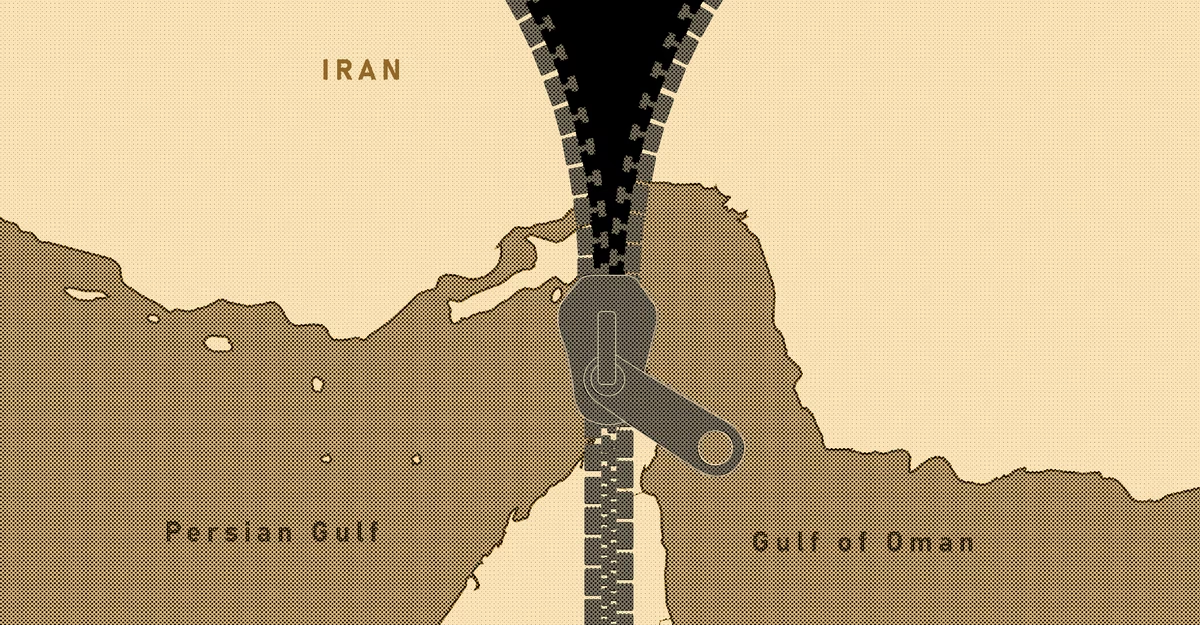
目前通过霍尔木兹海峡输送的石油量有所增加,但这并不意味着美国已经获胜。
More oil is flowing through the strait, but that doesn’t mean the U.S. has won.
作者:艾伦·艾尔。支持对伊朗开战的人士将近期霍尔木兹海峡石油运输量的上升视为美国战略终于奏效的证据。特朗普总统对此深信不疑,以至于他最近拒绝了伊朗外交部提出的旨在结束战争并重新开放海峡的七天和平方案。特朗普还夸耀称,美国“取得了巨大胜利”。
By Alan Eyre Proponents of the war with Iran have taken recent increases in crude-oil flows through the Strait of Hormuz as proof that the U.S. strategy is finally working. President Trump is so confident in this that he recently rejected a seven-day plan, set forward by Iran’s foreign ministry, to end the war and open the strait. The United States is “winning tremendously,” Trump boasted.
然而,美国政府却将战术上的优势与战略上的成功混为一谈。这场战争原本预计只会持续四到五周,如今已打了七个月;在此期间,特朗普政府对伊朗的认知仍存在严重偏差。霍尔木兹海峡石油出口量的增加,也并不能说明美国即将按照自己的条件结束这场冲突。
A confused administration is conflating tactical dominance with strategic success. Seven months into a war that its planners suggested would last four to five weeks, the Trump administration’s understanding of Iran remains deeply flawed, and increases in oil exported through the strait don’t mean that the U.S. is close to ending the conflict on its terms.
总统的自信无疑部分源于据报道,他相信这场冲突将取决于哪一方能够承受最长的经济痛苦。伊朗经济的倒计时时钟似乎越来越快:美国海军对伊朗港口的封锁无情有效,财政部8月份宣布的“经济弃儿行动”也在较小程度上发挥了作用,该行动是“一场前所未有的行动,旨在切断支撑伊朗伊斯兰共和国的每一条剩余经济命脉。”战前,伊朗经济状况不佳。
The president’s self-assurance doubtless derives in part from his reported belief that this conflict will come down to which side is able to endure economic pain the longest. The countdown clock on Iran’s economy appears to be ticking ever faster: The U.S. Navy’s blockade on Iranian ports has been ruthlessly effective, as, to a lesser extent, has the Treasury Department’s Operation Economic Outcast, announced in August as “an unprecedented campaign to sever every remaining economic lifeline sustaining the Islamic Republic of Iran.”
现在它正陷入深深的危机。伊朗里亚尔兑1美元汇率创纪录,超过250万里亚尔兑1美元,而战前汇率接近120万里亚尔。根据伊朗政府的统计数据,8月下旬食品通胀同比超过125%。一个习惯于廉价、充足汽油的国家现在严重短缺,其政府正在逐步减少补贴。国际货币基金组织预测,伊朗经济将在2026年萎缩5.4%,正如财政部长贝森特上个月初所说,美国政府已评估伊朗正处于“死亡螺旋”,迫切希望达成协议。
Iran’s economy was in bad shape before the war. Now it is in deep crisis. The Iranian rial is trading at a record rate of more than 2.5 million to a dollar, versus a prewar exchange rate closer to 1.2 million. Year-over-year food inflation was more than 125 percent in late August, according to Iranian-government statistics. A country accustomed to cheap, plentiful gasoline now has severe shortages, and its government is progressively scaling back subsidies. The International Monetary Fund projects that the Iranian economy will contract by 5.4 percent in 2026, and the U.S. administration has assessed, as Treasury Secretary Bessent said early last month, that Iran is in a “death spiral,” desperate to make a deal.
与此同时,政府似乎认为,由于伊朗关闭甚至大幅限制霍尔木兹海峡海上交通的能力下降,美国经济痛苦的时间已经放慢。伊朗通过地雷和袭击油轮来控制这一瓶颈,使每日石油运输量从战前的每天2000万桶减少到3月份的每天不到300万桶。但8月下旬,美国军方声称取得了一个“重大里程碑”:它清除了海峡过境路线上的地雷。9月中旬,中央司令部发表新闻声明称,该海峡“开放过境”。
The administration appears to believe that the clock on American economic pain, meanwhile, has been slowed by Iran’s decreased ability to close or even significantly constrain maritime traffic through the Strait of Hormuz. Iran’s grip on that choke point, through sea mines and attacks on tankers, had reduced the daily transit of oil from 20 million barrels a day before the war to fewer than 3 million a day by March. But in late August, the U.S. military claimed a “major milestone”: It had cleared the strait’s transit routes of mines. A mid-September CENTCOM press statement said that the strait was “open for transit.”
9月份,该地区石油出口大幅增长。根据摩根大通上个月底在社交媒体上发布的一份评估报告,该地区出口反弹至仅比战前水平低11%。据海事情报公司开普勒(Kpler)报告,9月份通过海峡的石油日均量为1000万桶;另有600万桶石油通过避开海峡的港口和管道离开该地区。9月下旬,CNN的一个标题似乎抓住了总体评估:“伊朗在霍尔木兹海峡失去了相当大的影响力。它不能永远这样下去。”
Regional oil exports rose significantly in September. According to a JP Morgan assessment that circulated on social media late last month, regional exports rebounded to just 11 percent below prewar levels. The maritime intelligence company Kpler reported the September daily average of oil through the strait at 10 million barrels; an additional 6 million barrels left the area by means of ports and pipelines that avoided the strait. A late-September headline on CNN seemed to capture the general assessment: “Iran has lost considerable leverage in the Strait of Hormuz. It can’t go on like this forever.”
石油流动恢复的原因之一是,沙特、阿联酋、卡塔尔和科威特石油公司与美国海军合作,已开始进行高风险的转移,以躲避威胁该海峡的伊朗反舰导弹和无人机。水道内的穿梭油轮关闭转发器,装载石油,并在美国海军战斗机和攻击直升机的监视下,拥抱阿曼海岸离开海峡。一旦到达安全水域,他们就会将原油货物转移到更大的超级油轮上进行运输。
One reason for the resumption of oil flows is that Saudi, Emirati, Qatari, and Kuwaiti oil companies, working with the U.S. Navy, have started pulling off risky transfers that evade the Iranian anti-ship missiles and drones threatening the strait. Shuttle tankers inside the waterway turn off their transponders, load up with oil, and, watched over by U.S. Navy fighter jets and attack helicopters, leave the strait by hugging the Omani coast. Once in safe waters, they transfer their crude cargo to larger supertankers for onward transport.
但海峡的新现状既不可持续,也不可扩展。舰对舰转移既危险又昂贵,而且依赖于美国积极的军事行动,目前美国的军事行动涉及两个已经在该地区的海军航母打击群,第三个正在途中。
But the new status quo in the strait is neither sustainable nor scalable. Ship-to-ship transfers are dangerous and expensive, and they rely on active U.S. military operations, which currently involve two Navy aircraft-carrier strike groups already in the region and a third on its way.
与此同时,通过海峡的交通仍然危险。截至10月5日的一周内,至少有八艘油轮遭到袭击,总部位于巴林的跨国联合海事信息中心仍将海峡通行的威胁评估为“严重”。根据联合王国海事贸易组织,海峡交通量仍比冲突前水平低75%。全球原油和成品油的供应落后于需求,区域成品油出口仅为战前标准的58%。正如Kpler贸易风险分析师Ana Subasic最近所说的那样,通过该地区的船只和石油比战争初期更多,“并不意味着我们看到了流动的正常化。”
Meanwhile, transit through the strait remains dangerous. At least eight tankers have been attacked in the week ending October 5, and the multinational Joint Maritime Information Center, based in Bahrain, still assesses the threat for strait passage as “severe.”According to the United Kingdom Maritime Trade Organization, strait traffic remains 75 percent below pre-conflict levels. The global supply of crude and refined products trails demand, and regional exports of refined products are at only 58 percent of prewar norms. As the Kpler trade-risk analyst Ana Subasic recently told , the passage of more ships and oil through the region than earlier in the war “doesn’t mean we’re seeing a normalization of flows.”
特朗普认为伊朗的经济痛苦比美国更快,这很可能是正确的。但伊朗政权正在进行一场它认为事关生死存亡的斗争,其忍受的疼痛程度将远高于陷入不受欢迎战争的美国政府所能接受的程度。汽油和柴油价格飙升可能会给共和党在下个月中期选举中面临的一个问题。相比之下,伊朗政权拥有广泛且久经考验的民众镇压基础设施,已经表现出大规模屠杀其公民的意愿,并且没有根据投票箱调整其政策。
Trump could well be right in believing that Iran’s economic pain is increasing faster than America’s. But the Iranian regime, engaged in a fight it believes to be existential, will tolerate pain levels much higher than those acceptable to a U.S. administration mired in an unpopular war. The soaring price of gasoline and diesel could be a problem for Republicans in the midterm elections next month. By contrast, the Iranian regime, with its extensive and tested infrastructure of popular repression, has shown its willingness to slaughter its citizens en masse and is not calibrating its policies to the ballot box.
特朗普政府似乎没有意识到,伊朗领导人--比美国和以色列在战争开始时杀害的领导人更加军事化和强硬--正在假设美国决心推翻伊斯兰共和国。他们认为压力下的妥协会加速而不是推迟自己的毁灭。为了应对美国日益加剧的经济压力和不断恶化的战略局势,他们军事升级的可能性远大于投降。
The Trump administration seems not to realize that Iran’s leaders—more militarized and hard-line than those the U.S. and Israel killed at the start of the war—are operating on the assumption the United States is dead set on toppling the Islamic Republic. They see compromise under pressure as hastening, not delaying, their own destruction. In response to intensifying U.S. economic pressure and a worsening strategic situation, they are far likelier to escalate militarily than to capitulate.
据报道,越南战争结束后不久,一名美国上校在与越南上校交谈时断言:“你们从未在战场上击败过我们。”据称,越南上校想了想,然后回答说:“可能是这样,但这也无关紧要。”伊朗也可能如此。是的,美国已经摧毁了伊朗的大量军队。是的,它正在削弱伊朗的经济,使更多的伊朗公民陷入困境。是的,它从该地区开采的石油比战争初期还要多。但这些都没有让美国更接近胜利。
Shortly after the Vietnam War ended, an American colonel talking with his Vietnamese counterpart is reported to have asserted, “You never defeated us on the battlefield.”The Vietnamese colonel allegedly thought about it, then replied, “That may be so, but it’s also irrelevant.”The same could be true with Iran. Yes, the U.S. has destroyed huge swaths of Iran’s military. Yes, it is crippling Iran’s economy and immiserating ever more of its citizens. And yes, it is getting more oil out of the region than earlier in the war. But none of that is getting America much closer to a win.