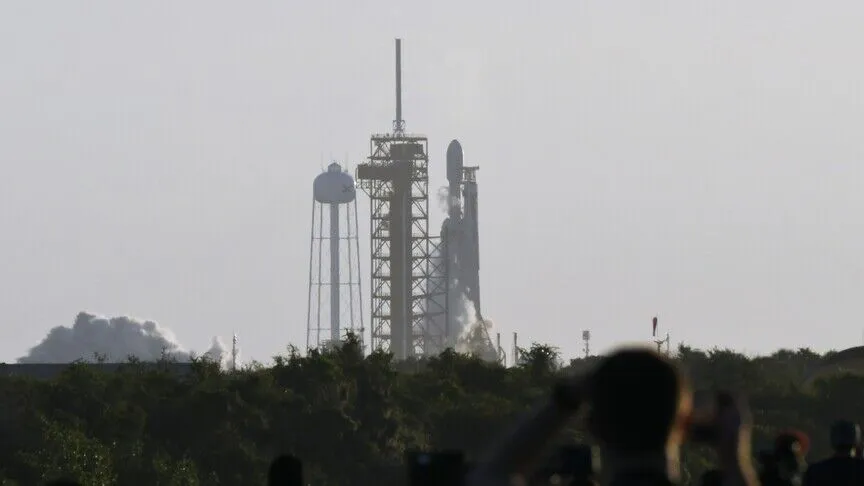
周三,韩国在其第五次发射任务中成功发射了国产“世界”运载火箭,将15颗卫星送入轨道,其中包括用于构建该国首个国产微型卫星星座的5颗卫星。
South Korea launched its homegrown Nuri space rocket Wednesday on its fifth flight, carrying 15 satellites into orbit, including five intended for the country's first domestically launched microsatellite constellation.
据韩联社报道,当地时间中午12点25分,这枚重达200吨的火箭从首尔西南约400公里处的罗老航天中心升空。
The 200-ton rocket blasted off from the Naro Space Center in Goheung, about 400 kilometers (248 miles) southwest of Seoul, at 12.25 pm local time, Yonhap News Agency reported.
此次发射的载荷包括5颗用于国家安全的新太空地球观测卫星星座(NEONSAT)微型卫星以及10颗立方体卫星。
The payload comprises five New-space Earth Observation Satellite Constellation for National Safety (NEONSAT) microsatellites and 10 CubeSats.
编号为2至6的5颗NEONSAT卫星预计将在约575公里的高空,每隔35至40秒依次释放,随后立方体卫星也将被释放。
The five NEONSATs, numbered 2 through 6, were scheduled to be deployed at intervals of 35 to 40 seconds at an altitude of around 575 kilometers (357 miles), followed by the CubeSats.
每颗NEONSAT卫星的重量不到100公斤,搭载的光电相机可拍摄出能分辨出1米大小物体的黑白影像。这些卫星主要用于对朝鲜半岛及周边地区进行国家安全监测与灾害应对。
Each NEONSAT weighs less than 100 kilograms (220 pounds) and carries an electro-optical camera capable of distinguishing objects as small as 1 meter (3.3 feet) in black-and-white imagery. The satellites are designed to monitor the Korean Peninsula and surrounding areas for national security and disaster response.
明年,“世界”火箭的第六次发射任务还将再发射5颗NEONSAT卫星,届时该10星星座将全部组建完成。
Another five NEONSATs are due to be launched on Nuri's sixth flight next year, completing the 10-satellite constellation.
去年11月,“世界”火箭在第四次发射中成功将包括CAS500-3及12颗立方体卫星在内的13颗卫星送入轨道。那次任务也是该火箭的首次夜间发射,且由私营企业韩华航空航天公司负责执行。
In November 2025, Nuri successfully placed 13 satellites into orbit during its fourth flight, including the CAS500-3 and 12 CubeSats. That mission marked the rocket's first nighttime launch and its first led by private company Hanwha Aerospace.