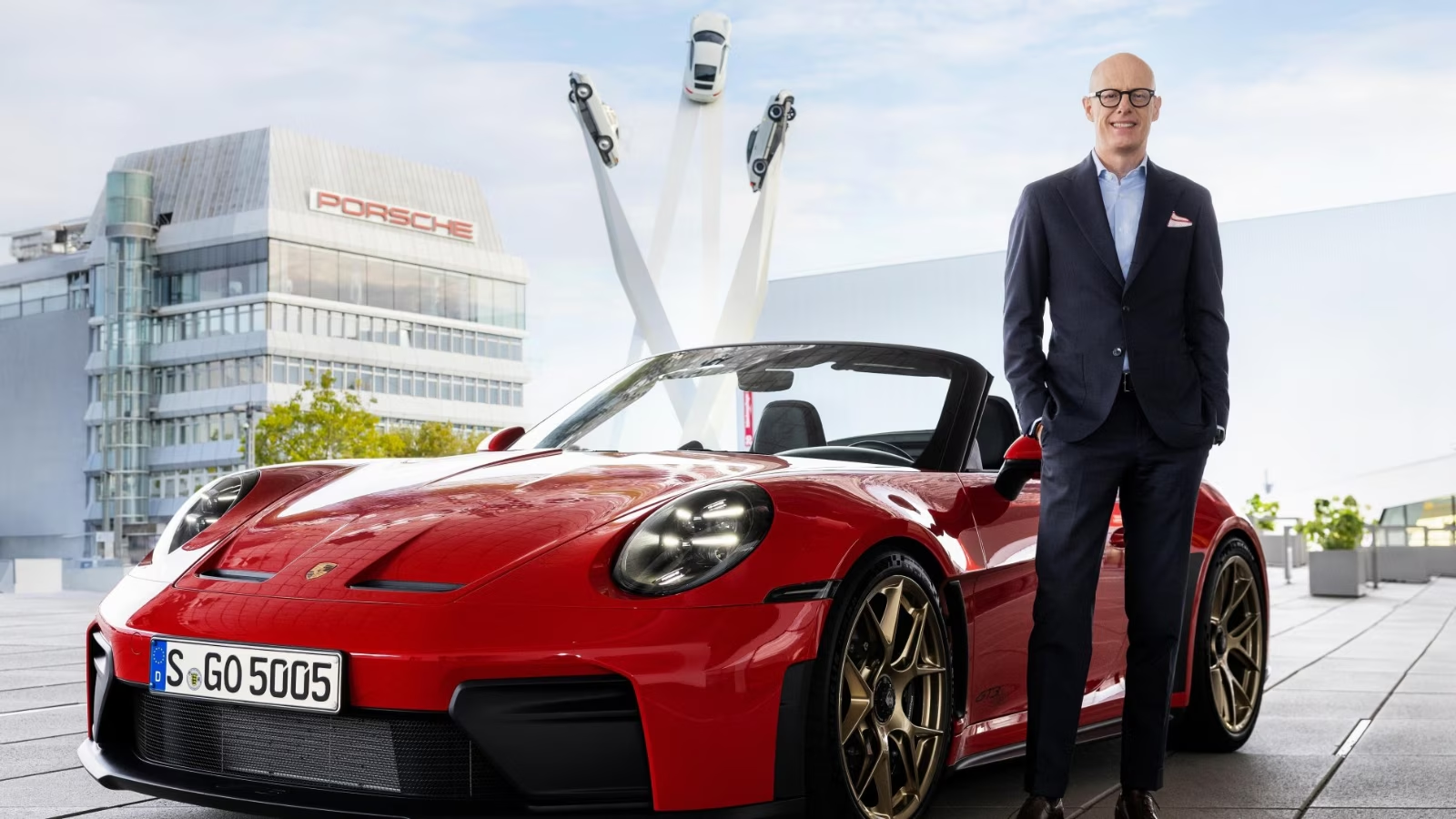
保时捷公司计划在中期内将其高端车型的平均售价提高约20%。该公司在周三的“Weissach开发中心”举行的资本市场日活动中宣布了这一举措,该活动也是其新战略“Sportwagenschmiede '35”的一部分。保时捷希望减少高端车型的销售数量,同时提升盈利能力。由于在电动化技术方面的失误以及中国市场的销售下滑,公司的利润受到了严重影响。首席执行官迈克尔·莱特斯(Michael Leiters)表示,这一转型需要一定的时间才能实现。
Porsche AG plans to raise the average selling price of its top-of-the-range models by about 20% in the medium term. It announced the move on Wednesday as part of a new strategy called “Sportwagenschmiede '35”, presented at a Capital Markets Day at its Weissach Development Centre. The company wants to sell fewer, higher-end cars and revive its profits. Its earnings were hit by costly missteps on electrification and a plunge in sales in China. Chief Executive Michael Leiters said the turnaround will take time.
在法兰克福的早盘交易中,保时捷的股票价格上涨了5.1%,公司市值达到了404亿欧元。自年初以来,保时捷的股价已下跌了3%。
Porsche shares rose as much as 5.1% in early trading in Frankfurt, valuing the company at €40.4 billion. The shares are down 3% since the start of the year.
关于定价策略,保时捷表示将继续坚持“价值优先于销量”的原则,即希望从每辆车上获得更高的利润,而不是单纯追求销量。该公司将扩大其“Sonderwunsch”(定制车型)项目,预计该项目的销售额在中期内将增长六倍;同时,它还将减少车型的种类(减少约20%),并期望由此使每个车型的销量增加约30%。
Pricier PorschesPorsche says it will stay with its “Value over Volume” principle. It wants to earn more from each car rather than sell more cars. It will expand its Sonderwunsch programme, which offers highly customised cars, and aims to raise sales from it sixfold in the medium term.
在超级跑车方面,保时捷计划开发一款采用中置发动机的超级跑车平台,该平台将用于打造一款高于911系列的新车型。如果这款新车真的得以投产,它将成为自2013年限量生产的918 Spyder以来保时捷推出的首款超级跑车。此举也将使保时捷的产品线更接近法拉利的跑车和豪华旅行车系列。此外,保时捷还在研发一款高于Cayenne级别的SUV车型,并计划到2030年每年至少推出一款具有标志性意义的新产品,主要瞄准利润较高的D级和E级市场。该公司希望将D级和E级车型的占比提升至约45%。
It will also cut model variants by about 20%, which it expects to lift sales per variant by about 30%.Supercar PlansPorsche plans to develop a mid-engined super sports car platform. It would support a new model line above the 911. If built, it would be the company's first supercar since the limited-production 918 Spyder debuted in 2013. It would also bring Porsche closer to Ferrari's range of sports cars and grand tourers. The company is also exploring an SUV above the Cayenne. It plans to launch at least one brand-defining new product every year by 2030, mainly in the high-margin D and E segments. Porsche wants to raise the share of D and E segment models in its range by about 45%.Other launches are planned for 2028.
其他产品计划包括:全电动版的718 Boxster和Cayman预计将在2028年上市,这将是它们首次实现全年生产的年份;同年还将推出一款采用内燃机和插电混合动力系统的B级SUV,以及现有的全电动Macan。
The all-electric 718 Boxster and Cayman are expected to support sales in 2028, their first full year of production. A new B-segment SUV with combustion and plug-in hybrid engines will be presented that year, alongside the current all-electric Macan.
关键信息:
- 销售与利润增长:保时捷预计2029年的销售额和利润将显著提升。
Porsche expects it to add noticeably to sales and profit in 2029. Deep CutsLeiters said the focus for now is on cost cutting.
- 成本削减:莱特斯表示,目前的重点在于削减成本,以增强公司的财务稳健性。他强调:“在进一步拓展高端市场之前,我们必须先‘把自己的事情做好’。”
“At the moment, the main focus is on reducing costs and making the company more financially robust,” he said. Porsche must first “put our own house in order” before moving further upmarket, he added. An agreement with employee representatives will cut 9,000 jobs.
- 裁员计划:与员工代表的协议将导致9,000个职位被裁减;作为补偿,核心员工的职位将得到保障(至少持续到2035年)。保时捷计划在中期内将员工总数减少25%,最终目标为30%,其中管理岗位的裁员比例将达到40%。
In return, the jobs of the core workforce are secured until 2035. Porsche plans to reduce its workforce by 25% in the medium term, with a target of 30%. Management positions will fall by 40%.Other planned cuts include: Development costs for future models: up to 20%.
- 具体成本削减措施:
Production staff costs: up to 30%.
未来车型的研发成本:最多削减20%;
Sales and distribution costs: 20%.
生产人员成本:最多削减30%;
销售和分销成本:削减20%;
Material costs for new vehicle projects: about 10% against earlier plans.
新车项目的材料成本:相比原计划削减约10%。
Porsche is also selling or closing non-core businesses.
- 非核心业务的处置:保时捷已出售其在Rimac和Bugatti Rimac的股份,并签署了出售其MHP咨询部门的协议;同时计划关闭Cellforce Group、Porsche eBike Performance和Cetitec等非核心业务。
It has sold its shares in Rimac and Bugatti Rimac and signed a deal to sell its MHP consulting arm. It plans to close Cellforce Group, Porsche eBike Performance and Cetitec. The company wants to lower its break-even point to below 200,000 vehicles a year.
- 盈利目标:
Leiters declined to give the current figure.
由于重组成本、关税以及需求疲软的影响,保时捷去年的营业利润率降至1.1%;今年上半年该比率回升至7.8%。
Porsche delivered just under 280,000 vehicles last year, and its output peaked at roughly 330,000 in 2023. The target is based on a very conservative forecast for China.
保时捷的目标是实现集团营业利润率在10%至15%之间,汽车业务的净现金流利润率在9%至12%之间。
The overhaul is also meant to prepare Porsche for permanent US tariffs and a China business that is unlikely to return to its former size. Profit TargetsPorsche's operating margin fell to 1.1% last year after restructuring costs, tariffs and weaker demand.
总结:保时捷正在采取一系列措施来降低成本、优化业务结构,并为可能持续存在的美国关税以及中国市场的不确定性做好准备。这些改革措施旨在帮助公司在竞争激烈的汽车行业中保持竞争力。
It recovered to 7.8% in the first half of this year. The downturn led to multibillion-euro writedowns at parent Volkswagen and cut dividends to Porsche SE, the investment vehicle of the Porsche-Piëch family. In the medium term, Porsche is targeting: A Group operating return on sales of 10% to 15%.
集团销售额预计在410亿至450亿欧元之间。能否达到这一范围的最高值,取决于更良好的经济环境、地缘政治局势以及更完善的监管政策,同时也取决于公司能否进一步创造价值。公司的长期目标是实现15%的集团营业利润率以及12%的汽车业务净现金流利润率。保时捷计划将税后合并净利润的50%或更多用于分红,并力争使汽车业务的净流动性达到营业收入的15%至20%。
An Automotive net cash flow margin of 9% to 12%. Group sales of €41 billion to €45 billion. Reaching the upper end of these ranges depends on a better economic, geopolitical and regulatory environment, or on further value-creation initiatives. The long-term targets are a 15% Group operating return on sales and a 12% Automotive net cash flow margin. Porsche aims to pay out 50% or more of its consolidated net income after tax as dividends. It also targets net liquidity of 15% to 20% of automotive revenue.
公司的投资和研发支出预计将在2026年达到峰值,之后将大幅下降。保时捷并非唯一一家正在调整战略的公司:大众汽车计划裁员10万人(主要在德国),而梅赛德斯-奔驰集团和宝马也在重新评估自身的盈利目标。
Investment and research spending is expected to peak in 2026 and then fall significantly. Porsche is not alone in resetting. Volkswagen plans to cut 100,000 positions, mainly in Germany, while Mercedes-Benz Group and BMW are recalibrating their profit ambitions.