雅加达——印度尼西亚立法机构周二通过的新劳动法获得了国内工人团体的赞赏,但也引发了企业的担忧。这些企业担心招聘成本上升,以及监管不确定性将进一步模糊投资前景。
JAKARTA -- Indonesia's new labor law, which the legislature passed on Tuesday, has won applause from workers' groups in the country but is sparking anxiety among businesses worried about rising hiring costs and regulatory uncertainty further clouding the investment outlook.
众议院一致通过了这项劳动保护法案,恢复了此前在备受争议的2020年“综合”就业创造法中被废除的部分规定,包括对外包岗位类型的限制,以及企业在解雇员工前必须采取的措施。
The House of Representatives unanimously endorsed the bill on labor protection, restoring some rules that had been scrapped under the controversial 2020 "omnibus" law on job creation including restrictions on the types of jobs that can be outsourced and steps companies must take before firing employees.
劳工部长亚西耶里表示,新法将固定期限劳动合同的最长期限设定为四年,并引入了旨在保护科技公司零工劳动者免受单方面解雇的条款。他在周二的议会会议中概述了该法案的关键内容。
Manpower Minister Yassierli said the new law sets the maximum period for fixed-term employment contracts at four years and introduces provisions aimed at protecting gig workers at tech companies from dismissing workers unilaterally. He outlined the bill's key points during Tuesday's parliamentary session.
“(这项法律)通过保障就业各领域的平等机会和平等对待,进一步强化了对工人权利的保护,”亚西耶里说。该法律的最终版本尚未公布,但劳工团体对其通过表示欢迎。
"[The law] reinforces the protection of workers' rights by guaranteeing equal opportunities and equal treatment across all aspects of employment," Yassierli said. A final copy of the law has not yet been made public, but labor groups cheered its passage.
全印尼工人工会联合会主席安迪·加尼表示,这项法律为工人提供了更强大的保障,并列举了多项要求,例如要求人力资源公司将外包工人转为正式员工、设立解雇补偿保障基金以及改进工资计算方式。
Andi Gani, president of the All-Indonesian Workers Union Confederation, said the law provided stronger safeguards for workers, citing requirements for staffing agencies to make outsourced workers permanent employees, the creation of a severance guarantee fund and improvements to wage calculations.
“雇主将不再被允许随意解雇工人,”加尼对记者说。“我们提交给议会和政府的草案中,有90%的内容被纳入了这部劳动保护法。”印尼工会联合会主席伊克巴尔则表示,与“综合法”及此前的2003年劳动法相比,新法为工人提供了更全面的保护。
"Employers will no longer be allowed to dismiss workers arbitrarily," Gani told reporters. "Of the draft we submitted to the parliament and the government, 90% [of the content] was adopted into the labor protection law." Said Iqbal, president of the Confederation of Indonesian Trade Unions, said the new law offers far better worker protections, compared with the provisions of the omnibus law and the previous 2003 manpower law.
印尼工人协会称这项新法律是劳动者权利的“胜利”。该协会主席米拉·苏米拉特在一份声明中表示:“我们今天心怀感激,但不会放弃我们的批判立场。我们将仔细阅读所有条款,并监督其所有配套法规的执行。”这项新法律出台之际,普拉博沃·苏比安托总统的支持率正急剧下滑。过去几个月发布的两项调查显示,由于不受欢迎的政策和人们对经济的负面看法,总统的支持率大幅下降。国会几乎所有政党都属于执政联盟。
The Association of Indonesian Workers called the new law a "victory" for laborers' rights. "We are grateful today, but we will not lose our critical stance," Mirah Sumirat, president of the association, said in a statement. "We'll read through all of the provisions and oversee all of its implementing regulations." The new law comes at a time when President Prabowo Subianto's popularity is plummeting. Two surveys released over the past few months show that the president's approval ratings sank over unpopular policies and negative perceptions of the economy. Nearly all parties in the House are part of the ruling coalition.
然而,企业界对这一法律变革感到担忧。印尼工商会副主席埃尔温·阿克萨表示,新条款削弱了2020年综合法案所赋予的部分灵活性。该法案是在前总统佐科·维多多执政期间通过的,普遍被认为对商业较为友好。
Businesses, however, are anxious about the legal changes. Erwin Aksa, deputy chairman of the Indonesian Chamber of Commerce and Industry, said the new provisions reduce some of the flexibility provided under the 2020 omnibus law, which was passed during the administration of former President Joko Widodo and was generally considered business friendly.
5月20日,印尼总统普拉博沃·苏比安托在雅加达向议会发表讲话。10月6日,众议院通过了一项新的劳动法,而此时总统的公众支持率正在持续下降。
Indonesian President Prabowo Subianto delivers a speech to parliament in Jakarta on May 20. The House of Representatives' passage of a new labor law on Oct. 6 comes amid sinking public support for the president.
阿克萨表示,劳动力成本和雇佣灵活性是投资者考虑的重要因素,企业需要对其义务有明确的预期。他向《日经亚洲》表示:“如果劳动法规变化过快,或者配套规则造成不确定性,投资者就会将这些风险纳入考量。”
Aksa said labor costs and hiring flexibility are a consideration for investors, and companies need certainty about their obligations. "If labor regulations change too quickly, or implementing rules create uncertainty, investors will factor in those risks," he told Nikkei Asia.
他呼吁政府、工人和雇主之间加强对话,共同制定技术实施指南:“还应提供充分的过渡期,以便企业能够调整其成本结构、雇佣合同和劳动力规划。”印度尼西亚纺织协会执行董事丹南·吉林德拉瓦达纳警告称,新法可能会增加企业风险,并指出与旧法相比,新法新增了许多对行政违规行为处以刑事惩罚的条款。
He called for better dialogue among the government, workers and employers in drafting technical guidelines for implementation: "Adequate transition periods should also be provided so companies can adjust their cost structures, employment contracts and workforce planning." Danang Girindrawardana, executive director of the Indonesian Textile Association, warned the new law could increase business risks, pointing to many more provisions stipulating criminal penalties for administrative violations, compared with the old law.
“过于严格的法规可能会促使企业减少人力使用,转向技术化生产,”吉林德拉瓦达纳表示。“在未来一到两年内,许多工厂肯定会倒闭,而[市场]状况也不太可能得到足够改善。”战略咨询公司FGS Global的副董事迪迪·迪纳托表示,更高的遣散费成本和更严格的解雇限制可能会使雇主在招聘和扩张方面更加谨慎,尤其是在劳动密集型行业。
"Overly strict regulations could encourage companies to reduce their use of human labor and shift toward technology," Girindrawardana said. "Over the next one to two years, many factories will certainly collapse, while the [market] situation isn't [likely] to improve sufficiently." Dedi Dinarto, associate director at strategic advisory firm FGS Global, said higher severance costs and tighter dismissal restrictions could make employers more cautious about hiring and expansion, particularly in labor-intensive industries.
“只要企业有明确的规则和调整时间,更强的工人保护并不必然损害竞争力,”迪纳托向《日经亚洲》表示。“企业在比较制造业选址时,除了劳动力成本,生产力、基础设施和监管确定性也同样重要。”美国商会印度尼西亚分会总经理唐娜·普里亚迪表示,新法的许多方面仍需进一步讨论,例如数字平台上的零工劳动者是否应被归类为雇员。
"Stronger worker protections need not undermine competitiveness, provided businesses have clear rules and sufficient time to adjust," Dinarto told Nikkei Asia. "Productivity, infrastructure and regulatory certainty matter, alongside labor costs, when companies compare manufacturing locations." Donna Priadi, managing director of the American Chamber of Commerce in Indonesia, said many aspects of the new law need further discussion, such as whether gig workers for digital platforms should be classified as employees.
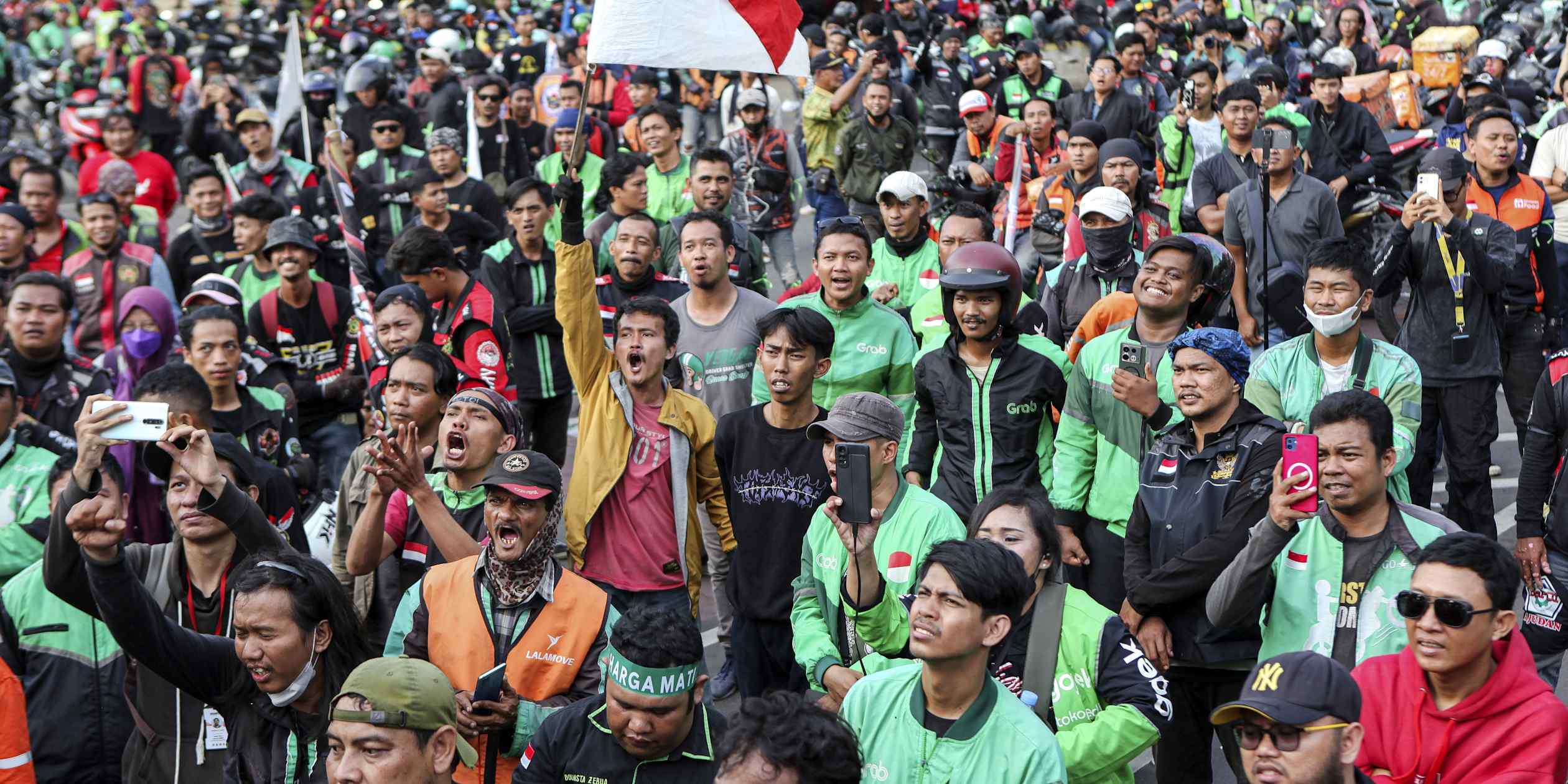
例如,新加坡的Grab及其印度尼西亚竞争对手Gojek等网约车公司都将司机定义为“合作伙伴”。这些公司表示,他们正在研究新法。
Ride-hailing companies, for example, such as Singapore-based Grab and its Indonesian rival Gojek, define their drivers as "partners." The companies said they are reviewing the new law.
普里亚迪表示,许多企业尚未收到该法律的副本,并对具体实施方式感到担忧。她说,在印度尼西亚投资的美企将继续与政府进行对话,以寻求双赢的解决方案。
Priadi said many businesses have yet to receive a copy of the law and are concerned about how it will be implemented. She said U.S. companies investing in Indonesia will continue discussions with the government to seek a win-win solution.
“我们需要时间来消化这些条款,并计算它们对企业的影响,”Priadi对记者说。“像这样的法规变化,在印度尼西亚做出投资决定时也会被纳入考量。这些变化也引发了相当大的争论和困惑。”
"We need time to digest the provisions and calculate their impact on businesses," Priadi told reporters. "Changes to regulations like these are also taken into consideration when making investment decisions in Indonesia. They have also sparked considerable debate and confusion."
日惹加查马达大学的劳动法讲师Nabiyla Risfa表示,非正式工人在新法律下获得了“更明确的保护”,但她警告称,具体实施细节“仍然不明朗”。监督组织BPJS Watch的劳工权利倡导者Timboel Siregar则表示,该法律对投资的影响将取决于其他措施。他强调,更强大的劳工保护应伴随着更简化的投资程序以及更完善的法律确定性,以推动生产力和企业持续经营。“还必须解决腐败、非法收费和官僚障碍等问题,才能鼓励企业投资,”Siregar说。
Nabiyla Risfa, a labor law lecturer at Gadjah Mada University in Yogyakarta, said informal workers are gaining "more explicit protection" under the new law but cautioned that the implementation details "remain unclear." Timboel Siregar, a labor rights advocate at watchdog BPJS Watch, said the law's effect on investment will depend on other measures, asserting that stronger labor protections should be accompanied by simpler investment procedures and better legal certainty to foster productivity and business continuity. "Corruption, illegal levies and bureaucratic hurdles must also be addressed to encourage businesses to invest," Siregar said.