
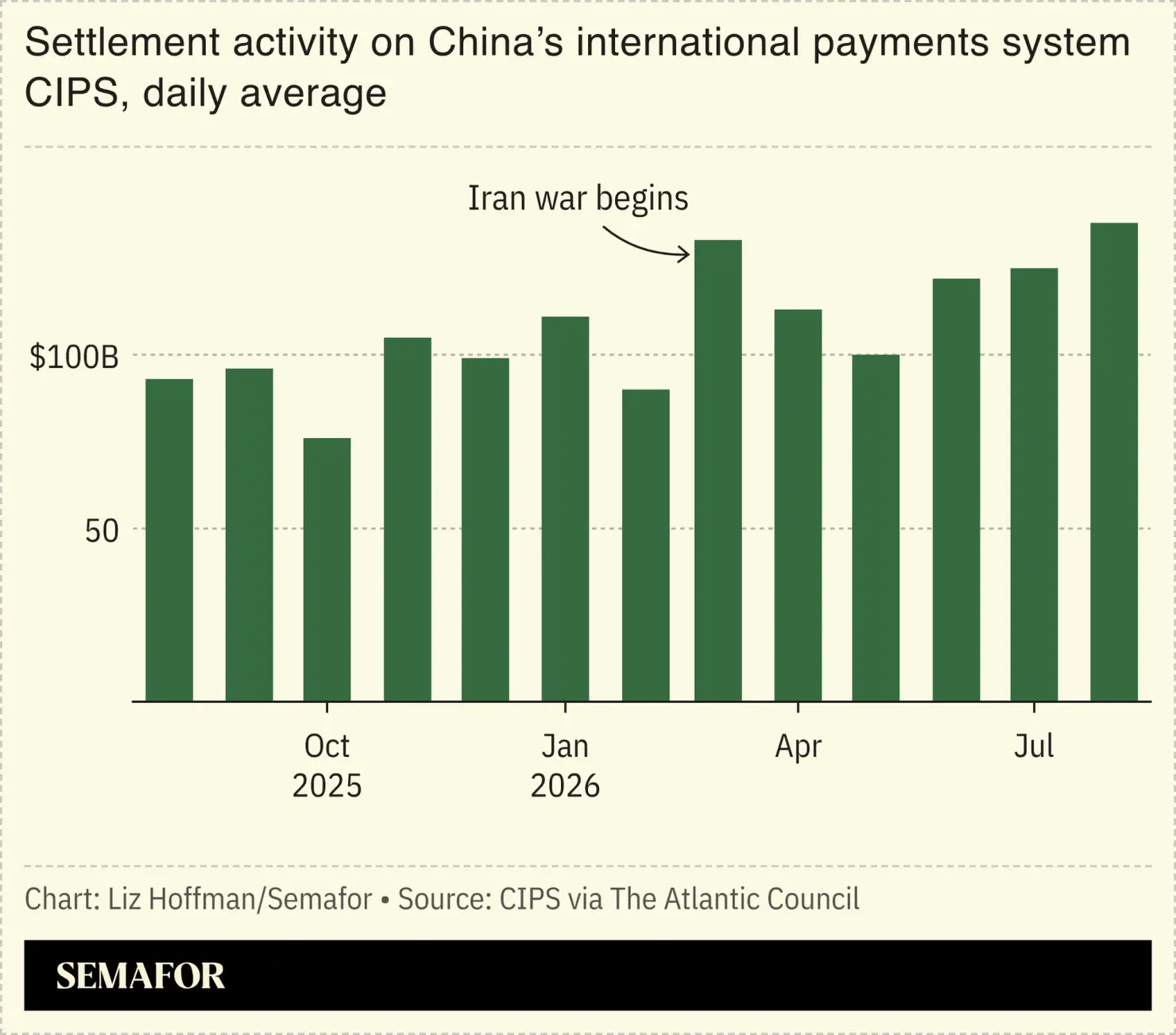
中国与美元计价体系相抗衡、用于全球银行间资金快速划转的系统,在8月创下了单日交易量新高。
China’s competitor to the dollar-denominated system that zips money between global banks saw record daily volume in August.
今年春季因伊朗冲突导致受制裁企业寻求规避华盛顿制裁而出现的交易激增,现在看起来不再像是一个短暂的波动,而更像是北京构建平行金融基础设施努力获得的一个永久性的、尽管微小的助推。这并不意味着美元的消亡。
A spike last spring, as the Iran war sent sanctioned companies looking for a way around Washington, now looks less like a blip and more like a permanent, if small, leg-up for Beijing’s efforts to build a parallel system of financial plumbing. This isn’t the death of the dollar.
大西洋理事会研究员尹洁茜和Lize de Kruijf首次向Semafor分享的新数据显示,美元仍然支撑着大多数全球贸易和外汇交易。(试着不通过美元将土耳其里拉兑换成印度卢比。
New data from Atlantic Council researchers Jessie Yin and Lize de Kruijf shared first with Semafor, shows the greenback still underpins most global trade and foreign-exchange transactions. (Try converting Turkish lira to Indian rupees without going through the greenback.)“The top line numbers all remain stable,” said Josh Lipsky, the Atlantic Council’s chair of international economics.
)“宏观数字依然保持稳定,”大西洋理事会国际经济学主席乔什·利普斯基表示。“但如果深入细节,会发现一些令人担忧的迹象。”迄今为止,中国推翻美元霸主地位的努力主要还只是个奇观。
“But look underneath the hood and there’s some worrying signs.”China’s efforts to dethrone the dollar have so far mostly been a curiosity.
尽管北京通过央行互换协议向发展中国家大量输送本币,但人民币在全球央行储备中的占比自2022年以来实际上已有所下降。
Renminbi’s place in global central-bank reserve coffers has actually fallen since 2022, despite Beijing shoveling its currency into developing economies through central-bank swap lines.
但危机可以重塑局面:自俄罗斯入侵乌克兰以及西方金融网络随之将俄罗斯资产冻结这一武器化举措以来,北京跨境银行间支付系统(CIPS)的直接参与者数量已翻了一番多。— 丽兹·霍夫曼
But crises can reset the board: The number of direct participants in Beijing’s cross-border interbank payment system has more than doubled since Russia’s invasion of Ukraine, and the resulting weaponization of Western financial networks to freeze Russian assets. — Liz Hoffman