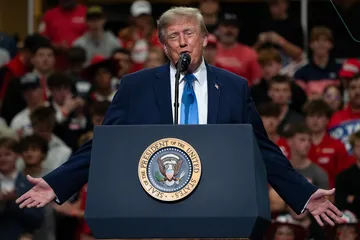
唐纳德·特朗普大幅削减了美国对拉丁美洲的援助,尽管该地区国家接连选出了与他立场一致的政府。
Trump has slashed US aid to Latin America even as country after country has elected governments aligned with him.
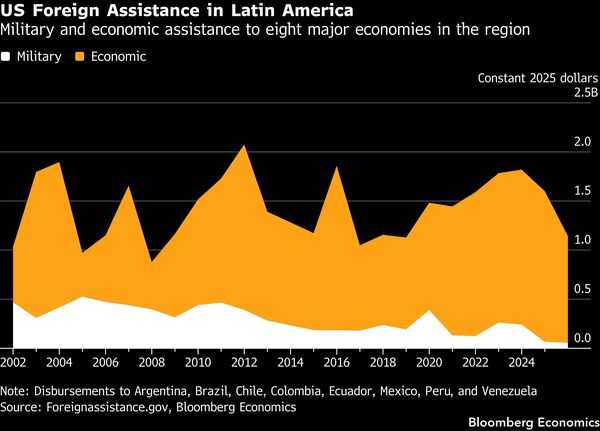
尽管华盛顿重新将焦点转向该地区,但根据彭博经济研究(Bloomberg Economics)汇编的数据,去年其八大主要经济体的军事援助骤降至仅5600万美元,创下至少自2001年以来的最低纪录。
Despite Washington’s renewed focus on the region, military aid to eight of its major economies slumped to just $56 million last year, the lowest since at least 2001, according to data compiled by Bloomberg Economics.
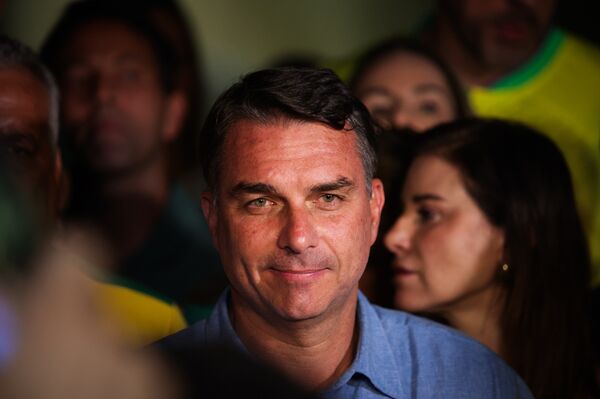
特朗普的盟友弗拉维奥·博尔索纳罗在周日的巴西总统选举中名列第一,并成为在10月25日决选中击败现任总统路易斯·伊纳西奥·卢拉·达席尔瓦的热门人选。如果博尔索纳罗获胜,墨西哥将成为该地区唯一一个不由与特朗普立场一致的政府领导的主要经济体。
Trump ally Flavio Bolsonaro finished first in Sunday’s Brazilian presidential election and is the favorite to win the Oct. 25 runoff against incumbent Luiz Inácio Lula da Silva. A Bolsonaro victory would leave Mexico as the only major regional economy not led by a government aligned with Trump.
然而,特朗普并没有金援这些友好的政府,而是施压它们提高国防预算、购买美国武器,并加入美国主导的打击贩毒集团的行动。
Yet rather than bankroll friendly governments, Trump is pressing them to boost defense budgets, buy US weapons and join US-led operations against drug cartels.
自2023年以来,特朗普的盟友赢得了整个拉丁美洲的多场选举,包括阿根廷、智利、秘鲁和哥伦比亚。自1月份美军抓获委内瑞拉总统尼古拉斯·马杜罗后,委内瑞拉的社会主义政府重新向华盛顿靠拢。
Since 2023, Trump allies have won elections across Latin America, including in Argentina, Chile, Peru and Colombia. Venezuela’s socialist government realigned with Washington after US forces captured President Nicolás Maduro in January.
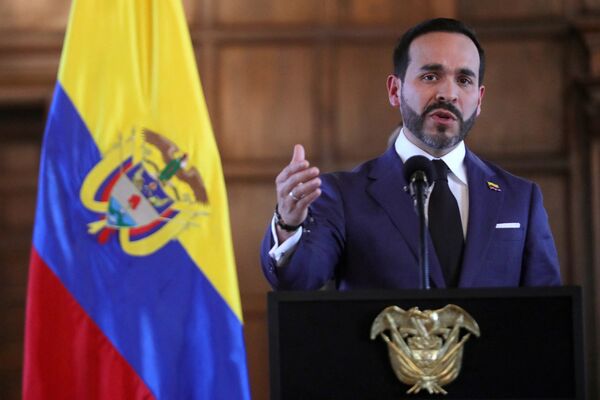
哥伦比亚自2000年代初以来一直是该地区接受美国军事援助最多的国家,自右翼律师阿韦拉尔多·德拉埃斯普列拉于8月上台以来,该国已获承诺将获得新的援助。然而,即便美国国务院计划在哥伦比亚、厄瓜多尔、秘鲁和巴拿马之间分配的5200万美元额外军事融资,也只是当年哥伦比亚一国在克林顿时期旨在向波哥大输送数十亿美元安全援助的反毒品和反叛乱计划——“哥伦比亚计划”(Plan Colombia)鼎盛时期所获资金的九牛一毛。
Colombia, the largest recipient of US military aid in the region since the early 2000s, has been promised new help since right-wing lawyer Abelardo de la Espriella took power in August. But even the $52 million in additional military financing the State Department plans to divide among Colombia, Ecuador, Peru and Panama is a fraction of what Colombia alone received at the height of Plan Colombia, the Clinton-era counter-narcotics and counterinsurgency program that funneled billions of dollars in security assistance to Bogotá.
这与美国先前的对外政策形成了鲜明对比。在“哥伦比亚计划”的鼎盛时期,仅在哥伦比亚一地,华盛顿每年就在军事、警察和反毒品项目上花费数亿美元。
The contrast with previous US campaigns is stark. At Plan Colombia’s peak, Washington was spending hundreds of millions of dollars a year in Colombia alone on military, police and counternarcotics programs.
“外国的军事资助已经不再存在,但外国的军事销售仍在继续,”华盛顿战略与国际研究中心的研究员亨利·齐默(Henry Ziemer)表示。“军事出口是我们可以用来振兴美国工业基础的一种方式,但美国并不愿意免费提供这些军事产品;美国希望其他国家为此付费。”虽然特朗普拒绝提供财政支持,但他通过在其他情况下派遣军队来履行自己的承诺。
“Foreign military financing is out. Foreign military sales are in,” said Henry Ziemer, a fellow at the Center for Strategic and International Studies in Washington. “Military exports are one way we can revitalize the US industrial base, but there’s not a lot of appetite to give those away. The US wants people to pay for it.”While Trump has shunned financial support, he has committed resources in another way by deploying troops in some situations.
今年3月,特朗普推出了名为“美洲盾牌”(Shield of the Americas)的反犯罪联盟,已有14个拉丁美洲国家加入了该联盟;国防部长皮特·赫格塞斯(Pete Hegseth)在8月表示,多个国家已同意与美国进行联合打击行动。最近,美军参与了厄瓜多尔的一次警方突袭行动,并在巴拿马接受了丛林作战训练。
Fourteen Latin American countries signed onto Trump’s Shield of the Americas, an anti-crime alliance he launched in March. Several countries have agreed to conduct joint strikes with the US, Defense Secretary Pete Hegseth said in August. US troops have recently joined a police raid in Ecuador and trained in Panama for jungle operations.
此外,美国军方称,在对涉嫌运输毒品的船只的打击行动中,已击毙了220多人。
Separately, US forces have killed more than 220 people in strikes on vessels the military says were carrying drugs.
特朗普对拉丁美洲的政策被称为“唐罗主义”(Donroe Doctrine),这一名称是对19世纪美国“门罗主义”(Monroe Doctrine)的戏仿——门罗主义主张美国在西方半球的主导地位。
Trump’s approach to Latin America has been dubbed the “Donroe Doctrine,” a play on the Monroe Doctrine, the 19th-century policy asserting US dominance in the Western Hemisphere.
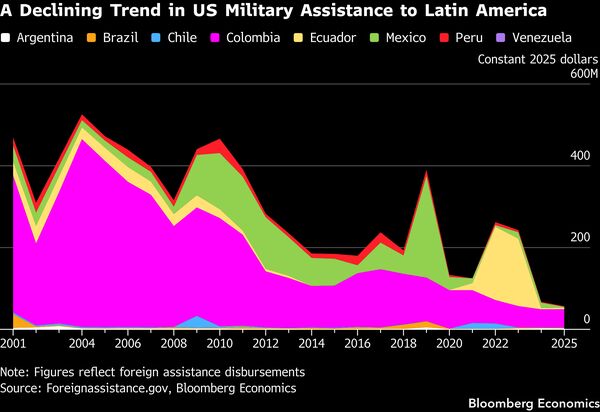
“至少到目前为止,实际的援助力度并未与特朗普的言论相匹配;与此同时,美国的对外援助整体上也在减少,”彭博经济研究所(Bloomberg Economics)的希梅娜·苏尼加(Jimena Zuniga)指出。五角大楼和国务院均未回应相关评论请求。
“The actual assistance flows have not moved in tandem with rhetoric, at least so far, amid a broader pullback in US foreign assistance,” said Bloomberg Economics’ Jimena Zuniga. The Pentagon and the State Department did not respond to requests for comment.
此前的美国政府也一直重视该地区的经济合作;在2012年,美国对该地区8个主要经济体的各类支持(包括军事援助)达到了20多亿美元(按通货膨胀因素调整后的金额)。去年,这一数字下降到了约一半,仅为11亿美元。
Prior administrations also focused on economic initiatives in the region, which at its peak in 2012 brought support of all kinds to eight of its major economies — including for military — to over $2 billion, adjusted for inflation. Last year, it was down to close to half of that: $1.1 billion.
彭博经济研究所指出,意识形态因素并非决定哪些国家能够获得美国支持的主要因素。墨西哥虽然政府立场偏左,但长期以来一直是美国的重要合作伙伴;尽管克劳迪娅·谢因鲍姆(Claudia Sheinbaum)总统多次拒绝任何外国军事行动进入该国境内,美国仍继续与墨西哥保持合作。
Ideological considerations aren’t the main factor determining which countries got US support, Bloomberg Economics wrote. Mexico, which has a left-leaning government, has long been a key collaborator, even though President Claudia Sheinbaum has repeatedly rejected any foreign military operations in her country.
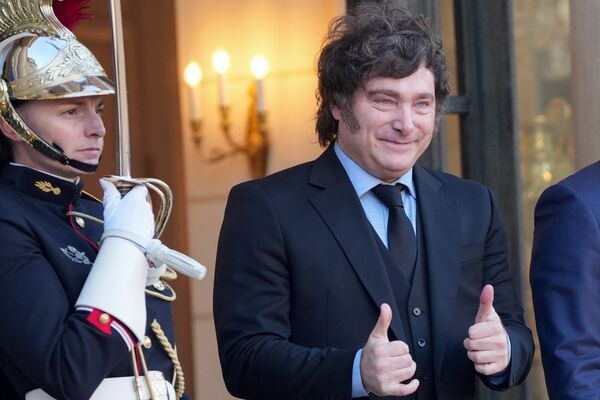
特朗普政府还在其他方面采取了偏袒政策,在阿根廷关键选举前夕承诺向米莱提供财政支持,并在巴西法院拒绝撤销对前总统博索纳罗未遂政变指控后对其实施关税惩罚。
Trump’s government has played favorites in other ways, pledging financial support to Argentina’s Javier Milei before critical elections and punishing Brazil with tariffs after its courts refused to drop charges against former president Jair Bolsonaro for an attempted coup.
彭博经济研究的祖尼加和考特尼·麦克布莱德写道:“正如对阿根廷的财政生命线和对巴西的巨额关税分别所表明的那样,美国拥有其他工具来支持盟友并施压其视为对手的国家。尽管如此,迄今为止援助资金流向的演变可能表明美国战略存在局限性。”
“The US has other tools to support allies and pressure perceived foes, as the financial lifeline to Argentina and steep tariffs on Brazil illustrate, respectively,” wrote Bloomberg Economics’ Zuniga and Courtney McBride. “Still, the evolution of assistance flows so far may point to limits on the US strategy.”