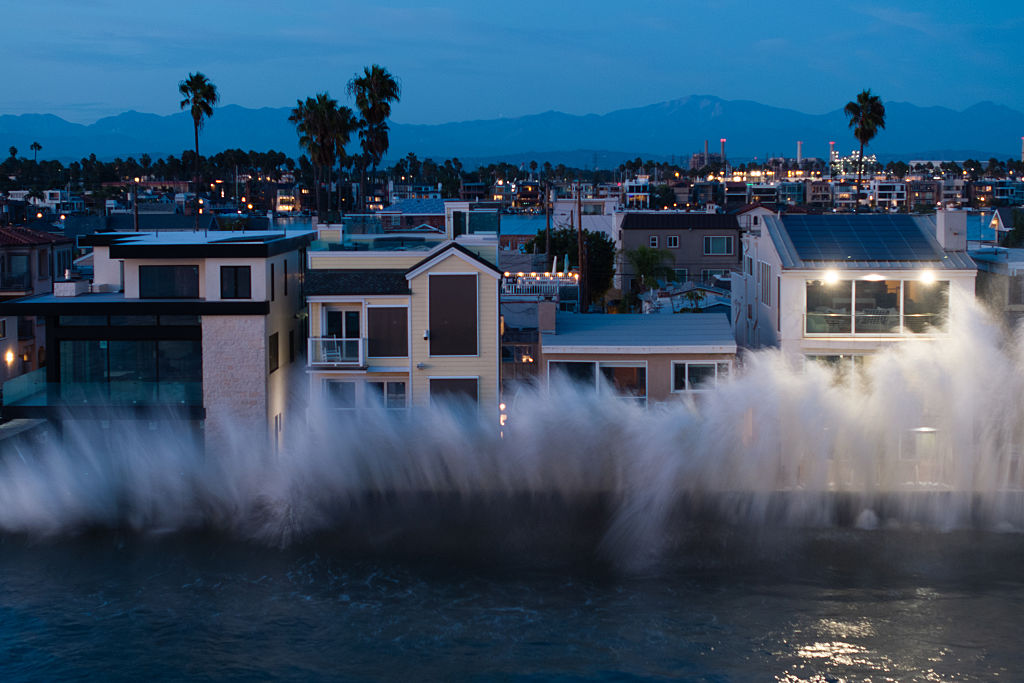
由厄尔尼诺现象引发的一股巨大波浪能量流——即所谓的开尔文波——预计将沿西海岸传播,导致海平面上升,并增加沿海城镇遭受海岸侵蚀的风险。
A large pulse of wave energy generated by El Niño conditions, known as a Kelvin wave, is expected to travel up the West Coast, raising sea levels and increasing the risk of coastal erosion for beachfront towns.
受此影响,本月西海岸的海平面预计将上升最多达1英尺。科学家指出,这一现象不仅会对人类生存环境造成威胁,还会给沿海的海洋生物带来致命压力。什么是开尔文波?
As a result, the West Coast can expect to see sea levels begin to rise by up to 1 ft. this month—and scientists say that the phenomenon can create dangerous conditions for humans, and place deadly stress on marine wildlife as it travels up the coastline. What is a Kelvin wave?
开尔文波以发现该现象的苏格兰工程师、数学家兼物理学家威廉·汤姆森(即开尔文勋爵)的名字命名。它们与我们通常看到的拍击海岸的普通海浪截然不同,属于行星尺度的波浪——即规模巨大、移动缓慢且绵延数千英里的水体。温暖的海水会沿着赤道缓慢向南美洲、中美洲及北美洲移动,其影响可能持续数月之久。
Kelvin waves are named after the Scottish engineer, mathematician, and physicist who identified the phenomenon, William Thomson, also known as Lord Kelvin. They are not like the typical waves you see crashing into the beach. They’re planetary waves—large, slow-moving masses of water that can span thousands of miles. Warm water slowly moves along the equator, towards South, Central and North America and can raise sea level for months.
从表面上看,开尔文波的影响似乎并不明显。“它会将温暖的海水推向更深的海底,并在海面形成隆起,”奥尔巴尼大学大气科学教授保罗·朗迪解释道。这种隆起现象便会导致海平面上升。“表面上看起来没什么变化,但海平面其实会比正常水平高出几厘米而已。”虽然增幅看似微小,但结合其他因素后却可能对海岸线产生重大影响。
On the surface, their impact might not be particularly noticeable. “It pushes the warm water down deeper and produces a ridge in the ocean itself,” says Paul Roundy, professor of atmospheric science at University at Albany. That causes sea levels to rise, he says. “You would not see anything different, but the sea level would be just a few centimeters higher than it would normally be.”While it might not sound like much, coupled with other factors, it can have a major impact on coastlines.
“如果将这种海平面上升与常规潮汐或强潮汐叠加,再加上厄尔尼诺现象引发的暴风雨,便可能显著加剧海岸侵蚀与洪水风险,”朗迪补充道。上一次出现开尔文波是什么时候?
“[If] you add that sea level change to the normal tides or strong tide, and then potentially add a storm on top of it, which El Niño intensifies, then it can start to have a meaningful effect on changing the beach erosion and flooding at the coast,” says Roundy. When was the last Kelvin wave?
本季西海岸已出现过多次开尔文波。“截至目前,北美西海岸大概已经经历了三到四次这样的波浪,”朗迪说道。
This season has already brought a few Kelvin waves to the West Coast. “We've already had probably three or four of them up along the west coast of North America so far,” says Roundy.
今年,包括马里布、拉古纳海滩和长滩在内的多个加利福尼亚州沿海城镇都出现了严重的海岸侵蚀现象。造成这一现象的原因多种多样,其中包括厄尔尼诺现象以及太平洋飓风的影响。9月底,加利福尼亚州州长加文·纽森宣布该州进入紧急状态,以便为应对厄尔尼诺可能带来的影响做好准备。
A number of coastal California towns, including Malibu, Laguna Beach, and Long Beach, have already seen significant coastal erosion this year—due to a number of factors, including El Niño and Pacific hurricanes. At the end of September, California Governor Gavin Newsom declared a state of emergency to help prepare the state for potential El Niño impacts.
上一次较为显著的厄尔尼诺现象发生在2015年至2016年间,期间共出现了五次开尔文波。
The last strong El Niño event, which took place from 2015-2016, had five Kelvin waves.
相比之下,2022年至2023年的厄尔尼诺现象并未引发强烈的开尔文波。其原因在于其他多种气象因素——比如较弱的西风——未能形成促使开尔文波形成的环境条件。开尔文波与厄尔尼诺现象之间有何关联呢?
On the other hand, the 2022-2023 El Niño, did not produce strong Kelvin waves. That’s because a number of other weather events—including weak westerly winds—did not produce the kind of conditions meant to form them. How are Kelvin waves linked to El Niño?
在厄尔尼诺年份,通常将表层暖水推向太平洋西部的信风会减弱或改变方向,导致暖水向东流动,进而形成开尔文波。
Kelvin waves commonly occur during El Niño years, when trade winds that normally push warm surface water toward the western Pacific weaken or change directions, moving warm water east and initiating a Kelvin wave.
关于气候变化对厄尔尼诺现象的影响,科学界仍存在诸多争议。不过,在厄尔尼诺年份,由于暖水向大气中释放热量,全球气温往往会升高。再加上人类活动引发的气候变化已使全球气温屡创新高,科学家们预测2027年很可能成为有记录以来全球最热的一年。
There’s a lot of scientific debate about how climate change is impacting El Niño events. However, global temperatures trend higher during El Niño years, as warm water adds heat into the atmosphere. That, coupled with already record breaking global temperatures due to human caused climate change, has scientists predicting that 2027 is likely to be the world's hottest year on record.