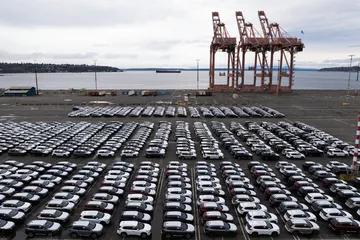
美国与另外14个经济体发表联合声明,承诺应对特定行业的过剩制造产能和生产问题,尽管特朗普政府正准备就这些关税和贸易担忧惩罚部分贸易伙伴。
The US joined 14 other economies in pledging to confront excess manufacturing capacity and production in certain sectors, even as the Trump administration looks to punish some of those trading partners over those concerns.
在密尔沃基举行的近期G20贸易部长会议后发布的联合声明称,各经济体对美国“对该问题的关注”表示欢迎,并指出“国际社会越来越认识到,结构性产能过剩和生产对全球经济和各国经济构成了根本性挑战”。他们表示决心共同努力“进一步研究并采取有效行动”解决产能过剩问题,并将汽车、电动汽车、电池、化工、半导体和太阳能电池板列为重点关注领域。
The joint statement following the recent G20 trade ministers meeting in Milwaukee says the economies welcomed the US “focus on this issue,” citing what they called “increasing international recognition that structural excess capacity and production poses a fundamental challenge for the global economy and individual economies.”They expressed their resolve to work together to “further examine and take effective actions” to address excess capacity, identifying autos, electric vehicles, batteries, chemicals, semiconductors and solar panels as sectors of concern.
美国正在对针对十几个主要贸易伙伴的产能过剩问题展开调查。目前尚不清楚该调查何时结束,但预计将导致对这些经济体征收更高关税。
The US is carrying out an investigation into excess capacity targeting more than a dozen major trading partners. It is not clear when that probe will conclude but it is expected to result in higher tariffs on those economies.
签署联合声明的几个经济体已经成为该调查的目标。与美国共同签署该声明的经济体包括阿根廷、澳大利亚、加拿大、欧盟、法国、德国、印度、意大利、日本、韩国、墨西哥、波兰、土耳其和英国。未签署该协议的G20国家包括中国、巴西、俄罗斯和南非。
Several of the economies that signed the joint statement are already subject to that probe. Economiesg the joint statement with the US included Argentina, Australia, Canada, the European Union, France, Germany, India, Italy, Japan, South Korea, Mexico, Poland, Turkey and the UK G20 countries that did not sign the agreement include China, Brazil, Russia and South Africa.
结构性产能过剩是近期G20贸易部长会议的关键议题之一。美国还主导了关于应对粮食供应链武器化、商品强迫劳动以及改革最惠国关税制度的讨论。
Structural excess capacity was one of the key topics at the recent G20 meeting of trade ministers. The US also led members in discussions on addressing weaponization of food supply chains, forced labor in goods and reforming the most favored nation tariff system.
美国贸易代表杰米森·格里尔在声明中表示:“如果不加遏制,这些问题将继续削弱国内产业、挤压本地生产,并阻碍我们提高工及其家人生活水平的能力。”
“Left unchecked, these issues will continue to cripple domestic industries, displace local production, and hinder our ability to raise the standard of living for workers and their families,” US Trade Representative Jamieson Greer said in a statement.