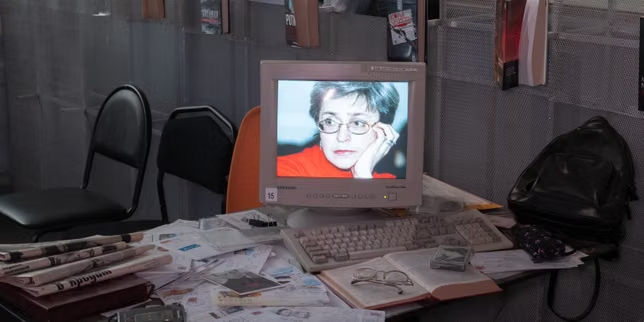
10月7日,弗拉基米尔·普京庆祝他的74岁生日。同一天,也是记者安娜·波利特科夫斯卡娅(1958-2006)被谋杀20周年纪念日。她在莫斯科公寓楼的入口处被枪杀。枪手当时就在那里等待她;他的同伙们整天跟踪着安娜,并不断向他报告她的行踪。
On October 7, Vladimir Putin celebrates his 74th birthday. That same day marks 20 years since the murder of journalist Anna Politkovskaya [1958-2006], who was executed in the entryway of her apartment building in Moscow. The gunman was waiting for her there; his accomplices had followed Anna all day and kept him informed of her movements.
对安娜·波利特科夫斯卡娅来说,一个接受谎言的社会最终也会接受暴力。她在车臣战争期间和战后撰写的报道,曝露了俄罗斯占军的骇人听闻的宣传和谎言。她还谴责了几乎没有人权保障的环境中对身体暴力的滥用。她清楚自己所冒的风险,但她也清楚静默不言是多么不可接受。
For Anna Politkovskaya, a society that accepts lies ends up accepting violence as well. Her reports from Chechnya, written during and after the war, exposed the shocking propaganda and lies of the Russian occupying forces. She also denounced the relentless use of physical violence in an environment almost devoid of rights. She knew the risks she was taking, but she also knew how unacceptable it was to remain silent.
我记得,在莫斯科诺瓦亚·加泽塔的新闻室里,她曾等待总编德米特里·穆拉托夫是否会批准她的最新文章,她是否对一家报纸过于挑衅——一家报纸早在2004年就时刻担惧着被当局关闭的命运。那就是当时的处境,但似乎还有些许希望。谁能想到,20年后,普京仍然掌权,并且发动一场将造成数十万人死亡的战争?
I remember how, in the Moscow newsroom of Novaya Gazeta, she would wait to see whether editor-in-chief Dmitry Muratov would approve her latest article, whether she had gone too far for a newspaper that, as early as 2004, lived in constant fear of being shut down by the authorities. That was the situation, and yet it felt as if not everything was lost. Who could have imagined that, 20 years later, Putin would still be in power and waging a war that would cost hundreds of thousands of lives?
我在第二次车臣战争(1999-2000)主要阶段结束后认识了安娜,这场战争是普京发起的第一次冲突。她经常前往高山地区,将这些 trips 称为“工作任务”:对她来说,这场战争是俄罗斯的一次灾难。她认为它已经渗透到每个人的血液中,拒绝顺从的人则被沉默。
I met Anna after the end of the main phase of the Second Chechen War (1999-2000), the first conflict started by Putin. She traveled constantly to the Caucasus, referring to these trips as "work assignments": To her, this war was a disaster for all of Russia. She believed it had seeped into everyone's pores, and those who refused to conform were silenced.
我的纪录片《科卡——来自车臣的白鸽》(2005)展示了如何武装着相机和笔记本的车臣女性们记录了俄罗斯军队所犯下的暴行。她们徒劳地试图让国际法庭凭借她们的辛勤调查将罪犯绳之以法。
My film Coca, la colombe de Tchétchénie (Coca – the Dove from Chechnya, 2005) showed how Chechen women, armed with a camera and a notepad, documented atrocities committed by the Russian army. They worked, in vain, to get an international court to convict the perpetrators, based on their painstaking research.
在那些年里,当我遇见她时,安娜经常陪同她的车臣朋友詹纳普·加沙耶娃。詹纳普出生在哈萨克斯坦,这个地方曾被斯大林流放车臣人。她是我电影中的一个重要人物。她和安娜都是从事这一领域的女性。在那些年里,成千上万的人失踪了,没有留下任何痕迹,也从未 reappear。我拍摄的这些女性给我看了装满这些失踪人们照片的文件夹。安娜试图追踪他们的命运,找到责任人。她承认战争改变了她,使她变得更加坚强,她比以往任何时候都更加决心。
When I met her during those years, Anna was often accompanied by her Chechen friend, Zainap Gashaeva, a central figure in my film, who was born in Kazakhstan, where Stalin had deported the Chechen people. Both were women in the field. During those years, thousands of people vanished without a trace and never reappeared. The women I filmed showed me binders filled with photos of these missing people. Anna tried to retrace their fates and find those responsible. She acknowledged that the war had changed her, that she had become tougher, and she was more determined than ever.