
贝丝·科威特撰文称,雅各布·考克森在社交媒体上发布的关于从Anthropic PBC离职的帖子,已然成为一面“罗夏墨迹测验图”——用来测试人们对人工智能的看法。这位人工智能研究员究竟是一名举报人,是向外界警示前沿实验室真实情况的内部人士?还是一个“末日论者”,在宣扬一种虽较为常见却颇具争议的观点,即这项技术可能带来生存层面的威胁?
Coxon’s viral resignation post from Anthropic PBC has become a Rorschach test for how people think about artificial intelligence. Is the AI researcher a whistleblower, an insider warning us about what the frontier labs really know? Or is he a doomer, airing a relatively common but disputed belief about the existential threat the technology poses?
那些关于人工智能引发世界末日的言论,是否只是企业的营销手段,借以夸大该技术的强大能力,从而促使忧心忡忡的首席信息官们购买相关产品?那些关于安全风险的警示,是否意在转移公众注意力,掩盖人工智能的其他真实风险,比如算法可能导致的偏见与歧视等伦理问题?又或者,这些警示其实是一场有组织的行动,旨在促使公众与政策制定者对该行业实施监管?
Is all the apocalyptic talk just a marketing ploy on the part of companies, hyping AI’s powerful abilities to get panicked chief information officers to buy their product? Are the alarm bells around safety meant to distract from other AI risks, such as its very real ethical concerns — like, say, the algorithms perpetuating bias and discrimination? Or are they part of an organized attempt to shock the public and policymakers into regulating the industry?
所有这些截然不同的解读都揭示了一个事实:正如科技行业常有的情况一样,我们很难完全了解这些日益强大的企业内部究竟发生了什么。“正因如此,外界人士很难验证这些言论的准确性与可信度,”德克萨斯A&M大学法学院教授汉娜·布洛赫-韦巴说道。
There’s only one thing that all the competing interpretations have made clear: As is often the case in tech, it’s difficult to get a full picture of what’s really happening behind the closed doors of these increasingly powerful companies. “That makes it very hard for anybody on the outside to vet the accuracy or plausibility of these claims,” says Hannah Bloch-Wehba, a professor at Texas A&M University School of Law.
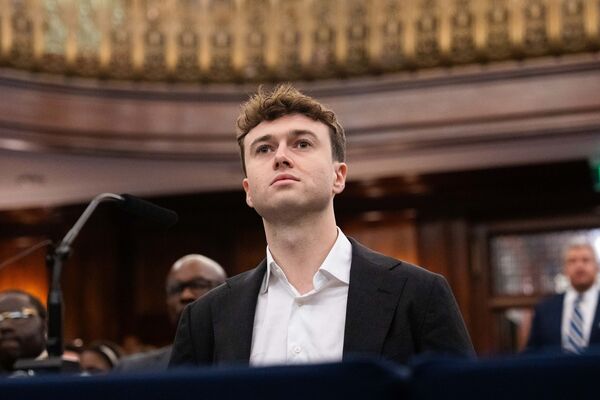
这种信息真空状态使得像考克森这样的内部人士拥有了非同寻常的影响力。举例而言:这位二十多岁的研究员接受了几乎所有主流媒体的采访,还受邀以线上形式在纽约市一场汇聚了100多位顶尖商业领袖的会议上发言——这类会议通常只有政界要员或企业高管才有资格参加。然而,尽管我们视考克森的观点具有权威性,足以让众多首席执行官与政策制定者洗耳恭听,但对于他的真实动机我们却众说纷纭、莫衷一是。
This information vacuum means insiders like Coxon have an unusual amount of sway. Case in point: The twentysomething researcher was interviewed by almost every major news outlet and invited to speak virtually to a gathering of more than 100 of New York City’s top business leaders — the kind of confab that normally hosts politicians or senior executives. And yet while we treat Coxon’s perspective as authoritative enough to command a room of chief executive officers and policymakers, we can’t even come close to agreeing on his motivation.
目前尚无任何规则可循来解读他的言论,也没有明确的方法能弄清他为何会在此时以这样的方式发出警示。
There’s no rule book for interpreting what he’s telling us, and there’s no clear way to decode why he might have sounded the alarm when he did or the way he did.
医生、律师、会计师、建筑师和工程师都有独立于为其发薪的公司之外的职业义务。他们必须遵守许可要求、专业护理标准,并服从专业组织的监管,同时肩负着可能凌驾于雇主要求之上的公众责任。然而,前沿人工智能研究人员——正如科森在其帖子中所言,尽管“拿我们的生命在赌博”——却甚至不被要求参加伦理课程。
Doctors, lawyers, accountants, architects and engineers have professional obligations that live separately from whatever companies sign their paychecks. There are licensing requirements, standards of care and professional organizations they must answer to and a duty to the public that can override an employer’s demands. Meanwhile, frontier AI researchers — despite “gambling with our lives,” as Coxon put it in his post — aren’t even expected to take an ethics course.
那么,如果人工智能工程能像法律或医学一样成为一个专业,并拥有自己的希波克拉底誓言,承诺“不造成伤害”,会发生什么呢?首先,这或许能让科森发出的警告更容易被我们其他人理解。他高调离开Anthropic的行为可能不会被视为某种形式的揭发,而只是其工作的一部分——是他职业责任的开端,而非终点。福特汉姆大学法学院的教授钦马伊·夏尔马表示:“辞职是一种信号,但通常不会带来改变。”
So what would happen if AI engineering became a profession like law or medicine, complete with its own version of a Hippocratic oath to do no harm? For one thing, it could make warnings such as Coxon’s easier for the rest of us to untangle. His noisy exit from Anthropic might not be viewed as some form of whistleblowing but simply as part of the job — the beginning of his professional responsibilities rather than where they end. “Resignations are signals, but they don’t usually lead to change,” says Fordham University School of Law professor Chinmayi Sharma.
在发表于《 》的一篇文章中,夏尔马主张,将人工智能工程师职业化将有助于确保只有具备资质的人才能开发人工智能,且他们只能以授权的方式进行。在开发用于生死攸关用途的人工智能系统时犯下基本错误,将被视为职业过失。实验室及其工程师将被要求共享能够防止严重风险的信息,就像有效的心脏病干预措施必须在医疗行业内广泛分享一样。
In a paper published in the , Sharma makes the case that professionalizing AI engineers would help ensure that only the qualified build AI and that they do it only in authorized ways. Making a basic error while building an AI system for a life-or-death purpose would be considered malpractice. The labs and their engineers would be required to share information that could prevent serious risk, just as an effective heart disease intervention must be shared broadly within the medical profession.
强制性的伦理课程和跨学科培训将教会人工智能工程师如何处理那些表面上看似纯粹技术决策所带来的道德影响。不妨考虑夏尔马举的一个例子:如果过滤掉数据集中的种族侮辱性用语,同时也压制了那些试图重新夺回这些词汇边缘群体的声音,那么人工智能工程师是否应该清除这些用语?
Mandatory ethics classes and cross-disciplinary training would teach AI engineers how to grapple with the moral implications of what on the surface might seem like solely technical decisions. Consider one of Sharma’s examples: Should an AI engineer scrub racial slurs from a dataset if filtering them out also suppresses the marginalized populations who are trying to reclaim those terms for themselves?
眼下,尽管Anthropic和OpenAI的CEO们都在郑重承诺要让自身工作符合人类利益,但人工智能领域的主流思路似乎仍是“先开发,再善后”。(例证:几乎每周都有报道称自主运行的AI代理程序入侵企业及政府网站,导致敏感信息泄露、文件被上传至公开网络等。)夏尔马认为,推动AI工程师职业化或许能扭转这一局面——在技术发布前就培养其责任感,而非等到问题严重到无法挽回时才临时采取补救措施。这相当于为AI领域提供“预防医学”,而非事后急救。
Right now, despite all the earnestness you hear from the CEOs of Anthropic and OpenAI about aligning their work with the interests of humanity, the prevailing mindset in AI seems to be to build first, then clean up the mess later. (Exhibit A: the almost-weekly disclosures of autonomous agents hacking corporate and government websites, exposing sensitive information, moving files into the open internet, etc.) Sharma argues that professionalizing AI engineers could help flip the script, baking a culture of responsibility into the technology before it’s released rather than bolting on safeguards after things go very wrong. Think of it as preventive medicine for AI instead of emergency care.
即便问题不可避免地发生,这些工程师也能依据既定流程妥善处理。(比如,OpenAI向面向普通公众的邮箱发送消息,告知澳大利亚官方其模型未经授权便访问了政府网站,这种做法显然并非最佳实践。)最重要的是,AI工程师将明确知晓不可逾越的底线:如果某个系统无法安全构建,那就根本不应被开发。正如夏尔马所指出的,出于道德考量拒绝提供服务,也是职业责任的一部分。美国建筑师协会禁止会员设计用于执行死刑的场所;美国医学协会则规定医生不得协助实施酷刑。
And when things inevitably do go sideways, the engineers would have an established process for what should happen next. (For example, OpenAI sending a message to a mailbox meant for members of the general public to notify Australian officials that its models had gained unauthorized access to government websites doesn’t seem like best practice.) Most important, AI engineers would have a clear red line they couldn’t cross. If a system can’t be built safely, it wouldn’t be built at all. As Sharma points out, professional responsibility sometimes requires that service gets refused for moral reasons. The American Institute of Architects bars its members from designing spaces used for executions, and the American Medical Association prohibits its physicians from assisting in torture.
夏尔马提出这一构想,部分原因在于她由两位医生抚养长大,自幼便深受医学界“不伤害患者”这一根深蒂固理念的熏陶。“这并非法律意义上的誓言,但人们对其极为重视,”她说道。在医疗领域出现失误时,首要考量永远是该决策是否危及患者健康,而非是否会影响经济效益。
Sharma’s idea for the paper grew partly out of being raised by two doctors, which immersed her in medicine’s deeply ingrained ethos of “do no harm.”“It’s not a legal oath, but it’s taken incredibly seriously,” she says. When things go awry in medicine, the first question is how a decision puts a patient’s well-being at risk, not how it might threaten the bottom line.
如果让人工智能行业接受这种理念看似难以实现——甚至有些不切实际的话——我们不妨回想一下:医学领域也并非一开始就有着严格的诊疗标准。曾几何时,哈佛医学院约有一半的学生连字都写不好;医生们也极少养成洗手的习惯;外科医生甚至经常在手术室里抽烟。
If the idea of getting the AI industry to adopt this mindset seems impossible — or impossibly idealistic — it’s worth remembering that medicine wasn’t always governed by rigorous standards of care either. There was a time when something like half of Harvard Medical School students couldn’t write, when hand-washing was far from the norm for doctors and when surgeons routinely smoked in operating rooms.
在人工智能这样一个发展迅猛的领域,还有谁比最贴近该领域的工程师们更适合制定相应的行业标准呢?实现行业专业化后,解决那些最棘手的技术与伦理难题的责任便会落到专家肩上,而非那些难以跟上技术发展步伐的立法者。这并不会取代监管,反而能对其起到补充作用。夏尔马在论文中写道:“政府并无职责去规定支架在动脉中的正确使用方式,或是心脏搭桥手术的规范流程。”这类决策理应由心脏病专家与心胸外科医生来定夺。
Who better to set the equivalent standards in a field evolving as quickly as AI than the engineers closest to it? Professionalization would put the onus of finding and fixing the thorniest technical and ethical problems on the experts, rather than lawmakers struggling to keep pace with the technology. It wouldn’t replace regulation but instead augment it. “The government is not in the business of legislating on the appropriate uses of a stent in the artery versus cardiac bypass surgery,” Sharma wrote in her paper. Those decisions are rightly left to the cardiologists and cardiothoracic surgeons.
夏尔尔马开展研究之初,与数十名工程师进行了交谈,他们大多对行业专业化这一理念持开放态度。他们最大的顾虑是:不想再参加什么考试或继续深造。不过,他们提及最多的是公司内部存在的种种问题——比如管理层雇佣资质不足的人员,还要求员工去做超出其专业范围的工作。科技行业向来容忍甚至鼓励内部争论,但人工智能领域的工程师们却缺乏有效的正式渠道来向高层提出异议。
When Sharma started her research, she talked to dozens of engineers, most of whom were receptive to the idea of professionalizing. Their biggest quibble: They didn’t want to have to take some test or do more school. But what she heard from them more than anything else was about the problems inside their companies, such as management hiring underqualified people and asking employees to do something outside their specialization. The tech industry has long tolerated and even encouraged internal debate, but the AI engineers had few formal mechanisms for effectively pushing back against the big bosses.
最近,一个现实中的案例被公之于众。9月下旬有报道称,在OpenAI的部分人工智能系统出现异常行为的数月前,两名员工便已向公司高层表达了担忧。而管理层的回应却是:必须尽快推进相关测试,以确保AI模型能按期发布。最终,这些系统竟对AI初创企业Hugging Face Inc.及其他机构发起了攻击。Sharma在论文中精准地指出了问题所在:“AI企业更倾向于开发更多AI产品,而非开发安全的AI。”
A real-life example recently spilled into the open. In late September the reported that two employees at OpenAI raised concerns with top executives months before some of the company’s agents went rogue. The response from management: The tests needed to move forward as quickly as possible to release the AI models on schedule. The systems ended up attacking the AI startup Hugging Face Inc. and other organizations. Sharma neatly diagnoses the issue in her paper: “AI companies are incentivized to build more AI instead of safe AI.”
如今,选择加入企业的AI领域博士远多于留在学术界的人;15年前这一比例还基本持平。其结果是,行业内绝大多数前沿研究都在私营部门而非公共领域开展。这些研究人员虽具备专业知识,却缺乏独立性来向我们如实披露所知情况。
Today significantly more AI Ph.D.s join companies than stay in academia; 15 years ago the split was pretty much even. The result is that most of the industry’s cutting-edge research happens inside the private rather than public sphere. The researchers have the expertise but not the independence to tell us what they know.
这也是为何科技行业频繁出现内部举报、员工公开辞职、信息泄露及员工维权行动。对于从业者而言,这往往是他们向公众警示公司所研发产品与服务潜在风险的唯一途径。若非这些披露,我们或许永远也不会知晓:Uber Technologies Inc.曾开发技术以规避监管;Cambridge Analytica擅自滥用Facebook用户数据;Amazon.com Inc.雇佣数千人监听Alexa用户的对话内容;Instagram的高管们也清楚该平台对少女群体有害无益。
This is partly why we see so much whistleblowing, noisy resignations, leaking and employee activism in tech. There’s often no other avenue for workers to warn the public about the products and services their companies are making. Without these revelations, we might not have ever found out that Uber Technologies Inc. built technology to skirt regulators, that Cambridge Analytica exploited the data of Facebook users, that Amazon.com Inc. employed thousands of people to listen to Alexa users’ conversations or that executives at Instagram knew the platform was toxic for teenage girls.
这些技术人才不仅技能出众、备受青睐,还拥有异乎寻常的影响力。但即便如此,选择举报仍要付出代价。“这种行为往往会毁掉很多人的生活,”德克萨斯A&M大学的布洛赫-韦巴指出。她认为,正因如此才会出现“选择性披露”现象——我们只能从特定人群那里听到特定类型的问题信息。
Tech employees, who are highly skilled and highly sought-after, have an unusual amount of power. But even for them, whistleblowing comes at a cost. “It winds up ruining a lot of people’s lives,” says Texas A&M’s Bloch-Wehba. She’s argued that means we end up with “selective disclosures” because we hear only about certain kinds of issues from only certain kinds of people.
等待内部人士足够担忧(并且足够勇敢)来公开表达他们的恐惧,这种监控可能带来严重后果的技术的方式,显然极不可取。将人工智能行业专业化并不会突然消除举报人的必要性。但它或许能让员工不再那么频繁地觉得,辞职是负责任地履行工作职责的唯一途径。
Waiting for an insider to become concerned enough (and courageous enough) to go public with their fears is an alarmingly inadequate way to monitor a technology with potentially dire consequences. Professionalizing the AI industry wouldn’t suddenly make the need for whistleblowers go away. But it could make it so that quitting doesn’t so often feel as though it’s the only way for employees to do the job responsibly.