
华尔街专业人士表示,尽管Meta Platforms Inc.的Muse似乎已经接过了接力棒,但芯片制造商仍然是股票投资者参与顶尖人工智能代理体竞赛的最佳选择。
Street pros say chipmakers remain the best way for equity investors to play the race for the top artificial intelligence agent even as Meta Platforms Inc.’s Muse seems to have seized the baton.
“领导地位几乎就像一场‘热土豆’游戏,”Paisley Nardini说道。她担任Tema ETFs的投资策略主管,负责管理38亿美元资产,而该基金持有Meta的股份。“我已经听到有人开玩笑说,几周后我们就会把Muse抛在脑后,转而关注其他东西。”人工智能代理体能处理诸如预订或管理财务等多步骤任务。随着投资者评估哪些产品可能成为企业和消费者的首选,并考量它们可能对传统商业模式造成的颠覆性影响,这些代理体的流行已在市场上掀起波澜。
“Leadership is almost like a game of hot potato,” said Paisley Nardini, who helps oversee $3.8 billion as head of investment strategy at Tema ETFs, which owns Meta shares. “I’m already hearing people joke about how we’ll forget about Muse for something else in a couple weeks.”AI agents handle multi-step tasks like making reservations or managing finances. Their popularity has created waves in the market as investors weigh which products are likely to emerge as favorites for businesses and consumers — while also assessing the potential disruptive impact they could have on traditional business models.
然而,在这些疑问之中,有一点变得愈发清晰:这些新型代理体所需的计算能力远超上一代主要以聊天机器人形式存在的人工智能工具。这意味着,芯片制造商以及人工智能基础设施领域的其他相关股票将持续受到需求支撑。自近四年前ChatGPT问世以来,这些领域一直是布局这项新兴技术的热门选择。
Amid those questions, however, what’s become clear is that these new agents require more computing power than the previous generation of AI tools, which largely took the form of chatbots. That means there should be continuing demand for the shares of chipmakers and other areas of the AI infrastructure landscape, which have been the favored ways to position for the emerging technology since ChatGPT debuted nearly four years ago.
“与其试图押注哪家公司最终会拥有最佳代理体,我们更希望持有支撑所有代理体的基础——即无论哪家企业领先,都能受益的股票,”Lear Investment Management的首席投资官Rick Lear说道。他的集中型投资组合专注于那些有望从代理体崛起中获益的公司,例如Nvidia Corp.、Micron Technology Inc.和电力公司Williams Cos Inc.。
“Rather than trying to play which company will wind up with the best agent, we want to own the foundation for agents overall, the stocks that will work regardless of which company is in the lead,” said Rick Lear, chief investment officer at Lear Investment Management, whose concentrated portfolio focuses on names it expects to benefit from the rise of agents, such as Nvidia Corp., Micron Technology Inc. and power company Williams Cos Inc.
“科技领域的领导权一直在反复易手,但如果智能体整体取得突破,我们将需要更多芯片、更多内存、更多电力以及更完善的基础设施,”他表示。“无论Meta是从行业最佳再次沦为垫底,还是保持领先,这一趋势都将普遍存在。”今年,AI基础设施类股票在很大程度上推动了市场走势。标普500指数中涨幅最高的10只股票中,有9只都与这一主题相关。芯片制造商的表现尤其强劲,费城半导体指数飙升84%,其动力来自美光、美满科技、英特尔和超威半导体等AI概念股。
“Tech leadership keeps going back and forth, but if agents take off overall, we will need a lot more chips, more memory, more power, more infrastructure,” he said. “That will be true universally, regardless of whether we go from Meta being the best to stinking again.”AI infrastructure stocks have largely driven the market this year. Of the top 10 gainers in the S&P 500 Index, nine have exposure to the theme. Chipmakers have been particularly strong, with the Philadelphia Stock Exchange Semiconductor Index jumping 84%, fueled by AI plays like Micron, Marvell Technology Inc., Intel Corp. and Advanced Micro Devices Inc.
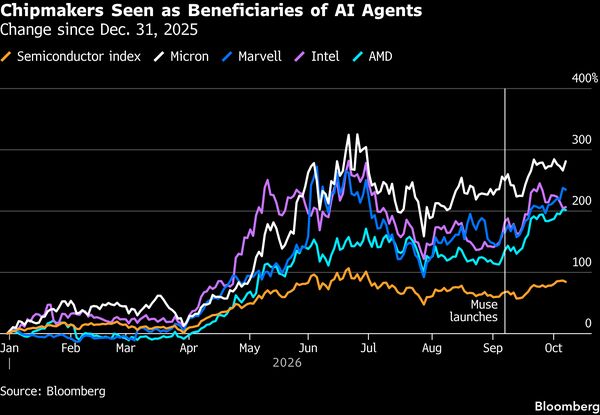
Meta于上个月推出了其个人AI助手Muse,并迅速获得了庞大的下载量和极高的评价。这使其母公司Facebook在9月份表现惊艳,股价上涨27%,创下近四年来的最佳月度表现。随后,OpenAI也推出了自己的新产品Dots,与Alphabet的Gemini Spark和SpaceXAI的Grok Bot一同加入了AI智能体市场的竞争。
Meta debuted its Muse personal AI assistant last month, and quickly garnered huge download numbers and rave reviews. That contributed to a scorching September for Facebook’s parent, with the stock’s 27% gain representing its best month in nearly four years. OpenAI followed with its own new product, Dots, joining Alphabet Inc.’s Gemini Spark and SpaceXAI’s Grok Bot in the AI agent market.
Muse的流行表明,人们对AI的态度变化之快,市场热度往往迅速转向最新或最热门的产品。尽管Meta目前正处高位,但今年上半年,由于外界认为其在AI领域投入了数百亿美元却收效甚微,公司一度陷入困境。与此同时,Alphabet则从年初被视为AI领导者,到近期开始受到更多 scrutiny。
Muse’s popularity shows how quickly AI sentiment can change, with momentum often shifting to the latest or buzziest product. While Meta’s riding high now, it struggled in the first half of the year due to the perception that it was spending tens of billions of dollars on AI with little to show for it. Meanwhile, Alphabet has gone from being considered the AI leader earlier in the year to coming under scrutiny more recently.
正是由于这种剧烈波动,许多投资者认为投资AI基础设施类股票,比押注于智能体竞赛中的公司更为可靠。
That kind of whipsaw is why so many investors see AI infrastructure stocks as more reliable wagers than the companies in the agent race.
“如果你试图押注Meta、Alphabet、苹果或其他公司谁将成为AI代理技术的最大赢家,那么目前来看,这就像抛硬币一样难以预测,”Tema ETFs的Nardini表示。“投资基础设施是获取收益更直接的方式,因为对AI代理的需求将在长期内推动对这些产品的需求。”这一观点正迅速成为市场共识,促使分析师上调对AI基础设施收入的预期。根据Bloomberg Intelligence的数据,该行业预计2027年净利润将增长63%,收入则跃升54%。而在7月底,利润增长预期尚不足48%,收入增长预期为32%。
“If you’re trying to bet on whether Meta, Alphabet, Apple or someone else will be the biggest winner of AI agents, right now that looks like a coin flip,” Tema ETFs’ Nardini said. “Infrastructure is a more straightforward way to reap the benefits, because demand for agents will drive demand for these products over a long-term time horizon.”This is swiftly becoming a consensus view, prompting analysts to raise their expectations for AI infrastructure earnings. The sector is expected to post net income growth of 63% in 2027 on a 54% leap in revenue, according to Bloomberg Intelligence. At the end of July, the projection was for an increase of less than 48% in profits on a 32% rise in revenue.
2028年的预测值也在不断上调,这表明华尔街预计这一趋势将在未来几年持续。
Estimates for 2028 have been moving higher as well, a sign that Wall Street expects the trend to be durable over several years.
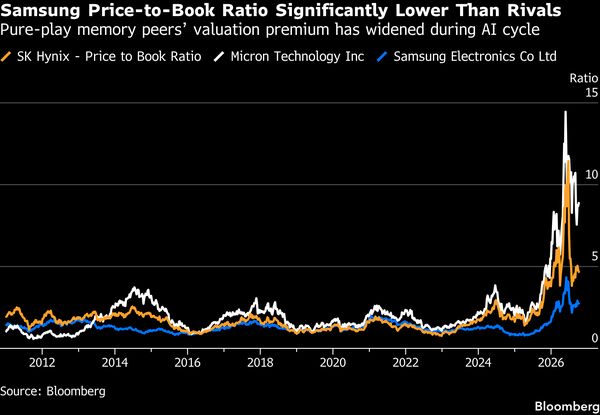
持续进化的AI代理技术是这一逻辑的关键。花旗集团分析师Atif Malik表示,不同类型的半导体——包括处理器、内存和网络芯片——也可能因AI代理技术的发展而受益。根据他10月6日发布的研究报告,CPU芯片的总可触达市场预计将以每年60%的复合增长率持续增长至2030年。
Constantly evolving agents are a key part of that thesis. Different kinds of semiconductors — including processors, memory and networking chips — could also get a boost from their development, according to Citigroup Inc. analyst Atif Malik. He estimates the total addressable market for CPU chips will grow at a 60% compound annual rate through 2030, according to an Oct. 6 research note.
“这就是为什么基础设施投资策略如此合理,”Nardini说。“Meta不会永远保持领先,六个月后,行业领导者就会发生变化。但唯一不会改变的是对芯片的需求。”
“That’s why the infrastructure approach makes a lot of sense,” Nardini said. “Meta won’t hold the torch forever. Leadership will change in six months. What won’t change is the demand for chips.”