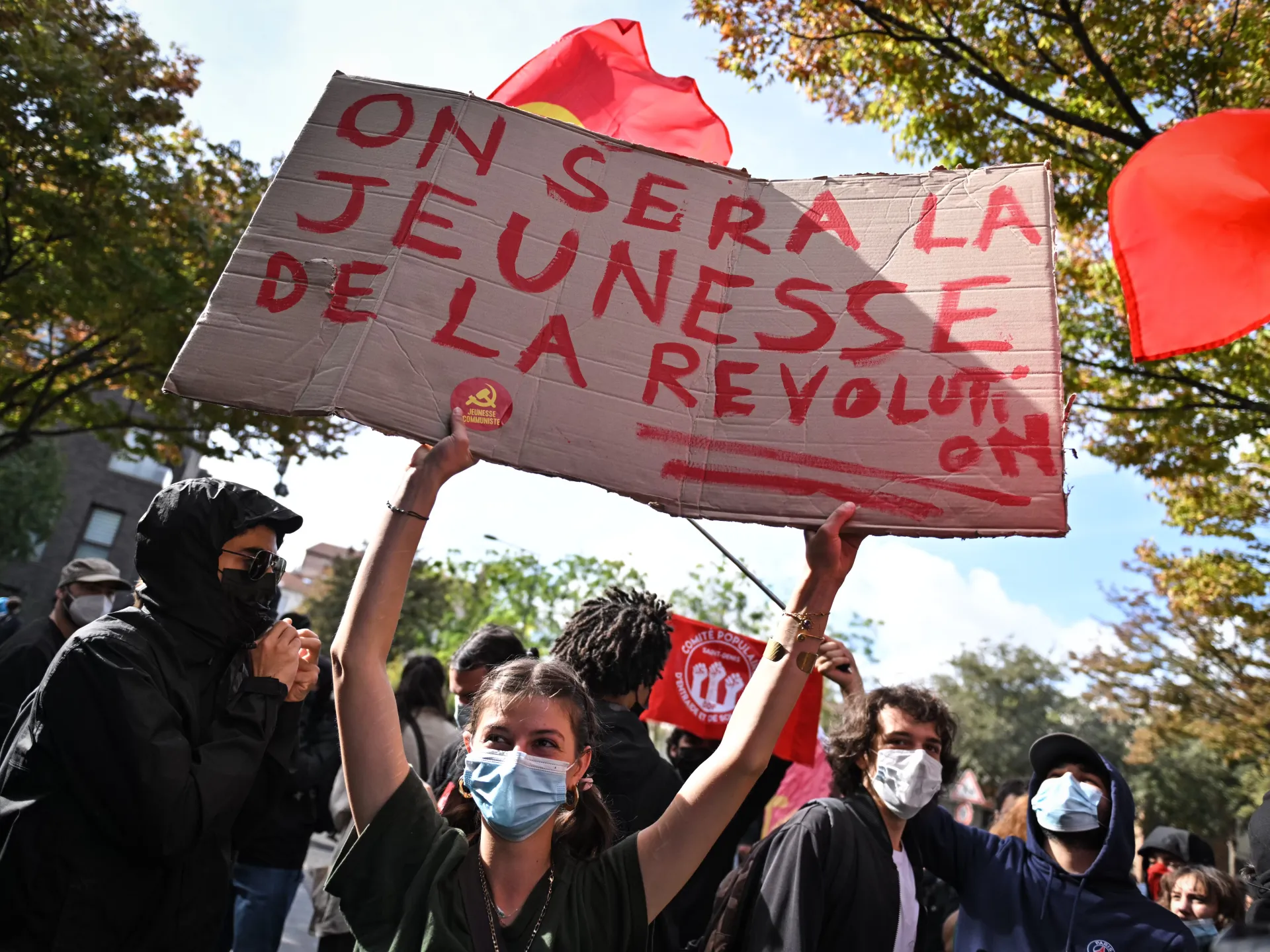
这场针对教育体系的运动吸引了数十万名学生、教师和家长的参与,被工会和学生运动组织者称为“非同寻常”。
over the education system, attracting hundreds of thousands of pupils, teachers and parents, has been described as exceptional by unions and student movement organisers.
法国学生联合会国际发言人爱丽丝·科恩-莫尔扎代克周二表示:“我认为这场运动具有历史性意义,其规模之大前所未有。”当时,政府方面称抗议者人数达到26.6万人。
“I think this is very historic and unprecedented by how big it is,” Alice Cohen-Morzadec, international spokesperson for France’s Student Union, said on Tuesday, when government sources put the number of protesters at 266,000.
她补充道:“有人称这是自1968年5月以来的最大规模运动。”
“Some are saying this is the biggest movement since May 1968,” she added.
近五十年前,巴黎大学的学潮最初源于对过时且过度拥挤的教育体系、有限的机会以及更广泛政治问题的不满。
The student protests at Paris universities nearly five decades ago were initially driven by opposition to an outdated and overcrowded system, limited opportunities and broader political concerns.
很快,这些骚乱就蔓延到了校园之外,演变成波及全国、涉及数百万工人的罢工,几乎使整个国家陷入瘫痪。
The unrest soon spread beyond campuses, expanding into nationwide strikes involving millions of workers that virtually paralysed the country.
当时,总统夏尔·戴高乐仍在执政。而如今的抗议活动则发生在法国即将举行明年总统选举之际,极右翼势力正密切关注着局势。与1968年一样,始于9月21日巴黎郊区一所发展欠佳的中学的抗议活动,关注点同样是教育经费、教师短缺、班级拥挤和学校设施问题。
Back then, President Charles de Gaulle was in power. Today’s protests come as France heads into next year’s presidential elections, which are being eyed by the far right As in 1968, the protests that started on September 21 at an underdeveloped Paris suburban high school are about funding for education, teacher shortages, overcrowded classes, and school facilities.
但历史学家和学生运动组织者认为,这些只是导火索,而非更深层的原因。
But those are triggers and not the deeper causes, according to historians and student movement organisers.
现代法国历史学家、伦敦玛丽女王大学自由艺术讲师安德鲁·史密斯向半岛电视台表示:“对年轻人来说,这是一场希望的危机。你可以看到,他们每天都面临着经济问题、政治极端主义、欧洲战争的危险、人工智能对职业生涯的威胁、高青年失业率以及气候危机。”
“For the young people, this is a crisis of hope. You can see they are bombarded daily with economic problems, political extremes, dangers of warfare in Europe, the threat to their careers from AI, high youth unemployment rates, the climate crisis,” Andrew Smith, historian of modern France and lecturer in Liberal Arts at Queen Mary University of London, told Al Jazeera.
他说,近年来政府与学生代表及工会之间缺乏实质性的互动,也是学生不满的原因之一。
He said students are dissatisfied because of a lack of substantive interaction between the government and student representatives and unions in recent years.
他表示:“政府很难与对话代表会面,并尝试与社会各方进行对话。”
“It has been difficult for the government to meet with interlocutors and try to have dialogue with social partners,” he said.
法国社会运动研究员罗比·莫尔德(Robi Morder)表示,沟通的缺乏反映了当前政府的做法。
Robi Morder, a researcher on social movements in France, said the lack of communication reflects the current government’s approach.
莫尔德说:“1990年和1998年,政府由社会党和左翼人士领导。一些部长曾参与青年运动。因此,当出现问题时,政府知道如何进行谈判。1990年,总统本人就接见过学生代表团。”
“In 1990 and 1998, governments were led by socialists and leftists. Some of the ministers had been in the youth movement. So when there was an issue, the government knew how to negotiate. In 1990, the president himself received a delegation of students,” said Morder.
他补充道:“我们现在的情况不同,因为政府不仅在政治上属于另一派系,而且他们也没有老一辈政治人物的经验。他们不知道如何调解社会冲突。政府的第一反应就是:‘这没什么大不了的;我们会叫警察,一切都会好起来的。’”学生组织者们表示,他们感到沮丧,因为他们觉得政府没有把他们当回事。
“We are not in the same situation because the government is not only from the other side politically, but they also don’t have the experience of the old political class,” he added. “They don’t know how to negotiate a social conflict. The government’s first answer is, ‘It is nothing; we will call the police, and everything will be OK.’”Student organisers say they are frustrated because they feel the government is not taking them seriously.
法国最大学生组织——学生总会联合会(FAGE)的副主席克洛埃·格鲁嫩瓦尔德(Chloe Grunenwald)表示:“这已经太过分了,够了!我们多年来一直在提出这些要求。我们需要更多的教育资金、更多的教师以及更好的设施。”该联合会代表了大约30万名学生。
“This is too much. Enough is enough. We have been making these demands for years. We need more money for education, we need more teachers, we need better facilities,” said Chloe Grunenwald, vice president of the Federation of the General Association of Students (FAGE), the largest organisation of its kind in France, representing some 300,000 students.
在接受半岛电视台采访时,一些学生表示,他们加入近期的抗议活动是为了声援最早走上街头的人。联盟范围的扩大也体现在格鲁嫩瓦尔德和科恩-莫尔扎代克(Cohen-Morzadec)都代表着支持高中生抗议活动的大学工会这一事实上。史密斯和莫尔德谈到了现在与1968年的不同之处。
When interviewed by Al Jazeera several students said they had joined recent protests in solidarity with those who first took to the streets. The broadening of the coalition is illustrated by the fact that both Grunenwald and Cohen-Morzadec represent university unions rallying in support of high school pupils. Smith and Morder spoke of the differences between now and 1968.
史密斯说:“今年的学年开始方式截然不同。持续不断的极端高温是引发并迅速点燃这场抗议的一个因素。我们的教室里挤着超过40人,气温却高达40摄氏度(104华氏度)。这种情况根本无法忍受。”
“This school year started very differently. The never-ending heatwaves is one thing that really provoked it and made it catch fire. We had classrooms with over 40 people in temperatures exceeding 40 degrees [Celsius;104 Fahrenheit]. That is untenable,” Smith said.
据称存在警察暴行。抗议组织者和工会也抱怨他们所称的警察暴行。
Alleged police brutality Protest organisers and unions have also complained about what they see as police brutality.
“不幸的是,媒体一直在讨论垃圾桶被焚烧、学校被封锁,以及这被视为一种暴力行为。但真正的暴力实际上来自政府一方,”科恩-莫尔扎代克说道。
“Unfortunately, the media are talking about how bins are being burnt, schools are being blocked, and how it is a form of violence. The real violence is actually coming from the government side,” said Cohen-Morzadec.
作为和解的信号,总理塞巴斯蒂安·勒科努周三表示:“必须倾听学生的声音。”同时,内政部长洛朗·努内斯命令警方暂停对抗议的高中生使用震撼弹。但这些举措可能不足以平息民众的愤怒。
In a sign of conciliation, Prime Minister Sebastien Lecornu on Wednesday said, “Students must be heard,” while Interior Minister Laurent Nunez ordered police to suspend the use of stun grenades against protesting high school pupils. But those moves might not be enough to calm the anger.
“我们将持续动员,直到我们的诉求得到满足。尤其是因为10月17日和11月20日——这两个日子已成为欧洲所有青年为争取未来而动员的国际性日期,因此我们希望至少持续到这些日期,甚至更久,”科恩-莫尔扎代克说。
“We are going to mobilise until we get our demands, especially because we have October 17 and November 20 – as an international date for the youth in all Europe to mobilise for our future, so we want to continue at least until those dates, if not further,” said Cohen-Morzadec.
全国范围内的罢工和反政府示威活动已定于10月17日举行,预计将有大量工会齐聚一堂,表达他们对能源和食品价格飙升、预算削减提案以及公共部门薪资冻结的不满。
Nationwide strikes and antigovernment demonstrations are scheduled for October 17, expected to bring together a large number of unions to air their grievances against soaring energy and food prices, proposed budget cuts, and freezes on public sector salaries.
这些罢工得到了左翼“不屈法国”(LFI)党(由让-吕克·梅朗雄领导)以及该国主要工会(法语缩写为CGT)的支持。
The strikes are backed by the left-wing France Unbowed (LFI) party, led by Jean-Luc Melenchon, and the country’s main labour union, known by its French acronym, CGT.
批评者指责“不屈法国”党和梅朗雄煽动暴力以攻击政府,但这一指控遭到了他们以及抗议组织者的否认。
Critics have accused the LFI and Melenchon of inciting violence to score points against the government, an accusation they and protest organisers deny.
“我们的信息始终如一:我们正在为自身权利而斗争,我们的示威活动是和平的。我们不代表任何人,”格鲁嫩瓦尔德说。
“Our message has been the same. We are fighting for our rights and our demonstrations are passive. We are not working on behalf of anyone else,” said Grunenwald.
学生工会发布了一份包含10项诉求的清单,他们称这些诉求将使政府耗费10亿欧元(11亿美元),并承诺在全部诉求得到满足之前持续施压。
Student unions have published a list of 10 demands they say will cost the government 1 billion euros ($1.1bn), and have promised to keep up the pressure until all those requirements are met.
诉求包括要求加大对学校和大学的投入,以及增加高等教育机构的师资和空间。学生们呼吁提供更强有力的经济和住房支持、价格合理的大学餐食,并停止向国际学生收取更高的费用。他们还希望终结他们所称的“与高中及学生运动相关的一切形式的镇压”。
Among the demands are calls for greater investment in schools and universities and more staff and space in higher education. Students are calling for stronger financial and housing support, affordable university meals, and an end to higher fees for international students. They also want an end to what they call “all forms of repression linked to the high school and student movement”.