周四,法国学生再次走上街头并封锁了一些高中,要求政府采取行动,他们认为政府对国家教育系统的投入不足。这场抗议浪潮已进入第三周,由于教职员工短缺、教室过度拥挤以及校舍破旧等问题达到临界点,数十万人参与了游行。
French students took to the streets again Thursday and blockaded some high schools as they demanded action from the government they say is underfunding the country’s education system. Now in its third week, the wave of protests has seen hundreds of thousands march after rows over staffing shortages, overcrowded classrooms, and dilapidated buildings reached a crisis point.
在学生工会呼吁更广泛的支持后,抗议运动于周二蔓延至全国,家长、教师和活动人士纷纷响应。部分抗议活动演变为暴力冲突,参与者点火并投掷抛射物,警方则动用了催泪瓦斯和高压水枪。法国内政部表示,自抗议活动开始以来,至少有6547人被捕或被警方拦截。数百名学生和警察受伤。法国教育部向《时代》周刊表示,截至当地时间周四中午,仍有157所学校处于关闭状态。
The protest movement went nationwide on Tuesday, after student unions called for a wider support of their mobilization, with parents, teachers, and activists heeding the call. Some protests have turned violent, with attendees lighting fires and hurling projectiles, and police using tear gas and water cannons. Since the protests began, at least 6,547 people have been arrested or stopped by police, said France’s Interior Ministry. Hundreds of students and police officers have been injured. The French Education Ministry told TIME that as of midday Thursday, local time, 157 schools remain closed.
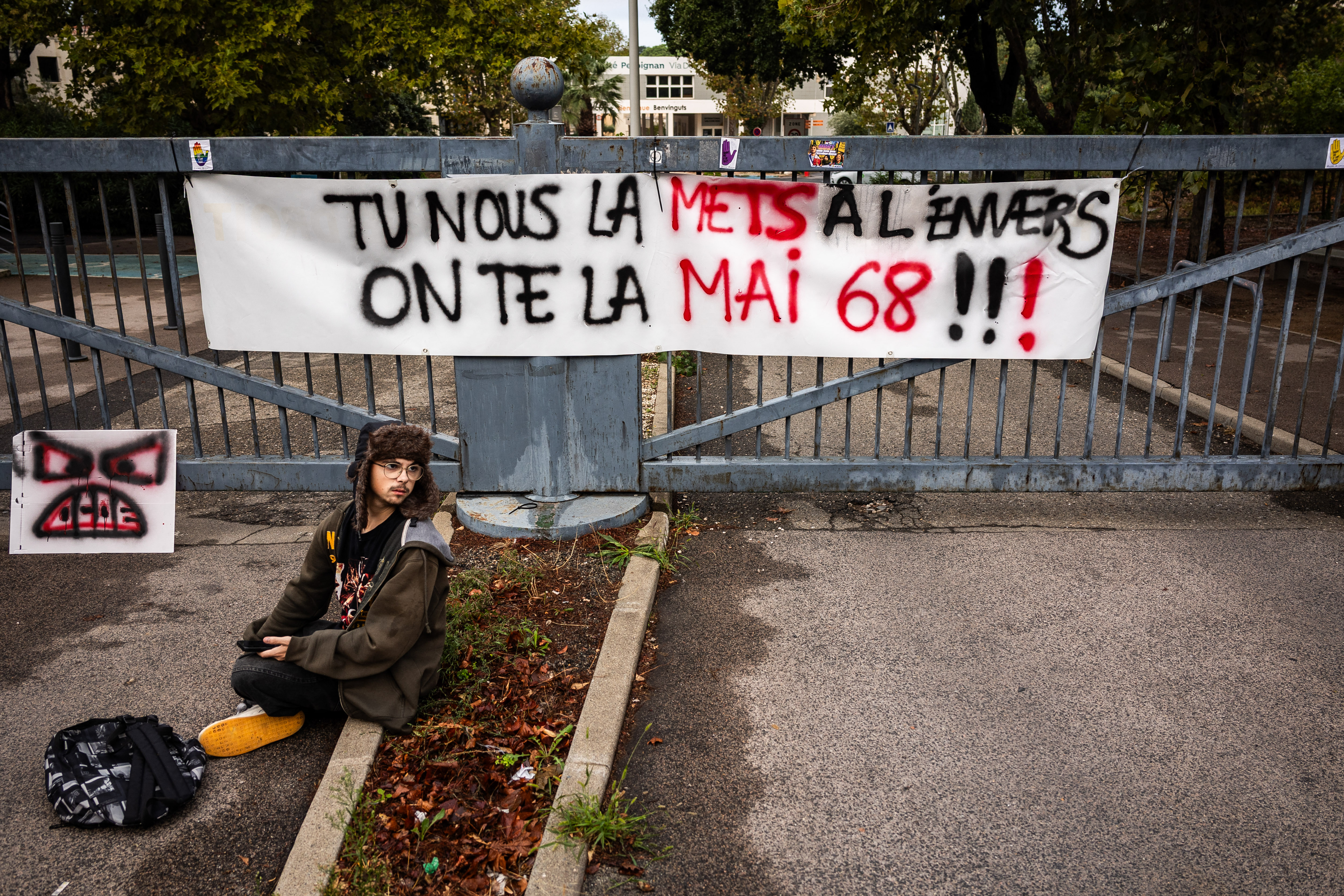
在整个抗议过程中,学生和其他参与者举着各种要求变革的标语。一个共同的主题已经出现,许多自制的横幅都提到了1968年,更具体地说是1968年5月。这是指1968年由学生运动发起的全国性抗议活动,当时导致数百万工人罢工,并几乎推翻了政府。
Throughout the protests, students and other attendees have held up various signs calling for change. A common theme has emerged, as many of the homemade banners mention the year 1968—and more specifically, May 1968. That’s in reference to the nationwide protests initiated by a student movement in 1968 that led to millions of workers striking and nearly toppled the government.
周二,在佩皮尼昂大学(University of Perpignan Via Domitia)被封锁期间,校门上挂出的一条横幅上写着一条警告,大意是:“你们想糊弄我们,那我们就让你们重温‘68年5月风暴’。”在马赛的改革广场(Reforme Square),聚集的学生中有人举着一块牌子,上面写着“67一代正在重演68年5月”,这被认为是指代“阿尔法世代”(Gen Alpha)6-7岁的趋势。
During the blockade of the University of Perpignan Via Domitia on Tuesday, a banner raised on the gates contained a warning, which roughly translated to “You’re trying to pull a fast one on us, we'll give you May '68.”Elsewhere, as students gathered in Reforme Square in Marseille, a protester held a sign that read “Generation 67 is doing May 68,” thought to be in reference to the Gen Alpha 6-7 trend.
在巴黎,有人举着一块黑白标语牌,上面画着一个大人物捂住年轻人的嘴,并配有“sois jeune et tais-toi”的字样,意为“年轻就闭嘴”。同样的口号也曾在1968年的抗议活动中使用过。
In Paris, someone held a black and white sign of a larger figure with their hand over the mouth of a youngster, emblazoned with the phrase “sois jeune et tais-toi,” which means “be young and shut up.”That same slogan was used during the 1968 protests.
诺丁汉特伦特大学当代欧洲历史教授克里斯·雷诺兹(Chris Reynolds)表示:“1968年是法国抗议史上一个开创性的时刻。这不仅是因为当时发生的事件规模极其巨大,更因为这场抗议最初只是一场小规模的学生运动,却在极短时间内迅速蔓延,成为法国历史上规模最大的罢工。”专家告诉《时代》周刊,1968年发生的事情绝非遥远的记忆。法国年轻人不仅从那一代人的集结中汲取灵感,立法者们也深知此类抗议活动可能产生的强大威力。
“1968 was a seminal moment in the protest history of France,” says Chris Reynolds, professor of contemporary European history at Nottingham Trent University. “Not only because of the sheer enormity of what happened, but that it started out as a smallish student protest that within a very short space of time mushroomed to become arguably the greatest strike in French history.”What happened in 1968 is anything but a distant memory, experts tell TIME. Not only do the youth of France draw inspiration from the rallying of a generation, lawmakers are also mindful of how powerful such protests can be.
雷诺兹说:“自1968年以来,法国政府内部一直担心类似事件会再次发生。这种担忧在于,学生可能会成为一场运动的起点,进而引发社会其他阶层的支持,最终导致一场更大的危机。”1968年5月到底发生了什么?
“Ever since 1968, there has been a fear within the state that it could happen again,” says Reynolds. “This idea that somehow the students could be the starting point of a movement that would then elicit support from other sectors of society, leading to a much greater crisis.”What happened in May 1968?
巴黎大学南泰尔校区(Nanterre campus)的学生在1967年至1968年间举行了多次抗议活动,反对他们认为过于严格和保守的规定。
Students at the Nanterre campus of the University of Paris held protests across 1967 and 1968 in opposition of rules they viewed to be too restrictive and conservative.
牛津大学欧洲与法国历史教授罗伯特·吉尔迪亚(Robert Gildea)表示:“这是一场教育危机。当时,大学在20世纪60年代正处于快速扩张期。”
“It was a crisis of education. At that point, universities were expanding very quickly in the 1960s,” says Robert Gildea, a professor of European and French history at the University of Oxford.
“当时的大学也非常保守且等级森严,”他补充道,并指出教师与学生之间缺乏沟通,导致不满情绪日益加剧。
“Universities then were also very conservative and hierarchical,” he adds, noting that a lack of communication between the faculty and students led to growing frustrations.
其中一个争议焦点是宿舍探视限制,该规定禁止男女学生互相留宿在对方的房间。
One argument centered on restrictions on dormitory visits that stopped male and female students staying in each other’s rooms.
1968年5月,为了平息愈演愈烈的抗议活动,南泰尔校区被关闭,抗议运动随即转移至巴黎拉丁区的索邦大学校区。学生们在大学校园内设置路障,要求改革大学制度,同时指责法国总统夏尔·戴高乐统治着一个“警察国家”。防暴警察与学生抗议者之间爆发了冲突,数百名学生被捕。5月11日凌晨发生的一场尤为激烈的冲突引起了全国关注。
In May 1968, when the Nanterre campus was shut down in an effort to dampen escalating protests, the movement moved to the Sorbonne campus in Paris’ Latin Quarter. Students barricaded themselves within the university grounds and called for a reform of the university system, while accusing French President Charles de Gaulle of running a "police state.”Clashes ensued between riot police and student protesters, hundreds of which were arrested. A particularly violent clash in the early hours of May 11 garnered nationwide attention.
当工会加入并组织了全国范围内的系列罢工,要求改善工厂及其他行业工人的薪酬和工作条件时,抗议运动进一步扩大。抗议活动达到高潮时,约有1000万名工人参与罢工,使法国濒临崩溃,也引发了政府对其对经济影响的担忧。
The protest movement expanded when trade unions came on board and organized a series of strikes across the country, demanding better pay and conditions for workers in factories and other industries. At the height of the protests, around 10 million workers went on strike, bringing France to the brink and raising concerns in government about the impact on the economy.
戴高乐总统解散了议会,并宣布进入紧急状态。他在6月宣布提前举行选举,其保守派政党最终获胜,因为法国选民倾向于恢复稳定的承诺。抗议运动逐渐失去动力并走向消亡,但留下了深远的影响。
President De Gaulle dissolved parliament and cited a state of emergency. He called a snap election in June, which his conservative party ultimately won as French voters gravitated toward the promise of restored stability. The protest movement lost momentum and withered, but it left a lasting impact.
吉尔迪亚表示,如今许多学生都以自豪的态度提及1968年事件,同时他也警告说,如果年轻人团结起来,一场革命随时可能发生。
Gildea says many students now reference 1968 from a place of pride, while also warning a revolution could happen if the youth bands together.
“1968年是学生和工人最后一次大规模爆发,那次运动几乎让国家陷入瘫痪,”他说。“法国人对他们的革命传统感到非常自豪,此后所有的革命都希望援引那段历史,以寻求合法性。”自1968年以来的岁月里,法国学生经常走上街头表达不满,其中2006年和2018年的示威游行尤为引人注目——所有这些运动都被拿来与1968年相提并论。
“1968 was the last huge explosion of students and workers, which nearly brought the state down,” he says. “The French are very proud of their revolutionary tradition and all subsequent revolutions want to reference it as an appeal for legitimacy.”In the years since 1968, French students have often taken to the streets to air their grievances, with notable demonstrations happening in 2006 and 2018—all of which have drawn comparisons to 1968.
“它仍然是法国历史上一个反复出现的参照点,似乎代代相传,从未间断,”雷诺兹说。
“It remains this recurring reference point in French history, which seems to be passed down from generation to generation, without fail,” Reynolds says.