
两年前,当日本踏上政策正常化的道路时,我曾提出一个问题:这个国家是否已经准备好迎接一个“有利率的世界”?当时,许多人都提出了类似的问题,因为经过数十年的无通胀、零利率时代之后,这个亚洲大国重新感受到了通货膨胀和非零利率的存在。
Two years ago, when Japan embarked on its path toward policy normalization, I asked whether the country was ready for a “world with interest.”It was a question many were asking as the Asian nation rediscovered inflation and non-zero interest rates after decades without either.
或许,我们真正应该问的是:世界是否已经准备好迎接一个“有利率的日本”?
Perhaps the question we should have asked was: Is the world ready for a Japan with interest?
看看法国债券近期的抛售潮就知道了。正如我的同事Shuli Ren本周指出的那样,许多人将矛头指向了日本投资者。随着日本国内无风险利率开始变得更具吸引力,而法国债券在政治不确定性加剧的情况下又存在汇率对冲成本,将资金留在海外的吸引力正在减弱。多年来,日本投资者一直对法国债券配置过度,但在过去二十五年里,随着日本国内收益率长期接近零,法国也远非日本资金唯一涌入的目的地。
Just look at the selloff in French bonds. Many have pointed the finger at Japanese investors, as my colleague Shuli Ren noted this week. With risk-free rates at home starting to look attractive compared with hedged French debt amid mounting political uncertainty, the incentive to keep money overseas is diminishing. Japan has largely been overweight France for years, but it’s far from the only destination the country’s money poured into over the last quarter-century as yields at home hovered near zero.
但这并不意味着所有资金都会回流日本。不过,国内投资者正变得越来越挑剔——而世界其他国家也必须对此保持警惕。多年来,人们一直担心日本能否承受更高的利率,但很少有人思考过:一旦日本不再有意愿将资金贷往海外,世界将会发生什么变化?
That is not to say that all that money is coming home. But domestic investors are becoming more discerning – and the rest of the world will have to pay attention. For years, everyone worried about whether the nation could withstand higher interest rates. Far fewer asked what would happen to the world once Japan no longer had the incentive to lend its money.
法国或许只是第一个受害者。那么,还有哪些借款人可能会突然被日本投资者认为,与日本国内的投资机会相比,价格显得过于昂贵?
France might just be the first casualty. Which other borrowers could Japanese investors suddenly decide look a little too expensive compared with what they can get at home?
美国显然是一个值得关注的对象。然而,政治现实——尤其是东京对华盛顿安全保护伞的依赖——使得美国财政部长Scott Bessent所担忧的日本大规模抛售美债的噩梦情景不太可能发生。即便如此,在截至6月的六个月里,日本本土投资者仍净抛售了4.45万亿日元(约合280亿美元)的美国长期政府债券,这是自2022年以来首次出现半年度净抛售。
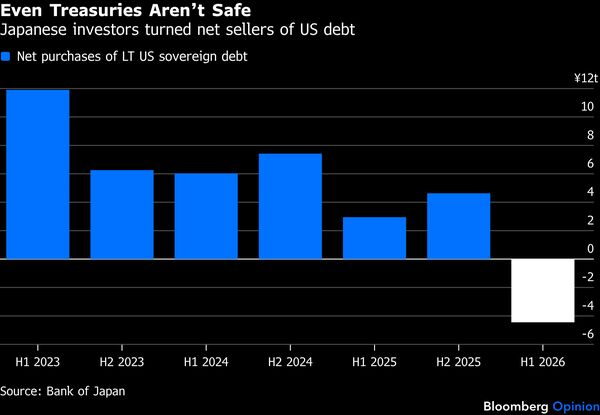
The US is an obvious place to look. Political realities, not least Tokyo’s reliance on Washington’s security umbrella, make Treasury Secretary Scott Bessent’s nightmare scenario of a wholesale Japanese selloff of Treasuries unlikely. Even so, local investors sold a net ¥4.45 trillion ($28 billion) of US long-term government bonds in the six months through June, the first half-year of net selling since 2022.
日本不必抛售其持有的外国主权债券,就能让全球其他地区的借贷成本上升。只需减少购买即可。而本地机构和家庭也正越来越多地将这些资金投向别处——本国市场。
Japan doesn’t have to dump its foreign sovereign bond holdings to make borrowing more expensive for the rest of the world. Simply buying less will do. And local institutions and households are increasingly investing that money somewhere else: home.
根据第一生命研究所的估算,政府养老金投资基金或许会调整其目标资产配置,也可能不会,但其在第二季度已经购买了5.7万亿日元的债券,是过去五年同期平均购买量的两倍多。公共养老金体系整体购买了6.8万亿日元,而银行和保险公司在过去几个月也成为国内政府债券的净买家。
The Government Pension Investment Fund may or may not undertake a change in its target allocation, but it already bought ¥5.7 trillion in the second quarter, more than twice what it purchased on average in the same period over the past five years, according to an estimate from Daiichi Life Research Institute Co. Public pensions as a whole bought ¥6.8 trillion, with banks and insurers also net buyers of domestic government bonds in recent months.
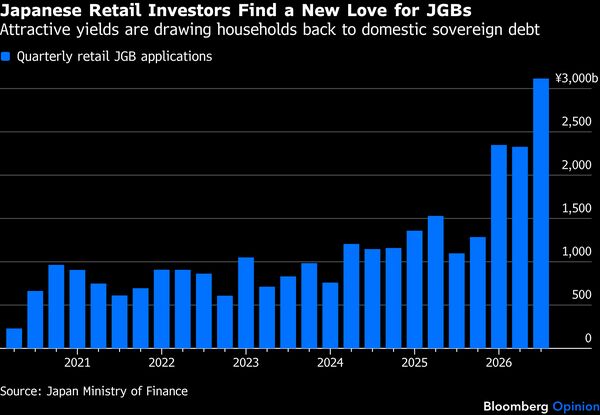
与此同时,个人投资者最青睐的投资工具突然变成了零售债券。今年7月,零售债券的投标额首次突破1万亿日元,自2014年现行销售模式启动以来,此后每个月都维持在这一水平之上。日本正在重建一个完整的国内固定收益投资文化——在长达数十年的零利率或负利率时期,这一文化几乎完全消失,当时日本银行主导着整个市场。
Meanwhile, the hottest vehicle for individual investors has suddenly become retail bonds. Bids passed ¥1 trillion in July for the first time since the current sales format began in 2014, and stayed above that mark each month since. Japan is rebuilding an entire domestic fixed-income culture that all but disappeared during decades of zero or negative rates, when the Bank of Japan dominated the market.
如今,随着央行逐步退出,更高的收益率正在恢复此前非常规宽松政策所摧毁的国内投资基础。这种影响将超越法国。日本的金融体系长期如此独特,以至于世界许多地方已经忘记了:当日本投资者有能力变得挑剔时,会发生什么。
Now as the central bank retreats, higher yields are restoring the domestic base that extraordinary easing destroyed. That’s going to have an impact beyond France. Japan’s financial system was so unusual for so long that much of the world has forgotten what happens when its investors can afford to be choosy.
在消费品领域,多年来存在一个普遍的误解:日本人排斥外国商品,只购买本国制造的产品。这从来都不是事实。真正正确的是,日本消费者以要求严苛而闻名。如今,这种特性正越来越多地体现在资本市场上:无论是购买汽车、手机、电视还是债券,日本都有能力做出审慎选择。
In the world of consumer products, a common misconception for many years was that the Japanese shunned foreign goods, and only bought things made domestically. That was never correct. What was true was that the nation’s consumers were famously exacting. The same is increasingly true of capital: Whether buying cars, phones, televisions or bonds, Japan can afford to be selective.
投资者已撤离法国、美国和澳大利亚的债务市场,但在今年上半年,他们仍然是德国、意大利和英国债券的净买家。他们也并非完全放弃海外资产。海外股票的需求依然强劲,尤其是零售投资者,持续向海外股票基金投入数万亿日元。
Investors have retreated from debt in France, the US and Australia, but they were still net buyers of German, Italian and UK bonds in the first half of the year. Nor are they abandoning foreign assets altogether. Demand for overseas equities remains robust, with retail investors in particular continuing to pour trillions of yen into foreign stock funds.
日本在过去几周全球债券抛售潮中堪称例外。其庞大的债务本应使其在利率上升的环境中格外脆弱。然而,最新关于主权债务累积和石油影响的担忧,几乎完全绕过了这个完全依赖能源进口、且拥有所有主要经济体中最高总债务与GDP比重的国家。第三季度,其10年期政府债券收益率在所有主要经济体中上升幅度最小。
The nation has been an exception to the global bond selloff of recent weeks. Its enormous debt pile was supposed to make it especially vulnerable to a world with higher rates. Instead, the latest concerns about mounting sovereign debt and the impact of oil have almost skipped a country entirely dependent on imported energy and saddled with the highest gross debt-to-gross domestic product ratio of any major economy. The 10-year government bond yield rose the least of any large peer in the third quarter.
日本当然并非完全不受这个新世界的影响。但该国政治相对稳定,养老金体系资金充足,更重要的是,时间站在它一边:截至3月底,其政府债务的平均票面利率仅为1%左右,平均期限接近10年,这意味着利率上升对公共财政的影响只会逐步显现。
Japan is hardly invulnerable to this new world. But it has relatively stable politics, a well-funded pension system, and more importantly, time on its side: As of the end of March, its government debt carried an average coupon of just under 1% and a maturity of nearly 10 years, meaning higher rates will feed into the public finances only gradually.
不过,这种喘息空间也不应被低估。首相高市早苗似乎已经开始更加谨慎地措辞,在本周议会新会期的开幕演讲中,她特别强调要安抚市场。
Still, that breathing room shouldn’t be taken lightly. Prime Minister Sanae Takaichi already appears to be choosing her words more carefully, placing a marked emphasis on reassuring markets in her speech opening the current session of parliament this week.
日本资金并未从全球市场撤离。但在数十年来将海外资本视为理所当然之后,如今全球市场将不得不与日本国内市场争夺这些资金。精明的日本消费者长期以来愿意为法国手袋和其他奢侈品支付溢价。现在,法国债务——以及所有其他国家的债务——也必须以同样的溢价来吸引他们。
Japanese money isn’t retreating from the world. But after decades of taking it for granted, the world will now have to compete with the domestic market for that capital. Discerning Japanese consumers have long been willing to pay a premium for French handbags and other luxury goods. Now, French debt — and everyone else’s — will have to offer them a premium in return. OPIN