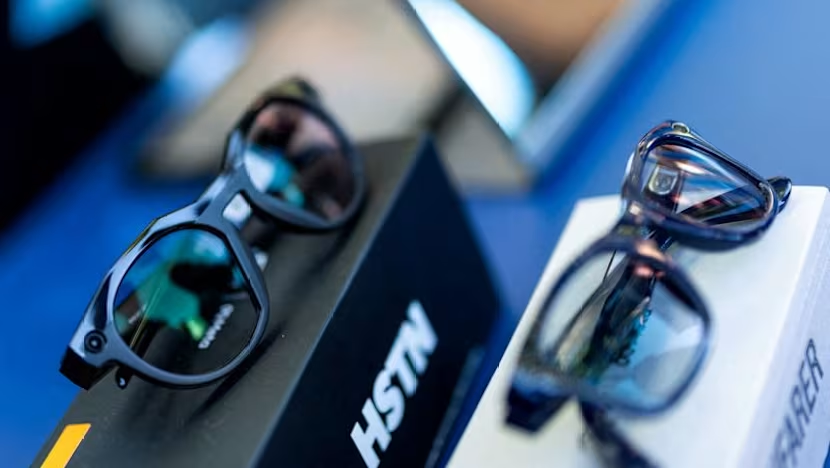
奥斯陆:“变态眼镜”能窥探隐私,还是几十年内最重要的零售产品之一?近年来,很少有消费科技能像Meta等公司目前推出的AI眼镜一样,引发如此激烈的反对声浪。
OSLO: “Pervert glasses” that enable privacy intrusion or one of the most important retail products in decades? Few recent consumer technologies have sparked such a fierce backlash as the AI-enabled eyewear now being offered by the likes of Meta.
如今,挪威正准备为全面限制这类眼镜的使用提供典型案例。直到本周,全球范围内的任何禁令大多都零零碎碎。近几个月来,英国和美国的法院、挪威石油公司Equinor以及奥斯陆的学校等都曾禁止使用这类眼镜。
Now Norway is set to provide a test case for broad restrictions on their use. Up until this week, any bans around the world have been largely piecemeal. Courts in the UK and US, Norwegian oil company Equinor and schools in Oslo are among those to prohibit their use in recent months.
但周一(10月5日),挪威的中左翼政府成为全球首个提议在特定公共场所禁止使用AI眼镜的国家——尽管这一禁令只是临时性的。许多细节仍有待明确,包括禁令具体适用于哪些区域——初步设想是在学校、更衣室等最敏感的场所实施。不过,向挪威议会提出这项提案是数字化部长Torgeir Micaelsen的“重中之重”。
But on Monday (Oct 5), Norway’s centre-left government became the first in the world to propose a ban - albeit temporary - on the use of AI glasses in certain public places. Many of the details remain to be worked out, including exactly where the ban would apply - the idea would be to enact it in the most sensitive areas such as schools and changing rooms. But bringing a proposal to Norway’s parliament is “a high priority” for digitalisation minister Torgeir Micaelsen.
纠正错误的使命感 对许多欧洲的政策制定者而言,这明显是一种纠正错误、避免重蹈覆辙的体现——他们如今已对过去在其他科技领域采取的放任自流态度感到后悔。
SENSE OF RIGHTING WRONGS For many policymakers in Europe, there is a distinct sense of righting wrongs and avoiding a laissez-faire approach that they now regret for other technologies.
Micaelsen表示:“我们必须避免重蹈15年前面对社交媒体时未能采取政治行动的覆辙。”
“We must avoid making the same mistake we made 15 years ago with social media, taking no political action,” Micaelsen says.
AI眼镜主要由Meta大力推动,但华为等其他公司也提供类似产品,苹果和谷歌未来也可能跟进。科技公司认为,这类眼镜可能比智能手机成为更理想的AI入口。
AI glasses have been pushed particularly hard by Meta, but others such as Huawei offer them and Apple and Google could follow. Tech companies argue they could be a better gateway to AI than smartphones.
然而,这些公司也喜欢利用眼镜在真实生活互动中收集音频和视频数据——这一点引发了巨大担忧。几乎每天都有关于智能眼镜可能被滥用的新闻:从男子在街头未经女性同意就进行拍摄,到本周一名丹麦议员透露自己曾在工作时偷录议会成员。
But these companies also like the idea of training the glasses on real-life interactions involving audio and video - something that causes great disquiet. Barely a day passes without a headline on the potential misuse of smart glasses, from men approaching women on the street without telling them they are filming to this week’s revelations by one Danish MP that he recorded members of parliament at work.
人们普遍担忧这些眼镜可能被用来监视妇女和儿童,尤其是在更衣室等场合,同时也有人担心隐私保护机制——例如在录制时闪烁的指示灯——可能会被绕过。
Worries abound about how the glasses could be used to spy on women and children, particularly in settings such as changing rooms, and how privacy safeguards - such as a flashing light that shows when they are recording - could be overridden.
法国数据保护机构“国家计算机与自由委员会”今年的一项调查显示,绝大多数民众(67%的受访者)认为智能眼镜对人们的隐私构成了威胁。欧盟会采取统一的做法吗?
A survey by France’s data protection office, Commission Nationale de l’Informatique et des Libertés, this year found the vast majority of people - 67 per cent of respondents - thought smart glasses posed a risk to people’s privacy. A COMMON EU APPROACH?
挪威并非唯一采取行动的国家。欧洲数据保护委员会是一个代表欧洲各地隐私监管机构的独立机构,已委托撰写一份关于智能眼镜社会接受度的报告,以指导立法者。澳大利亚政府也已请求提供建议,决定是否应在其办公室和服务中心禁止使用这类眼镜。此前,该国一些地方议会已禁止在游泳池、办公室等场所使用智能眼镜。此外,荷兰零售商Hans Anders本月成为全球首批因隐私问题停止销售Meta公司Ray-Ban眼镜的企业之一。
Norway is not alone in taking action. The European Data Protection Board, an independent body representing privacy regulators across Europe, has commissioned a report on the social acceptability of smart glasses to guide lawmakers. Australia’s government has asked for advice on whether to ban them from its offices and service centres after a number of the country’s local councils prohibited them from swimming pools, offices and more. And Dutch retailer Hans Anders this month became one of the first in the world to stop the sale of Meta’s Ray-Ban glasses over privacy concerns.
不过,目前挪威的行动最为彻底。该国表示,将很快提出临时禁令的提案,并成立一个专家组,为制定长期法规奠定基础。政府指出,禁令可能覆盖海滩、博物馆、购物中心、幼儿园、游乐场、医疗机构、健身中心的更衣室,甚至包括大学。
Norway, for now though, has gone the furthest, and says it will bring out a proposal for a temporary ban soon as well as setting up an expert group to lay the groundwork for permanent regulation. The locations for a ban could include beaches, museums, shopping centres, kindergartens, playgrounds, healthcare facilities, changing rooms for fitness centres, and even universities, the government has indicated.
Micaelsen承认,“对这类技术进行监管十分复杂,也引发了一系列问题”。但律师事务所Gerrish认为,欧洲数据保护委员会的报告或许能为欧盟制定统一的智能眼镜监管方法提供指导,就像早期各国对Cookie和广告技术各自为政的立场,最终逐渐统一为协调一致的指引一样。
Micaelsen concedes “regulating this type of technology is complex and raises a number of questions”. But the EDPB report may guide the development of a common EU approach to regulating smart glasses in much the same way that early, fragmented national positions on cookies and ad tech eventually converged into harmonised guidance, according to law firm Gerrish.
法国监管机构CNIL已经呼吁加强对智能眼镜的警惕。“智能眼镜的兴起可能导致大规模监控的风险显著增加,并使其被轻描淡写地对待……这些设备相对适中的成本,可能导致传感器充斥整个社会空间。”该机构表示。
The French regulator CNIL has already called for enhanced vigilance on smart glasses. “The rise of smart glasses could give rise to a significant risk of widespread surveillance and its trivialisation ... The relatively moderate cost of these devices could lead to a saturation of the social space by sensors,” it said.
鉴于智能眼镜的商业重要性,任何限制措施很可能会遭到科技公司的强烈抗议。Counterpoint Research的分析师预测,从现在到2032年,可穿戴设备领域的支出将超过1万亿美元。然而,活动人士对社会媒体对一代儿童造成的影响的担忧表明,欧洲及其他地区的政府若放任科技公司为所欲为,将面临巨大风险。
Any restrictions will probably be met by strong protests from tech companies given their commercial importance. Analysts at Counterpoint Research forecast more than US$1 trillion will be spent on wearable devices between now and 2032. But the concerns among campaigners about what social media has done to a generation of children show the risks for governments in Europe and beyond of allowing tech companies free rein.