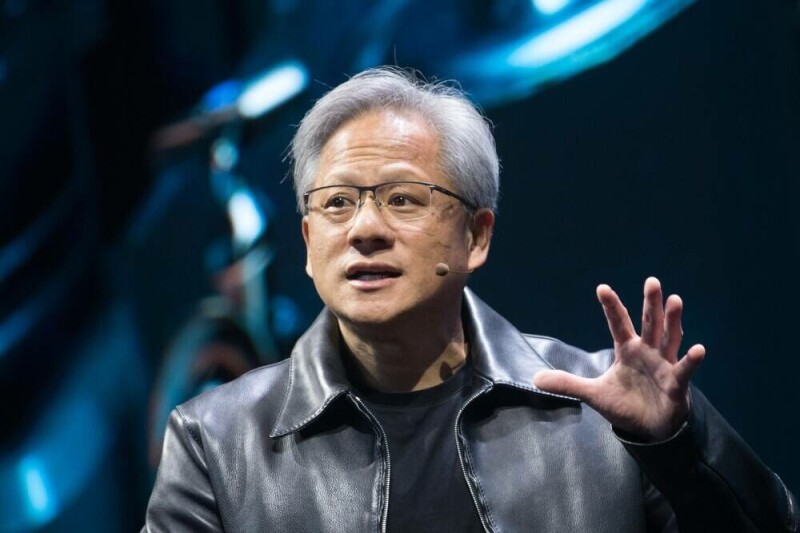
周四,英伟达(Nvidia)总算凑出了一些零钱,决定在未来五年内投入10亿美元——约占其季度利润的六十分之一——用于资助美国的科学探索。这项承诺是在华盛顿特区举行的一场活动中宣布的,旨在支持人工智能(AI)——或者现在该叫“超级智能”了?——在量子计算、医疗保健和能源安全等领域的研发。英伟达选择这些技术并不令人意外,因为该公司长期以来一直希望将人工智能与高性能计算相结合。
Nvidia on Thursday scraped together some spare change to commit $1 billion — about 1/60th of its quarterly profits — to funding US scientific discovery over the next five years. The commitment, announced during an event in Washington, DC, aims to support the research and development of AI — or is it "super intelligence" now? — in fields including quantum computing, healthcare, and energy security. Nvidia's choice of technologies is not surprising as it has long aspired to fuse AI and high-performance computing.
尽管大型语言模型(LLM)的训练和推理业务为其带来了收入,但这家GPU巨头仍持续推出专为人工智能辅助量子计算、医疗保健、药物发现和物理模拟设计的新CUDA库。该计划是美国政府去年年底由特朗普政府宣布的更广泛“创世纪使命”(Genesis Mission)的一部分,其目标是利用人工智能推动必要的科学发现,以确保美国保持技术领先地位。
And while LLM training and inference pay Nvidia's bills, the GPU giant has continued to introduce new CUDA libraries specifically for AI-assisted quantum computing, healthcare, drug discovery, and physics simulation. The initiative is part of the US government's broader Genesis Mission, announced late last year by the Trump administration, which aims to use AI to drive the scientific discoveries necessary to ensure the country's continued technological leadership.
该项目也标志着英伟达以重大方式重返美国超级计算领域。美国能源部(DoE)此前由英伟达提供动力的旗舰超级计算机Summit和Sierra,早在2018年就已投入使用。2021年推出的基于A100的Perlmutter系统同样值得关注,但其性能远不及早期系统。虽然英伟达从未停止为美国政府建造超级计算机,但这些系统通常比基于AMD的Frontier和El Capitan等大型平台要小得多。
The program marks Nvidia's return to US supercomputing in a big way. The Department of Energy's (DoE) last flagship supercomputers powered by Nvidia, Summitand Sierra, were commissioned all the way back in 2018. The A100-based Perlmutter system launched in 2021 is also notable, but fell far short of the older systems. And while Nvidia never stopped building supers for the US government, they tended to be significantly smaller than the massive AMD-based platforms like Frontier and El Capitan.
这种情况在去年发生了改变:英伟达宣布将向美国政府提供不少于七台新的超级计算机,分别部署在阿贡国家实验室、洛斯阿拉莫斯国家实验室和劳伦斯伯克利国家实验室。其中,阿贡实验室将部署基于10万块Blackwell GPU的Solstice系统。该系统由英伟达与甲骨文(Oracle)合作建造,主要面向新兴的人工智能工作负载,这些工作负载并不依赖超高精度计算,而是仅需16位、8位甚至4位的精度即可满足需求。
That changed last year when Nvidia revealed it would supply the US government with no fewer than seven new supercomputers across the Argonne, Los Alamos, and Lawrence Berkeley National Laboratories. Argonne will house the 100,000 Blackwell-GPU-based Solstice system. Built in collaboration with Oracle, the machine is largely aimed at emerging AI workloads, which don't depend on ultra-high precision computation and instead can get by with 16, eight or even four bits of precision.
这使得英伟达在实现美国政府在“创世纪任务”框架下的目标方面占据了有利地位。在过去几代GPU中,英伟达为了换取更高通量、更适合高利润AI工作负载的精度,牺牲了加速器中相当一部分双精度FP64的计算能力。在其即将推出的Vera Rubin平台上,英伟达高度依赖一种基于Ozaki方案的FP64模拟技术,我们今年早些时候曾对此做过更详细的分析。
That puts Nvidia in a strong position to meet the US government's goals under the Genesis Mission. Over the past few generations of GPUs, Nvidia has traded much of its accelerators' double-precision FP64 grunt in favor of higher throughput at precisions used by more lucrative AI workloads. In the case of its upcoming Vera Rubin platform, Nvidia relies heavily on an FP64 emulation capability based on the Ozaki scheme we looked at in more detail earlier this year.
洛斯阿拉莫斯实验室即将上线的Mission和Vision系统将采用这些相同的芯片,并利用英伟达的Quantum-X800 InfiniBand技术。FP64模拟虽存在一定权衡,但对于以AI优化为主、仅偶尔需要更高精度的工作负载而言,为换取额外的矩阵FLOPS性能,这种方案可能是值得的。尽管英伟达在美国科学计算领域扮演着越来越重要的角色,但值得注意的是,美国能源部最强大的超级计算机——至少在纯FP64领域——仍将由AMD提供动力。
Los Alamos' upcoming Mission and Vision systems will be powered by these same chips and take advantage of Nvidia's Quantum-X800 InfiniBand. FP64 emulation comes with compromises, but for workloads that are predominantly AI-optimized and only occasionally need higher precision, it can be worthwhile for the additional matrix FLOPS. While Nvidia is playing a much bigger role in US scientific computing efforts, it's worth noting that the DoE's biggest super — at least for pure FP64 — will still be powered by AMD.
橡树岭国家实验室的Discovery系统预计将于2029年投入运行,由HPE的Cray部门负责建造,搭载“Zen家族”经过FP64优化的MI430X GPU和Venice CPU。根据橡树岭是否获得设施供电升级,Discovery系统的理论峰值性能预计将在3.3至8.5 exaFLOPS之间。与此同时,中国的LineShine系统目前位居全球超级计算机Top500榜单榜首。
Oak Ridge National Laboratory's Discovery system, which is expected to come online 2029 will be built by HPE's Cray division and feature The House of Zen's FP64-optimized MI430X GPUs and Venice CPUs. Discovery is expected to offer peak theoretical performance somewhere between 3.3 and 8.5 exaFLOPS depending on whether or not Oak Ridge gets a facility power upgrade. Meanwhile, China's LineShine leads the Top500 ranking of Earth's mightiest computers.
该系统于今年北半球的春季首次亮相,实测性能达到2.2 exaFLOPS,理论峰值为2.7 exaFLOPS。随着中国重返榜单并给“山姆大叔”带来压力,橡树岭或许无需为争取额外算力而付出太多努力。®
That system made its debut this northern spring with 2.2 exaFLOPS measured out of a 2.7 exaFLOPS of theoretical performance. With Uncle Sam's nose bloodied by China's return to the ranking, Oak Ridge may not have to fight hard for the extra power. ®