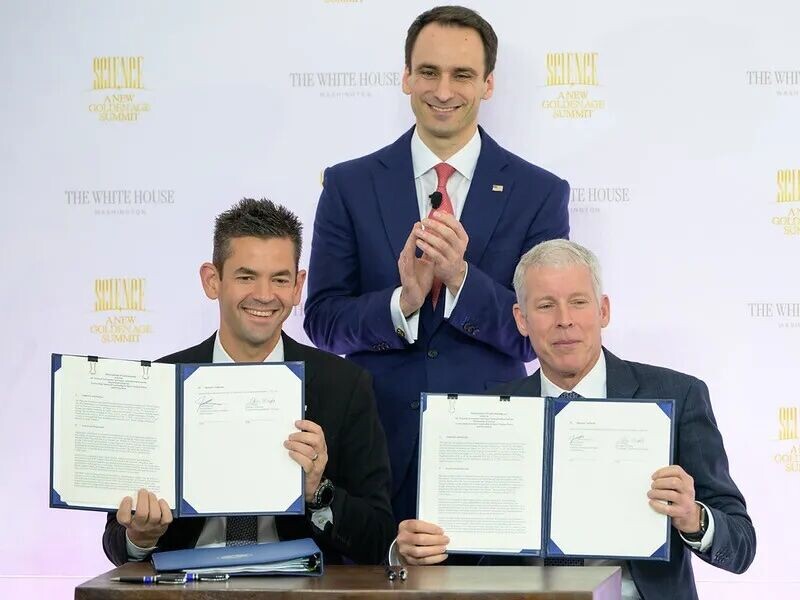
美国国家航空航天局(NASA)与能源部已同意扩大双方在航天局核能计划方面的合作,局长贾里德·艾萨克曼正紧锣密鼓地推进一项任务,计划发射一艘以核裂变为动力的火星探测器。“我们正在进入‘核能时代下的NASA’,”艾萨克曼在一次仪式上表示。他与能源部长克里斯·赖特在该仪式上签署了一份联合谅解备忘录(MOU)。
NASA and the Department of Energy have agreed to expand their collaboration on the space agency's nuclear ambitions, as administrator Jared Isaacman pushes ahead with a tight deadline to launch a fission-powered spacecraft to Mars. “We are entering the ‘Nuclear NASA-era,’” Isaacman said at ag ceremony where he and Energy Secretary Chris Wright signed a joint memorandum of understanding.
目前尚不清楚该谅解备忘录的全文是否已公布,但文件确立了双方在空间核技术方面合作的框架。根据NASA的说法,这项协议“将两家机构联合起来”,共同推进相关目标,工作内容包括研究、燃料生产、测试、发射整合及运行。“核能将使我们能够比以往走得更远、运行时间更长,并部署能力更强的航天器和设备,”艾萨克曼补充道。
The MOU, the full text of which doesn’t appear to have been published, establishes a framework for collaboration on space nuclear technology. Per NASA, the agreement “unites both agencies” in pursuing its objectives, with work to include research and fuel production, testing, launch integration, and operations. “Nuclear power will allow us to go farther, operate longer, and field more capable spacecraft and instruments than ever before,” Isaacman added.
“我们今天所做的工作,正在为未来以核裂变为动力的NASA航天器奠定基础,并为探索与发现开辟一个全新的领域。”自今年早些时候暂停轨道月球门户空间站项目、转而计划在月球表面建造基地以来,NASA一直在制定将核反应堆送入太空的大胆计划。这些计划包括为月球基地提供动力的核反应堆。NASA于周四表示,该反应堆计划于2030年前完成并准备发射,留给该机构实现这一宏伟目标的时间非常有限。
“The work we’re doing today is laying the foundation for the fission-poweuing NASA’s objred spacecraft of tomorrow and opening an entirely new frontier for exploration and discovery.”NASA has been making big plans to launch nuclear reactors into space since earlier this year when the agency paused work on the orbital Lunar Gateway station in favor of a base on the Moon’s surface. Those plans include a nuclear reactor to power said base, which NASA said on Thursday it intends to have ready for launch by 2030, giving the agency precious little time to meet such an ambitious goal.
除了周四的公告中称月球一号反应堆(LR-1)“正在稳步进展”外,NASA尚未提供太多证据表明该项目按计划进行。然而在此之前,NASA还面临一个更为紧迫的截止日期:空间一号反应堆(SR-1)必须完成,该反应堆将用于为计划于2028年12月发射的核动力航天器提供动力。
NASA has provided little evidence the initiative is on track, aside from noting in Thursday's announcement that it is “making steady progress” on Lunar Reactor-1 (LR-1), the unit it wants to use to power its Moon base. Before then, however, NASA faces an even tighter deadline for Space Reactor-1 (SR-1), which it intends to use to power a nuclear-propelled spacecraft scheduled to launch in December 2028.
要知道,距离那时不过两年多一点的时间,而美国国家航空航天局(NASA)几乎没有向公众展示过该航天器的任何进展。NASA将这一航天器命名为“自由号”(Freedom)。早在今年三月,当NASA暂停月球门户空间站项目时,就曾发布过SR-1的详细信息[PDF]。当时称,该航天器主要由一架经过改造的航天器总线构成,而NASA此前已几乎完成该总线的制造,原计划用于另一个项目。
That’s just over two years away, mind you, and NASA has provided little public evidence of progress on the spacecraft, which it has dubbed "Freedom." NASA provided details [PDF] for SR-1 back in March when it paused work on the Lunar Gateway, describing the spacecraft as being mostly constructed from a repurposed spacecraft bus that NASA had almost completed for a previous project.
其核反应堆将产生超过20千瓦的电力,为“自由号”在飞往火星途中的电推进系统供能,届时它将搭载三架“灵巧号”(Ingenuity)级直升机,用于勘察未来人类可能着陆的地点。不过,这一计划是否真能按照目前的时间表推进,谁也说不准。但现实是:NASA在按时完成任务方面,确实没有太多值得称道的记录。美国政府问责局(GAO)多年来一直在关注NASA重返月球的计划,并近十年来不断指出,其设定的时间表更像是幻想而非现实。
The reactor would produce more than 20 kilowatts of electricity to power Freedom's electric thrusters on its journey to Mars, where it would deliver three Ingenuity-class helicopters to survey potential future human landing sites. Whether that’ll happen on any sort of timeline that resembles the current one is anyone’s guess, but let’s face it: NASA doesn’t exactly have a great track record for getting things done on time. The Government Accountability Office has been watching NASA’s lunar return ambitions for years, and has been noting for nearly a decade that its timelines were more fantasy than reality.
在过去几年里,GAO指出,NASA现有的时间表已经非常紧张,任何一次意外都可能导致严重延误;而在特朗普政府第二个任期内大幅削减人员,更让情况雪上加霜。阿耳忒弥斯计划中重返月球的任务也遭遇了一些挫折。阿耳忒弥斯I号和II号多次推迟,此后NASA还调整了阿耳忒弥斯III号的目标,将原定于2027年的月球着陆任务改为在近地轨道进行的演示任务,部分原因正是为了应对月球着陆系统(包括SpaceX的“星舰”)尚未完全准备就绪的担忧。
In the past couple of years, the GAO has noted that existing NASA timelines were tight enough that any one mishap could push them back considerably, and massive workforce reductions under the second Trump administration haven’t helped matters. The Artemis missions to return humans to the Moon have also suffered a few hitches. Artemis I and Artemis II faced multiple delays, and NASA has since changed Artemis III's objectives, turning the planned 2027 lunar landing into a demonstration mission in low Earth orbit, in part to address concerns about the readiness of lunar landing systems, including SpaceX's Starship.
至于波音公司那出灾难性的太空舱事件,我们无需再赘述。那么,在两年多一点的时间内,究竟由谁来发射那台核反应堆?届时NASA又能否可靠地将人类送上月球表面?我们曾联系NASA,希望得到一些关于项目进展顺利的保证,但并未收到回复。®
We need not remind anyone of the saga of Boeing's calamity capsule. Who is going to launch that nuclear reactor in just over two years' time, and will NASA be able to land humans reliably on the Moon's surface by then? We checked in with NASA to get some assurances things were actually on pace, but didn’t hear back. ®