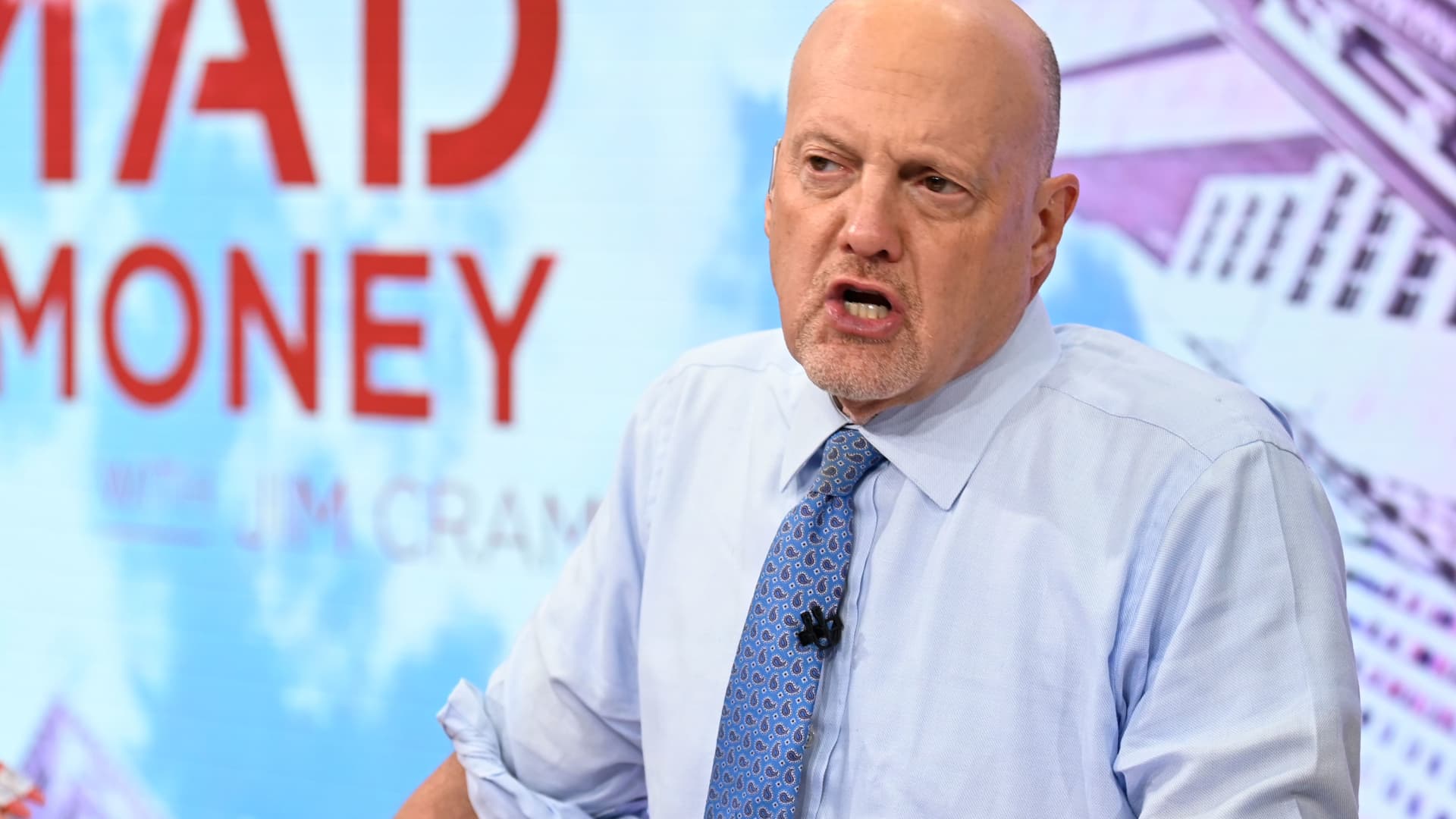
CNBC的吉姆·克雷默表示,周四人工智能股票的暴跌提醒人们,为何在市场波动中坚持投资必须实现多元化配置。
Thursday's sell-off in artificial intelligence stocks served as a reminder of why diversification is essential to staying invested through market volatility, according to CNBC's Jim Cramer.
在《金融时报》报道称OpenAI的年化收入比此前预期低约200亿美元后,科技股承压。甲骨文股价下跌5.5%,博通则下跌4.35%。与此同时,非人工智能领域的弱势股票,包括家得宝,在30年期国债拍卖表现稳健后,随着国债收益率回落而上涨。由CNBC投资俱乐部管理的克雷默慈善信托基金持有博通和家得宝的股票。
Tech shares came under pressure after the Financial Times reported that OpenAI's annualized revenue was about $20 billion below the amount previously signaled. Oracle tumbled 5.5% and Broadcom dropped 4.35%. Meanwhile, beaten-down stocks outside the AI trade, including Home Depot, rallied as Treasury yields eased following a solid 30-year bond auction. Cramer's Charitable Trust, the portfolio run by CNBC's Investing Club, owns shares of Broadcom and Home Depot.
“如果你只持有人工智能股票,今天就会是一场噩梦,”这位《疯狂金钱》节目主持人说道。
"If you had nothing but artificial intelligence stocks, today would've been a nightmare," the "Mad Money" host said.
克雷默解释说,集中化投资组合的风险在于,大幅亏损可能引发投资者恐慌,导致他们抛售持仓、转向现金,从而可能错过随后的市场复苏。他认为,多元化的投资组合有助于在特定投资主题受挫时缓冲损失,并让投资者更容易坚持持有。
The danger of a concentrated portfolio, Cramer explained, is that steep losses could prompt investors to panic, sell their holdings and retreat to cash, potentially missing a subsequent recovery. He argued a diversified portfolio can help cushion losses when a particular investing theme gets hit and make it easier to stay invested.
错过市场反弹的代价可能相当巨大。根据摩根大通的数据,一名投资者若在2005年至2024年间将1万美元投入标普500指数,却错过了该指数表现最好的10个交易日,其最终财富将不足持续全额投资者的二分之一。
The cost of missing a market rebound can be substantial. According to JPMorgan, an investor who put $10,000 into the S&P 500 and missed its 10 best trading days between 2005 and 2024 would have ended up with less than half the wealth of someone who stayed fully invested.
因此,克雷默表示,即使像家得宝这样的投资表现令人沮丧,持有市场热门板块以外的股票仍然重要。这家家居改善零售商多年来股价表现不佳,因为高利率对住房活动和消费者支出造成了压力。但周四的反弹帮助抵消了人工智能板块的疲软,也说明市场不同板块可以在不同时期表现出色。
That's why Cramer said holding stocks outside the market's hottest sectors matters, even when those investments, such as Home Depot, have been frustrating to own. Shares of the home improvement retailer have struggled for years as elevated interest rates weigh on housing activity and consumer spending. But its rebound Thursday helped offset weakness in the AI trade, illustrating how different parts of the market can perform well at different times.
“你知道我有多讨厌拥有家得宝的股票吗?”克ramer说道。“答案就是,今天我对它的喜爱程度几乎和过去讨厌它一样。因为正是在这样的日子里,它让我继续留在市场中。”对克ramer来说,分散投资最终的目的就是如此:不一定是要每天都能跑赢市场,而是防止某个板块的糟糕表现将投资者彻底赶出市场。
"Do you know how much I've hated owning Home Depot?" Cramer said. "The answer is about as much as I loved it today. Because it's keeping me in the game on days like this one." For Cramer, that's ultimately the purpose of diversification: not necessarily to outperform every day, but to prevent a bad day in one sector from driving investors out of the market altogether. "My goal when we started this show 22 years ago was and is simple," he said. "I want you to stay in the game. The only real way to make that happen is diversification.
“22年前我们创办这档节目时,我的目标很简单,现在也依然如此,”他说。“我希望你们能继续留在市场中。实现这一点的唯一有效方法就是分散投资。没有它,你们根本不可能留在市场中。”
You can't stay in the game without it." Sign up now for the CNBC Investing Club to follow Jim Cramer's every move in the market. Questions for Cramer? e into Cramer's world? Hit him up! Mad Money Twi