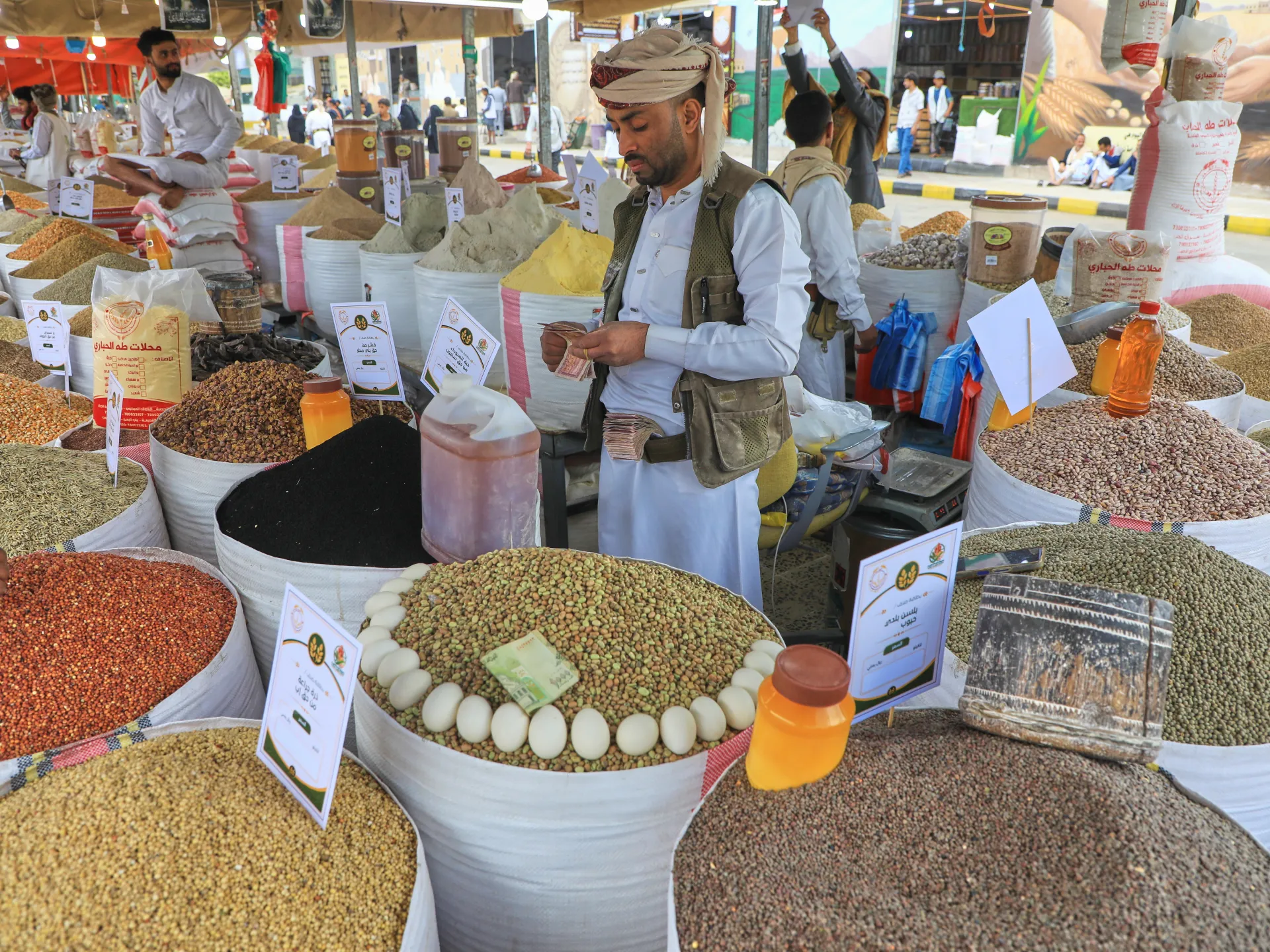
在也门,尽管政府与胡塞武装之间的冲突仍在持续,但数百万民众却面临着另一场远离前线的“战斗”:日益恶化的生活与经济状况。
across Yemen between the government and the Houthis, millions of people are confronting another battle far from the front lines: the deteriorating living and economic conditions in the country.
大量劳动者的工资要么无法按时发放,要么发放极不规律;与此同时,各类商品与服务的价格却不断上涨。此外,分裂的银行体系也使得资金在也门各地的流转变得愈发困难,进一步加剧了国家的经济困境。
With salaries for large segments of the workforce either unpaid or irregularly disbursed – and the prices of goods and services rising – Yemen’s economic struggles have been compounded by a divided banking system that has made moving money between different parts of the country increasingly complicated.
从亚丁那些囊中羞涩的购物者,到马里卜的流离失所家庭,再到萨那领不到工资的公共部门员工,也门民众不得不艰难抉择:哪些东西买得起,哪些只能忍痛舍弃。亚丁:食品开支吞噬了工资作为也门获得国际承认的政府在南部的临时首都,亚丁的问题并非市场上商品短缺,而是民众无力负担这些商品。
From Aden’s struggling shoppers to displaced families in Marib and unpaid public-sector workers in Sanaa, Yemenis are being forced to make difficult choices about what they can afford, and what they must go without. Aden: Food costs swallow salaries In Aden, the internationally recognised Yemeni government’s interim capital in the south, the problem is not so much a shortage of goods in markets as people’s inability to afford them.
工资涨幅远远赶不上食品、房租、医疗及交通费用的上涨速度,导致工人们每月到手的钱所剩无几。
Salaries have failed to keep pace with the rising costs of food rent, healthcare and transport leaving workers with little money left over at the end of the month.
如今,人们购买的食品数量减少、转而选择更便宜的商品,这些现象都反映出民众在经济压力下的无奈抉择。
The consequences are evident in the smaller quantities and cheaper products that now make up shoppers’ baskets, and the decisions they are forced to make about what to cut back on.
布什拉·阿卜杜拉·阿卜杜勒瓦里斯是亚丁的一名政府雇员。按黑市汇率计算,她每月的收入仅为78,000也门里亚尔(约合50美元)。而根据“也门经济监测计划”的估算,在政府控制区,一个普通家庭每月的食品开支就需约130,366里亚尔(约合83美元)。这还不包括房租、交通、医疗及其他家庭开支。
Bushra Abdullah Abdulwarith is a government employee in Aden. She earns 78,000 Yemeni riyals ($50) a month at the black market exchange rate while typical household food costs in government-held areas run about 130,366 riyals ($83), according to estimates by the Yemen Economic Tracking Initiative. And that’s before she factors in the cost of rent, transport, healthcare and other household expenses.
像布什拉这样的也门民众所面临的经济困境,正是十多年战争对国家经济造成重创的缩影。世界银行数据显示,自2015年以来,也门人均实际GDP下降了约58%。
The economic difficulties facing Yemenis like Bushra illustrate how more than a decade of war has devastated the economy. According to the World Bank, real GDP per capita has fallen by approximately 58 percent since 2015.
也门的货币管理体系已出现分裂:自2014年占领首都萨那以来,胡塞武装便自行建立了独立的金融机构。与此同时,石油出口受阻以及国际援助减少,这些因素共同导致了该国经济的持续衰退。
The fragmentation of Yemen’s monetary institutions between the government and the Houthis – who have operated their own institutions since seizing the capital, Sanaa, in 2014 – along with the disruption of oil exports, and declining international assistance have all contributed to the economic decline.
布什拉向半岛电视台表示,物价上涨迫使许多家庭几乎放弃了所有非必需品购买,甚至连一些价格较高的基本生活物资也不得不减少采购,尤其是肉类。她还指出,另一些家庭则只能少量购买食品,有时甚至需要靠赊账或借贷来维持生计。
Bushra told Al Jazeera that rising prices have forced many households to give up almost all non-essential purchases and cut back on some expensive basics, particularly meat. Other families, she said, have resorted to buying food in smaller quantities, sometimes on credit or loans.
物价上涨的影响不仅体现在经济数据上,也反映在人们的购物行为中。需求量的下降正是这种影响的直接体现。
Reduced demand The impact of rising prices is reflected not only in economic figures but also in the way people shop.
在亚丁曼苏拉区的一家购物中心工作的艾曼·马克塔里称,如今他的顾客们很少购买非必需品。
Ayman al-Maqtari, who works at a shopping centre in Aden’s Mansoura district, said that his customers now rarely buy non-essential items.
至于大米、糖、面粉和食用油等生活必需品,他注意到顾客们在放入购物篮前都会仔细比较价格。此外,人们购买的 quantity 也在减少——比如,他们宁愿买5公斤装的大米,也不再购买40公斤装的大包装。
When it comes to the essentials such as rice, sugar, flour, and cooking oil, he has noticed that customers size up the price of each item before putting it in their baskets. They are also buying smaller quantities, for example, opting for a 5kg (11 pound) over a 40kg (90 pound) bag of rice.
“如今很多人只能靠一天一天、一周一周地勉强维持生计,”艾曼对半岛电视台说道。他还补充说,当月底前钱款用尽时,越来越多的家庭只能选择赊账购物。购买力的下降同样对商业活动产生了负面影响。
“Many people have come to live day by day, or week by week,” Ayman told Al Jazeera, adding that more families are buying on credit when they run out of money before the end of the month. The decline in purchasing power is also affecting commercial activity.
在亚丁的多条街道及购物中心,商家们纷纷在橱窗和社交媒体上打出打折、促销的标语,试图以此吸引顾客、提升销量。
Across several streets and shopping centres in Aden, s for discounts and special offers have become increasingly visible in shop windows and on retailers’ social media pages, as businesses attempt to attract customers and boost sales.
零售商们表示,需求疲软的现象在那些家庭可以暂时不买的物品上表现得尤为明显,比如服装和家居用品。如今,家庭收入中越来越多的部分被用于购买食品、支付房租、医疗保健及交通费用。
Weak demand, retailers say, is particularly evident for items that households can put off buying, such as clothing and household goods. A growing share of family income is spent on food, rent, healthcare and transport.
有限的加薪也门政府于5月批准为公共部门员工发放20%的生活成本补贴,以缓解物价上涨带来的压力。不过,这一补贴是根据每位员工的基本工资计算的,而非他们的总收入,因此对许多员工来说,实际涨幅相当微小。
Limited pay increase The Yemeni government approved a 20 percent cost-of-living allowance in May for public-sector employees in an attempt to ease the pressure of rising prices. But the amount is calculated based on each employee’s base salary, rather than their total pay, meaning the actual increase is relatively small for many workers.
居住在亚丁的政府职员布什拉表示,这次加薪对改善她家庭的财务状况几乎没有帮助;她将这笔补贴形容为“一种临时的‘止痛药’,并不能真正反映人们生活水平所面临的严峻压力”。
Bushra, the government employee in Aden, said the increase has done little to improve her family’s financial circumstances. She described the allowance as “a temporary painkiller that does not reflect the scale of the actual pressure on people’s living standards”.
她的经历并非个例。10月初,世界粮食计划署表示,在政府控制的地区进行的最新调查显示,74%的家庭无法满足基本的食物需求。
Her experience is far from isolated. In early October, the World Food Programme said its latest monitoring in accessible government-controlled areas showed that 74 percent of households were unable to meet their basic food needs.
危机最为严重的地区之一是马里布——这座位于萨那以东的政府控制城市,这里居住着数十万流离失所的民众。由于战争期间人口激增(该地区原本属于偏远地区),该市的住房、就业和公共服务都面临着巨大压力。
One of the places where the crisis is evident is Marib a government-controlled city east of Sanaa that is home to hundreds of thousands of displaced people. The sharp increase in the population over the war years, in what was previously a provincial backwater, has led to pressure on the city’s housing, employment and public services.
马里布的政府职员们发现,工资发到手后几天内就被花光了;劳工们难以找到持续的工作;而流离失所的家庭则不得不在购买水和牛奶之间做出艰难选择。
Government employees in Marib see their salaries disappear within the first few days after being paid, labourers struggle to find more than a few days of work and displaced families are forced to choose between buying water and milk.
萨拉赫·阿尔-祖海菲在马里布的一家政府机构工作。他说,战争使他与生活在胡塞控制区域的父母失去了联系。“无论你挣多少钱,都远远不够满足基本生活需求,”他说。
Salah al-Zuhaifi works for a government institution in Marib. He said the war has separated him from his parents, who live in Houthi-controlled territory. Alone in Marib, al-Zuhaifi said that inflation had eroded much of his salary’s purchasing power.
另一位政府职员阿布·穆罕默德·纳赛尔·阿尔-阿斯巴希也表达了类似的困境。他告诉半岛电视台:“我每月的收入是40万也门里亚尔(约合250美元),但其中一半都用于支付房租,剩下的钱几乎不足以支付其他开销。”
“No matter how much you earn, it will not be enough to meet your needs,” he said. Abu Mohammed Nasser al-Asbahi, another government employee, described a similar struggle. He told Al Jazeera that he earns 400,000 riyals ($250) a month, but more than half of that goes towards his rent, leaving little for his other expenses.
“我们甚至还没到月初的三分之一,工资就已经花光了,”他解释说,他的家人在剩下的时间里只能依靠贷款和当地商店的信用来维持生活。马里卜的医疗行业也受到了家庭普遍削减开支的影响。
“We don’t even get to the first one-third of the month before the salary is gone,” he said, explaining that his family spends the rest of the month relying on loans and credit from local shops. The healthcare sector in Marib has also been affected by widespread household spending cuts.
药剂师哈立德·穆赫辛告诉半岛电视台,药品价格的上涨导致许多患者拒绝接受部分处方治疗,只购买他们认为最必需的药物。
Pharmacist Khaled Mohsen told Al Jazeera that the rising price of medicines has prompted many patients to decline parts of their prescribed treatment and purchase only what they consider most essential.
与此同时,患有慢性病的患者也开始逐渐减少药量,以延长药品的使用期限,但这带来了严重的健康风险。
People with chronic illnesses, meanwhile, have increasingly begun reducing their medication doses to make their supplies last longer before having to buy more, which creates serious health risks.
胡塞武装控制地区:自2014年以来,萨那以及也门人口稠密的西北部其他地区的居民一直由胡塞武装(又称“安萨尔·拉赫”(阿拉伯语意为“真主的支持者”))控制,他们同样面临着日益恶化的经济危机和生存成本问题,这与也门其他地区民众所遭遇的困境如出一辙。
Houthi areas Residents of Sanaa and other areas of Yemen’s populous northwest, controlled by the Houthis – an armed group also known as Ansar Allah (Arabic for Supporters of God) – since 2014, are also facing a worsening economic and cost-of-living crisis similar to that affecting Yemenis elsewhere in the country.
多种因素共同加剧了这场危机,尤其是公共部门工资长期未发、购买力下降、商品和服务价格上涨,以及战争初期也门货币和银行体系分裂所带来的持续影响。
Several factors are driving the crisis, particularly unpaid public-sector salaries, declining purchasing power, rising prices for goods and services, and the continuing consequences of the division of Yemen’s currency and banking systems in the early years of the war.
在胡塞武装控制地区,许多公共部门员工已经多年没有按时领取工资,某些行业甚至只能不定期地获得部分工资或半薪。
Many public-sector employees in Houthi-controlled areas have gone years without receiving regular salaries, with some sectors only receiving limited payments or half-salaries at irregular intervals.
即使有工资发放,在生活成本不断上涨的情况下,这些收入也无法满足家庭的基本需求。
Even when payments are made, they cannot cover families’ basic needs amid the rising cost of living.
与此同时,私营部门员工和企业主也面临日益加剧的压力,这源于经济活动衰退、多重税费负担以及就业机会的短缺。这些状况已经严重削弱了他们的收入和就业保障。
Meanwhile, private-sector workers and business owners face growing pressures as a result of declining economic activity, multiple fees and levies, and a shortage of employment opportunities. The conditions have undermined incomes and job security.
也门里亚尔在胡塞控制的萨那的汇率比政府控制地区更为稳定。胡塞组织实施了严格的货币管制,禁止流通也门政府印制的新版纸币,并且基本实行固定汇率。
The Yemeni riyal’s exchange rate in Houthi-controlled Sanaa is more stable than in areas controlled by the government. The Houthis have imposed strict monetary controls, banning the circulation of newer banknotes printed by the Yemeni government, and have also enforced a largely fixed exchange rate.
然而,这并不一定意味着购买力更强。由于现金短缺以及在全国不同地区运行的货币体系和银行体系之间的割裂,市场面临困难,包括资金转移成本上升。这直接影响到依赖国内外汇款的众多家庭。
However, that does not necessarily translate into stronger purchasing power. Markets face difficulties caused by cash shortages and the division between monetary and banking systems operating in different parts of the country, including increased costs for moving funds. That directly affects the many households relying on domestic and international remittances.
对于居住在胡塞控制区的居民来说,结果是货币相对稳定,但生计却十分脆弱。多年未发的工资和有限的就业机会使许多家庭难以负担基本生活必需品,几乎只能靠借贷、削减开支或依赖亲属的帮助来维持生活。
For residents in Houthi-controlled areas, the result is an economy in which the currency may be relatively stable, but livelihoods are precarious. Years of unpaid salaries and limited employment opportunities have left many families struggling to afford basic necessities, with few options beyond borrowing, cutting spending or relying on support from relatives.