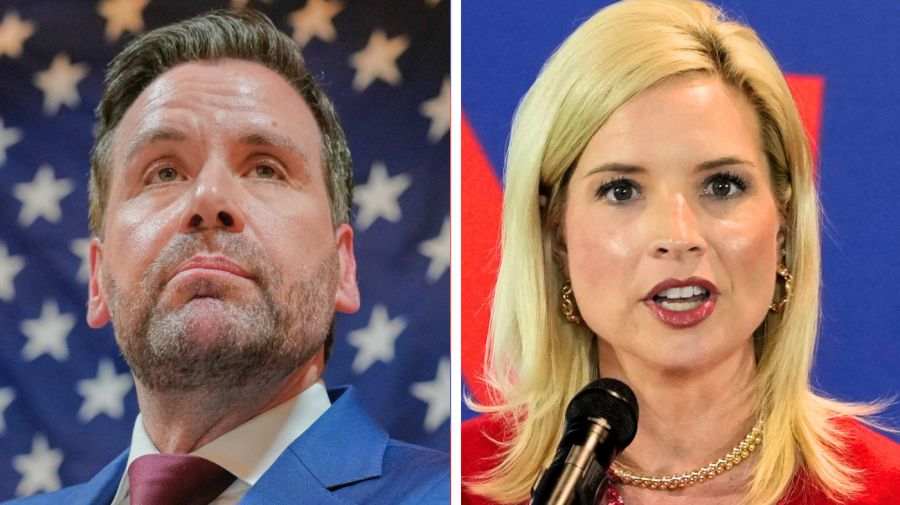
根据艾默生学院民调(Emerson College Polling)与《国会山报》(The Hill)联合发布的一项最新民调显示,在艾奥瓦州参议院空缺席位的角逐中,共和党众议员阿什利·辛森(Ashley Hinson)领先于其民主党对手乔什·图雷克(Josh Turek);而在州长竞选中,民主党籍州审计长罗布·桑德(Rob Sand)则领先于其共和党对手扎克·拉恩(Zach Lahn)。
Rep. Ashley Hinson (R-Iowa) leads her Democratic opponent Josh Turek for Iowa’s open Senate seat as Democratic state auditor Rob Sand holds an edge over his GOP opponent Zach Lahn in the gubernatorial contest, according to a new poll from Emerson College Polling and The Hill.
民调显示,辛森获得了47%的支持率,而图雷克获得了45%的支持率。她的领先优势处于该调查的误差范围之内。自由意志党候选人托马斯·拉恩(Thomas Laehn)获得了2%的支持率,另有7%的选民尚未决定。
The poll reported Hinson notched 47 percent of support, while Turek received 45 percent. Her lead is within the survey’s margin of error. Thomas Laehn, the Libertarian candidate, received 2 percent support, and 7 percent of voters were undecided.
在州长竞选中,49%的受访者支持桑德,45%支持拉恩。6%的受访者表示尚未决定。
In the race for governor, 49 percent supported Sand, while 45 percent favored Lahn. Six percent said they are undecided.
艾默生学院民调执行主任斯宾塞·金博尔(Spencer Kimball)指出,选民对候选人的支持存在年龄差异。“50岁以上的选民在参议院和州长选票上的支持力度有所不同:在参议院选举中,他们支持辛森而非图雷克的比例高出13个百分点,但在州长选举中,他们支持拉恩的比例仅高出5个百分点。”与此同时,金博尔表示,50岁以下的选民表现得更为一致,“他们在参议院选票上支持图雷克的比例高出14个百分点,在州长选票上支持桑德的比例也高出15个百分点。”
Spencer Kimball, executive director of Emerson College Polling, noted that support for the candidates was divided on age. “Voters over 50 differ in intensity of support on the Senate and gubernatorial ballot: they break for Hinson over Turek for Senate by 13, but Lahn only by five points on the ballot.”Meanwhile, voters under 50 are more consistent, per Kimball. “They break for Turek on the Senate ballot by 14, and similarly Sand by 15,” he added.
调查还发现,42%的受访者将经济列为首要议题,较8月份上升了4个百分点。其次是医疗保健(18%)、对民主的威胁(10%)和教育(8%)。
The survey also found 42 percent of respondents identified the economy as their top issue, which is up four points from August. This is followed by healthcare at 18 percent, threats to democracy at 10 percent and education at 8 percent.
“将经济视为该州面临的首要议题的选民,支持辛森的比例比支持图雷克高出4个百分点(47%对43%),但支持罗布·桑德的比例比支持拉恩高出3个百分点(49%对46%),”金博尔说。“将医疗保健或对民主的威胁视为该州首要议题的选民,则以两位数的优势支持民主党候选人。”在过去十年中,艾奥瓦州一直是稳固的共和党州,特朗普总统在三次总统竞选中均赢得了该州。然而,随着总统支持率持续下滑,以及美国国内对伊朗冲突的不满情绪日益增长,共和党正进入一个动荡的中期选举环境。
“Voters who say the economy is the top issue facing the state break for Hinson by four points, 47-43%, but for Rob Sand by three points, 49-46%,” Kimball said. “Voters who find healthcare or threats to democracy to be the top issue facing the state break for the Democratic candidates by double digits.”Iowa has been a reliably red state within the last decade, with President Trump carrying it in all three of his presidential runs. However, the GOP enters a rocky midterm environment as the president’s approval rating continually declines and dissatisfaction with the ongoing conflict with Iran grows in the U.S.
在“鹰眼之州”(爱荷华州)的潜在选民中,民调显示42%的人认可总统的工作表现,而51%的人表示不认可。
Among likely voters in the Hawkeye state, the poll found 42 percent approve of the president’s handling of his job, while 51 percent disapprove.
库克政治报告(Cook Political Report)将爱荷华州称为“特朗普关税政策及伊朗战争对农业影响引发强烈反弹的震中”。辛森(Hinson)尤其采取了与特朗普保持距离的举措,将竞选重点放在了伊朗战争带来的经济影响上——她明确反对特朗普为降低美国物价而提出的进口外国牛肉的计划。
The Cook Political Report refers to Iowa as “ground zero for backlash to the effect of Trump’s tariffs and Iran War on the agriculture industry.”Hinson, particularly, has made moves to distance herself from Trump by focusing her campaign on the economic impact of the Iran war — notably opposing Trump’s plan to import foreign beef as a way to reduce prices for Americans.
尽管她曾投票反对限制伊朗行动的决议,但她呼吁“立即结束”冲突,并在社交媒体上写道:“爱荷华州民众正承受着压力,不应为伊朗战争在加油站或结账台买单。”此次民调于10月5日至6日进行,调查对象为650名爱荷华州潜在选民。误差幅度为3.8个百分点。
Though she has voted against resolutions that would limit actions in Iran, she called for an “immediate end” to the conflict, writing on social media, “Iowans are being squeezed and shouldn’t have to foot the bill at the pump or the checkout line for the war in Iran.”The poll was conducted Oct. 5-6 among 650 likely voters in Iowa. The margin of error is 3.8 percentage points.