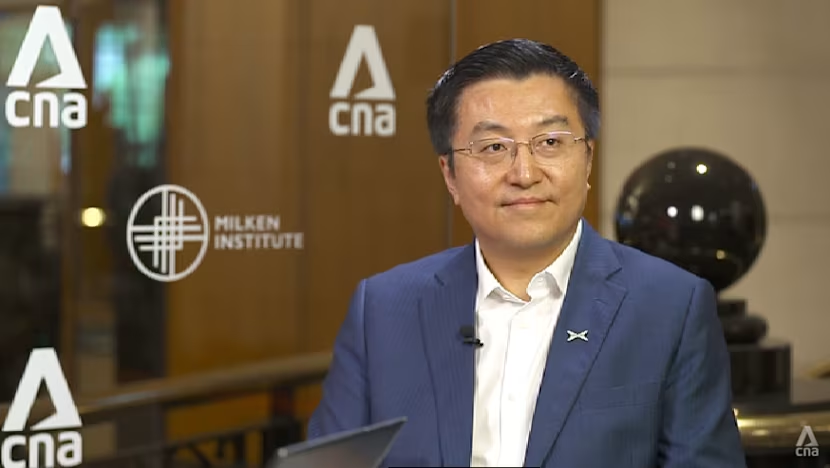
新加坡:中国电动汽车制造商小鹏汽车计划于明年在部分海外城市启动机器人出租车测试,将其自动驾驶技术拓展至中国境外,公司副主席兼总裁郭行华表示。
SINGAPORE: Chinese electric vehicle maker Xpeng plans to begin testing robotaxis in selected overseas cities next year, as it takes its autonomous driving technology beyond China, vice-chairman and president Brian Gu said.
他补充说,随着商业化部署的扩大,未来两到三年内,机器人出租车可能会在道路上变得更加常见。
Robotaxis could become a more common sight on roads in the next two to three years as commercial deployment expands, he added.
“从明年开始,我们希望在全球部分城市启动试点测试,”郭行华在新加坡米尔肯亚洲峰会间隙接受新加坡通讯社(CNA)采访时说。
“Starting next year, we hope to launch pilot testing in select global cities,” Gu told CNA on the sidelines of the Milken Institute Asia Summit in Singapore.
“机器人出租车离日常生活并不遥远。大概两到三年后,全球范围内就会出现更大规模的商业化部署。”但他并未透露正在考虑的具体城市。
“Robotaxis are not that far from everyday life. As soon as probably two to three years later, you could see larger-scale commercial deployment around the world.”He did not reveal which cities are being considered.
小鹏汽车目前正在中国南部城市广州测试其“Yoyo”机器人出租车,约有100辆车参与此次试点。
Xpeng is currently testing its Yoyo robotaxi in the southern Chinese city of Guangzhou, with close to 100 vehicles involved in the pilot.
郭行华表示,近年来自动驾驶技术取得了“巨大进步”,并指出小鹏汽车的辅助驾驶系统已用于其车辆行驶里程的近60%。
Gu said there has been “tremendous development” in autonomous driving capabilities in recent years, adding that Xpeng's driver-assistance systems were used for nearly 60 per cent of the distance travelled by its vehicles.
但他也指出,完全自动驾驶的机器人出租车需要达到更高的标准,包括能够在无人驾驶的情况下安全应对复杂和突发状况。
But fully autonomous robotaxis would need to meet a higher bar, including being able to safely handle complex and unexpected situations without a human driver, he noted.
激烈竞争:小鹏汽车推进机器人出租车项目之际,正值中国电动汽车行业竞争白热化。
INTENSE COMPETITION Xpeng’s robotaxi push comes amid intense competition in China’s EV sector.
“由于参与者数量庞大,中国汽车市场是全球竞争最激烈的市场,”郭行华说。
“The Chinese automotive market is the most competitive in the world because of the sheer number of players,” Gu said.
他补充说,希望在这场竞争中脱颖而出的企业,将越来越需要具备超越汽车制造本身的能力,包括人工智能、制造、供应链和海外运营等方面。
He added that companies hoping to emerge from that competition would increasingly need capabilities beyond making cars, including in artificial intelligence, manufacturing, supply chains and overseas operations.
“如今,要取得成功,你绝不能仅仅是一家汽车公司。你必须采取全栈式发展策略,既要做一家人工智能公司,也要做一家全球化企业,”他说。
“Today, to be successful, you cannot just be an automotive company. (You) have to develop a full stack approach. You have to be an AI company, a global company,” he said.
小鹏正在从电动汽车领域向机器人和飞行器等方向拓展,力求将自己打造为一家其称之为“实体AI”的公司。
Xpeng has been expanding beyond electric cars into areas including robots and flying vehicles, as it seeks to position itself as what it calls a “physical AI” company.
古表示,小鹏为自身车辆开发的技术,包括其自主的AI模型和芯片,也可以应用于其他设备。
Gu said the technology developed for its vehicles, including its own AI models and chips, could also be applied to other machines.
人形机器人方面,小鹏的人形机器人“铁人”便是其中之一。该公司计划从明年年初开始大规模生产这款机器人。
HUMANOID ROBOTS Among them is Iron, Xpeng’s humanoid robot, which the company is preparing to produce in larger quantities from early next year.
这款身高1.73米的机器人在体型、姿态和动作上都设计得与人类相似。
The 1.73m-tall robot is designed to resemble humans in its size, posture and movement.
小鹏计划将机器人部署在自家的门店和办公室中,用于担任接待员和销售助理。
Xpeng plans to deploy the robots in its own stores and offices, where they would work as receptionists and sales assistants.
“它们将与人类员工并肩工作,负责迎接顾客、介绍产品、回答问题,甚至可能递上瓶装水,”古说道。
“(They will) work alongside human employees by welcoming customers, introducing the products, answering questions, maybe even hand over bottled water,” said Gu.
他还补充说,小鹏计划于2027年下半年开始向外部客户推出“铁人”。
Xpeng intends to begin offering Iron to external customers in the second half of 2027, he added.