数月来,硅谷的亿万富翁们(以及加州其他几个金光闪闪的角落里的富豪)一直在竭力阻止一项全州性措施,该措施拟对其资产征收一次性5%的财富税。直到现在,他们的努力收效甚微。但本周,随着选票开始寄到选民家中,他们或许终于有了一些乐观的理由。
For months, the billionaires of Silicon Valley (and a few other gilded corners of California) have been scrambling to stop a statewide measure that would levy a one-time 5% wealth tax on their assets. Until now, they haven’t had much luck. But as ballots begin arriving in voters’ mailboxes this week, they arguably have some reason for optimism.
最近几项民意调查显示,在民主党人数约为共和党人两倍的加州,选民们对于以如此新颖的方式对富人征税,远未表现出支持态度。截至上个月,支持这项被称为“第40号提案”的措施的人还不到一半;而且根据加州大学伯克利分校民意调查专家的数据,即便是这微弱的支持率也在持续下降。
A few recent polls have found that voters across California, whereed Democrats outnumber Republicans roughly 2-to-1, are far from sold on taxing the rich in such a novel way. As of last month, fewer than half said they would support the measure, known as Proposition 40 — and, according to UC Berkeley’s pollsters, even that tepid support is slipping.
到了11月,谷歌联合创始人谢尔盖·布林在阻止第40号提案上投入的超过1亿美元,或许将换来可观的回报。但他以及加州其他亿万富翁不应将短期的政治成功与长期的政治趋势混为一谈。
Come November, Google co-founder Sergey Brin could end up with a solid return on his investment of more than $100 million to stop Proposition 40. But he and the rest of California’s billionaires shouldn’t confuse short-term political success with longer-term political trends.
第40号提案的支持者们的观点不无道理:关于对超级富豪征收新税的政策讨论——包括对全部资产征税(而不仅仅是收入或资本利得)这一颇具争议的方案——不太可能随着11月选举的结束而在加州戛然而止。相反,这类讨论很可能会被进一步激化。
The backers of Proposition 40 have a point when they argue that policy discussions about imposing new taxes on the ultrawealthy — including a controversial tax on overall assets, not just on income or capital gains — are unlikely to end in November in California. If anything, such discussions are likely to be supercharged.
该州颇具影响力的SEIU-UHW工会主席、也是这项投票提案的起草人戴夫·里根在接受彭博新闻社采访时说:“我认为我们已经让这个问题变得不可避免。”他表示,尽管己方在广告支出上远远落后于对手,而广告似乎正让公众舆论转向反对第40号提案。
As Dave Regan, president of the state’s powerful SEIU-UHW labor union and the architect of the ballot measure, told Bloomberg News: “I think we’ve made this issue inevitable.”He says that even though his side is being wildly outspent on advertising, which seems to be turning public opinion against Proposition 40.
相反,里根将问题归咎于民粹主义。事实上,民意调查显示,在美国大多数民众中,对民粹主义的支持正在上升,其背后是人们对住房、食品杂货和儿童抚养问题所引发的普遍经济不安全感。《华尔街日报》最近的一项民调得出结论:“在美国人对共和党和民主党都持负面看法的当下,围绕一系列政策已经形成了一股超越传统政党标签的联盟。”
Instead, Regan points to populism. Indeed, polls show rising support for it among majorities of Americans, driven by widespread feelings of economic insecurity over housing, groceries, childcare. A recent poll from the Wall Street Journal concluded that “a coalition reaching beyond the nation’s familiar party labels exists for a range of policies at a time when Americans view Republicans and Democrats negatively.”
大约三分之二的选民认为美国正走在错误的轨道上。无论这种看法是否正确,亿万富翁都被认为是造成这一局面的主要责任人。这一点尤其适用于与特朗普政府立场一致的硅谷亿万富翁——他们关于数据中心和人工智能的言论常常脱离现实,而追求这些目标的策略也同样缺乏分寸,且已司空见惯。
Roughly two-thirds of voters believe the US is on the wrong track. And rightly or wrongly, billionaires are getting a lot of the blame for that. This is particularly true of the Trump-administration-aligned billionaires of Silicon Valley, where tone-deaf statements about data centers and artificial intelligence — and equally tone-deaf strategies for pursuing them — have become routine.
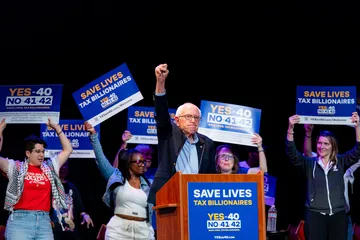
正因如此,当佛蒙特州参议员伯尼·桑德斯——第40号提案最知名的支持者——在旧金山和洛杉矶近期的集会上煽动民众时,我们不应忽视他的声音。
This is why Senator Bernie Sanders of Vermont — the most high-profile backer of Proposition 40 — shouldn’t be ignored when he is whipping up crowds, as he did recently at rallies in San Francisco and Los Angeles.
桑德斯在洛杉矶表示:“你们正在向从东海岸到西海岸乃至全国各地的民众证明:是的,我们确实能够挑战寡头们的贪婪;是的,我们确实能够建立一个为我们所有人、而不仅仅是那1%的人服务的经济和政府。”
“What you are showing people from coast to coast and all over is that, yes, we can take on the greed of the oligarchs,” Sanders said in LA. “Yes, we can create an economy and a government that works for all of us, not just the 1%.”
同样不应被忽视的还有民主党众议员罗·卡纳,他的选区就包括硅谷。他最近在接受《纽约客》采访时,解释自己支持第40号提案的理由时说:“我的选区里有五家市值达到一万亿美元的公司。当我当选国会议员时,这里连一家一万亿美元的公司都没有。它们被视为寡头,是掌握财富和权力、控制着我们生活的人……而且,它们还表现出更多的傲慢。”
Nor should Representative Ro Khanna, a Democrat whose district includes Silicon Valley. “There are five trillion-dollar companies in my district,” he recently told the New Yorker, explaining his support for Proposition 40. “When I got elected to Congress, there wasn’t a single trillion-dollar company. They’re seen as oligarchs, as the people with wealth and power, controlling our lives. … There’s also a lot more arrogance.”
桑德斯多次宣称第40号提案是美国“最重要的”投票议题。这种说法或许有些夸张,但它的出现确实推动了几项重要变化。最重要的是,它迫使民主党在民粹主义的争论中明确站队。
Sanders has repeatedly declared Proposition 40 the “most important” ballot measure in the US. That’s probably a stretch. But its very existence has set several things in motion. Most importantly, it has forced Democrats to pick a side in the populism debate.
迄今为止,民主党在加利福尼亚州和洛杉矶县的分支机构已支持这项投票提案,而旧金山民主党则持反对立场。工会内部也存在分歧。与此同时,州长加文·纽森表示,他愿意支持一项全国性的财富税,而不是支持第40号提案。他认为,该提案将迫使亿万富翁将住所和企业迁出本州,从而重创加州经济。
So far, the California and Los Angeles County chapters of the Democratic Party have endorsed the ballot measure, while the San Francisco Democratic Party has opposed it. Labor unions are split, too. Governor Gavin Newsom, meanwhile, has suggested that he would support a national wealth tax in lieu of supporting Proposition 40, which he argues would devastate California’s economy by driving billionaires to move their homes and businesses out of state.
纽森的这一论点在反对该投票提案的人群中十分普遍——而且他们的担忧并非没有道理。毕竟,根据彭博亿万富翁指数的数据,布林的个人净资产约为2700亿美元,他早已离开加州,在州界另一边的内华达州购置了一处豪宅。
Newsom’s is a common argument among the ballot measure’s opponents — and they aren’t wrong. After all, Brin, with a net worth of about $270 billion, according to Bloomberg’s Billionaires Index, has already left California for a mansion across the state line in Nevada.
但如果纽森在2028年如外界普遍预期的那样参选总统,他的这一决定可能会反噬自身,甚至影响其他民主党人。同样考虑参选的卡纳无疑会试图将“对亿万富翁征税”——尤其是对其资产征税——作为衡量党内提名的试金石。
But Newsom’s decision could come back to haunt him — and other Democrats — if he makes a widely expected run for president in 2028. Khanna, who’s also considering running, is sure to try turning taxing billionaires — and specifically, taxing their assets — into a litmus test for his party’s nomination.
卡纳和桑德斯已经提出了《让亿万富翁支付公平份额法案》,该法案将对约900名净资产达到或超过10亿美元的美国人征收5%的年度财富税。这几乎可以肯定,第40号提案所引发的争议仅仅是个开始。
Khanna and Sanders have already introduced the Make Billionaires Pay Their Fair Share Act, which would levy a 5% annual wealth tax on about 900 Americans with a net worth of $1 billion or more. That all but assures that what’s happening with Proposition 40 is only the beginning.
正如桑德斯本周末在旧金山对人群所说:“整个国家,甚至坦率地说,全世界的人们都在关注这里正在发生的事情。”换言之,“加州的走向,就是国家的走向。”这句格言一向是民主党在这个美国人口最多州份引以为豪的口号,但如今,它既成了一种承诺,也成为了一种担忧。
As Sanders told a crowd in San Francisco over the weekend, “The whole country, and frankly people from around the world, are paying attention to what is happening here.”In other words, “As California goes, so goes the nation.”It’s an adage that Democrats in the nation’s most populous state use proudly, but suddenly it has become as much of a promise as a source of fear.