特朗普政府将人工智能发展描述为赢家通吃的竞赛,但美国的数据中心充斥着中国制造的设备,许多美国公司依赖中国的人工智能。
The Trump administration paints AI development as a winner-take-all contest, but U.S. data centers are full of made-in-China equipment and many U.S. companies rely on Chinese AI.
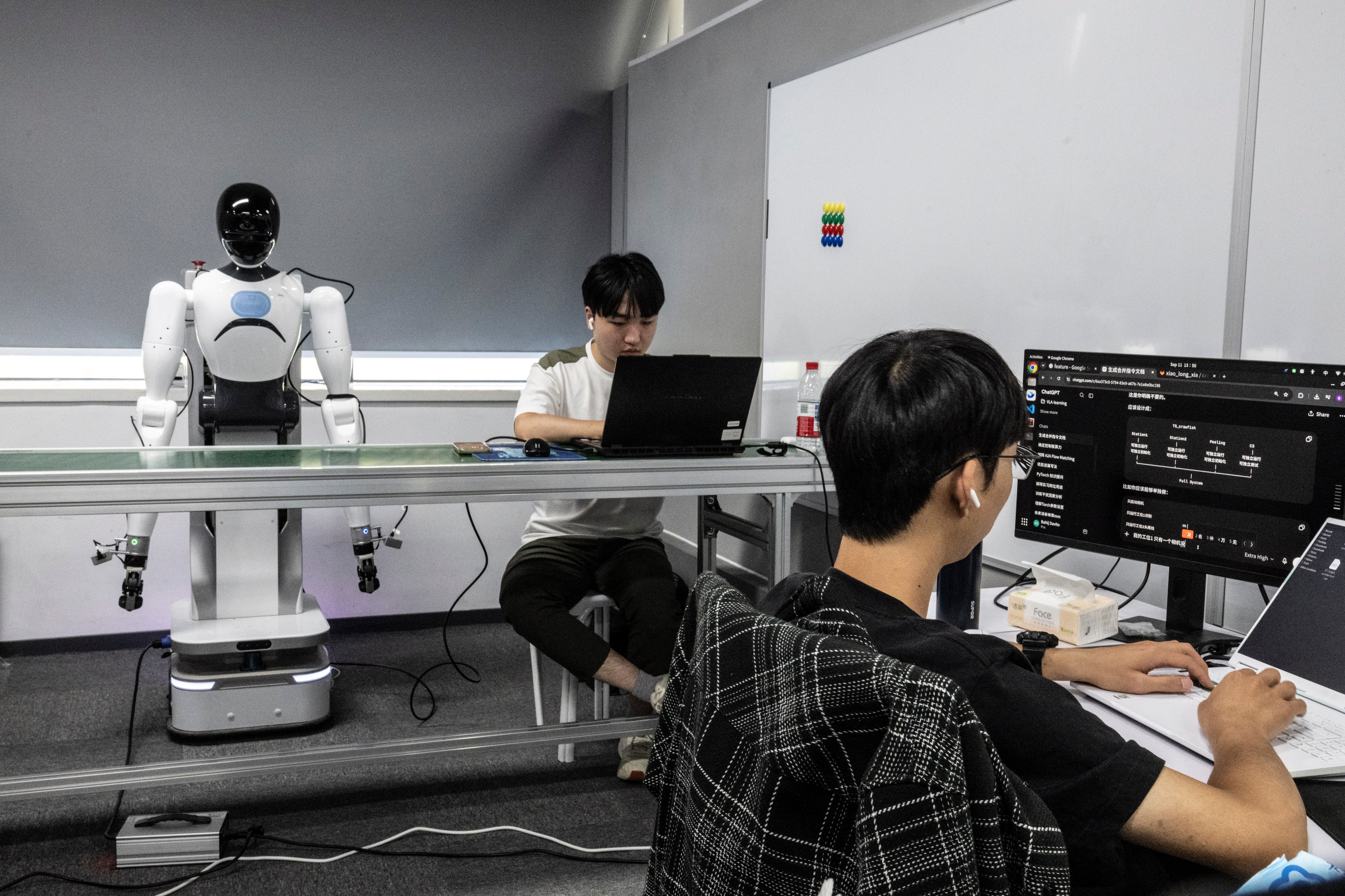
北京塔山科技正利用人工智能开发其机器人的技能。(Gilles Sabrié/《华盛顿邮报》供图)北京——要听美国官员的话,月之暗面公司通过从美国科技公司“恶意”窃取来开发其强大的人工智能模型,并且是共产党策划的一部分,旨在让美国公司依赖低成本的中国人工智能。
Tashan Technology in Beijing is using artificial intelligence to develop its robots’ skills. (Gilles Sabrié/For The Washington Post) BEIJING — To hear American officials tell it, Moonshot AI developed its powerful artificial intelligence models through “malicious” pilfering from American tech firms and is part of a Communist Party plot to hook U.S. companies on low-cost Chinese AI.
但该公司位于北京中关村高科技区的一栋普通办公楼里,并没有看到所谓的反美恶意行为的迹象。
But at the company’s head office here, an unremarkable building in the Zhongguancun high-tech district, there are no signs of such anti-American malevolence.
月之暗面的会议室以美国摇滚传奇乐队命名,如金属乐队和齐柏林飞艇;公司名称源自创始人杨志林对粉红弗洛伊德乐队《月之暗面》的喜爱。公司高管们享受着来自埃隆·马斯克等著名美国人的推特赞誉。而杨志林曾在匹兹堡的卡内基梅隆大学获得博士学位,甚至用他的英文昵称“Kimi”来命名他的模型。
Moonshot’s meeting rooms are named for American rock legends like Metallica and Led Zeppelin; the company’s very name stems from founder Yang Zhilin’s affection for Pink Floyd’s “The Dark Side of the Moon.”Company executives bask in tweeted praise from prominent Americans like Elon Musk. And Yang, who earned his doctorate in Pittsburgh at Carnegie Mellon University, even gives his models his English-language nickname, Kimi.
月之暗面体现了两个所谓正陷入人工智能主导权全面较量的国家之间的深厚联系。
Moonshot is emblematic of the deep ties between two nations supposedly locked in an all-out battle for AI dominance.
尽管特朗普总统的政府——以及美国科技领袖——经常将人工智能发展描述为赢家通吃的竞赛,但许多美国公司依赖月之暗面的最新产品Kimi K3作为硅谷产品的廉价替代品。美国的数据中心充斥着中国制造的设备,而诸如Meta智能眼镜之类的AI赋能产品也是由中国工人制造的。
While President Donald Trump’s administration — and U.S. tech leaders — routinely paint AI development as a winner-take-all contest, many U.S. companies rely on Moonshot’s latest offering, Kimi K3, as an inexpensive alternative to products from Silicon Valley. U.S. data centers are full of made-in-China equipment and AI-enabled products such as Meta’s smart glasses are made by Chinese workers.
“我们的联系如此紧密,”华盛顿布鲁金斯学会的人工智能专家凯尔·陈说。“存在大量实际的依赖关系。”
“We’re so deeply intertwined,” said Kyle Chan, an AI specialist at the Brookings Institution in Washington. “There’s a lot of actual dependency.”
这些链接之所以引人注目,是因为华盛顿对中国人工智能发展的警报声此起彼伏。四月,国会开始调查美国公司使用中国人工智能模型的情况,称其存在所谓的国家安全风险。上个月,联邦调查局、国家安全局和国土安全部网络安全部门发布联合警报,指责Moonshot及另外五家中国人工智能公司以未经授权使用美国模型进行训练为其发展战略基础。
Those links are striking given the alarms raised in Washington about Chinese AI development. In April, Congress began probing U.S. companies’ use of Chinese AI models, citing alleged national security risks. And last month, the FBI, the National Security Agency and the Department of Homeland Security’s cybersecurity arm issued a joint advisory accusing Moonshot and five other Chinese AI companies of basing their development strategy on unauthorized training on U.S. models.
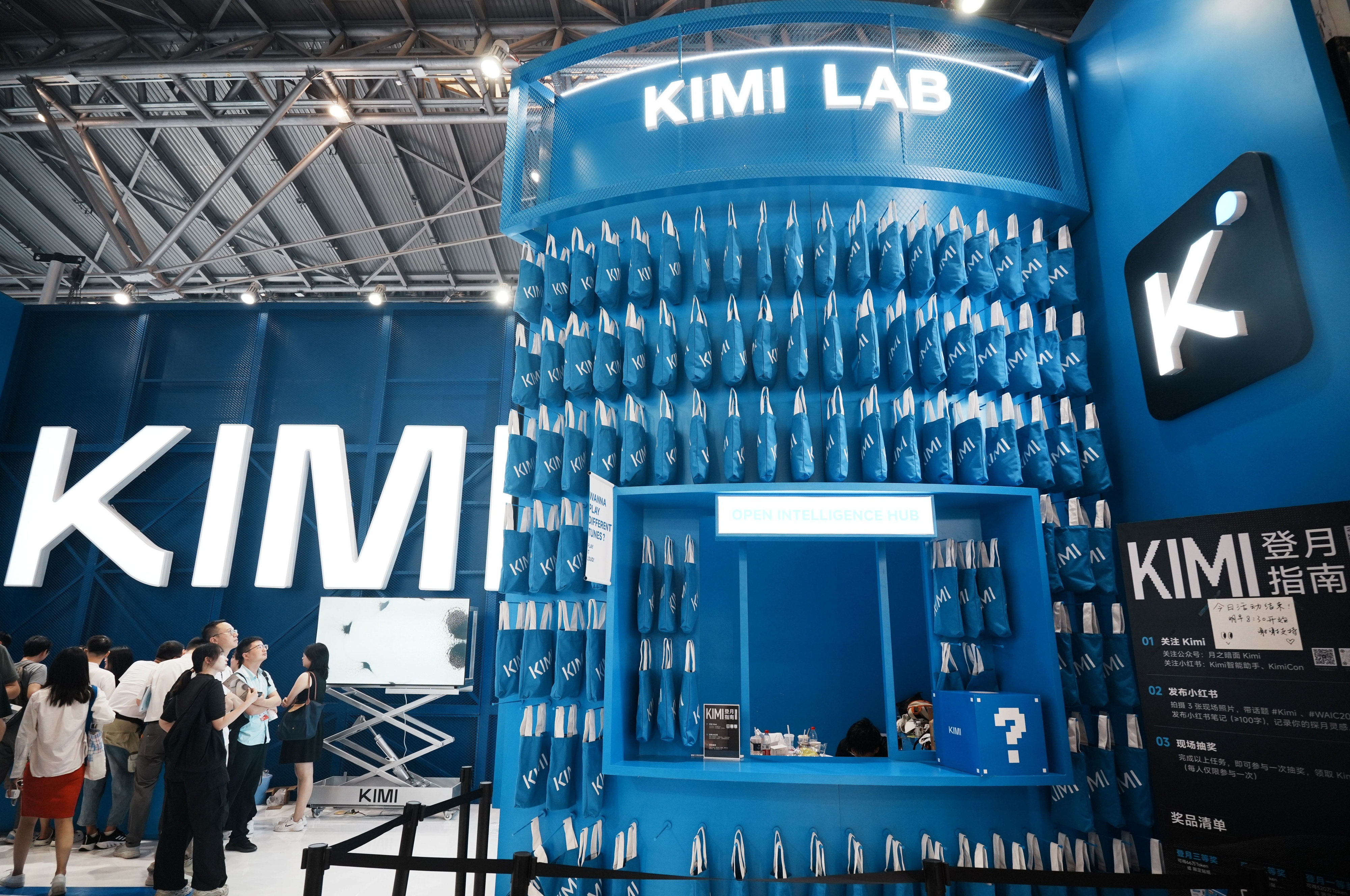
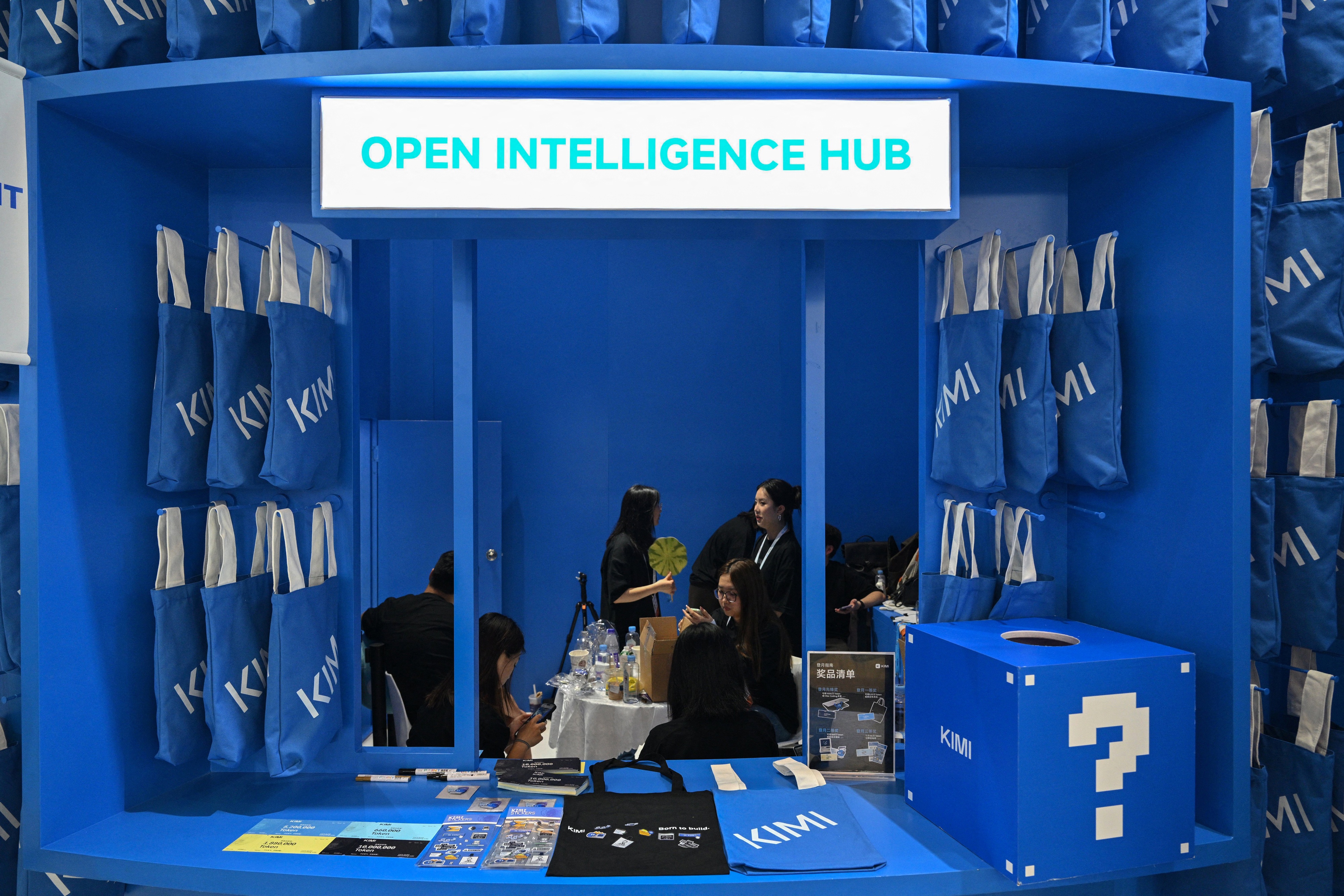
美国公司将Moonshot AI的最新产品Kimi K3作为硅谷产品的廉价替代品。该英文产品的名称源自Moonshot创始人杨子林的昵称。
American firms use Moonshot AI’s latest offering, Kimi K3, as an inexpensive alternative to products from Silicon Valley. The English-language product’s moniker comes from Moonshot founder Yang Zhilin's nickname.
美国对低价中国人工智能的需求如此旺盛,以至于当特朗普政府七月份因国家安全原因考虑禁止其使用时,近300家国内公司组成联盟强烈反对。正如Counterpoint Research的AI分析师魏孙所写:“美国客户对Kimi K3的渴望标志着开放智能本身成为地缘政治依赖的时刻。”
U.S. demand for low-cost Chinese AI is so robust that when the Trump administration in July considered banning it for national security reasons, a coalition of nearly 300 domestic companies loudly objected . The craving for Kimi K3 among American customers, wrote Wei Sun, an AI analyst for Counterpoint Research here, “marked the moment open intelligence itself becomes a geopolitical dependency.”
由Moonshot、Deep Seek和阿里巴巴等中国公司开发的“开放权重”人工智能模型可以由用户自定义,且远比Anthropic和OpenAI等硅谷公司提供的“封闭”模型便宜。尽管封闭模型更先进,但DoorDash和Airbnb等美国公司发现,中国产品对许多日常任务而言已经足够好。(《华盛顿邮报》与OpenAI有内容合作伙伴关系。)
“Open weight” AI models made by Chinese companies such as Moonshot, Deep Seek and Alibaba can be customized by users and are far cheaper than the “closed” models offered by Silicon Valley companies like Anthropic and OpenAI. Though the closed models are more advanced, U.S. companies such as DoorDash and Airbnb have found that the Chinese products are more than adequate for many routine tasks. (The Washington Post has a content partnership with OpenAI.)
正如华盛顿咨询公司DGA-Albright Stonebridge Group的合伙人保罗·特里奥洛所说:“这些中国公司正威胁着Anthropic和OpenAI——即封闭模型公司——而这些公司,顺便说一下,正在推动整个美国经济。”“而现在,美国政府陷入了困境,因为该如何应对这种情况呢?”
The Chinese companies “are a threat to Anthropic and OpenAI, the closed models — who are driving, by the way, the entire U.S. economy,” said Paul Triolo, a partner at DGA-Albright Stonebridge Group, a Washington consultancy. “And the U.S. government is now in a difficult position, because what do you do about that?”
确实,美国长期视为国家天赋的尖端技术垄断如今面临自斯普特尼克以来最严峻的挑战。
Indeed, the U.S. hold on cutting-edge technologies that most Americans have long regarded as a national birthright now faces perhaps its stiffest challenge since Sputnik.
美国实验室在追求通用人工智能(AGI)方面仍领先中国数月,AGI是一种超越人类能力的认知水平。但中国研究人员正以曾被认为在威权国家不可能实现的方式进行创新。他们还利用本国无与伦比的制造业基础,在实现该目标之前就将AI普及到经济的各个领域。
U.S. labs retain a lead of several months over China in the pursuit of artificial general intelligence or AGI, a level of cognitive ability that would exceed human capabilities. But Chinese researchers are innovating in ways once thought impossible in authoritarian nations. And they are capitalizing on their nation’s unrivaled manufacturing base to spread AI through the economy long before reaching that goal.
“中国在硬件方面做了很多工作。我认为这是中国和美国之间的主要区别,”哈佛肯尼迪学院研究员、专注于中国经济和AI产业的陈浩表示。“美国的逻辑是:模型是最重要的。但中国认为模型和硬件同样重要。而中国在制造方面具有优势。”
“China is doing a lot in hardware. I think that’s a major distinction between China and the U.S.,” said Hao Chen, a research fellow at Harvard Kennedy School, specializing in the Chinese economy and AI industry. “The U.S. logic is: The model is the most important. But China thinks the models and the hardware are equally important. And China has an advantage in manufacturing.”
在美国,AGI被视为圣杯。顶尖AI公司正在追求更复杂的模型,甚至聘请宗教学者和哲学家来就其创作的道德属性提供建议。如果中国率先实现AGI,财政部长斯科特·贝森特上个月曾警告:“其他一切都将无关紧要。”
In the United States, AGI is akin to the Holy Grail. Top AI companies are pursuing ever more sophisticated models, even hiring religious scholars and philosophers to advise on their creations’ moral attributes. If China achieves AGI first, Treasury Secretary Scott Bessent warned last month, “nothing else would matter.”
然而,许多中国公司对AGI的重视程度较低。他们效仿中国领导人的思路,将AI视为一种可贯穿工业、政府和日常生活的通用技术。
Many Chinese companies, however, place less emphasis on AGI. Taking their cue from Chinese leaders, they instead approach AI as an all-purpose technology to use throughout industry, government and everyday life.
如今,这意味着许多大城市酒店中的机器人管家、由字节跳动的豆包应用驱动的家庭助手、无处不在的AI生成短视频以及始终警惕的国家监控系统。未来,这可能意味着更多。
Today, that means robot butlers in many big-city hotels, home assistants powered by Bytedance’s Doubao app, ubiquitous AI-generated short videos and ever-vigilant state surveillance systems. Tomorrow, it may mean even more.
中国国务院去年更新了两年前发布的“AI Plus”倡议,称其应“推动人工智能与经济社会各领域的广泛而深入融合”。到2030年,包括科学、政府和工业发展在内的六个重点领域应实现智能体和终端的90%普及率,国务院如是表示。
China’s State Council last year updated a two-year old “AI Plus” initiative, saying it should “promote the extensive and in-depth integration of AI with all sectors and fields of the economy and society.”By 2030, six priority sectors — including science, government and industrial development — should reach 90 percent adoption rates of intelligent agents and terminals, the council said.
在北京西部一家关闭的钢铁厂的阴影中,中国技术人员正利用人工智能为机器人赋予精细运动能力,使其能够夹起鸡蛋而不压碎它,将电子元件插入其外壳,甚至将小龙虾的头部与身体分离。
In the shadows of a shuttered steel factory in western Beijing, Chinese technologists are using artificial intelligence to equip robots with the fine motor skills needed to lift an egg without crushing it, insert an electronic part into its housing or even separate the head of a crayfish from its body.
塔山科技专注于研发“触觉处理芯片”,使机器人能够区分轻重物体并为每种物体施加适当的抓握力度。
Tashan Technology specializes in “tactile processing chips” that allow robots to distinguish between light and heavy objects and use the appropriate grip strength for each.
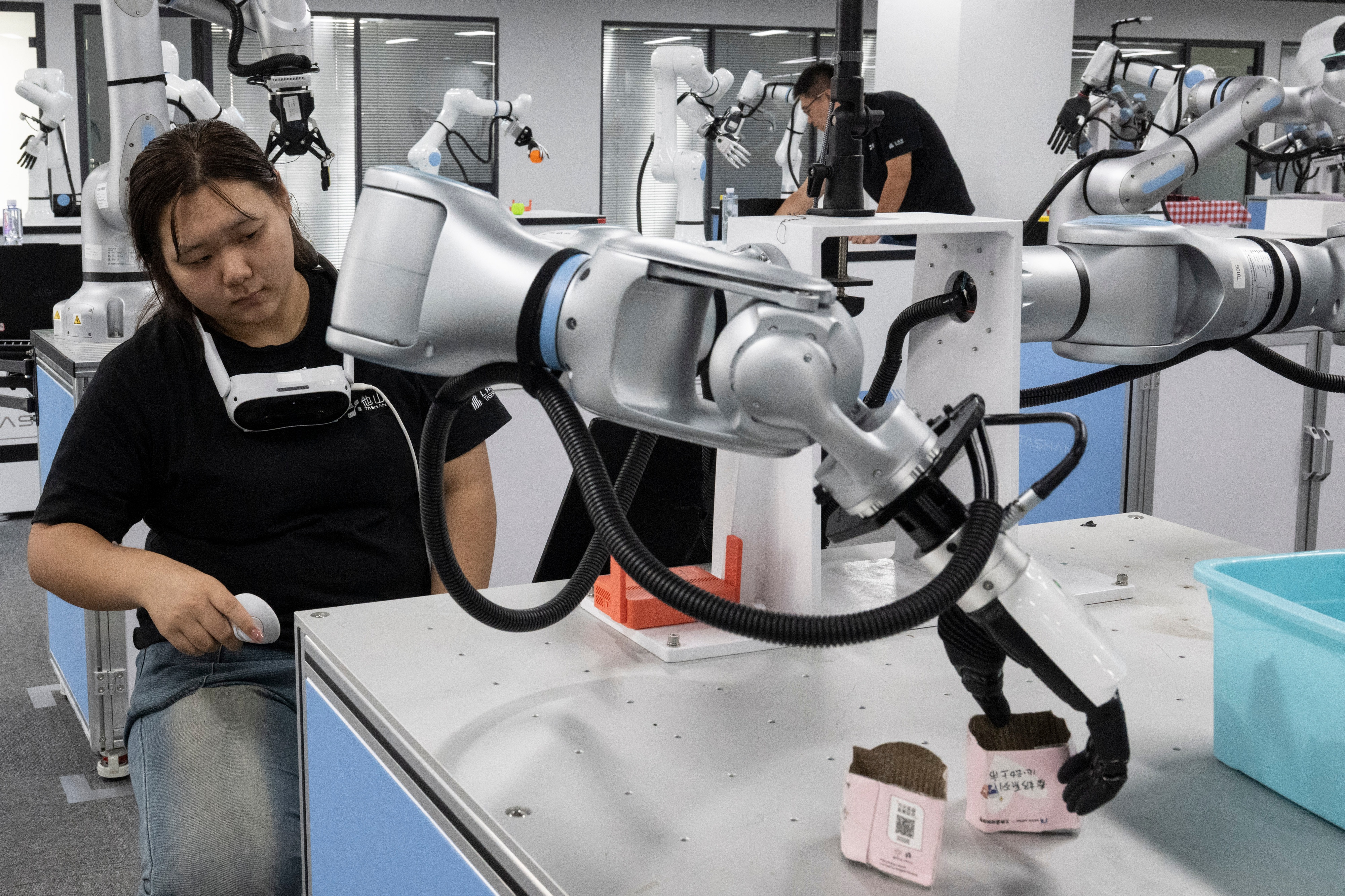
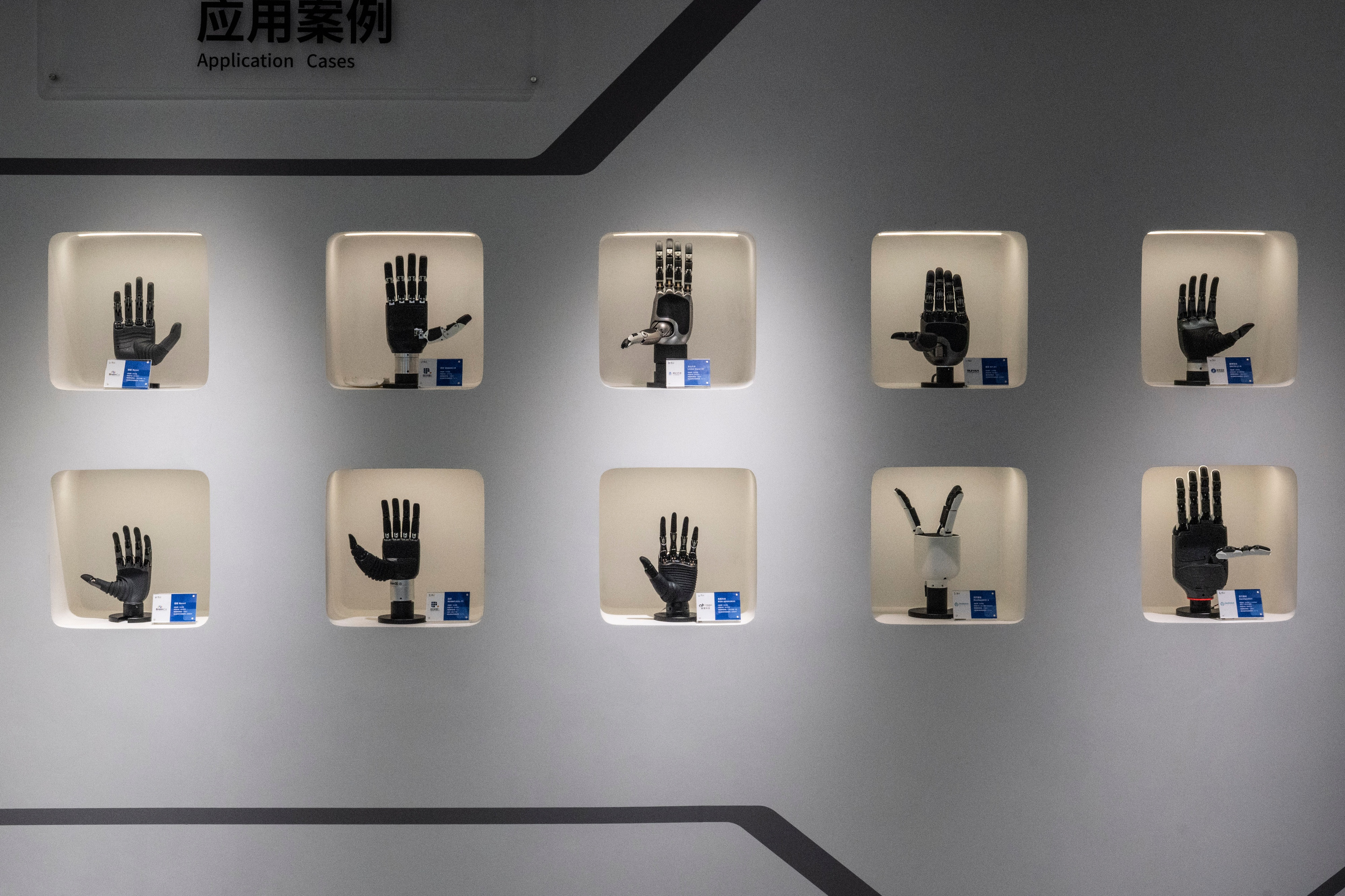
塔山科技正在开发具备精细运动能力的机器人。(Gilles Sabrié/《华盛顿邮报》)塔山展厅展出的触觉机器人手。(Gilles Sabrié/《华盛顿邮报》)在公司的研发中心,工作人员指挥机器人完成诸如擦拭厨房溢出液体或从模拟商店货架取货等任务。一款即将完成的产品将升级酒店机器人,使其能够将客房服务直接递交给客人手中,而不仅仅是送到房门口。
Tashan Technology is developing robots with fine motor skills. (Gilles Sabrié/For The Washington Post) Tactile robot hands on display at the Tashan showroom. (Gilles Sabrié/For The Washington Post) At the company’s research center, workers direct robots to perform jobs such as wiping up kitchen spills or fetching a product from a mock store shelf. One product that’s nearly complete would upgrade hotel robots to hand guests their room service orders rather than merely deliver them to their doors.
“我认为这反映了中美产业之间一个有趣的差异,”塔山科技国际业务负责人陈金林说。“在美国客户那里,他们往往在第一阶段就设定一个宏大的愿景或目标。[而在中国]即使这些产品只能完成单一任务,也会有客户愿意为此付费。”
“I think this reflects an interesting difference between the Chinese industry and the U.S. industry ,” said Chen Jinlin, the head of Tashan’s international business. “On the U.S. customer side, they will have a huge vision or a huge goal at the first stage. [But in China] there will be customers who are willing to pay for these products even if they could only do one task.”
中国的渐进式策略源于现实必要性。与美国的人工智能公司相比,中国公司在资本和计算资源(“算力”)方面存在不足。
China’s incremental strategy is born of necessity. Compared with AI companies in the U.S., Chinese companies are short of capital and computational resources or “compute.”
根据旧金山研究公司Epoch AI的数据,中国六大AI公司报告的年收入总和仅占Anthropic和OpenAI合并年收入的约10%。
Altogether, China’s top six AI companies report about 10 percent of the combined annual revenue of Anthropic and OpenAI, according to Epoch AI , a research firm in San Francisco.
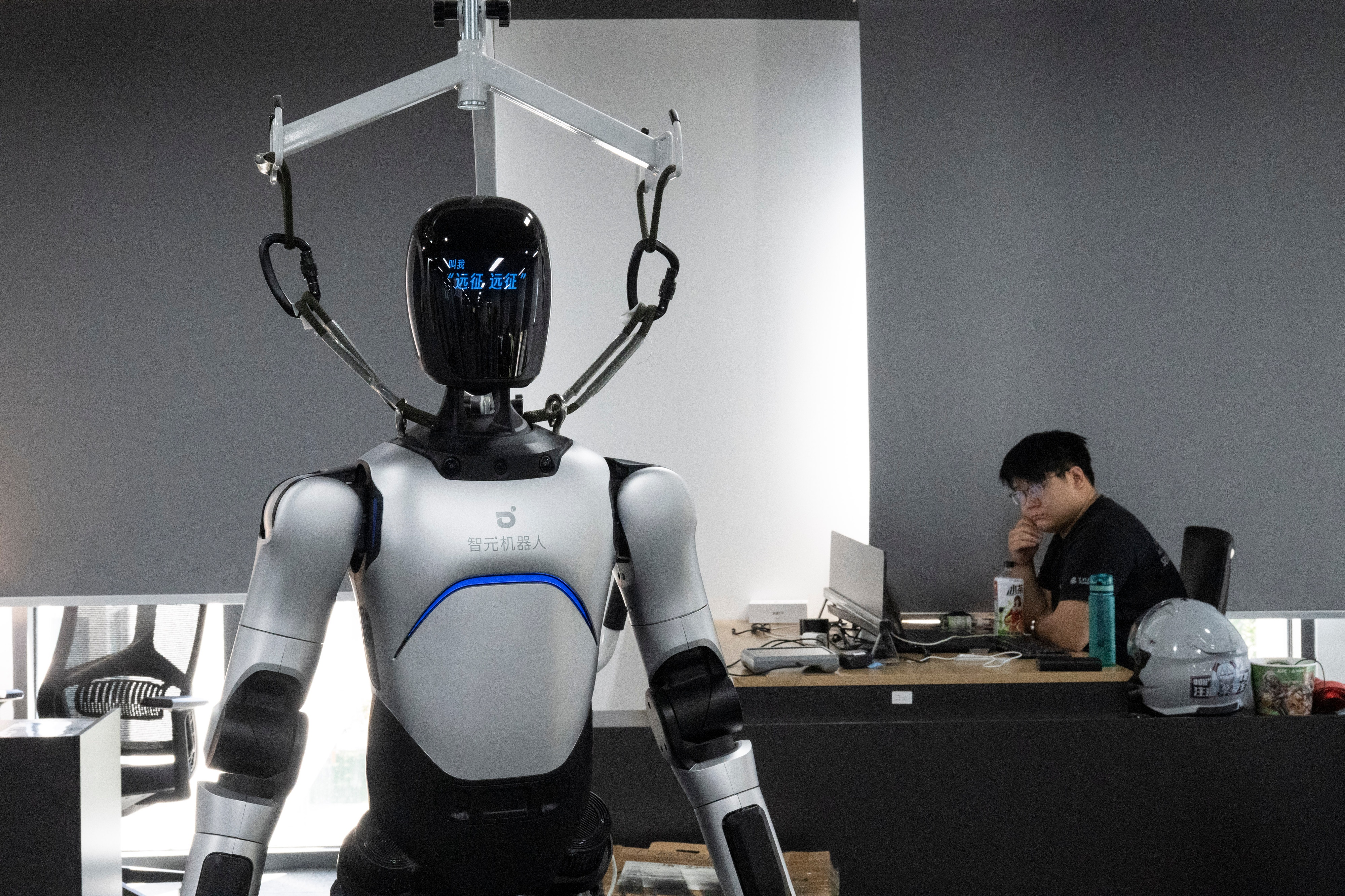
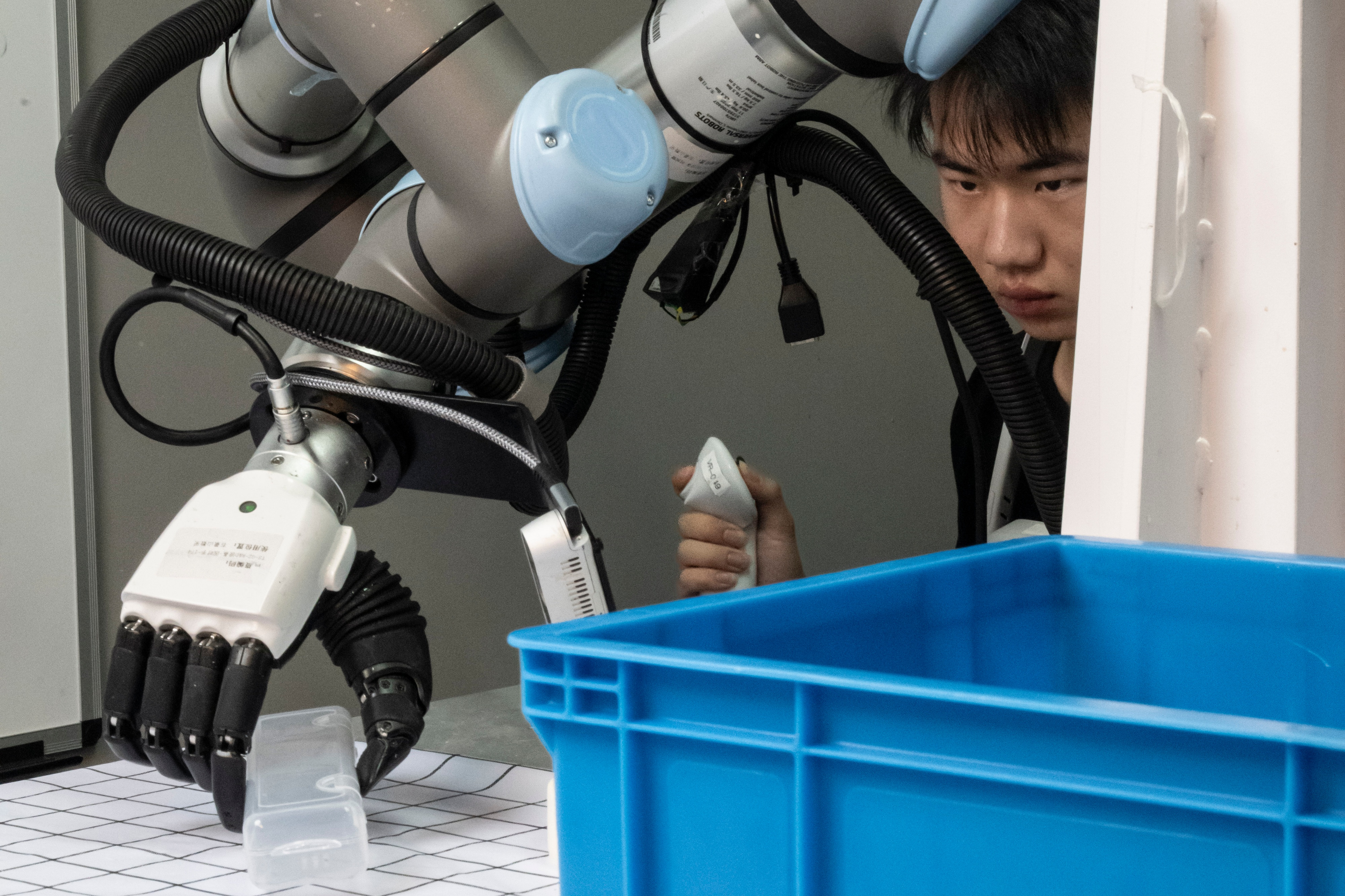
Tashan正在为酒店设计机器人,这些机器人可以为客人送上客房服务订单。(Gilles Sabrié/《华盛顿邮报》)一名Tashan员工正在训练机器人掌握合适的抓握力度,以便从货架上取出商品。(Gilles Sabrié/《华盛顿邮报》)筹集投资资金也并不容易。
Tashan is designing robots for hotels that could hand guests their room service orders. (Gilles Sabrié/For The Washington Post) A Tashan worker trains a robot in the right grip strength to fetch a product from a store shelf. (Gilles Sabrié/For The Washington Post) Raising money from investors isn’t any easier.
中国公司在国内和美国都面临更严格的监管审查,才能在纽约上市。据彭博社本周报道,Moonshot计划于明年早些时候在香港进行首次公开募股,融资额可能高达50亿美元。相比之下,Anthropic备受期待的今年晚些时候的IPO可能带来20倍于此的融资额。
Chinese companies face greater regulatory scrutiny both at home and in the U.S. before being able to list in New York. Moonshot is aiming for an initial stock offering in Hong Kong early next year that could raise up to $5 billion, Bloomberg reported this week. In contrast, Anthropic’s much-anticipated IPO later this year could bring in 20 times that amount.
算力短缺同样令人担忧。由于华盛顿对最先进计算机芯片的出口管制,美国公司在开发、测试和运行AI模型所需的算力方面享有10比1的优势,这一数据来自华盛顿非营利组织“进步研究所”(Institute for Progress)的8月报告,该组织表示其倡导促进增长的创新政策。
The compute shortfall is equally daunting. Thanks to Washington’s export controls on the most advanced computer chips, U.S. companies enjoy a 10-to-1 advantage in the processing power needed to develop, test and run AI models, according to an August report from the Institute for Progress, a Washington nonprofit that says it favors pro-growth innovation policies.
上个月,美国安全官员表示,六家中国AI公司——Moonshot、DeepSeek、阿里巴巴、Minimax、StepFun和Z.AI——曾通过大规模行动在美国最前沿的AI模型上训练自己的模型,违反了美国公司的使用条款。
U.S. security officials last month said six Chinese AI companies — Moonshot, DeepSeek, Alibaba, Minimax, StepFun, and Z.AI — engaged in extensive campaigns to train their models on the best U.S. frontier models, violating the U.S. companies’ terms of use.
尽管如此,中国公司仍拥有全球最广泛的制造基础,这使得它们能够在各类AI产品上实现快速原型制作、测试和产品迭代。
Still, Chinese companies enjoy the world’s most extensive manufacturing base, which allows for rapid prototyping, testing and product improvement across an array of AI goods.
过去几十年里,深圳、上海和杭州等城市形成了一个庞大的电子供应商网络。这些生产运动控制器、传感器和惯性测量单元的厂商构成了竞争优势,尤其在机器人领域具有重要意义。
Over the past several decades, a sprawling network of Chinese electronics suppliers has developed in cities such as Shenzhen, Shanghai and Hangzhou. Those producers of motion controllers, sensors and inertial measurement units represent a competitive advantage that is especially important in the robotics sector.
例如,根据摩根士丹利的说法,使用中国供应商制造特斯拉的Optimus 2人形机器人,材料成本约为46,000美元。但若使用非中国供应链,成本将几乎增加三倍,达到132,000美元。
For example, making Tesla’s Optimus 2 humanoid robot with Chinese suppliers would cost about $46,000 for materials, according to Morgan Stanley. But making it with a non-Chinese supply chain nearly triples the cost to $132,000.
许多服务于蓬勃发展的机器人行业的中国公司,正如陈所述,同时也为电动汽车制造商提供服务。
Many of the Chinese companies that serve the burgeoning robotics sector do double duty feeding electric vehicle makers, Chen said.
塔山就是这种产业交叉的一个例子。该公司成立于2017年,最初为汽车制造商开发电子产品,包括比亚迪——中国最大的汽车制造商之一。其早期产品之一是一种“踢传感器”,让驾驶员通过在后保险杠下方挥动脚来打开后备箱。
Tashan is an example of this industrial overlap. The company got its start in 2017 developing electronics for automakers, including BYD, China’s largest. One early product was a “kick sensor” that let drivers open the trunk by waving a foot under the rear bumper.
如今,塔山声称其在中国触觉传感器市场占有80%。该公司拥有超过200家客户,并正与全球市值最高的公司英伟达合作开展机器人模拟。
Today, Tashan claims 80 percent of the Chinese market for tactile sensors. The company has more than 200 customers and is partnering with Nvidia, the world’s most valuable company, on robotic simulations.
“中国具有明显的优势,而美国很难轻易克服这一优势,因为制造业、供应链、较低的成本以及更快的上市时间。产品可以在中国的公司中以一个周期完成构建、迭代和改进,而这一速度可能是美国相当公司的四倍,”北京01.AI公司首席执行官、前谷歌中国负责人李开复说道。
“China has the clear advantage and it’s not one that the U.S. can easily overcome because of the manufacturing, the supply chain, the lower costs, the faster time to market. Products can be built, iterated and improved in a cycle that could be four times faster than the American equivalent company,” said Kai-Fu Lee, chief executive of 01.AI in Beijing and former head of Google China.
过去十年里,在美国两任总统的领导下,美国一直在尝试减少对中国在关键商品方面的依赖。然而,将人工智能的益处惠及美国消费者和企业的希望,却依赖于中国供应商。
The U.S. has tried for most of the past decade, under two presidents, to reduce its dependence on China for critical goods. Yet hopes of spreading AI’s benefits to American consumers and businesses depend on Chinese suppliers.
如今,许多早期的人工智能使能产品——包括Meta的多款智能眼镜——都源自中国工厂。同样,Pebble Index智能戒指(可录制语音备忘录并将其传输至用户智能手机)也是在中国制造的。
Already, early AI-enabled products, including many of Meta’s smart glasses, emerge from Chinese factories. The Pebble Index smart ring, which records voice notes and transmits them to a user’s smartphone, likewise is made in China.
中国工厂也一直是美国近年来大规模数据中心建设的重要,尽管正在下降的物料来源。根据明尼阿波利斯联邦储备银行经济学家迈克尔·沃格的最新论文,美国超大规模云服务提供商去年从中国进口了价值约450亿美元的人工智能相关商品,包括计算机硬件、电力设备、供暖和制冷系统以及消防安全装备。
Chinese factories also have been an important, though declining, source of material for the massive U.S. data center build out of recent years. U.S. hyperscalers imported roughly $45 billion worth of AI-related goods from China last year, including computer hardware, power equipment, heating and cooling systems and fire safety gear, according to a recent paper by economist Michael Waugh of the Federal Reserve Bank of Minneapolis.
这一数字较两年前的约550亿美元有所下降,而中国在人工智能相关进口总额中的占比下降更为显著,沃格表示,其比例已从之前的水平降至2025年的7%,以及今年上半年的3%。台湾和越南的供应商承担了更大的角色,这表明一些中国制造的商品可能是通过这些国家转运到美国的。
That amount was down from roughly $55 billion two years earlier, and China’s decline was even sharper as a percentage of total AI-related imports, falling by about half to 7 percent in 2025 and to 3 percent in the first half of this year, Waugh said. Suppliers in Taiwan and Vietnam took on a larger role, which suggests some Chinese goods may have been shipped to the U.S. via those nations.
美国数据中心繁荣的一个中国受益者是中际旭光,这是一家光收发器制造商。该公司近60%的业务来自美国客户,如谷歌母公司Alphabet、亚马逊和英伟达。
One Chinese beneficiary of the U.S. data center boom is Zhongji InnoLight, a maker of optical transceivers. Nearly 60 percent of the company’s business comes from U.S. customers such as Alphabet, Amazon and Nvidia.
今年6月,五角大楼将中际旭光列入了与中国军方有关联的供应商名单。据路透社报道,特朗普政府也 reportedly 正在考虑禁止进口新制造的中国数据中心设备。
In June, the Pentagon added Zhongji InnoLight to its list of suppliers with links to the Chinese military. The Trump administration also is reportedly considering a ban on imports of new Chinese-made data center gear, according to a Reuters report.
“建设数据中心和训练美国的人工智能模型依赖于大量来自中国的数据中心组件,”布鲁金斯学会的陈说。“当你思考所谓的‘脱钩’或依赖问题时,你不需要深入表层就能看到,美国人工智能供应链中到处都是中国零部件和中国关联。”
“Building the data centers and training U.S. models depends on a lot of data center components that come from China ,” said Brookings’s Chan. “When you think about something like decoupling or dependency, you don’t have to scratch too far below the surface to start to see Chinese parts and Chinese connections throughout the U.S. AI supply chain.”