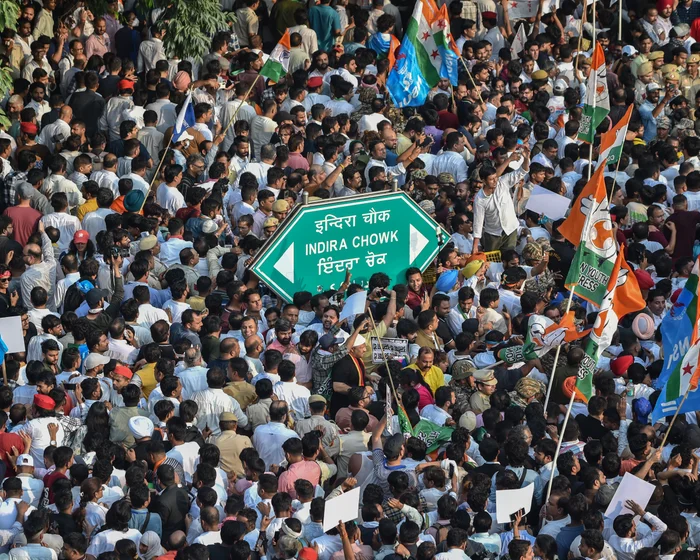
年轻的抗议者揭示了强人权威的局限。压制异议有可能加深他本应面对的民主危机。莫迪对德里选举权抗议的强硬镇压似乎适得其反。上周末,他的政府试图镇压由“Z世代蟑螂人民党”(CJP)发起的示威。政府关押了数千名青年,拘留记者,并像宣布紧急状态一样关闭首都。阿比吉特·迪普克(Abhijeet Dipke)在今年5月创立CJP,当时印度首席大法官将失业青年比作“蟑螂”,他在抵达德里时与其他领袖一起被拘留。
Young protesters have exposed the limits of a strongman’s authority. Crushing dissent risks deepening the democratic crisis he should confront Narendra Modi’s heavy-handed crackdown on protests over electoral rights in Delhi appears to have backfired. Over the weekend, his government tried to crush demonstrations led by the gen Z Cockroach Janta party (CJP). It locked up thousands of young people, detained journalists and shut down the capital as if he had declared emergency rule. Abhijeet Dipke, who launched the CJP in May after India’s chief justice compared jobless youths to “cockroaches”, was detained with other leaders when he landed in Delhi.
那些走上街头的人被警察粗暴对待或被捕。即便最高法院通常保持恭敬,命令保护和平集会,莫迪政府仍对基本宪法权利表现出专制蔑视。
Those who did take to the Indian capital’s streets were roughed up by police or taken into custody. Even when the usually deferential supreme court ordered peaceful assembly be protected, Mr Modi’s government showed its authoritarian contempt for fundamental constitutional rights.
这并非力量的展示,而是政府对其声称代表的选民的恐惧。但这些行动并未阻止抗议。周一,成千上万的人在德里游行,要求印度选举主管辞职,因为有报告称超过1.3亿选民的姓名被从选民名册中删除,以利莫迪的印度人民党(BJP)在近期选举中获胜。印度选举委员会否认了这一指控,尽管部分委员对选民姓名在未获知情的情况下被剔除表示担忧。
This was less a display of strength than a government showing its fear of voters it claims to represent. But the actions did not stop the protests. On Monday, thousands marched in Delhi, demanding the resignation of India’s election chief over reports that the names of more than 130 million voters were deleted from the electoral roll to benefit Mr Modi’s Bharatiya Janata party (BJP) in recent elections. It’s a charge that India’s election commission denies, although some commissioners have raised concerns over voters’ names being removed without their knowledge.