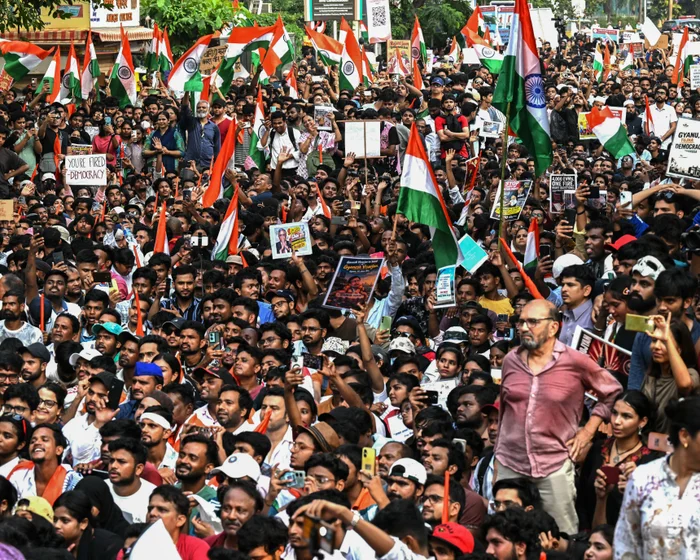
德里反对选民登记变更的游行导致大规模抓捕、网络封锁——以及对印度选举独立性的质疑。此外,记录平凡之美的摄影师。数月来的公众愤怒酝酿,已在印度引发一季不满。在此最新阶段,诉求是撤换首席选举委员 Gyanesh Kumar 并废除一项有争议的选民名单修订,该修订已使 1.3 亿人被剥夺选举权。过去一周,抗议活动每日爆发,促使首都对异议者实施暴力镇压。
Marches in Delhi against changes to voting registration led to dragnets, internet blackouts – and questions about India’s electoral independence. Plus, the cinematographer capturing the beauty of the mundane Months of simmering public anger have given rise to a season of discontent in India. In its latest iteration, the demand is for the removal of chief election commissioner Gyanesh Kumar and the scrapping of a controversial electoral rolls revision that has struck 130 million people off the. Protests have erupted every day over the past week, prompting a violent crackdown on dissenters in the capital.
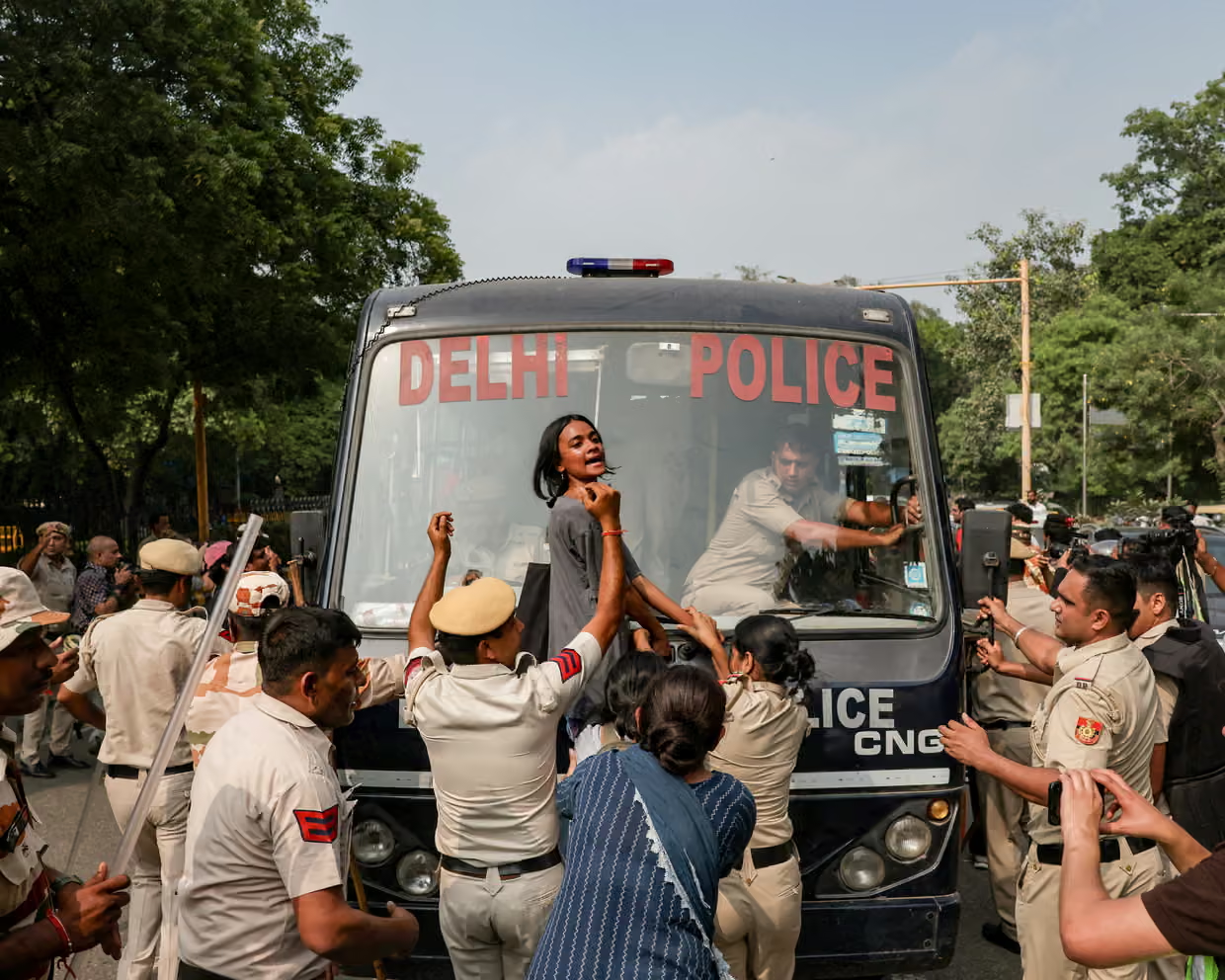
周末,德里实际上陷入封锁状态,变成了一个布满路障、道路封闭以及准军事部队在街头巡逻的军事化景观。在周六由“蟑螂人民党”领导的抗议活动之前,当局部署了大规模抓网:前往德里的 245 列列车被取消,45 个地铁站被关闭,酒类商店停业,市中心互联网服务被切断,活动人士被软禁在家。
Over the weekend, Delhi was effectively under lockdown, transformed into a militarised landscape of barricades, road closures and paramilitary forces marching through the streets. Ahead of a protest led by the Cockroach Janta party on Saturday, authorities deployed a massive dragnet: 245 trains to Delhi were cancelled, 45 metro stations were shut, liquor shops were closed, internet services were cut off in the heart of the city and activists were put under house arrest.