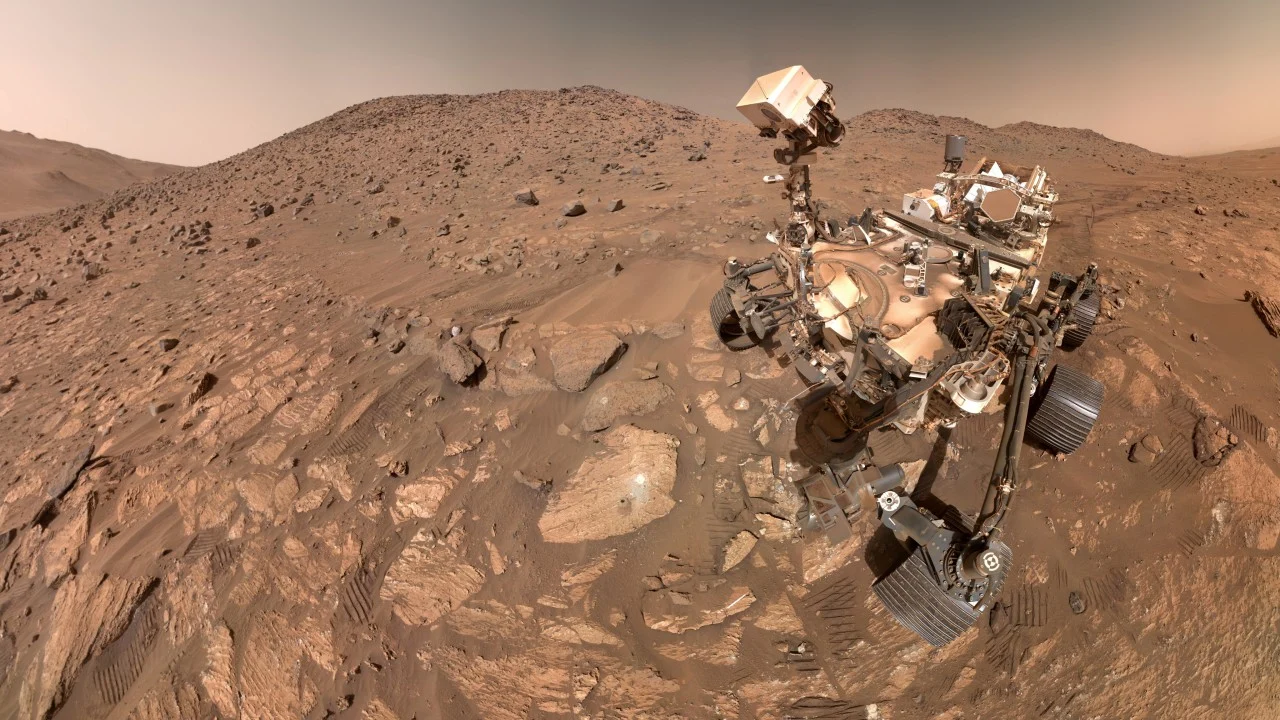
美国宇航局周二表示,该机构的机器人“毅力号”火星车自2021年抵达火星以来,已累计行驶45.2公里(28.1英里),行驶里程超过了地球以外任何其他星球表面上的其他车辆。
Nasa’s robotic Perseverance rover has now driven farther than any other vehicle on the surface of any world other than Earth, racking up 45.2km (28.1 miles) since arriving on Mars in 2021, the US space agency said on Tuesday.
这辆汽车大小、拥有六个轮子的火星车在探索地球邻居是否曾存在有利于微生物生命生存的条件这一任务进行到5年半之际,达成了这一里程碑。
The car-sized, six-wheeled rover reached the milestone 5½ years into its mission to explore if conditions conducive to microbial life ever existed on Earth’s neighbour.
在此过程中,它正在探访太阳系中人们所遭遇过的最古老的地形之一。
In doing so, it is visiting some of the most ancient terrain ever encountered in the solar system.
美国宇航局位于加利福尼亚州的喷气推进实验室的史蒂文·李表示:“‘毅力号’的工程硬件和仪器状态极佳,所有冗余系统仍然可用。”
“Perseverance’s engineering hardware and instruments are in excellent shape with all redundant systems still available,” Steven Lee of Nasa’s Jet Propulsion Laboratory in California, said.
身兼美国宇航局“毅力号”和“好奇号”两辆火星车项目经理的李补充说:“最近对所有系统进行的评估得出结论,它们有能力在2030年代及以后良好运行。”
“A recent assessment of all systems concluded that they are capable of operating well into the 2030s, likely beyond,” added Lee, the project manager for Nasa’s two Mars rovers, Perseverance and Curiosity.
“毅力号”的行驶里程已经超过了美国宇航局“机遇号”火星车从2004年至2018年在火星表面创下的45公里的先前纪录。这两辆火星车的行驶距离也都超过了任何月球车。
Perseverance has exceeded the previous figure of 45km driven on the Martian surface by Nasa’s Opportunity rover from 2004 to 2018. Both also exceeded the driving distances of any lunar rover.
“毅力号”携带着一套科学仪器,其重点一直是耶泽罗撞击坑。火星北半球的这一地区被认为在数十亿年前曾被水淹没,并拥有一个湖泊盆地。
Perseverance, with its suite of scientific instruments, has focused on the Jezero Crater, a region in the northern hemisphere of Mars believed to have been flooded with water and home to a lake basin billions of years ago.
这辆火星车在驶向一个名为伊杜比的地区、穿过该撞击坑西缘外被昵称为“沙姆湖”的地区时创下了这一里程碑。
The rover set the milestone in a journey towards an area called Idubi, through the region off the crater’s western rim nicknamed Lac de Charmes.
它的同伴火星车“好奇号”则在火星赤道附近的盖尔撞击坑内行驶。李补充说,“毅力号”没有表现出任何放慢速度的迹象。n他说,其机动系统机构正在接受测试,以证明它可以行驶100公里或更远,在这项工作中,硬件将接受相当于150公里至300公里的测试。
Its companion rover, Curiosity, rolls along in the Gale Crater near the Martian equator. Perseverance is showing no signs of slowing down, Lee added. Its mobility system mechanisms are being tested to show it can drive 100km or more, he said, with the hardware to be tested to the equivalent of 150km to 300km in the effort.
美国宇航局将“毅力号”成功的主要原因归功于其自动驾驶能力,即名为AutoNav的自主导航系统。李表示,其90%的行驶都是自主完成的,无需人类干预。
Nasa attributed a major role in Perseverance’s success to its self-driving capability, an autonomous navigation system called AutoNav. Lee said 90 per cent of its drives are done autonomously, with no human intervention.
他说:“‘毅力号’拍摄前方地形的立体图像,生成3D软件地图,并选择通往行驶目标的最高效安全路径。”
“Perseverance takes stereo images of the terrain ahead, generates a 3D software map, and selects the safest path towards a drive goal,” he said.
李补充说,另一个关键组件是视觉计算单元,这是一个快速协处理器计算机,能让火星车在行驶过程中几乎不间断地非常快速处理图像并运行其自动驾驶软件。n他说,这与以往的火星车形成了鲜明对比,以往的火星车在每个行驶路段之前都需要暂停以进行“思考”。该火星车最初的任务设想仅为行驶20公里。
Another key component is the Vision Compute Element, a fast co-processor computer that allows the rover to process images and run its self-driving software very quickly, almost continuously during drives, Lee added. That contrasts with previous rovers, which needed to pause to “think” before each drive segment, he said. The rover’s original mission envisaged just 20km of driving.
李表示,火星车基于钚的动力系统表现符合预期,并补充说它“仍有许多年的可用能量”。
The rover’s plutonium-based power system is performing as expected, Lee said, adding it has “many years of useful energy still available”.