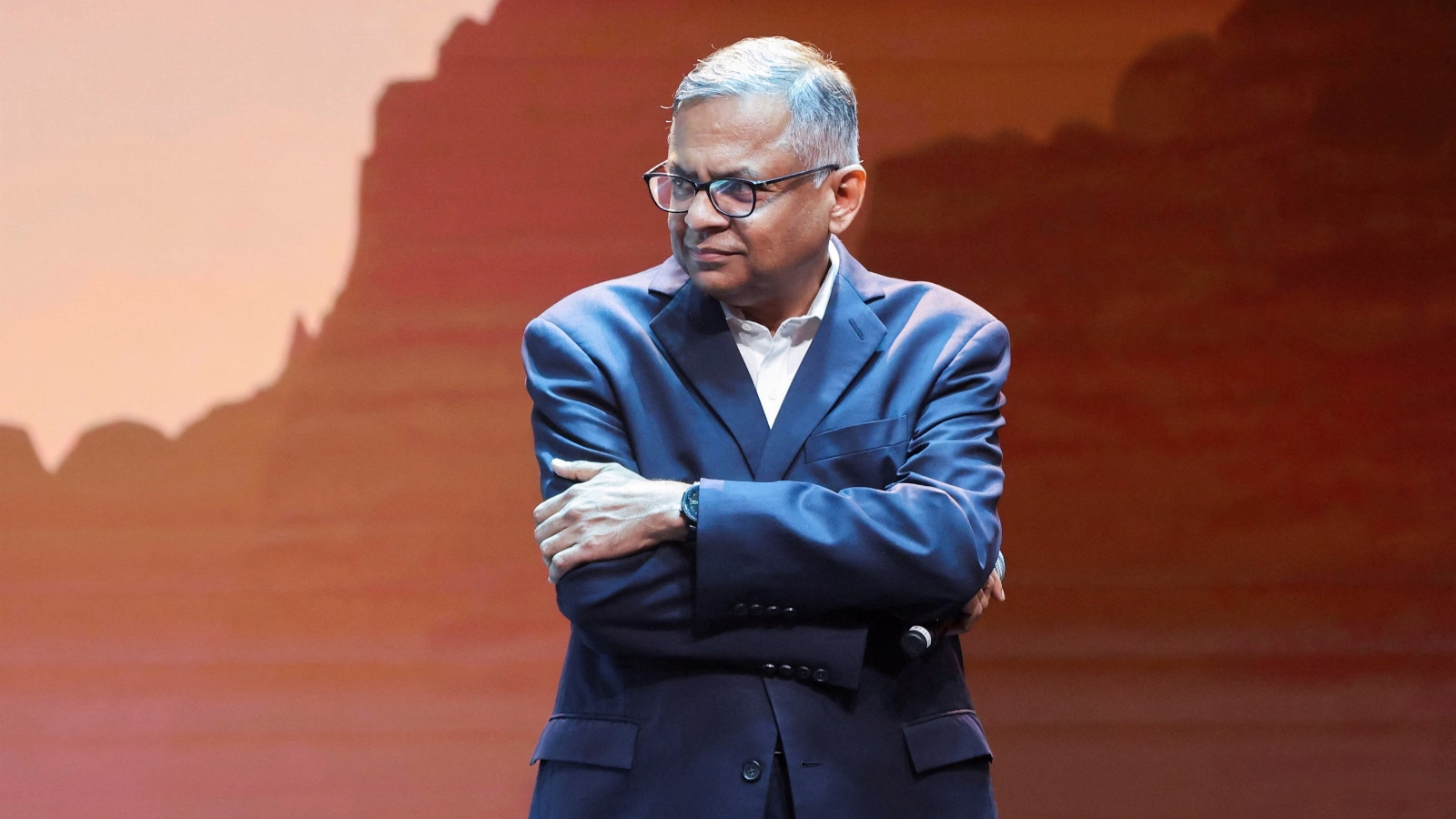
塔塔父子公司董事长N·钱德拉塞卡兰(N Chandrasekaran)于10月13日周二警示称,地缘政治、技术和大宗商品相关动荡正日益交织,并表示尽管企业在过去五十年中经历过大流行病和两次世界大战,但如今正面临前所未有的综合挑战。
Tata Sons Chairman N Chandrasekaran on Tuesday, October 13, flagged the growing convergence of geopolitical, technological and commodity-related disruptions, saying businesses were facing an unprecedented combination of challenges despite having weathered pandemics and two world wars over the past five decades." We have had it good for the last five decades.
“在过去五十年里,我们过得很顺利。我们的集团经历过大流行病、两次世界大战,我们都存活了下来。但这是所有事情第一次同时发生,从地缘政治动荡、技术动荡到大宗商品动荡。”塔塔父子公司董事长纳塔拉詹·钱德拉塞卡兰(NATARAJAN CHANDRASEKARAN)在2026年彭博创新经济论坛上如是说。
Our group has seen pandemics, two world wars, and we survived. But it's the first time everything is happening together, from the geopolitical disruption, technological disruption, and the commodity disruption."NATARAJAN CHANDRASEKARAN, CHAIRMAN, TATA SONS Chandrasekaran said at the 2026 Bloomberg New Economy Forum.
他指出,技术、技术的潜在滥用以及由此导致的劳动力重组是关键的近期挑战。
He identified technology, its potential misuse and the resulting restructuring of labour as key near-term challenges.
他还对持续的冲突和供应链中断表达了担忧,并以一次差点让捷豹路虎损失六周产量的网络攻击为例。
He also expressed concern over ongoing conflicts and supply chain disruptions, citing a cyberattack that nearly cost Jaguar Land Rover six weeks of production.
钱德拉塞卡兰表示,在日益加剧的不确定性中,企业需要重新评估韧性。“我们必须为我们的业务重新定义韧性的含义,”他说。半导体是印度未来的关键另外,钱德拉塞卡兰表示,半导体将是印度未来的根本,凭借其人才储备、庞大的国内市场以及潜在的国际伙伴关系,印度完全有能力成为全球供应链中的关键参与者。
Chandrasekaran said businesses needed to reassess resilience amid growing uncertainty. "We have to define what resilience will mean for our business," he said. Semiconductors key to India's futureSeparately, Chandrasekaran said semiconductors would be fundamental to India's future, with the country well positioned to emerge as a key player in global supply chains, supported by its talent pool, large domestic market and potential international partnerships.
他表示,塔塔集团的首要任务是在这个满足国内需求不可或缺的行业中构建能力,同时强调需要通过伙伴关系来获取技术并发展印度的半导体生态系统。
He said the Tata Group's priority was to build capabilities in an industry essential to meeting domestic demand, while stressing the need for partnerships to access technology and develop India's semiconductor ecosystem."
“我们在印度处于一个极佳的位置,因为我们拥有人才,拥有国内市场,我们可以在每一个全球供应链中发挥作用,”他说。
We are in a beautiful spot in India, because we have the talent, we have the domestic market, we can play a part in every global supply chain," he said.
然而,钱德拉塞卡兰警告称,在没有充分评估市场需求和商业可行性的情况下,不应盲目投资最先进的芯片制造技术。
However, Chandrasekaran cautioned against investing in the most advanced chip-manufacturing technologies without adequately assessing market demand and commercial viability."
“你不能鲁莽地说我要去搞2纳米芯片。这根本行不通。因此,我们还需要看需求在哪里,”他补充说,投资必须具有财务可行性,并在长期内创造可持续的就业机会。
You cannot be reckless and say that I am going to be putting a 2 nanometre chip . It's just not going to work. So, we need to also see where the demand is," he said, adding that investments must be financially viable and generate sustainable employment over the long term.
塔塔电子正与台湾的力积电合作,在古吉拉特邦多莱拉建立一座半导体晶圆厂,投资额约为9100亿卢比。该集团还在阿萨姆邦开发一座半导体封装测试设施,投资额约为2700亿卢比。
Tata Electronics is setting up a semiconductor fabrication plant in Dholera, Gujarat, in partnership with Taiwan's Powerchip Semiconductor Manufacturing Corporation , with an investment of around ₹91,000 crore. The group is also developing a semiconductor assembly and test facility in Assam, involving an investment of around ₹27,000 crore.
这些项目旨在满足不断增长的国内需求,加强印度的半导体供应链,并使印度更紧密地融入全球电子制造生态系统。
The projects are aimed at meeting growing domestic demand, strengthening India's semiconductor supply chain and integrating the country more closely with the global electronics manufacturing ecosystem.