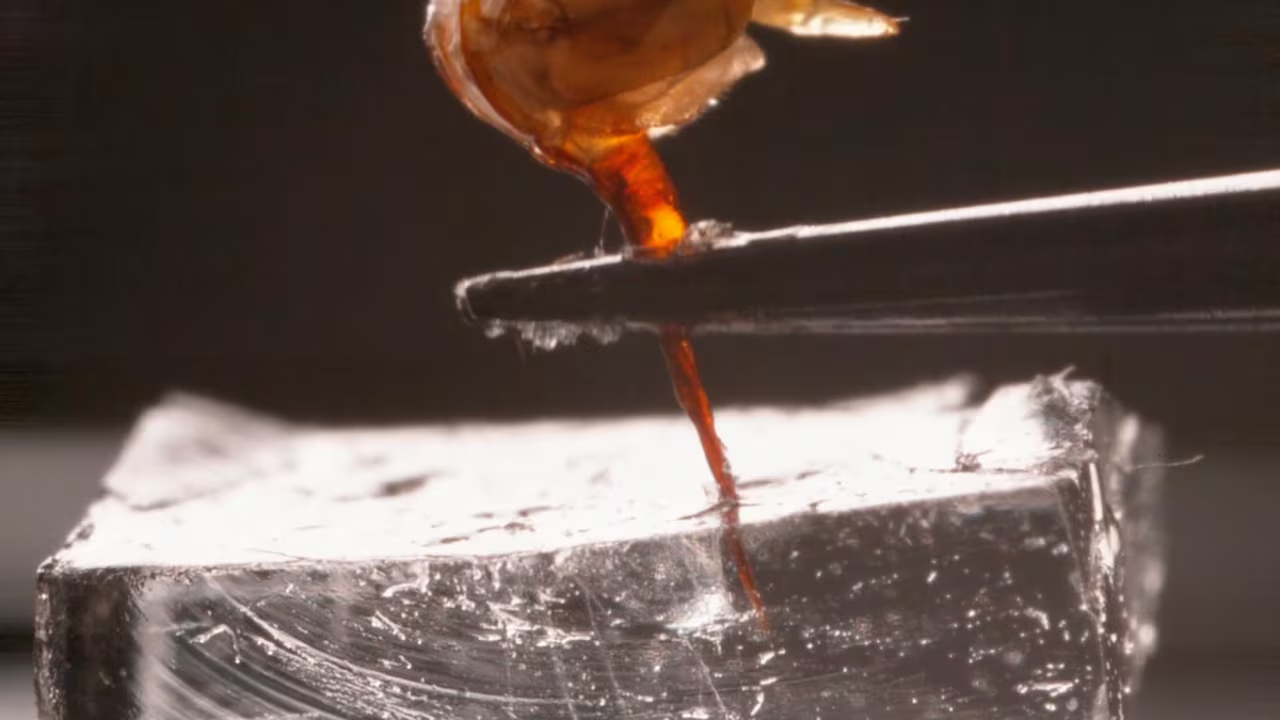
西方蜜蜂的螫针是一种最后才使用的防御武器,其设计目的是刺入猎物体内并注入毒液——这一过程往往会导致工蜂死亡。
The stinger of a western honey bee is a weapon of last resort, designed to embed itself and deposit venom in flesh — most often resulting in the worker bee's death.
最新发表的一项研究则从科学角度揭示了这种防御机制为何如此有效。
New research published in the is quite literally shedding light on what makes this defence mechanism so effective.
“能够实际拍摄到螫针工作的过程实属前所未有的突破,这完全要归功于现代摄像技术,”该研究的主要作者、澳大利亚麦考瑞大学的博士后研究员菲奥雷拉·拉米雷斯·埃斯基维尔说道。
"Being able to actually film them in action was a brand new thing that is only really possible thanks to modern cameras," said Fiorella Ramirez Esquivel, lead author and postdoctoral researcher with Macquarie University in Australia.
由于蜜蜂螫刺的动作转瞬即逝,拉米雷斯·埃斯基维尔及其团队使用了每秒可拍摄数百帧画面的高速摄像机。由于毒囊与螫针本身呈半透明状,研究人员得以借助强光来清晰勾勒出其内部结构。
Because bee stings happen in the blink of an eye, Ramirez Esquivel and her team used cameras capable of capturing hundreds of frames per second. The translucence of the venom sac and stinger allowed them to use strong lighting to better outline the distinct structures inside.
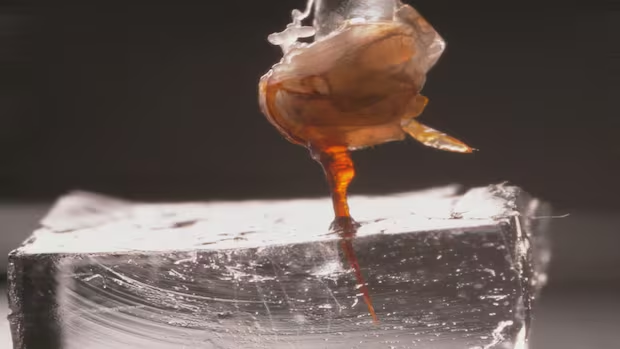
实验过程中,研究人员使用活的蜜蜂,在取出其螫针后立即将其处死。由于螫针脱离蜂体后仅能维持约两分钟的活性,拉米雷斯·埃斯基维尔表示自己必须争分夺秒地完成操作。
The experiments used live honey bees, removing their stinger and killing them immediately after. Because the stinger remains active for only about two minutes once separated from the bee's body, Ramirez Esquivel said she had to work fast.
“我需要从蜜蜂身上取下螫针,然后将其插入这种人造皮肤替代品中;整个操作空间仅有约4毫米,必须精准无误才行,”她在悉尼接受加拿大广播公司采访时说道。
"I'm removing the stinger from the bee and then I have to stick it into this artificial [skin substitute] and I have about four millimetres of space where I have to get it exactly right," she told CBC News from Sydney.
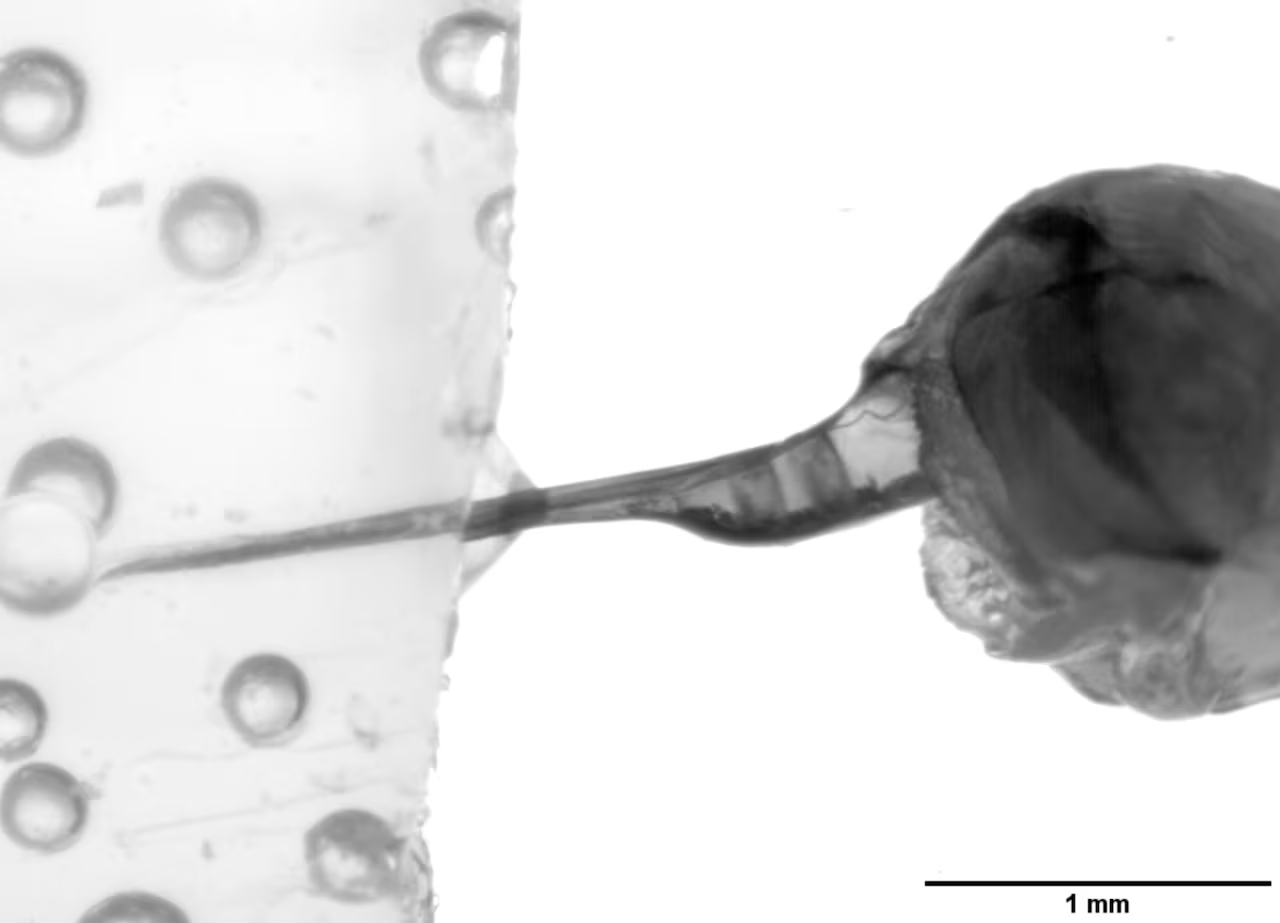
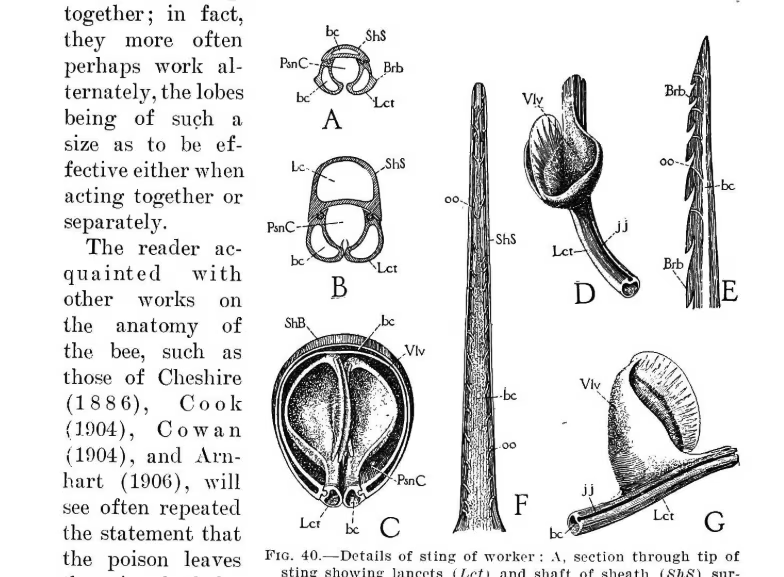
研究结果显示,螫针内部存在两个特化的“阀门”,它们同时承担着两项功能:一方面推动带倒钩的螫针进一步刺入猎物体内,另一方面持续将毒囊中的毒液注入其中。
Double-piston design The results show how two specialized valves are doing two jobs at once: driving the barbed stinger deeper while continuously pumping venom from the sac down into the flesh.
这篇论文将这一机制称为“双活塞设计”,不过其复杂程度远超普通汽车发动机中仅有一个活塞在气缸内上下运动的构造。
The paper describes it as a "double piston design," but the system is a lot more complex than a standard car engine, where a single piston moves up and down inside a cylinder.
“现在想象一下,有两根这样的刺,它们在相互经过时必须能顺利错开,”拉米雷斯·埃斯基维尔说道,“而当它们改变方向时,又必须能收缩起来,以便体液能够在其周围流动。”这是一种极为微妙的动作过程,研究人员借助3D打印技术重现了这一过程,以便更深入地了解这些刺如何相互移动——这样既能保证毒液持续流出,又能推动刺进一步扎入猎物体内。
"Now imagine that you have two of them, and they have to be moving past each other when they go past," Ramirez Esquivel said, "and as they reverse direction, they have to collapse so that the fluid can flow around it." It's a delicate dance that the researchers recreated using 3D printing to better understand how the valves move past each other — allowing venom to keep flowing while also propelling the stinger deeper.
德克萨斯A&M大学的养蜂学教授朱莉安娜·兰格尔并未参与这项研究,她表示这些视频十分引人入胜,因为它们呈现的内容远远超出了她平时所见的扫描电子显微镜图像与示意图。
Juliana Rangel, professor of apiculture at Texas A&M University who was not involved in the study, said she found the videos fascinating because they go beyond the scanning electron microscope images and diagrams she's used to seeing.
“我们早就知道这些刺及其构造的存在,毕竟数万年来我们一直都是这类蜇伤事件的受害者,”兰格尔说道,“但我们始终不清楚,为何在蜇刺装置脱离后,毒液还能持续流出这么长时间。”研究显示,这些刺的细微颤动与移动可持续长达15分钟。
"We have known forever [about the stinger and its parts] because we have been the victims of these stinging events for tens of thousands of years," Rangel said. "But we just didn't know, really, how that venom continues to be pumped for so long after the release of the stinging apparatus." The study says twitches and minute movements of the stinger can continue for as long as 15 minutes.
舍弃身体的一部分作为防御手段的现象被称为自切,但并非所有蜜蜂都会这么做。西方蜜蜂属于群居性物种,整个蜂群可被视为一个“超级有机体”,工蜂们共同承担着保护蜂群的责任。因此,这种极端的防御机制对一只体型微小的蜜蜂而言实属不易。
Kill and be killed Leaving behind part of the body as a defence mechanism is called autotomy, but not all bees do it. The western honey bee is a social species whose colony functions as a "superorganism" that workers help protect. Its drastic defence mechanism has to punch above a small bee's weight.
“这种蜇刺结构及其演化过程……其实是一种‘保险措施’,”兰格尔在德克萨斯州大学城接受加拿大广播公司采访时说道,“牺牲个体生命是为了保护整个蜂群,这是值得的。”她还补充道,几乎所有其他会蜇人的蜜蜂身上都没有倒钩结构,无法让刺牢牢留在猎物体内;与雌性工蜂不同,这些蜜蜂必须存活下来才能繁衍后代,而雌性工蜂本身不具备繁殖能力。
"This stinging structure and the evolution of the stinging apparatus … it's kind of an insurance policy," Rangel told CBC News from College Station, Texas. "That the life was lost for a good cause, which is defence of the larger colony." Rangel added that almost all other bees that sting don't have barbs that help the stinger remain embedded in an animal because, unlike female worker honey bees, they need to survive in order to reproduce. Female worker honey bees are sterile and don't produce offspring themselves.
此外,西方蜜蜂的刺还会释放信息素——这种化学信号能吸引其他蜜蜂一同参与对威胁的攻击。
Honey bee stingers also release pheromones, chemical signals that recruit other bees to join an attack against a threat.
兰格尔指出,这种防御机制并不总能抵御那些皮肤或毛发更为坚韧的捕食者,不过倒钩结构以及持续不断的刺入动作确实能提升抵御攻击的成功率。
The defence mechanism doesn't always work against tougher skin or fur, Rangel says, but barbs and continuous penetration likely improve the chances of warding off an attacker.
以大自然为灵感:西方蜜蜂原产于欧洲,如今已遍布全球,人类对其的研究历史也长达数百年之久。我们与这种蜜蜂的关系更是源远流长。
Nature as inspiration Though native to Europe, western honey bees are now found around the world and have been studied for hundreds of years. Our relationship with them stretches even further.
“这种关系可以追溯到约9000年前,”俄勒冈大学生态学副教授劳伦·波尼西奥说道,“当时就有洞穴壁画描绘了人们从蜂群中采集蜂蜜与蜂蜡的场景。直到古埃及时期,我们才开始看到人类对蜜蜂进行主动管理的记录。”时间来到1758年,瑞典生物学家卡尔·林奈正式对该物种进行了科学分类。研究还提到,20世纪初美国昆虫学家罗伯特·E·斯诺德格拉斯对西方蜜蜂的螫针结构做了极为详尽的描述。
"It goes back about 9,000 years," said Lauren Ponisio, associate professor and ecologist at the University of Oregon. "There are cave paintings that describe people actually harvesting honey and wax from colonies. It doesn't show up until the Egyptians that we start seeing active management." Fast-forward to 1758, when Swedish biologist Carl Linnaeus scientifically classified the species. Their stingers, the study notes, were described in great detail in the early 1900s by American entomologist Robert E. Snodgrass.
如今,借助高速摄像技术,研究人员得以进一步揭示这一复杂机制的运作原理——相关发现或许能在医学领域发挥重要作用。
But by using high-speed videography, researchers are revealing more about this complex system — findings that could potentially have medical applications.
“它的运作方式并非像注射器那样‘按一下就停止’——注射器的活塞只需下压一次便不再动作,”拉米雷斯·埃斯基维尔解释道,“但由于西方蜜蜂实际上拥有两个‘活塞’,因此能实现持续性的物质输送。”波尼西奥表示,这项研究也引发了她的诸多思考:还有不少能产蜜的蜜蜂种类与西方蜜蜂存在显著差异,其中不少原产于美洲地区。
"It's not stopping and starting like a … syringe. The plunger for a syringe, it goes down once and that's it," Ramirez Esquivel said. "But because we have two plungers effectively, then you can have continuous flow." Ponisio says this study also makes her wonder about other bees that produce honey but differ significantly from western honey bees, including species native to the Americas.
“这引出了一些非常有趣的问题:那些能产蜜的蜜蜂为何没有螫针?这样的生理特征对它们而言又意味着什么呢?”波尼西奥说道。
"It does lead to really interesting questions of … well, you have these other honey producing bees, why don't they have stingers? And how did that work out for them?" Ponisio said.