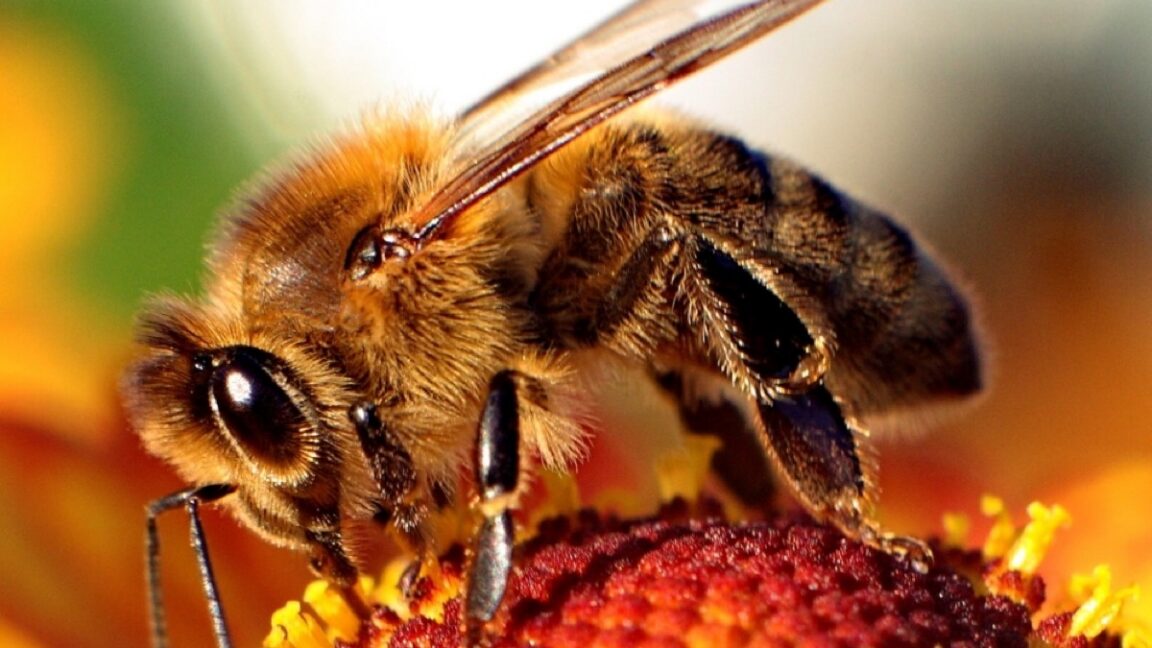
众所周知,蜜蜂蜇人后会将毒刺留在柔软的皮肉中并飞走。根据发表在《美国国家科学院院刊》上的一篇新论文,科学家现已确定,得益于一种独特的双活塞泵式机制,毒刺甚至能在蜜蜂飞走后继续向倒霉的受害者泵送毒液。
Honey bees are known to leave their stingers embedded in tender flesh once they sting you and fly away. Scientists have now determined that the stinger is able to continue pumping venom into its unfortunate victim even after the bee flies away, thanks to a unique double-piston pump-like mechanism, according to a new paper published in the Proceedings of the National Academy of Sciences.
不同物种演化出了不同的毒液输送机制,这涉及刺穿皮肤,然后从腺体或储囊中泵送毒液。例如,蜘蛛的毒腺周围环绕着肌肉,肌肉收缩将毒液通过中空的毒牙喷出。蜜蜂、黄蜂和蚂蚁则通过毒刺输送毒液,要么通过收缩毒液储囊周围的肌肉,要么通过称为毒针的硬质结构协同工作来泵送毒液。
Different species have evolved different mechanisms for delivering venom, which involves piercing the skin and then pumping venom from a gland or reservoir. Spiders, for instance, have muscles surrounding their venom glands, which contract and eject venom through hollow fangs. Bees, wasps, and ants deliver venom via their stingers, either by contracting muscles around the venom reservoir or through stiff elements called lancets working together to pump venom.
蜜蜂还有一个独特特征:工蜂将毒刺刺入目标后飞走,留下毒刺。毒刺继续自行穿透组织并泵送毒液,这是一种称为自切的罕见现象。蜜蜂的毒刺有三个主要的相互咬合的部件形成毒液管道:一个中间变宽形成主要泵腔的中针,以及两个尖端锋利、能前后滑动的毒针,它们刺穿组织并将毒液泵送入目标。但这种泵送动作的精确机制从未被直接观察到。
Honey bees add a unique feature: Worker bees fly away after inserting their stingers in the target, leaving the stinger behind. The stinger continues to penetrate the tissue and pump venom on its own, a rare phenomenon known as autotomy. A honey bee's stinger has three main interlocking elements that form the venom canal: a stylet that widens to form the main pumping chamber and two sharp-tipped lancets that slide back and forth, piercing the tissue and pumping venom into the target. But the precise mechanism by which the pumping action is achieved has never been directly observed.