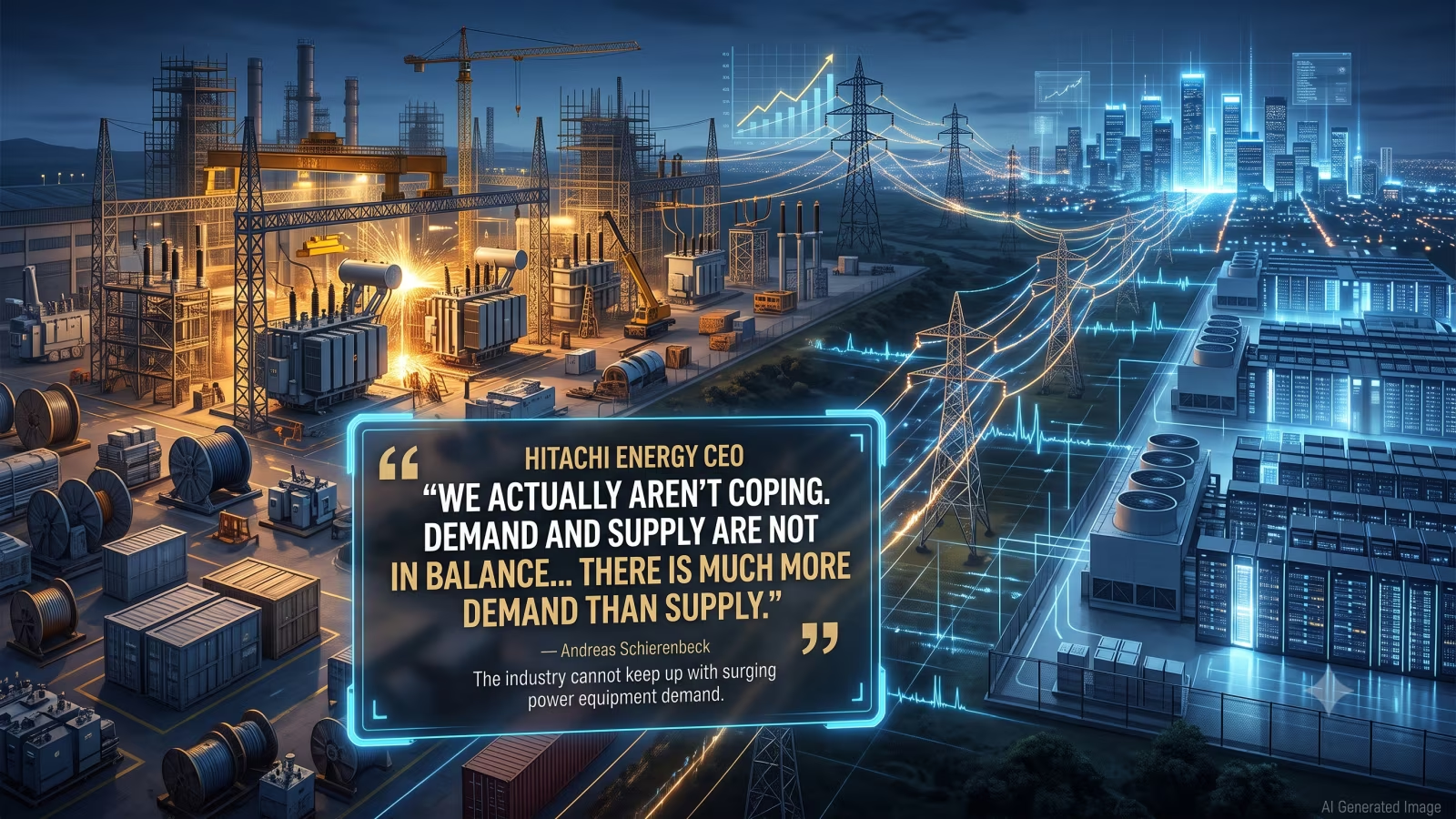
日立能源正努力跟上电力基础设施需求激增的步伐,全球首席执行官安德烈亚斯·舍伦贝克表示,行业需要更清晰地了解未来订单,并与客户建立更紧密的合作伙伴关系,以更快扩大制造产能。该公司正在全球范围内投资超过90亿美元以提升产能,但制造设施和电网项目的长交货期使得供应难以跟上需求,舍伦贝克在接受CNBC-TV18独家采访时表示。
Hitachi Energy is struggling to keep pace with surging demand for electricity infrastructure, with Global CEO Andreas Schierenbeck saying the industry needs greater visibility into future orders and closer partnerships with customers to expand manufacturing capacity faster. The company is investing more than $9 billion worldwide to increase production, but long lead times for manufacturing facilities and grid projects are making it difficult for supply to catch up with demand, Schierenbeck said in an exclusive interview with CNBC-TV18.“We actually aren't coping. Demand and supply are not in balance at the moment. There is much more demand than supply,” he said.A data center can be built in about two years, while a manufacturing facility takes around three to four years to establish.
“我们实际上应付不来。目前需求和供应不平衡,需求远大于供应。”他说。一个数据中心大约两年即可建成,而制造设施的建立通常需要三到四年。电网扩建计划可能需要10到15年,单个项目则需五到六年才能完成。这些时间周期使得设备制造商在应对需求快速增长时空间有限。日立能源呼吁长期客户承诺舍伦贝克表示,行业传统的交易方式——客户下单、供应商按单履行,缺乏足够的长期协调——需要改变。
Grid expansion plans can take 10–15 years, with individual projects requiring five to six years to complete. These timelines leave equipment manufacturers with limited scope to respond quickly to rising demand. Hitachi Energy calls for long-term customer commitmentsSchierenbeck said the industry's traditional transactional approach, in which customers place orders and suppliers fulfil them without sufficient long-term coordination, needs to change.
制造商在向新工厂投入数亿美元之前,必须对未来需求有更大的确定性。长期规划、框架协议和提前预留产能将有助于公司在投资决策上更有信心。“我们必须建立伙伴关系,开展更多长期规划,签订框架协议并预留产能,以便我们能更快进行投资,”舍伦贝克说。日立能源正在扩建现有制造基地并新建设施。
Manufacturers must have greater certainty about future demand before committing hundreds of millions of dollars to new factories. Long-term planning, framework agreements and advance capacity reservations would help companies make investment decisions with greater confidence.“We have to establish partnerships, engage in more long-term planning, enter into framework agreements and reserve capacity so that we can invest faster,” Schierenbeck said. Hitachi Energy is expanding existing manufacturing sites and building new facilities.
然而,施伦贝克表示,对未来业务的更清晰可见性将有助于行业加速投资,因为公司需要明确的商业案例来向股东证明额外支出的合理性。专用机械短缺,包括用于制造变压器的设备,也可能限制产能。地缘政治动荡和供应链问题可能增加成本,尽管施伦贝克指出,更好的需求可见性和更强的政治支持可能有助于行业加快发展。
However, Schierenbeck said greater visibility into future business would help the industry accelerate investment, as companies need clear business cases to justify additional spending to shareholders. Specialised machinery shortages, including equipment used to manufacture transformers, can also constrain capacity. Geopolitical disruptions and supply chain issues may increase costs, although Schierenbeck identified better demand visibility and stronger political support as factors that could help the industry move faster.AI adds to electricity demandThe rapid growth of artificial intelligence is adding to the pressure on electricity infrastructure, with data centers requiring substantially more power than they did a few years ago.
人工智能增加电力需求人工智能的快速增长正在给电力基础设施带来压力,数据中心所需的电力比几年前大幅增加。施伦贝克表示,以前仅需20–40兆瓦的数据中心现在可能需要两、四甚至五吉瓦。他估计,美国数据中心的电力需求可能达到80–100吉瓦,相当于80–100座发电厂的输出。他表示,人工智能可能使美国乃至全球数据中心的能源消耗翻倍。
Schierenbeck said data centers that previously required 20–40 megawatts could now require two, four or even five gigawatts. He estimated that US data center electricity demand could reach 80–100 gigawatts, equivalent to the output of 80–100 power plants.AI could double data center energy consumption in the US and potentially worldwide, he said.
然而,电力需求的增加不仅限于人工智能。工业电气化以及向电动汽车的转变也将需要对电网进行投资。行业面临的挑战是快速扩展电力基础设施,以适应这些消费变化。机遇规模巨大,但行业需要将长期投资承诺转化为制造产能和及时交付,以满足日益增长的电力基础设施需求。
However, the increase in electricity demand is not limited to AI. Industrial electrification and the shift towards electric vehicles will also require investment in power grids. The challenge for the industry is to expand electricity infrastructure quickly enough to accommodate these changes in consumption. The scale of the opportunity is substantial, but the industry will need to turn long-term investment commitments into manufacturing capacity and timely deliveries to meet the growing demand for electricity infrastructure.