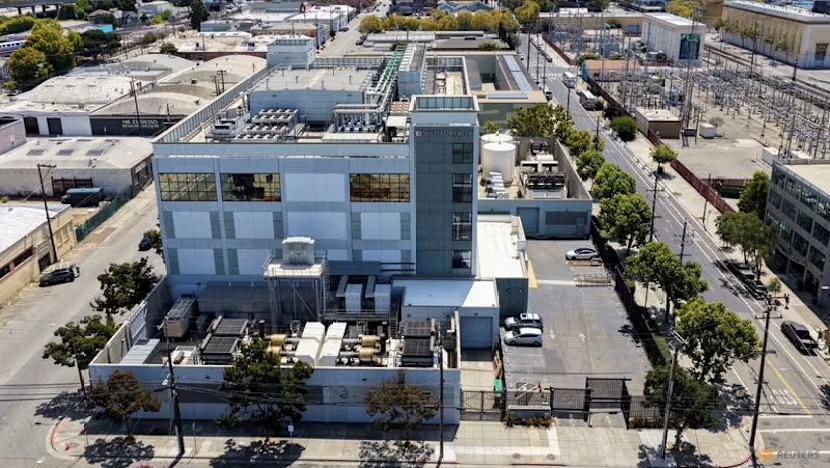
日立能源首席执行官安德烈亚斯·希伦贝克表示,人工智能正在给全球电网带来更大压力。
is putting greater pressure on electricity grids worldwide, according to Hitachi Energy CEO Andreas Schierenbeck.
希伦贝克周三(10月14日)在新德里出席彭博新经济论坛期间接受CNA采访时表示,数据中心的电力需求规模已显著增长。
Speaking to CNA on the sidelines of the Bloomberg New Economy Forum in New Delhi on Wednesday (Oct 14), Schierenbeck said the scale of electricity demand from data centres has grown significantly.
他说:“这些数据中心的规模是我们从未见过的。几年前,一个数据中心可能只有20至30兆瓦……相当于伦敦希思罗机场夏季的能耗。而现在我们谈论的是两吉瓦。”
"The size of these data centres is something we haven't seen. Years ago, a data centre was maybe 20-30 megawatts … the size of the energy consumption of London Heathrow in summer. And now we're talking about two gigawatts," he said.
国际能源署(IEA)估计,数据中心的用电量将从2025年的485太瓦时在2030年前大致翻倍至950太瓦时——略高于日本目前的全年用电量。
The International Energy Agency (IEA) estimates that electricity consumption by data centres will roughly double from 485 terawatt-hours in 2025 to 950 TWh by 2030 – slightly more than Japan currently consumes in a year.
电网基础设施是关键瓶颈 希伦贝克表示,人工智能正在给本已面临波动性和需要更多发电资产的电网增加新的制约。
GRID INFRASTRUCTURE A KEY BOTTLENECK AI is adding constraints to electricity grids already dealing with volatility and the need for more power generation assets, Schierenbeck said.
他指出,电网基础设施不足是满足日益增长的电力需求和扩大可再生能源装机容量的首要障碍。
He identified inadequate grid infrastructure as the first obstacle to meeting rising electricity demand and expanding renewable energy capacity.
他说:“如果没有电网,你就没有基础,没有根基来输送所发的电力。”他以德国为例,说明电网限制如何延误了可再生能源项目的并网。
"If the grid is not there, you have no base, no foundation for transmitting energy which is generated," he said. He cited Germany as an example of a country where grid limitations have delayed the connection of renewable energy projects.
根据国际能源署的数据,全球有超过2500吉瓦的可再生能源、大负荷和储能项目因排队等待并网而停滞。
According to the IEA, more than 2,500 gigawatts of renewable energy, large-load and storage projects are stalled in grid-connection queues worldwide.
希伦贝克表示,相比之下,印度在接入更多可再生能源之前,已在加强电网方面取得显著进展。他指出,印度此前曾面临停电、电网不稳定和互联互通有限等问题。
India, in contrast, had made significant progress in strengthening its electricity network before connecting more renewable energy sources, Schierenbeck said, noting that the country had previously struggled with power outages, grid instability and limited interconnections.
他说,日立能源正通过高压直流(HVDC)输电技术支持印度的电网扩建,该技术能高效地远距离输送大量电力。该公司也在扩大其在印度的制造业务,以满足国内和国际需求。
He said Hitachi Energy is supporting India's grid expansion through high-voltage direct current (HVDC) transmission technology, which enables large amounts of electricity to be transported efficiently over long distances. The company is also expanding its manufacturing operations in India to meet domestic and international demand.
6月,该公司宣布计划在古吉拉特邦瓦多拉投资约200亿卢比(2.1亿美元)建设一座新的电力变压器工厂。
In June, it announced plans to invest about 20 billion rupees (US$210 million) in a new power transformer factory in Vadodara, Gujarat.
施里恩贝克表示,扩大电力网络需要大量投资,但认为未能升级基础设施在长期来看将更加昂贵。
Schierenbeck said expanding electricity networks would require substantial investment, but argued that failing to upgrade infrastructure would prove more costly in the long run.
他说,更强大的电网最终可以通过让更多发电设施(包括可再生能源项目)接入电网来帮助降低能源成本。
He said stronger grids could eventually help lower energy costs by allowing more power generation facilities, including renewable energy projects, to connect to electricity networks.
当被问及谁应承担升级电网的成本时,施里恩贝克表示,费用最终将由消费者和纳税人承担。
Asked who should bear the cost of upgrading power grids, Schierenbeck said the expense would ultimately fall on consumers and taxpayers.
扩大全球制造业布局 随着对电网基础设施需求的增长,日立能源正在全球投资90亿美元以扩大制造业务及其他能力。其投资覆盖美国、加拿大、欧洲、印度和中国等市场。
EXPANDING GLOBAL MANUFACTURING FOOTPRINT As demand for grid infrastructure grows, Hitachi Energy is investing US$9 billion globally to expand manufacturing and other capabilities. Its investments span markets including the United States, Canada, Europe, India and China.
8月,该公司宣布在中国安徽省合肥投资3亿美元,以扩大其电力变压器和组件的制造能力。
In August, the company announced a US$300 million investment in China to expand its power transformer and component manufacturing capacity in Hefei, Anhui province.
施里恩贝克表示,新冠肺炎疫情期间的供应链中断和能源危机凸显了多元化公司供应来源以降低风险的重要性。
Schierenbeck said disruptions during the COVID-19 pandemic and energy crises had reinforced the importance of diversifying the company's sources of supply to reduce risks.
“我们正在非常认真地审视我们的供应链,并试图降低其风险,确保我们拥有多个供应来源,了解即将到来的情况,并能够做出反应,”他补充道。
"We're looking very diligently at our supply chain and trying to de-risk that and that we have multiple sources that we know what is coming, that we can react," he added.
东盟电网的政治与融资障碍 关于东南亚国家联盟(ASEAN)统一电网的前景,施里恩贝克表示,随着更多可再生能源的接入,电网正变得更大、更复杂,而更高的互联互通也是另一个日益增长的趋势。
POLITICAL, FINANCING HURDLES FOR ASEAN POWER GRID On the prospects for a unified Association of Southeast Asian Nations (ASEAN) power grid Schierenbeck said electricity networks were becoming larger and more complex as more renewable energy was added, while greater interconnectivity was another growing trend.
该地区集团旨在到2045年建立一个互联互通的电网,以促进跨境电力交易并增强能源安全。
The regional bloc aims to establish an interconnected power grid by 2045 to facilitate cross-border electricity trade and strengthen energy security.
施里恩贝克强调,高压直流输电(HVDC)技术是跨区域、跨国界连接电力网络的一种方式,使各国能够实现电力结构多元化并降低其电力系统的风险。
Schierenbeck highlighted HVDC technology as a way to connect electricity networks across regions and national borders, allowing countries to diversify and reduce risks to their power systems.
他将这种日益增长的互联互通层描述为“在电网之上正在发展的另一张电网”。
He described this growing layer of interconnections as "another grid developing on top of the grid".
施里恩贝克表示,项目审批和融资仍然是关键挑战,尤其是在涉及多个国家时。
Schierenbeck said securing project approvals and financing remained key challenges, particularly when multiple countries were involved.
他说:“瓶颈不在于技术。瓶颈在于这些项目获批和融资所需的时间,尤其是当你有两个国家在就谁付多少钱达成一致或进行讨论时。”
"The bottleneck is not the technology. The bottleneck is the time to get these projects approved and financed, especially if you have two countries agreeing or discussing who is paying what," he said.
“有时候会有更多的政治讨论,但能源就是政治,而政治永远与能源相关。”
"There are sometimes more political discussions, but energy is politics and politics is always energy."