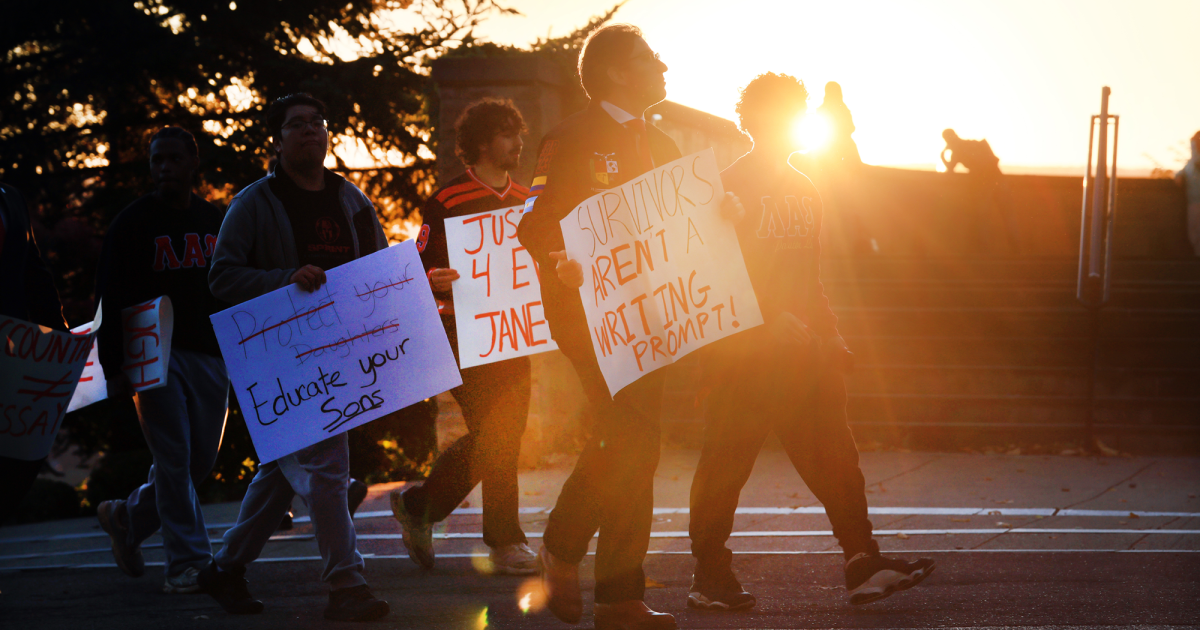
随着康奈尔大学性侵事件持续引发热议,其影响已从大学校园蔓延至全国各地的家庭。一个老生常谈的问题再度浮现:我们该如何教育自己的儿子?具体而言,怎样培养出不会对女性实施性侵、并能勇敢抵制施暴者的男性?
As the Cornell rape allegations continue to roil beyond college campuses and into the homes of families across the country, a familiar question has played out: How do we educate our sons? Specifically, how do we raise boys who grow up to be men who will not rape women and who will stand up to perpetrators?
在我的社交圈中讨论此案时,只要有人提及自家孩子可能效仿所谓的“康奈尔七人组”的行为,哪怕是在五岁孩子的生日派对上,也会立刻引发众人的强烈反感。这些指控对我们而言简直难以理解,仿佛与我们家庭的生活完全脱节。因此,家长们只能苦苦寻觅应对之策,尽管这种情形几乎超出了他们的想象。正是在这种焦虑氛围下,“性同意”这一概念再度受到重视,人们迫切希望将它的重要性深深植入青少年的脑海。
In discussing the case in my social circles, the mere suggestion that our kids could come to mirror the behavior of the so-called Cornell 7 is enough to induce genuine nausea right there smack in the middle of a 5-year-old’s birthday party. The allegations seem perversely unrecognizable to us and the inner lives of our families, leaving parents understandably grasping for strategies for a scenario they can hardly imagine. And so, it’s against this air of anxiety that favor has once again settled on sexual consent, and the need to drill its importance into the minds of our youth.
若“性同意”这个话题让人产生似曾经历过的压抑感,那是因为每逢校园性侵丑闻引发舆论哗然之时,它总会被反复提及。以25年间出现的两个相关短剧为例:1993年有一部讽刺安提阿学院推行的“事先征得同意”政策;2018年正值#MeToo运动兴起之际,又出现另一部短剧,虽对性同意教育持较为正面的态度,却也强调必须以明确的“只有说‘同意’才算有效”作为判定标准。由此可见,无论表达方式如何变化,“性同意”始终是几十年来有关性侵问题讨论的核心议题。
If consent as a talking point feels like grim deja vu, that’s because it returns with each cycle of outrage over alleged campus sexual assault. Consider how the topic has been the inspiration for two different skits across 25 years: a 1993 segment that ridiculed the “Ask First” policy at Antioch College, and another in 2018—albeit depicting consent education in a more favorable light—during the #MeToo movement that emphasized an unambiguous “yes means yes” approach to establishing consent. Which is to say that consent, in differents and varying deliveries, has informed decades’ worth of discourse around sexual assault.
“性侵与性同意毫无关联。”然而现实中,这类讨论往往将“性同意”视为终点,而非解决校园性侵泛滥这一严峻问题的起点。这样一来,我们便回避了更为棘手的问题:究竟是什么让性侵行为对施暴者产生吸引力?答案正是对“获得他人同意”的渴望。事实上,强奸犯不仅漠视受害者的同意,他们甚至根本不希望得到这种同意。
“Sexual assault has nothing to do with consent.”But too often, these conversations treat consent as the finish line—not the starting point to addressing more challenging aspects around rampant sexual assault on our college campuses. In doing so, we sidestep more uncomfortable questions of what makes something like rape appealing to perpetrators in the first place: the thrill of consent. That rapists don’t just disregard your consent but don’t want it. “Sexual assault has nothing to do with consent,” Andrea O’Reilly, a professor at York University in Canada, said.
“性侵犯与‘同意’毫无关系,”加拿大约克大学的教授安德烈亚·奥莱利(Andrea O’Reilly)说道,“性侵犯的本质在于权力、厌女症以及虐待行为。在当前这些流行的网络梗图中,我们恰恰忽略了这些核心问题。”(事实上,康奈尔大学性侵指控事件所涉及的 Snapchat 讨论帖中充斥着令人发指的评论,比如“楼上还有‘免费的女人’可供‘享用’”、“商店还开着吗?”、“你现在就可以进去‘行动’吧”等等。)
“It’s about power, misogyny, and abuse. This is what we’re missing in the conversation with all these memes going around.” (Indeed, the Snapchat thread at the center of the Cornell allegations is littered with comments relishing this rot: “Free pussy” upstairs. “Shop still open?” “Like you can walk in and whip it out rn.”)“Of course, we need to educate boys about consent,” O’Reilly added, “but we need to reframe the conversation. Why [do some men] even desire sex with an unconscious woman?”It can be a deeply torturous thought experiment.
奥莱利补充道:“当然,我们需要教育男孩们关于‘同意’的重要性,但我们也必须重新审视整个讨论的框架。为什么有些男人会渴望与处于无意识状态(即无法表达自己意愿)的女性发生性关系呢?”
Once you confront the psychological attraction, you start seeing strains of it everywhere, like an outbreak. When, amid this very climate, a comedian cracks jokes about gym “whores” on national TV.
这是一个极其令人痛苦的思考问题:一旦你开始正视这种心理上的吸引力,你就会发现它在社会中的种种表现——就像一场瘟疫一样无处不在。在这种环境下,有些喜剧演员甚至会在全国性的电视节目中拿健身房里的“荡妇”开玩笑;几十年来,一些行业巨头还偏爱与已知有恋童癖的人共事;而那些被指控性侵的男性却两次成功当选总统……当然,与男孩们讨论厌女症和虐待行为远比教育他们关于“同意”的概念要困难得多,也更令人恐惧。
When, for decades, titans of industry prized the company of a known pedophile When a man held liable for rape, to accompany the dozens of sexual assault allegations wins the presidency twice over. Of course, talking to boys about misogyny and abuse is a far more difficult, and frankly, intimidating, task than teaching consent. Who wants to acknowledge, accurately, that plenty of everyday men hate their mothers and that this hatred informs endless corners of an ugly society?
谁愿意承认:许多普通男性其实憎恨自己的母亲,而这种仇恨正是构成这个丑陋社会的重要根源呢?不过,支持全面性教育的人认为,可以从孩子教育的早期阶段就开始逐步探讨这些敏感话题(比如让孩子学会如何正确地与他人相处、如何控制自己的行为等等),从而帮助他们建立起对尊重他人的性行为的正确认知。
But advocates of comprehensive sex education say that small bites at these difficult topics—sitting cross-legged on the floor, keeping hands to ourselves, etc.—can start at the earliest stages of a child’s education, and later, widen the narrow focus on consent to model what , respectful sex looks like. Once you confront the psychological attraction, you start seeing strains of it everywhere, like an outbreak.
乔治城大学法学院教授罗宾·韦斯特告诉我,如果我们仅将讨论范围局限于“同意”这一层面,父母们很可能向孩子传递这样一种信息:“性是可以拿来讨价还价的东西;只要获得了对方的同意,自己就无需再承担任何责任了。”
When, amid this very climate, a comedian cracks jokes about gym “whores” on national TV. Robin West, a professor at Georgetown Law, told me that when we restrict the conversation to consent, parents run the risk of sending the message that “sex is the proper subject of a bargain and [once obtained], you’re off the hook.”
“其实父母完全可以这样对孩子说:你们必须确保自己带入亲密关系中的性行为确实符合所有人的利益,而不只是为了满足一己私欲,”韦斯特补充道。
“It shouldn’t be problematic for parents to say that you need to make sure that this sexuality you’re introducing into your relationship is actually serving the welfare of all of you,” West added. “That you’re not just doing it for your own selfish ends.”
哥伦比亚大学社会医学科学教授詹妮弗·S·赫希指出:“性行为所涉及的层面远不止‘同意’这一点。如果人们没有意识到对方同样是拥有性权利的个体,没有意识到人与人之间本质上是平等的——即我有权选择自己的性体验,对方同样也有这个权利——那么单纯强调‘同意’其实并无太大意义。”对有些人而言,这些观念或许只是最基本的常识。
“There are so many other dimensions of a sexual interaction [than consent],” Jennifer S. Hirsch, a professor of sociomedical sciences at Columbia University, said. “A focus on consent is not really meaningful if somebody doesn’t understand that the other person is a sexual citizen, that people fundamentally are equivalent human beings. That yes, I have a right to choose my sexual experiences, and so does the other person.”Such concepts might seem like the bare minimum to some.
但在一个性别平等状况堪忧的国家——正如赫希所言,就连纽约这样的所谓“自由派州”都并未强制推行符合医学常识的性教育——这些观念远未成为现实中的普遍共识。
But in a country so lacking in gender equality—where, as Hirsch told me, so-called blue states such as New York do not mandate medically accurate sex ed—they are far from a guarantee.
“自2008年起,我就一直在纽约致力于推动全面的性教育,”赫希说道,“我们历经了多届立法机构,但相关提案始终未能被提交至议会表决。试想一下,在这段时间里,有多少人因为政府的无所作为而遭受了性伤害啊。”如今被广泛采用的以“同意”为核心、辅以性教育的模式,最初源于巴拉克·奥巴马第一任总统任期内为应对校园性暴力问题而推出的举措。
“I’ve been working on comprehensive sex education in New York since 2008,” Hirsch said. “We’ve flown through many different legislatures, and it’s never even come to the floor for a vote once. So think about the thousands and thousands of people who have experienced sexual harm in that time because of their political inaction.”The consent and education-based models of today can be traced to Barack Obama’s first presidency as an effort to address campus sexual violence.
然而,尽管这种模式如今在各大高校中已相当普及,校园性侵事件却依然屡见不鲜;甚至有研究显示,近年来上报的性侵案件数量实际上还有所上升。这些令人担忧的趋势引出了一个棘手的问题:性教育在减少性暴力方面究竟能否发挥实际作用呢?
But despite their prevalence on college campuses today, campus sexual assault has persisted, with some studies showing that incidents of reported assault have actually in recent years. These worrying trends force a thorny question: Does education even work when it comes to reducing sexual violence?
“这些方法其实蕴含着一种关于行为改变的理论,”布鲁克林学院的心理学教授安娜·甘特曼(Ana Gantman)告诉我。她与几位同事在2024年对相关研究进行了元分析。“这些方法认为,改变与性暴力相关的观念(比如那些认为‘女性在真正同意之前会先表示拒绝’的错误观念)能够降低性暴力的发生率和受害率。”
“These approaches have an implicit theory of behavior change,” Ana Gantman, a psychology professor at Brooklyn College who, with several colleagues, conducted a 2024 meta-analysis of related studies, told me. “They assume that changing ideas related to sexual violence—like the endorsement of rape myths that claim ‘a woman says no before she says yes’—will change overall rates of perpetration and victimization.”
尽管这些教育项目似乎确实改变了人们对性暴力的态度和看法,但奇怪的是,它们对这一教育模式的最终目标——即减少性暴力事件的发生——几乎没有产生实质性影响。甘特曼强调:“这并不是说这些错误观念本身不值得被纠正;它们确实应该被消除。但从减少性暴力发生的角度来看,我们试图通过改变人们的观念来改变他们的行为,但这种方法似乎效果并不明显。”
Though these programs appeared to effectively shift attitudes and beliefs around sexual violence, curiously, they had little impact on the ultimate goal of this education model: reducing instances of assault. None of which, as Gantman stressed, was to argue “that rape myths are not worth dispelling in their own right—they absolutely are. But as an avenue to reduce rates of perpetration, I think we have tried changing beliefs to change behavior, and it doesn’t seem to be very effective.”Successfully convincing someone that rape is bad doesn’t mean they won’t commit it.
换句话说,仅仅让某人认识到性暴力的危害性,并不能保证他们就不会实施性暴力。甘特曼指出,除了教育之外,还需要采取其他措施,比如为学生创造更多可以自由交流的空间(比如宿舍以外的场所)。
In other words, successfully convincing someone that rape is bad doesn’t mean they won’t commit it. Gantman emphasized the need for changes beyond education, including creating spaces outside fraternities and dormitory bedrooms where students can socialize.
“学生得到的信息是性侵犯是不好的,”赫希说。“不要强奸别人。不要被强奸。不要让你的朋友被强奸。但作为公共卫生专业人士,我们知道这并不等同于有效的预防。这是让人们意识到问题的一步,但它并没有给人们所需的工具来避免强奸他人或避免被强奸。”
“What students are getting is the message that sexual assault is bad,” Hirsch said. “Don’t rape someone. Don’t get raped. Don’t let your friends get raped. But as public health professionals, we know that doesn’t equal effective prevention. It is a first step to make people aware of a problem, but it doesn’t give people the tools that they need to not rape somebody or to not get raped.”
甘特曼说,这种普遍失败的一个例外是名为“安全约会”(Safe Dates)的校园项目,该项目面向的是未达到大学年龄的学生。这些教育方法往往涉及赫希提到的综合方法,课程聚焦于性方面更微妙的话题,如约会规范和性别刻板印象。“该项目经过了严格评估,并被证明能降低施暴者的报告率,”甘特曼说。“它还为‘转变边界’(Shifting Boundaries)铺平了道路,这是另一个经过严格评估的校园项目,并且还考虑了学校建筑的实际物理空间。”
One exception to this broad failure, Gantman said, was a school-based program called Safe Dates, which focused on students younger than college age. These educational approaches tended to involve the comprehensive approach Hirsch referenced, with curriculum focusing on more nuanced topics around sex, such as dating norms and gender stereotypes. “This program has been rigorously evaluated and has been shown to decrease reported rates of perpetration,” Gantman said. “It also paved the way for Shifting Boundaries, another school-based program that has been rigorously evaluated, and also takes the literal physical space of the buildings of the school into account.”
物理空间作为校园性侵犯的关键因素,触及了在康奈尔大学指控事件中全国范围内呼吁禁止兄弟会的 renewed 呼声的核心。该事件涉及七名前兄弟会成员以及数十名曾属于现在著名的Snapchat聊天记录群组的其他人。
Physical spaces as a critical factor in campus sexual assault goes to the heart of the renewed calls to ban fraternities nationwide amid the Cornell allegations, which involve seven former fraternity members, and dozens of others who belonged to a now-famous Snapchat text thread.
“兄弟会代表着多种形式权力的高度集中:男性气质的权力、财富的权力,以及经常出现的白人种族的权力,”赫希说。“他们还拥有控制酒精的权力、作为三年级和四年级学生的权力,以及控制社交空间的权力。”
“Fraternities represent a very dense concentration of many forms of power: the power of masculinity, the power of wealth, and frequently, the power of whiteness,” Hirsch said. “They also have the power to control alcohol, the power of being third- and fourth-year students, and the power of controlling social space.
但虽然这些权力中的一些是可以修改的——例如,大学可以让年轻学生在不受年长男性控制的空间里更容易地社交——赫希尔表示,移除兄弟会的大学仍将难以应对更系统性的不平等形式。“如果人们踏入校园时没有意识到周围的人是拥有选择自己性经历权利的平等人类,那么培养这些人的社区就已经失败了,”她说。
But while some of these powers were modifiable—for example, a college could make it easier for younger students to socialize in spaces that weren’t controlled by older men—Hirsch said college campuses that remove frats would still struggle to address more systemic forms of inequality. “If people step onto campus not realizing that the people around them are equivalent human beings who have the right to choose their sexual experiences, the communities that raise those people have failed,” she said.
这可能是事实。但为什么只试图根除男性特权、秘密以及普遍恶劣行为的众多摇篮之一呢?兄弟会的借口——联谊、社区、职业网络、校友捐款——层出不穷,且已有大量墨水被用于宣传其所谓的价值。然而,对我们许多人来说,看着另一轮校园性侵指控的展开,这些借口这一次似乎在到达时就已经跛脚了。目前的愤怒是否能为康奈尔官员提供一个罕见的机会,引领更大范围的制度性变革,包括是的,禁止希腊生活?
That might be true. But why try eradicating just one of the many cradles for male entitlement, secrecy, and generally egregious behavior? Excuses for frats—bonding, community, career networks, alumni donations—are endless, and plenty of ink has been spilled on their supposed values. Yet, for so many of us, watching another round of campus sexual assault allegations unfold, these justifications seem to limp on arrival this time around. Could the current outrage open a rare opportunity for Cornell officials to lead the way to larger institutional change, including, yes, bans on Greek life?
纽约州等州是否会推动在学校中立法实施医学准确的性教育,并对此大肆宣传?这仍有待观察。但目前,我们至少可以超越同意的号召。
Will states like New York move to codify medically accurate sex ed in their schools and make a helluva big deal about it? It remains to be seen. But for now, we can at least go beyond the rallying call of consent.