那些试图获取无限太阳能与广阔空间资源的轨道数据中心,正大幅提升太空领域爆发灾难性冲突的风险——与此同时,全球各国军队纷纷引入人工智能技术,并将计算设施视为关键基础设施。
Orbital data centers chasing unlimited solar power and boundless real estate increase the risk of potentially catastrophic conflict in space — just as militaries worldwide embrace artificial intelligence and see computing facilities as critical infrastructure.
在地球上,政府所有的服务器集群均受到严密保护,甚至可深埋地下以增强抗攻击能力。伊朗的空袭曾瞄准中东地区的数据中心;近期乌克兰的攻击也摧毁了俄罗斯境内的多座数据中心,这些事例均凸显出此类设施的重要价值。
On the ground, government server farms are highly protected and can be buried to make them more resilient to attack. Iranian airstrikes targeted data centers across the Middle East, and Ukrainian attacks in recent days destroyed several in Russia, highlighting their perceived value.
而在太空中,这些数据中心极易遭受导弹攻击、信号干扰、网络攻击以及定向能武器的打击。对其进行防御的成本极高,而一旦遭到成功攻击,产生的碎片更可能堵塞关键的轨道区域。
In space, the facilities would be vulnerable to missiles, jamming, cyber attacks and directed-energy weapons. Defending them is costly, yet a successful physical attack could choke a crucial orbital band with debris.
“任何被送入太空且具备重要价值的设施,都会提升攻击太空基础设施的潜在收益,”英国杜伦大学天体政治学副教授、相关研究作者布莱德温·鲍文指出,“我们都不希望太空爆发战争,因为那样所有人都会遭受巨大损失。”
“Anything of value that you put up in space increases the potential payoff of attacking space infrastructure,” said Bleddyn Bowen, author of and an associate professor of astropolitics at Durham University in the UK. “We’d rather not have a shooting war in space because we’d all lose quite a lot.”
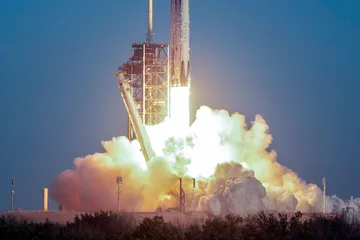
美国太空军在一份声明中称:“在获得相关决策层授权且符合法律、政策及既定权限的前提下,我们具备多种能力来保护并捍卫美国的太空利益。”10月2日,SpaceX的火箭将谷歌公司的一颗数据中心测试卫星送入轨道;与此同时,地面上的运营商们也在不断寻求更强大的计算能力以推动人工智能的发展。蓝色起源公司的创始人杰夫·贝索斯也对这一构想表现出浓厚兴趣,其公司已向美国联邦通信委员会提交了申请,计划发射超过5万颗此类卫星。
The US Space Force said in a statement it “maintains a range of capabilities to protect and defend U.S. space interests, if directed by appropriate decision-makers and consistent with applicable law, policy, and established authorities.”On Oct. 2, a SpaceX rocket carried a data center test satellite for Alphabet Inc.’s Google into orbit as operators on the ground hunt ever-increasing levels of computing power to fuel AI development. Blue Origin LLC founder Jeff Bezos also expressed enthusiasm about the idea, with his company filing paperwork with the US Federal Communications Commission to operate more than 50,000 such satellites.
SpaceX首席执行官埃隆·马斯克表示,他预计未来太空中将出现多达100万个轨道数据中心。目前,他的公司正日益频繁地获得美国国家安全与国防领域的各类合同。
SpaceX Chief Executive Officer Elon Musk, whose company has been getting an increasing share of US national security and defense contracts, has said he envisions as many as 1 million orbital data centers.
“虽然这个数字可能并不现实——毕竟在轨道上运营数据中心面临着许多更为实际的问题(比如冷却系统的问题)——但即使只有其中一小部分数据中心被部署在太空中,也会对军事防御构成威胁,”曾担任哈佛大学天体物理学家的乔纳森·麦克道威尔(Jonathan McDowell)说道。他专门研究卫星发射及轨道碎片问题。
Although that number might not be realistic — given that operating data centers in orbit presents plenty of more prosaic challenges, such as cooling — even putting a fraction of those in the skies would pose a military defense problem, said former Harvard University astrophysicist Jonathan McDowell, who tracks launches and orbital debris.
美国、中国、俄罗斯和印度都已经测试过地面反卫星武器。美国太空军上个月表示已将一种反卫星武器送入轨道,但拒绝透露该武器的具体类型。
The US, China, Russia and India have tested ground-based anti-satellite weapons. The Space Force said last month it placed an operational weapon in orbit but declined to say what it was.
麦克道威尔解释说:“如果你将大量的导弹防御任务外包给这些数据中心,那么这些数据中心就很容易成为军事目标。动能反卫星武器可以直接攻击这些数据中心;另一种风险是它们容易受到电子干扰的影响。”他认为,最糟糕的情况是:针对这些轨道数据中心的导弹攻击会产生大量碎片,导致相关轨道区域无法正常使用。
“If you outsource a lot of your missile defense targeting to these data centers, for instance, then that makes them very much military targets,” McDowell said. “Kinetic anti-satellite weapons could directly target a data center. The other possibility is the vulnerability to jamming.”The worst-case scenario, he said, would be missile attacks against space-based centers that create enough debris to make those orbital areas unusable.
非营利组织“Secure World Foundation”的太空安全与稳定事务负责人维多利亚·萨姆森(Victoria Samson)指出,数据中心很可能会选择位于地球极地附近的太阳同步轨道,这样它们就能持续处于阳光照射范围内;许多成像卫星也采用这种轨道类型。
Data centers would most likely use a sun—synchronous orbit over the Earth’s poles to stay constantly in sunlight, said Victoria Samson, chief director for space security and stability at the nonprofit Secure World Foundation. That type of orbit is also used by many imaging satellites.
美国初创公司Axiom Space Inc.正在设计用于轨道的数据中心,该公司表示其系统在设计时就已经考虑到了这些数据中心可能成为军事目标的因素,并强调“安全性是轨道计算系统的基本设计要求,而非事后附加的功能”。同样致力于开发数据中心卫星的Starcloud Inc.的首席执行官菲利普·约翰斯顿(Philip Johnston)则认为,这些数据中心在太空中比在地面上的风险更低;因为数量众多,即使摧毁其中几个数据中心也不会对整体系统造成太大影响。
Axiom Space Inc., a US startup that’s designing orbital data centers, said its systems were built around the assumption they’d be military targets, and “security is a design requirement for orbital compute, not an add-on.”Philip Johnston, chief executive officer of Starcloud Inc., which also aims to develop data center satellites, said he saw them being less at risk in space than on the ground. The sheer number would distribute operations enough where destroying a few would have little effect, he said.
尽管轨道碎片带来的风险以及潜在的军事冲突升级可能会让主要太空强国放弃使用动能反卫星武器的念头,但那些在太空中拥有较少资产的国家可能并不会如此顾虑。
Although the risk of orbital debris and escalation would be enough to dissuade major space powers from a kinetic attack, a nation with less to lose in orbit might not have such qualms.
“如果这一切看起来显得有些仓促、缺乏周密考虑,那其实是因为这些想法本身就非常不成熟,根本没有人真正花时间去认真思考过这些问题,”位于费城的对外政策研究所(Foreign Policy Research Institute)的杰出研究员杰弗里·刘易斯(Jeffrey Lewis)说道。
“If all this seems a little half-baked and not very well thought through, that’s because it’s completely half-baked and no one has thought about it at all,” said Jeffrey Lewis, a distinguished fellow at the Foreign Policy Research Institute based in Philadelphia.