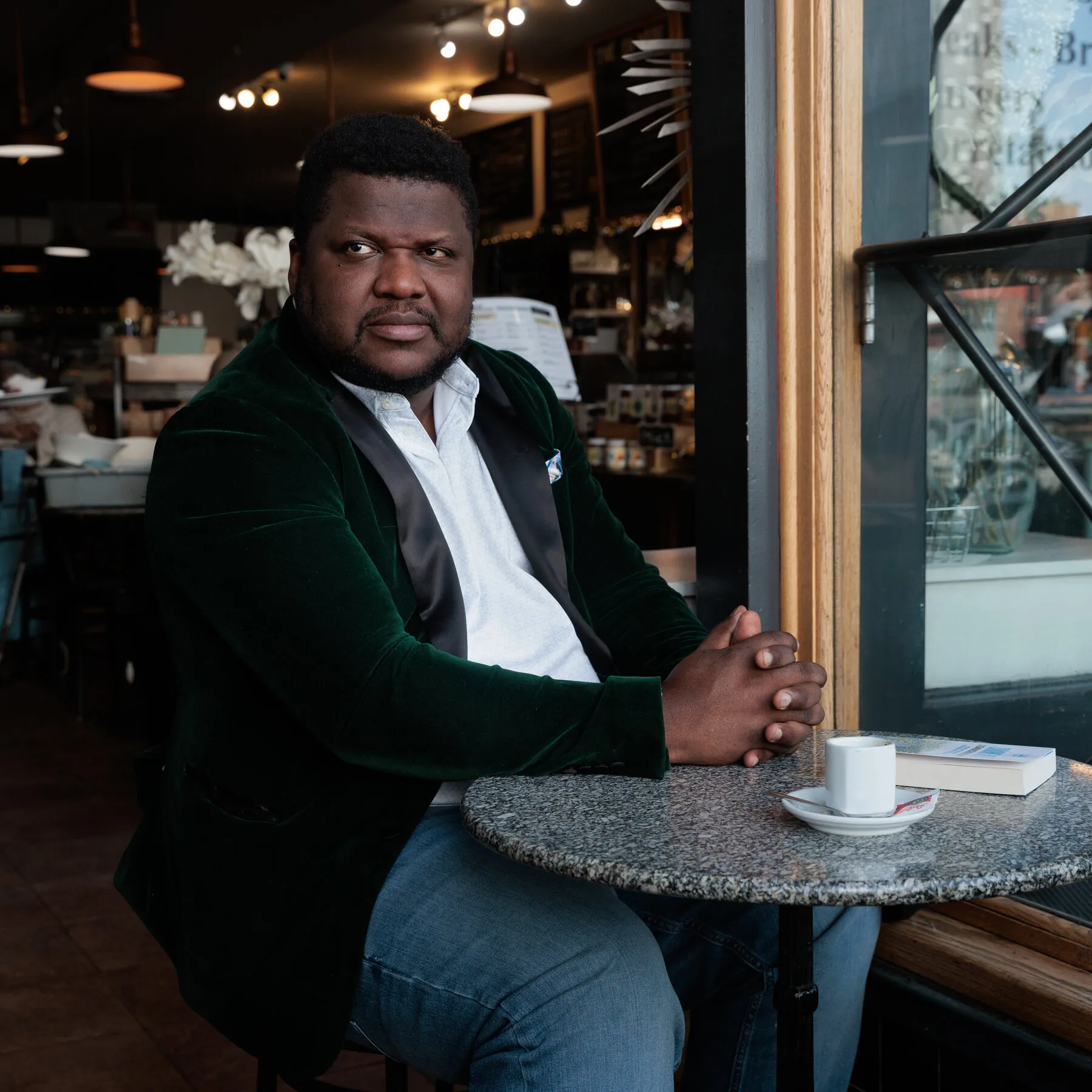
备受赞誉的作者否认使用人工智能但承认抄袭 打破数周的沉默,海地-加拿大作家瑟利森·奥雷利安仍然否认了关于他新小说《要么那样要么死》的指控。一名被指控文学失范的海地-加拿大作家——包括抄袭其他作家以及利用人工智能撰写其获奖新小说——已承认抄袭行为,但否认使用人工智能撰写书中的部分内容。
Acclaimed Author Denies Using A.I. but Admits Plagiarism Breaking a weekslong silence, Thélyson Orélien, a Haitian-Canadian writer, still rejected accusations about his new novel, ‘It Was Either That or Die.’A Haitian-Canadian author accused of literary malpractice — including plagiarizing other writers and using artificial intelligence to write his award-winning new novel — has admitted to the plagiarism but denied using A.I. to write parts of the book.
作者瑟利森·奥雷利安在周二的一份声明中道歉,因他曾声称“将非自己创作的文本当作自己的作品”——这是对他最近被指控抄袭其十多年前发表的评论文章和短篇小说内容的回应。
The author, Thélyson Orélien, apologized in a statement on Tuesday for claiming “as my own texts that are not mine” — a reference to recent accusations that he had plagiarized the content of opinion articles and a short story that he published more than a decade ago.
但奥雷利安先生表示,指控他使用人工智能撰写《要么那样要么死》一书部分内容的说法是“诽谤和异端”。该书今年首次出版后曾获初步赞誉。
But Mr. Orélien said that it was “slander and heresy” to claim that he had used A.I. to write parts of “It Was Either That or Die,” a novel published this year to initial acclaim.
“我在这本书的写作过程中确实在这里那里使用了一些研究工具,尤其是在处理外来习语时,”奥雷利安先生谈到该书的创作时说道,但未澄清这些工具具体是什么。“但本书中没有任何句子是由机器生成的,”他补充道。
“I did use research tools here and there, particularly when it came to foreign idioms,” Mr. Orélien said of writing that book, without clarifying what those tools were. “But no sentence in this book was created by a machine,” he added.
上个月对奥雷利安先生的指控升级为一场文学丑闻,震动了法国,并引发该国作家和出版界对人工智能兴起意味着文学未来何方的深刻反思。
The accusations against Mr. Orélien last month turned into a literary scandal that rocked France and prompted deep soul-searching among the country’s writers and publishers about what the emergence of A.I. means for the future of literature.
此事还导致法国最具声望的文学奖项——龚古尔奖评审委员会将《要么那样要么死》从今年的奖项候选名单中剔除。
It also led the jury of the Goncourt prize, France’s most prestigious literary award, to remove “It Was Either That or Die” from this year’s shortlist for the prize.
这场争议源于一个鲜为人知的社交媒体账号称其使用名为Pangram的人工智能检测工具分析了该书,得出结论认为该书是借助人工智能撰写的。后来揭露,该匿名社交媒体账号部分由保守派日报《费加罗报》专栏作家萨缪尔·菲图西运营。
The furor erupted after a little-known social media account said it had run the book through an A.I.-detector tool called Pangram, which concluded it was written with the help of A.I. It was later revealed that the anonymous social media account was partly run by Samuel Fitoussi, a columnist at Le Figaro, a conservative daily newspaper.
在这些指控出现后不久,奥雷利安先生迅速否认曾使用人工智能写作他的小说。但随着丑闻不断扩大,关于他早期作品涉嫌抄袭的指控也随之浮出水面,他选择不对任何指控进一步发表评论,并突然终止了他在法国的文学巡演。
In the immediate aftermath of those accusations, Mr. Orélien swiftly denied ever using A.I. to write his novel. But as the scandal grew bigger and accusations of plagiarism in his earlier writing surfaced, he refrained from commenting further on any of the accusations and put an abrupt end to his literary tour in France.
“沉默有代价:保持沉默,就是让别人来讲述我的故事,”这位38岁的作家周二在其法国出版商提供的声明中表示,他抨击那些“在他小说之后出现”的所谓“专家”。
“Silence comes at a price: by staying silent, I was letting others tell my story for me,” the 38-year-old writer said on Tuesday, in a statement provided by his French publisher, railing against “experts” who “came after” his novel.
奥雷利安出生于海地一个中产阶级家庭,2010年地震导致超过20万人死亡、他家园被毁后,他前往加拿大。他的小说描绘了一名移民从海地到加拿大的艰难旅程,“这源于我自身的创伤以及其他移民的创伤,”他周二表示。
The author grew up in a middle-class family in Haiti and left for Canada after the 2010 earthquake that killed more than 200,000 people and destroyed his home. His novel, which depicts a migrant’s harrowing journey from Haiti to Canada, “comes from my own wounds and those of other migrants,” he said on Tuesday.
他说,他早在2017年开始写这部小说,并在2019年完成了最初的300页草稿——那时人工智能工具尚未广泛可用。他周二写道,人工智能并未创造“源于我直觉的叙事意义或结构”。然而,他承认自己在早期作品中存在抄袭行为。
He started writing it in 2017, he said, and finished the first 300-page draft in 2019, years before A.I. tools were widely available. A.I. did not create “the meaning or structure of a narrative that comes from my gut,” he wrote on Tuesday. He did, however, acknowledge plagiarism in earlier writing.
加拿大国家公共广播电台Radio Canada上个月报道称,奥雷利安先生在2012年和2013年发表的四篇评论文章中存在抄袭,且他获奖的2012年短篇小说《世界往何处去》(《Où va le monde》)的部分内容与1960年出版的法国书籍《魔法师的早晨》(《Le Matin des Magiciens》)相似。
Radio Canada, Canada’s national public broadcaster, reported last month that Mr. Orélien had plagiarized four opinion articles published in 2012 and 2013 and that chunks of an award-winning 2012 short story, “Où va le monde,” resembled parts of a French book published in 1960, “Le Matin des Magiciens.”
周二,奥雷利安列出了一系列他当时所钦佩的作家,包括《魔法师的早晨》的作者。“但欣赏并不意味着我有权利拿走、声称属于自己的非原创文本,”他说。
On Tuesday Mr. Orélien listed a series of writers he said he admired at the time, including the authors of “Le Matin des Magiciens.”“But admiration does not give me the right to take, to claim as my own, texts that are not mine,” he said.
“我尽管年轻且缺乏经验,却犯下了不可原谅的错误。我对此深感 regret,并无保留地道歉,”他补充道。
“I made unacceptable mistakes, despite my youth and inexperience. I deeply regret this and present my apologies without reserve,” he added.
奥雷利恩先生表示,虽然批评始终是合法的,但过去几周他所遭受的“威胁”、“媒体私刑”和“种族骚扰”已变得“不堪忍受”。他最后呼吁人们应“本其本来面目”评判他的小说。塞戈莱娜·勒斯特拉迪是《时代》杂志驻巴黎的记者兼研究员。
Mr. Orélien said that, though criticism was always legitimate, the “threats,” “media lynching” and “racist harassment” to which he had been subjected over the past few weeks had been “unbearable.”He concluded by calling for his novel to be judged “for what it is.”Ségolène Le Stradic a reporter and researcher for The Times, based in Paris.