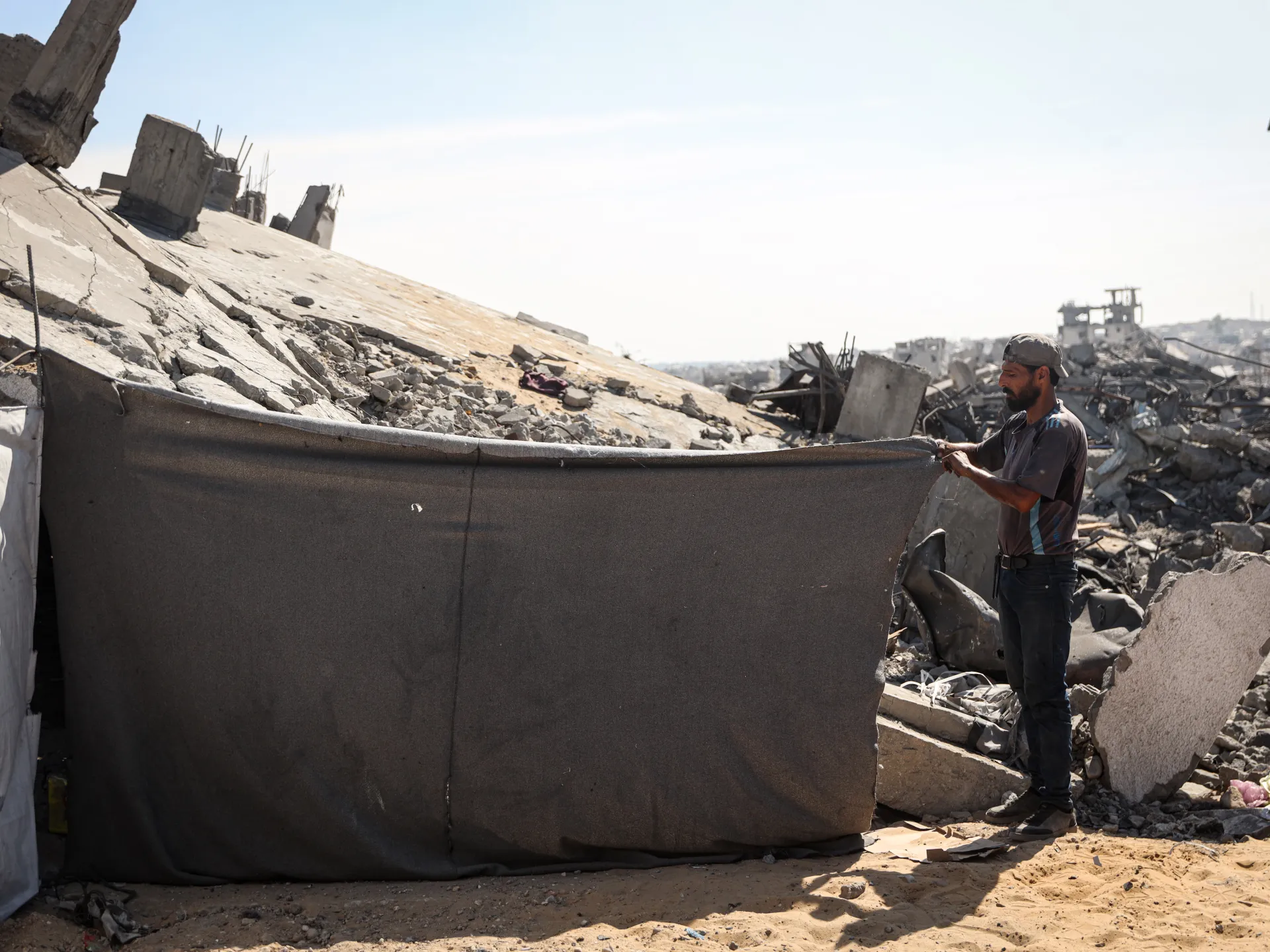
马哈茂德·哈尔齐恩在距离标示以色列所谓“黄线”的黄色混凝土障碍物约200米的地方搭起了帐篷,为他的第六次搬迁做准备。
Mahmoud Harzeen is pitching a tent about 200 metres from the yellow concrete blocks marking Israel’s so-called Yellow Line preparing for his sixth move.
每当这条“黄线”向前推进一点,这位35岁的男子就会收拾行李,再次搬到更远的地方,试图保护自己的家人免受危险。然而,每一次搬迁都只能带来短暂的安宁。
Each time the line inches closer, the 35-year-old packs up and moves further back, trying to keep his family away from danger. But every move offers only temporary relief.
“每当他们稍微向前推进一点,我们就会稍微后退一点,”哈尔齐恩告诉半岛电视台。
“Every time they move forward a little, we move back a little,” Harzeen told Al Jazeera.
这条“黄线”是根据2025年10月达成的“停火协议”划分加沙地带以色列与巴勒斯坦控制区域的边界。
The Yellow Line divided Gaza’s territory between Israeli and Palestinian control as part of the October 2025 “ceasefire” agreement.
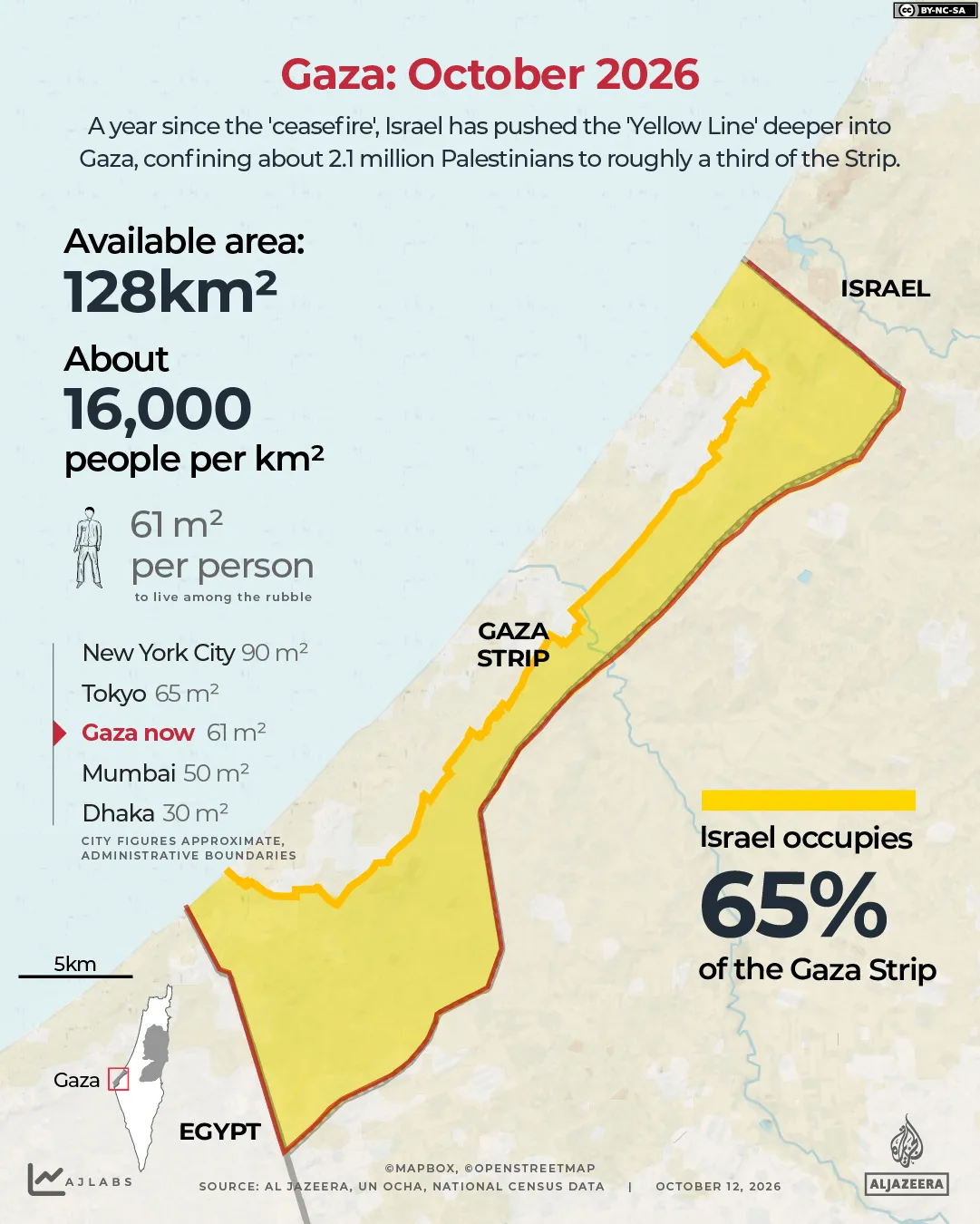
根据联合国的数据,以色列军队已撤回到该边界线后方,但仍在不断将边界线向加沙地带内部推进;目前以色列控制着加沙约65%的领土(而一年前这一比例为53%)。
Israeli forces withdrew behind the line, but have continued to move the demarcation deeper into Gaza. They now control about 65 percent of Gaza, according to the United Nations, up from the 53 percent agreed a year ago.
10月11日,以色列军队将位于加沙东部舒贾耶地区的黄色混凝土障碍物向西移动了数十米,导致更多居民区落入以色列的军事控制范围,巴勒斯坦家庭被迫再次逃离。以色列不断变化的边界限制了他们的居住和活动空间。
On October 11, Israeli forces moved the yellow concrete blocks dozens of metres westward in Shujayea, in eastern Gaza City. More of the neighbourhood was brought under Israeli military control and Palestinian families were forced to flee again, with Israel’s shifting boundaries further restricting where they can live and move.
哈尔齐恩需要养活一个由10口人组成的家庭,这次搬迁只是他长达一年以来一直在寻找合适居住地的过程中的又一次尝试。
For Harzeen, who supports a family of 10, the latest move is part of a year-long search for somewhere his family can live. He can’t remember the dates of each displacement.
他记不清每次搬迁的具体日期,只能回忆起那些曾经居住过的地点:齐图恩(Zeitoun)、萨哈特·阿尔-沙瓦(Sahat al-Shawa)、阿尔-蒙塔扎(al-Muntazah)……“大概有六次吧——每次‘黄线’向前推进一点,我就觉得危险了,于是就会搬回更远的地方,试图在那里暂时安顿下来,”他解释道。
Instead, he recalled the places, one after another: Zeitoun, Sahat al-Shawa, al-Muntazah. “About six times – every time the line advanced a little – I would feel that it was dangerous, so I would move back a little and try to live there for a while,” he explained. His most recent move barely lasted one night.
最近这次搬迁仅持续了一个晚上:他在那里搭好帐篷后睡了一晚,就被以色列军队再次推进的“黄线”逼迫离开了。
After spending time setting up the tent, he slept in it once before Israeli forces moved the Yellow Line forward again, getting too close for Harzeen’s liking.
他说道:“我搭起帐篷,在里面睡了一晚。” “第二天早上,我们收拾好床铺和随身物品就离开了。” 这种威胁不仅限于这些方块本身的移动。哈尔泽恩描述了自己在无人机、直升机、炮火和乱枪子弹中生活的情景,弹片对附近寻求庇护的人们构成持续威胁。
“I pitched the tent and slept in it for one night,” he said. “The next morning, we took our bedding and our things and left.”The threat extends beyond the movement of the blocks themselves. Harzeen described living amid drones, helicopters, artillery fire and stray bullets, with shrapnel posing a constant danger to people sheltering nearby.
他说,当防线推进的夜晚尤其令人恐惧,他回忆起当时有坦克、部队和密集炮火伴随方块的移动。
The nights when the line advances are particularly frightening, he said, recalling tanks, troops and heavy shelling as the blocks were moved.
尽管有所谓的“停火”,以色列仍在继续发动袭击,过去一年已造成近1500名巴勒斯坦人死亡。自2023年10月战争爆发以来,以色列已造成超过74000名巴勒斯坦人死亡。
Israel has continued its attacks despite the “ceasefire”, killing nearly 1,500 Palestinians in the last year. Israel has killed more than 74,000 Palestinians since the war started in October 2023.
他说道:“他们推进防线的那晚,会有坦克、步兵前来,炮弹也会被发射。” “所有这些发生,只是为了让他们能把黄色方块再往前移一点点。” 由于以色列的种族灭绝战争以及随之而来的对该飞地建筑物的大规模破坏,加沙地带的大多数人已经多次流离失所。这导致更安全地区可用于搭帐篷的空间甚少,而且租金飙升,哈尔泽恩根本负担不起。
“The night they move the line, there are tanks, infantry coming down, and shells being fired,” he said. “All of that happens just so they can move the yellow block a little further forward.”Most people in Gaza have been displaced multiple times as a result of Israel’s genocidal war and the accompanying large scale destruction of buildings across the enclave. That leaves little space to pitch tents in safer areas and soaring rent that Harzeen can’t afford.
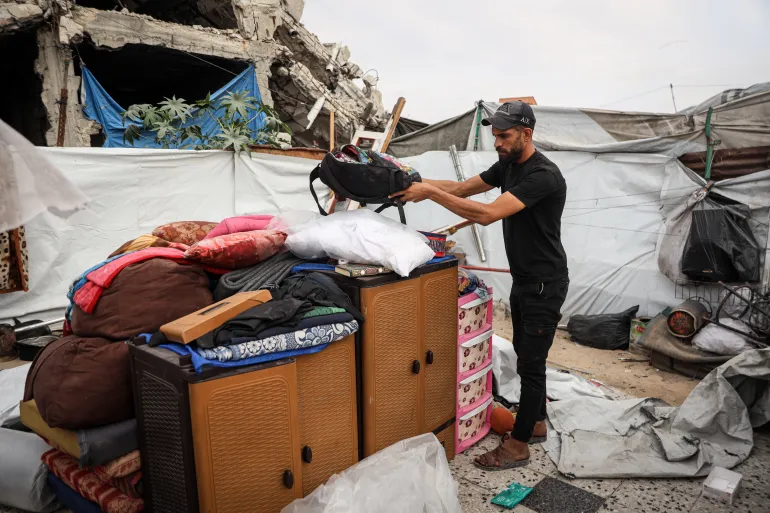
现在他正在为可能再次搬迁做准备。“他们很可能会再次向前推进,”他说。“每次我们被迫逃离时,都必须靠近它更近一些。我们一直在搬迁。” 一户巴勒斯坦家庭的随身物品放在他们帐篷旁边,位于舒杰亚,居民们担心将面临进一步的流离失所[阿卜杜勒哈基姆·阿布·里亚什/半岛电视台]。夜间逃离,早晨返回 对于32岁的阿斯玛·阿里来说,黄线的推进使得流离失所变成了夜间逃离、早晨返回的循环,她永远不知道自己家能在一个地方待多久。
Now he is preparing for the possibility of moving again. “They will probably move it forward again,” he said. “Every time we have to flee, we have to move closer to it. We keep moving.”A Palestinian family’s belongings lie beside their tent in Shujayea, where residents fear further displacement [Abdelhakim Abu Riash/Al Jazeera] Fleeing at night, returning in the morning For Asma Ali, 32, the Yellow Line’s advance has turned displacement into a cycle of fleeing at night and returning in the morning, never knowing how long her family can stay in one place.
阿里是舒杰亚的一位三个孩子的母亲,她说自停火开始以来,她的家人已经流离失所了七八次。
Ali, a mother of three from Shujayea, said her family has been displaced seven or eight times since the ceasefire began.
在逗留加沙市中心后,他们回到了舒贾耶(Shujayea),希望能在阿尔-曼塔尔(al-Mantar)地区安顿下来。然而一个月后,由于炮击再次加剧以及人们对再次撤离的担忧,他们不得不再次搬家。
After staying in central Gaza City, they returned to Shujayea hoping to settle in the al-Mantar area. But then, a month later, renewed shelling and evacuation fears forced them to move again.
这家人最初在学校里避难,后来搬到了一个靠近公交车站的房屋里。在经历了一整晚的猛烈炮击后,他们在清晨离开了那里,前往加沙市中心的亲戚家中暂住。但随着“黄线”(Yellow Line)的不断推进,阿里(Asma Ali)不确定她的家人下一步该去哪里。
The family sought shelter at a school before moving to a house near a bus stop. After a night of heavy shelling, they left in the early hours of the morning and went to stay with family back in the centre of Gaza City. But the advance of the Yellow Line has left Ali uncertain about where her family could go next.
阿里表示,随着“黄线”的推进,她的家人不知道该去哪里才能找到安全的地方。[阿卜杜勒哈基姆·阿布·里亚什/半岛电视台(Abdelhakim Abu Riash/Al Jazeera)]“每晚我们都会逃走,第二天早上再回来,”阿里说,“整晚都在寻找可以暂住的地方,第二天早上再返回。”
Asma Ali says the advancing Yellow Line has left her family uncertain about where they can find safety [Abdelhakim Abu Riash/Al Jazeera]“Every night, we would flee, then come back in the morning,” Ali said. “You spend the night trying to find somewhere to stay, then return the next morning.”
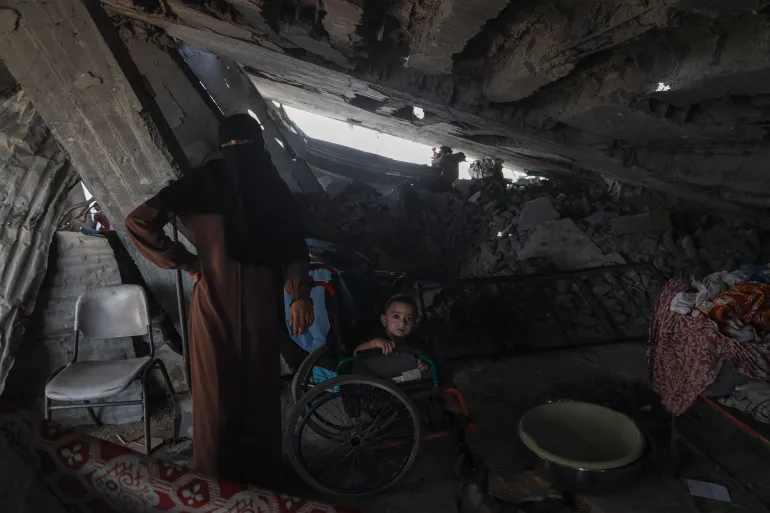
“‘黄线’推进的那个夜晚非常可怕,”她说,“枪声从夜晚一直持续到黎明,人们生活在恐惧之中。”阿里还说,当他们居住的房屋被毁时,她的家人失去了所有的财物——包括黄金、生活用品以及孩子们的衣服。
“The night the Yellow Line advances is terrifying,” she said. “The shooting continues from the beginning of the night until dawn. You live in fear.”Ali said her family lost their belongings – including gold, household items and her children’s clothes – when the dwelling they were staying in was destroyed.
其中丢失的物品中还包括她儿子使用的辅助器具(该儿子有残疾)。这个辅助器具他们才使用了两天而已。“一切都消失得无影无踪,”她说。
Among the items lost was a brace for her son, who has a disability. She only had the brace for two days. “It was gone in the blink of an eye,” she said.
这家人一直在寻找安全的住所,但阿里表示他们根本负担不起其他地方的生活费用。向南迁移也非常困难:交通不便,而且他们也不确定在那里能否找到安全的地方。
The family has been trying to find somewhere safe to stay, but Ali said there is nowhere they can afford to go. Moving south is also difficult, with transport hard to find and little certainty that they will find a safe place there.
阿里的愿望很简单:她只是希望找到一个能让孩子们安心睡觉的地方,而家人不必再次逃离。
Asma’s request is simple: somewhere her children can sleep without the family having to flee again.
“最重要的是找到一个安全的地方,”她说,“一个我可以把孩子们安置在那里、让我们能够休息和安顿下来的地方。”
“The most important thing is somewhere safe for us,” she said. “Somewhere I can put my children and where we can rest and settle.”