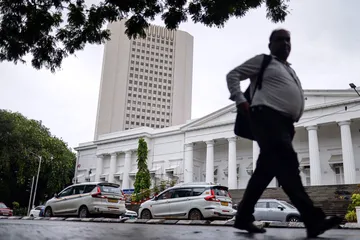
印度央行似乎已进入危机应对模式。它重新启用了2013年“缩减恐慌”时最后使用的应对方案,以防止货币出现自由落体式下跌。但对心理上重要的100卢比兑1美元汇率的防卫越是绝望,当局越有可能操之过急,从而造成严重损害。
The Indian central bank seems to be in crisis-fighting mode. It has dusted off the playbook it last used during the 2013 taper tantrum to ward off a free fall in the currency. But the more desperate the defense of the psychologically important level of 100 rupees to the dollar, the greater the risk that authorities will overplay their hand and cause serious damage.
首先,印度储备银行敦促银行在三个月内从海外侨民那里借款1330亿美元。当这项在8月结束的行动未能扭转看空情绪时,该机构上周末提高了贷款人的货币对冲成本,并指示石油进口商直接从印度储备银行购买美元,绕过市场汇率。
First, the Reserve Bank of India nudged banks to borrow $133 billion from the diaspora in under three months. When that drive, which ended in August, failed to turn bearish sentiment, the authority last weekend raised lenders’ currency hedging costs and directed oil importers to buy dollars from the RBI, bypassing the market exchange rate.
目前,卢比兑美元汇率已升至约95卢比。但中东地区的动荡使布伦特原油价格维持在每桶100美元以上,食品价格推动通胀升至两年高点,而美国国债收益率飙升正在吸走新兴市场的资本,这场救援可能只是短暂的。
For now, the rupee has strengthened to around 95 to the dollar. But with turmoil in the Middle East keeping Brent crude above $100 a barrel, food prices pushing inflation to a two-year high, and surging US bond yields sucking capital out of emerging markets, this rescue may be short-lived.
值得回忆的是,2013年恐慌时期所尝试的许多措施——在美国联邦储备局发出结束后全球金融危机时期宽松货币时代的信号之后——最终都适得其反。以至于市场开始质疑,当时即将卸任的行长杜武里·苏布拉奥的最后一招会不会是实施资本管制。直到前国际货币基金组织首席经济学家拉古拉姆·拉詹接任并宣布成立一个委员会,以明确的通胀目标来锚定货币政策,印度央行才终于开始恢复其信誉。卢比的贬值压力随之缓解。
It’s worth remembering that much of what was tried in the panic of 2013 — after the US Federal Reserve signaled an end to the post-Global Financial Crisis cheap money era — went badly wrong. So much so that the market began to ask if the then outgoing Governor Duvvuri Subbarao’s final move would be capital controls. It was only when Raghuram Rajan, a former International Monetary Fund chief economist, took over and announced a committee to anchor monetary policy in explicit inflation targeting that the central bank finally began to recoup its credibility. The pressure on the rupee ebbed.
正是如此,解决当前危机的办法在于:对全球投资者具有可信度并提供充分的风险补偿。最近,印度储备银行对新德里的财政需求过于迁就 — — 并且对通胀过于犹豫。自2024年12月新任行长桑贾伊·马尔霍特拉上任以来,央行将借贷成本下调了125个基点,并在12个月内购买的政府债券规模超过了疫情第一年。今年才首次上调25个基点的利率,即便如此,六名政策制定者中也有两人反对将货币立场从中性调整为有序紧缩。
Therein lies the solution to the current crisis: credibility and adequate risk compensation to global investors. Of late, the RBI has been too accommodative of New Delhi’s fiscal needs — and too hesitant on inflation. After Governor Sanjay Malhotra took over in December 2024, the central bank slashed borrowing costs by 125 basis points and bought more government bonds in 12 months than during the first year of the pandemic. The first 25 basis-point increase in rates came only this month, and even then two out of six policymakers voted against changing the monetary stance to calibrated tightening from neutral.
纠正航向必须从认识到开始:卢比的捍卫不能依赖非常规手段,而让常规政策工具闲置不用。印度庞大的侨民无疑是其“取款机” — — 祖国需要外汇时,他们总是随时准备提供支持。但这笔钱代价高昂。贷款人之所以愿意吸收这些美元存款,是因为印度储备银行承担了本金的汇率风险。拉詹当初勉强提供了这种后盾。当时动员的260亿美元稳定了外汇储备。
A course correction must begin by recognizing that the rupee’s defense can’t be left to unconventional measures while regular policy tools gather dust. India’s vast diaspora is undoubtedly its ATM — always ready to oblige when their home country needs hard currency. But this is expensive money. Lenders only raise these dollar deposits because the RBI absorbs the exchange-rate risk on the principal amount. Rajan gave this backstop reluctantly. The $26 billion mobilized back then stabilized foreign reserves.
而这一次,不仅规模是当时的五倍,而且未能有效支撑储备 — — 自今年9月初以来,外汇储备已下降500亿美元。再加上2000亿美元的美元远期净头寸为负 — — 即印度储备银行未来的义务 — — 7340亿美元的“战争基金”显得更加不堪一击。虽然贷款人对本金偿还的汇率风险已由印度储备银行承担,但他们仍需动用硬币向侨民存款人支付利息。根据曾任银行家和证券监管者的天文台集团分析师阿南特·纳拉扬的估算,这使银行面临约350亿美元的现值远期美元需求。
This time, not only is the amount five times larger, but it’s failing to shore up reserves, which have fallen by $50 billion since early September. Add to that a negative dollar forward book of $200 billion — the RBI’s future obligations — and the $734 billion war chest looks even less impressive. While lenders’ currency risk on principal repayment has been taken over by the RBI, they must still access hard currency for interest payments to diaspora depositors. That exposes banks to an estimated $35 billion in forward dollar demand in present-value terms, according to Observatory Group analyst Ananth Narayan, a former banker and securities regulator.
恰逢此时,印度央行周一对银行进行对冲的限制进一步收紧,不仅限制银行对冲客户的货币负债,还限制其对冲自身的货币负债。这显然是过度反应。2013年夏季,印度央行同样因形势不佳而进行行政层面的微调。一些经济学家已经在敦促马尔霍特拉完全重复那次实验。
As it happens, the RBI on Monday imposed fresh restrictions on banks hedging not just their customers’ currency liabilities, but also their own. That’s overkill. In the summer of 2013, a flailing RBI similarly tinkered administratively. Some economists are already urging Malhotra to repeat that experiment in its entirety.
这样做明智吗?通过一次性将隔夜利率上调2个百分点,印度央行在2013年7月将短期利率推高至10.25%。这引发了流动资金的争夺,使银行在短时间内获得了一季高成本贷款,随后因企业杠杆过高的借款人违约,银行陷入多年下滑。
Would that be wise? By hiking overnight rates by 2 percentage points in a single shot, the RBI pushed short-term rates to 10.25% in July 2013. That triggered a working-capital scramble, yielding banks a quick quarter of high-cost loans before sending them into a multi-year tailspin as overleveraged corporate borrowers failed.
经过长时间的等待,印度的信贷需求再次增强,几乎达到20%。其中很大一部分是用于个人贷款。企业借款并非用于新增资产,而是主要用于持有库存,因为通胀推高了原材料成本。如今若提升短期利率,将导致收益率曲线倒挂,侵蚀银行利润空间,并再次使信贷引擎停滞。如此举措还将短路货币政策委员会,削弱其重要性。
After a long wait, credit demand in India has once again strengthened to almost 20%. A big chunk of it is for personal loans. Corporate borrowing is not for new assets, but largely for holding inventory as inflation pushes raw-material costs higher. A bump to short-term rates now would invert the yield curve, destroy banks’ margins, and seize up the credit engine again. Such a move would also short-circuit the monetary-policy committee and diminish its importance.
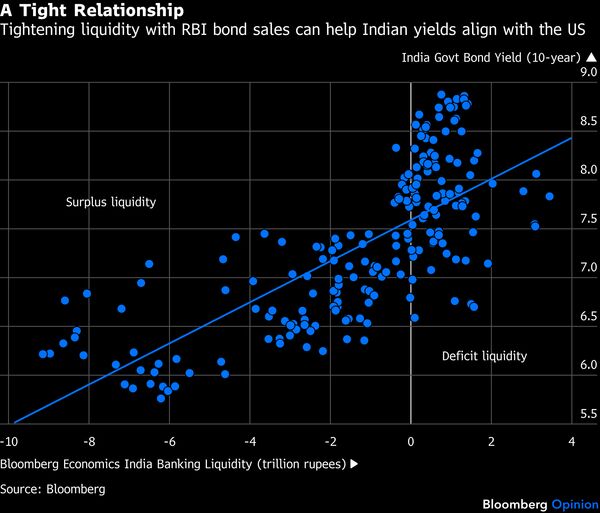
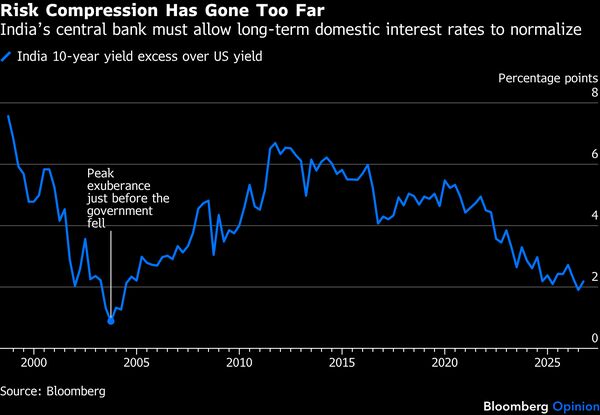
一个更清晰的解决方案或许是让印度央行向银行出售债券,从而提升整个收益率曲线,而不仅仅是短端。10年期收益率与银行流动性密切相关;吸收盈余是重置长期利率的确定方式。首要任务应是让印度重建其相对于美国国债的耗尽的收益率优势。2013年时,10年期利差曾达到600个基点,如今已缩小至约200个基点。若没有足够的风险补偿,全球资本不会流入。
A cleaner solution may be for the RBI to sell bonds to banks, lifting the entire yield curve rather than just the short end. The 10-year yield tracks banking liquidity closely; mopping up the surplus is the surest way to reset long-term rates. The priority should be to let India rebuild its depleted yield advantage over US Treasuries. The 10-year spread that used to be 600 basis points in 2013 has narrowed to about 200. Without adequate risk compensation, global capital won't arrive.
在厄尔尼诺导致的干旱需要更多支出用于农村生计之际,迫使政府以更高利率借款可能加剧印度长期存在的财政脆弱性。但印度储备银行已经为新德里做了足够的工作。其最重要的目标是重新赢得投资者的信任。2013年的胜利并非来自非常规政策工具,而是通过重建印度储备银行的信誉实现的。即便现在,也没有捷径可走。
Forcing the government to borrow at higher rates just when El Niño-induced droughts demand more spending on rural livelihoods may worsen India’s chronic fiscal fragility. But the RBI has done enough already for New Delhi. Its most crucial goal is to regain investors’ trust. The battle of 2013 was won not by unconventional policy tools — but by re-establishing the RBI’s credibility. Even now, there’s no shortcut around it.